How to Manage Play With Your Dog During a Walk
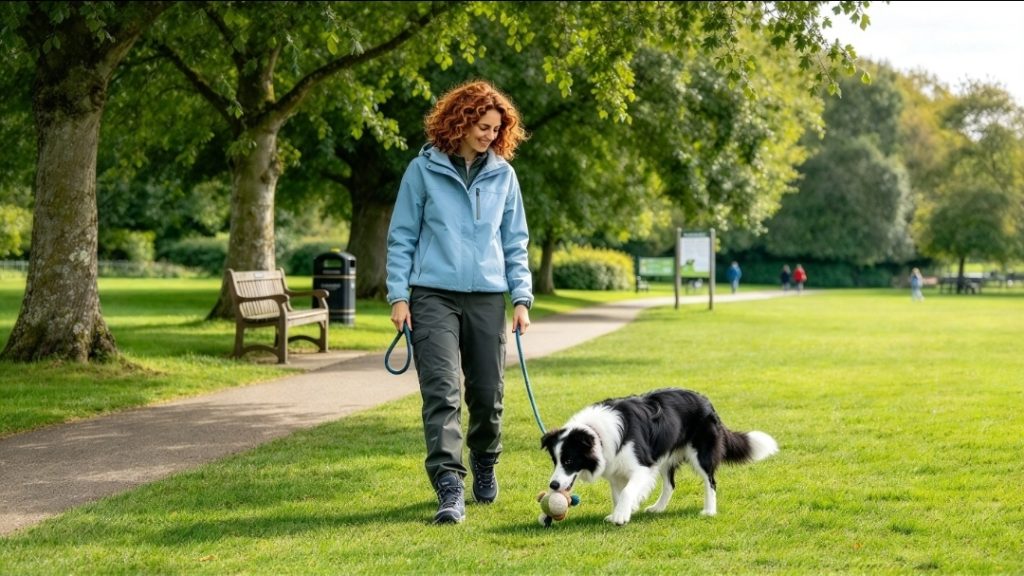
Knowing how to manage play with your dog during a walk helps you provide enjoyable activity without allowing excitement to take over the rest of the outing. Play can build engagement, provide mental stimulation and strengthen interaction between you and your dog. However, poorly timed or overly intense play can lead to pulling, jumping, chasing, difficulty responding to cues or struggling to return to calm walking.
The aim is to make play an enjoyable, purposeful part of the walk. Choose the right environment, keep the game appropriate for your dog, recognise when excitement is increasing and teach your dog how to transition back to walking.
RECOMMENDED PRODUCTS

Should You Play With Your Dog During a Walk?
Yes, play can be a valuable part of a walk when the activity suits your dog and the surrounding environment.
Some dogs enjoy chasing and retrieving toys. Others prefer tug, searching games or direct interaction with their handler. Some dogs find food rewards, sniffing and exploring more motivating than toys.
There is no need to make every dog play with a toy. The important thing is to understand what your dog enjoys and whether that activity supports the purpose of the outing.
A walk can include several activities, such as:
- Calm lead walking.
- Sniffing and environmental exploration.
- Short training exercises.
- Structured play with a suitable toy.
- Rest and opportunities to recover.
Each activity has a different purpose. Play should complement the walk rather than determine everything that happens during it.
Choose the Right Time and Place for Play
Before starting a game, assess the environment and your dog’s current behaviour.
A quiet, open area with enough space is generally more suitable than a narrow path, crowded park entrance or busy pavement. Consider other dogs, children, cyclists, wildlife and nearby traffic before introducing a toy or encouraging energetic movement.
Avoid games that could cause your dog to run towards hazards, collide with people or become tangled in the lead.
If your dog is already fixated on another dog, chasing wildlife or struggling to respond to you, introducing an exciting toy may make the situation harder to manage. Create space and address the immediate situation first.
The right time to play is when the environment is suitable and you can manage the activity safely.
How to Start a Structured Play Session
1. Gain Your Dog’s Engagement
Begin when your dog is able to notice you and respond to simple communication.
Present the toy or invite your dog into a familiar game. Watch how your dog responds rather than assuming that showing a toy will automatically create useful engagement.
If your dog is interested, begin with a short interaction. If the dog shows little interest, do not force the game. Try a different activity or use a reward your dog values more.
The purpose is to encourage willing participation, not to create excitement at any cost.
2. Keep the Game Appropriate
Choose a game that suits your dog’s size, age, physical ability and experience.
For example, you might use a short retrieving game, gentle tug or a simple search for a toy. Keep movements appropriate and avoid repeatedly encouraging sudden, high-speed turns, collisions or excessive jumping.
Observe your dog’s body language throughout the game. If the dog becomes frantic, repeatedly jumps at your hands, grabs clothing or struggles to respond, pause and reduce the intensity.
Play should remain enjoyable for both dog and handler.
3. Keep Sessions Manageable
There is no single session length that suits every dog. Some dogs benefit from brief games, while others can manage longer periods of suitable play.
Watch your dog’s response rather than relying only on the clock.
Finish or pause while the game is still manageable, especially when your dog is learning how to play and return to walking. Short, successful sessions are often easier to incorporate into a normal outing than prolonged, intense games.
Allow breaks when your dog needs them, and stop if you notice fatigue, discomfort or difficulty regulating excitement.
How to Prevent Your Dog Becoming Overexcited
Excitement is a normal part of many games. The difficulty arises when the dog becomes so stimulated that responding to the handler or moving calmly afterwards becomes difficult.
Watch for changes such as:
- Increasingly frantic movement.
- Repeated jumping or grabbing at clothing.
- Persistent barking or vocalisation.
- Ignoring familiar cues that the dog normally understands.
- Repeated attempts to restart the game.
- Difficulty disengaging from the toy.
- Signs of fatigue or discomfort.
No single behaviour automatically means a dog is too excited, so consider the whole picture and how easily your dog can respond.
If the game is becoming difficult to manage, pause it. Reduce movement, create space from distractions and give your dog an opportunity to settle before deciding what to do next.
Do not respond by making the game more intense in an attempt to tire your dog out.
Teaching Your Dog When Play Starts and Ends
Clear beginnings and endings help make play more predictable.
You can introduce a consistent invitation to start the game and a familiar cue, such as “finished”, to signal that the activity is ending. Teach these cues in an easy environment first and reward your dog for responding.
For example:
- Invite your dog to engage with the toy.
- Play briefly and appropriately.
- Signal the end of the game.
- Encourage your dog to disengage and return attention to you.
- Reward the response when appropriate.
- Resume calm walking if your dog is ready.
If your dog struggles to release a toy, practise a positive release exercise separately rather than turning every game into a contest over the object.
You can sometimes restart the game after a successful release, provided it is safe and appropriate. This helps your dog learn that releasing the toy does not always mean the fun is over.
Never put your hands at risk trying to force an object out of a dog’s mouth.
How to Return to Calm Walking After Play
The transition back to walking is an important part of managing play.
Ending the game does not mean your dog’s excitement will disappear immediately. Some dogs need a short period of lower stimulation before they can comfortably resume the walk.
Step 1: Finish in a Manageable Environment
Avoid ending a high-energy game immediately beside a busy road, crowded gate or group of unfamiliar dogs. Choose a suitable area where you can safely manage the transition.
Step 2: Reduce Stimulation
Put away the toy when appropriate and stop encouraging energetic movement. Give your dog space to settle without repeatedly issuing commands.
Step 3: Check Your Dog’s Response
Notice whether your dog can turn attention towards you, move on a manageable lead and respond to familiar cues.
If your dog continues pulling, jumping or fixating on the toy, make the transition easier. You may need to wait, create distance or practise shorter games in a quieter location.
Step 4: Resume Walking Gradually
Begin with a short stretch of calm walking. Reward your dog for moving with you and responding appropriately.
If your dog is ready, continue the walk normally. If the dog is still struggling, reduce distractions and allow more time before adding further demands.
The goal is not to suppress all excitement. It is to help your dog move from play back to walking safely and comfortably.
What If Your Dog Keeps Demanding to Play?
Some dogs learn to bring toys repeatedly, jump at the handler or pull towards places where games have previously taken place.
This can happen when play begins whenever the dog demands it, or when pulling and jumping repeatedly result in access to the game.
Establish a consistent routine. Begin play when you choose and the circumstances are suitable, rather than automatically responding to every demand.
If your dog jumps or grabs at you, pause the interaction and avoid rewarding the behaviour with more exciting movement. When your dog can engage appropriately, invite them back into a suitable game.
Do not punish your dog for wanting to play. Teach an alternative behaviour and reinforce the way you want the dog to interact.
If the behaviour becomes unsafe or difficult to manage, seek individual training guidance.
Should You Use Toys Around Other Dogs?
Only when the environment and circumstances make it appropriate.
A toy can attract the attention of nearby dogs, create competition or increase arousal. Some dogs become possessive of toys, while others may become frustrated when they cannot reach an object or join a game.
Avoid introducing toys in close proximity to unfamiliar dogs without a suitable plan. Do not assume that dogs sharing a space will be comfortable sharing toys.
If another dog approaches while you are playing, pause if it is safe to do so, manage your own dog and create appropriate space. Never allow a toy game to develop into a confrontation.
Where there is a history of resource guarding, aggression or serious conflict around toys, seek help from a qualified behaviour professional before attempting shared play.
Common Mistakes When Playing With Your Dog During a Walk
Playing in an Unsafe Location
A toy can encourage sudden movement and reduce a dog’s attention to surrounding hazards. Choose a suitable space away from traffic, crowded paths and other risks.
Making Every Walk About Play
Dogs can benefit from walks that allow calm movement, sniffing and environmental exploration. A toy does not need to appear on every outing.
Continuing When Your Dog Is Struggling
If your dog cannot respond appropriately, is becoming frantic or appears tired, continuing the game may make the transition harder. Pause and reassess.
Using Play to Distract From Every Problem
A toy is not a universal solution for barking, fear or reactivity. If your dog is uncomfortable around a person or another dog, increase distance and address the underlying issue rather than automatically introducing play.
Ending the Game Without Teaching a Transition
If play stops abruptly and the dog has no learned way to disengage, the dog may continue jumping, pulling or demanding the toy. Practise ending games calmly in easier environments.
Assuming Every Dog Enjoys the Same Games
Different dogs have different preferences and physical abilities. Choose activities that suit your individual dog rather than forcing a particular style of play.
RECOMMENDED PRODUCTS
A Simple Routine for Managing Play During a Walk
Use this sequence to keep the activity purposeful and manageable.
- Assess the environment: Check for traffic, people, dogs and other hazards.
- Check your dog: Consider attention, energy, physical comfort and current behaviour.
- Invite engagement: Start a suitable game only when your dog and the environment are ready.
- Play appropriately: Keep the activity manageable and monitor your dog’s response.
- Pause when needed: Stop if excitement becomes difficult to manage or the dog shows fatigue or discomfort.
- End clearly: Use your familiar finishing cue and encourage disengagement.
- Transition back to walking: Allow recovery and reward calm movement when appropriate.
- Reassess: If your dog cannot settle, reduce stimulation and adjust the next session.
With practice, the beginning, middle and end of play can become more predictable.
When to Seek Professional Help
If your dog repeatedly becomes uncontrollable during play, bites or grabs clothing, guards toys, reacts aggressively or cannot safely disengage from a game, seek guidance from a suitably qualified, reward-based dog trainer or behaviour professional.
Stop any activity that creates an immediate safety risk. If your dog shows pain, unusual fatigue or a sudden change in behaviour, consult a veterinary professional.
Individual guidance can help identify whether the difficulty relates to the game itself, the environment, the dog’s emotional response or a skill that needs to be taught gradually.
Final Thoughts
Managing play with your dog during a walk is about balancing enjoyment with safe, appropriate behaviour.
Choose a suitable place, use games your dog genuinely enjoys, keep excitement manageable and teach your dog how to finish the activity. After play, observe whether your dog is ready to return to calm walking and adjust the situation if necessary.
Play should enrich the walk, strengthen interaction and provide an enjoyable activity without making the rest of the outing difficult to manage.