
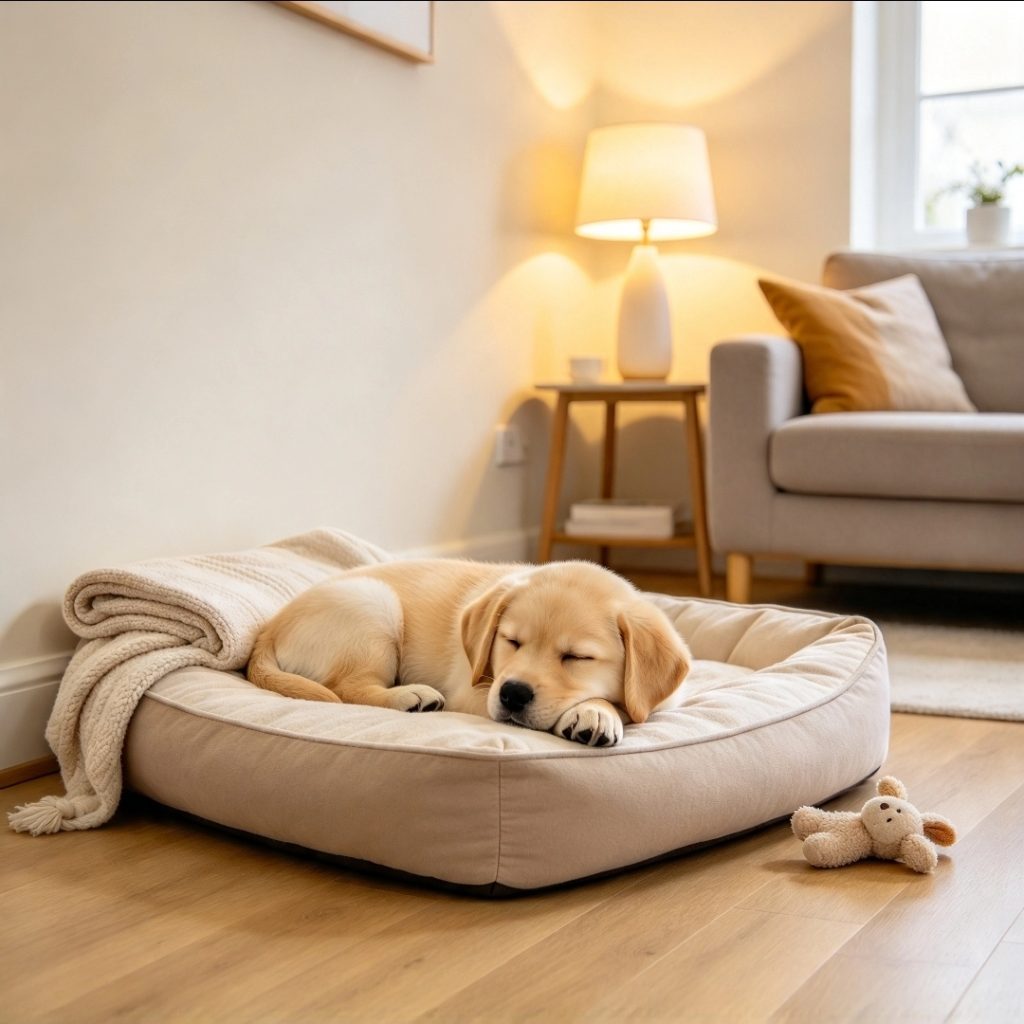
How do I teach a puppy to calm down?
How do I teach a puppy to calm down? Start by helping your puppy recognise when it is time to rest, rewarding calm behaviour and providing a balance of play, training, exploration and sleep. Puppies are naturally curious and energetic, but they have not yet learned how to manage excitement or settle themselves consistently. With patience, supervision and a predictable routine, you can help your puppy develop calmer behaviour as they grow.
RECOMMENDED PRODUCTS

Understand why puppies struggle to calm down
Puppies are still learning how to respond to excitement, distractions and everyday experiences. Running around, jumping up, biting during play and struggling to settle can all occur during normal development.
However, excessive excitement does not always mean your puppy needs more exercise. Sometimes the opposite is true.
Common reasons a puppy struggles to calm down include:
- Overtiredness: Your puppy needs sleep but is becoming increasingly restless instead.
- Overstimulation: Visitors, exciting games, noise or too many new experiences make it difficult to relax.
- Unmet needs: Your puppy may need the toilet, food at an appropriate mealtime, water or attention.
- Lack of routine: Your puppy has not yet learned when to expect activity and when to rest.
- Unintentional reinforcement: If jumping, barking or biting regularly results in exciting attention, these behaviours may become more frequent.
- Limited experience: Your puppy has not yet had enough opportunities to practise settling in different situations.
Before trying to change the behaviour, consider what might be causing it. Understanding the reason helps you choose the right response.
Teach your puppy what calm behaviour looks like
Your puppy will not automatically understand what you mean when you want them to calm down. You need to show them which behaviours are appropriate and make those behaviours rewarding.
Start in a quiet environment with few distractions. When your puppy stands calmly, sits, lies down or relaxes on their bedding, gently reward them with a small food reward or calm praise.
Keep your movements relaxed and your voice quiet. Avoid turning every successful moment into an exciting interaction.
If your puppy lies down near you without demanding attention, allow them to continue resting. You do not need to reward every moment with food or touch; sometimes the most helpful response is to let your puppy relax undisturbed.
Practise in short sessions and gradually repeat the exercise in different rooms and situations.
The aim is to teach your puppy that calm behaviour is worthwhile, not to demand that they remain still all day.
Reward calm behaviour throughout the day
Formal training is useful, but everyday opportunities are equally important.
Watch for moments when your puppy makes a good choice without being asked. They might choose to sit instead of jumping, investigate a toy rather than chew furniture, or settle on their bed after playing.
Reward these choices when appropriate.
For example:
- When your puppy sits calmly to greet you, reward the greeting.
- When your puppy chooses an appropriate chew toy, acknowledge the behaviour.
- When your puppy lies down after playing, allow them to rest.
- When your puppy watches activity without becoming overexcited, reward their calm response.
- When your puppy waits briefly rather than demanding immediate attention, reinforce that behaviour.
Consistency helps your puppy learn which behaviours lead to positive outcomes.
Avoid waiting until your puppy becomes frantic before giving them attention. Look for opportunities to encourage calmness before excitement escalates.
Use a consistent routine for play and rest
Puppies benefit from a daily routine that balances activity with recovery. Too much excitement without enough rest can make it harder for them to settle.
Build the day around suitable opportunities for toileting, meals, short training sessions, play, exploration and sleep.
After an active period, reduce stimulation and guide your puppy towards a quiet resting area. This helps create a predictable transition from activity to rest.
Young puppies need substantial sleep, although the amount varies with age and individual needs. If your puppy becomes increasingly mouthy, frantic, distracted or unable to respond to familiar cues, consider whether they need a break.
Do not assume that every burst of energy requires a longer walk or a more exciting game. Sometimes the most useful response is to make the environment quieter and allow your puppy to sleep.
Help your puppy settle on a bed or mat
A designated resting place can help your puppy learn where to relax. Choose a comfortable bed or mat in a suitable location away from constant disturbance.
Begin when your puppy is already relatively calm.
Encourage them towards the resting area and reward them for investigating it. When they stand, sit or lie down on the mat, offer a reward if appropriate.
As your puppy becomes comfortable, gradually reward longer periods of relaxed behaviour. Keep the early stages easy so your puppy can succeed without becoming frustrated.
If your puppy gets up, avoid repeatedly forcing them back onto the mat. Make the exercise easier, reduce distractions or try again when they are more ready to settle.
The resting area should remain a positive place. If you use a crate or pen, introduce it gradually and never use it as punishment.
Calm your puppy during exciting play
Play is important for learning, confidence and healthy interaction, but some games can make a puppy increasingly excited.
Watch how your puppy responds as the game progresses. If they begin jumping uncontrollably, grabbing clothing, biting hands or ignoring familiar cues, pause the activity.
Keep your response calm. Stop moving the toy, reduce interaction and give your puppy a moment to recover. Once they are calmer, you can offer a suitable toy or resume a less intense activity if they are ready.
Avoid waving toys around more vigorously, shouting or chasing your puppy when they are already overexcited. These responses may increase arousal rather than help them settle.
Shorter play sessions with pauses are often more productive than allowing excitement to build continuously.
If your puppy repeatedly becomes overstimulated, finish the game earlier next time and provide a quiet opportunity to rest.
Teach your puppy to calm down when visitors arrive
Visitors can make it difficult for a puppy to control their excitement. New people, movement, voices and attention can all increase arousal.
Prepare the environment before visitors arrive. Use a suitable barrier, pen or lead when necessary to prevent your puppy from rushing towards people.
Ask visitors to remain calm and avoid encouraging jumping, chasing or frantic play. Reward your puppy for keeping their paws on the floor, watching quietly or choosing to move away and rest.
If your puppy becomes too excited to respond, increase the distance from visitors and reduce the stimulation. Give them time to settle before trying another introduction.
Do not force your puppy to greet everyone. Some puppies need more space or time to feel comfortable around unfamiliar people.
Gradual, positive introductions help your puppy learn that visitors do not always mean an overwhelming burst of excitement.
What should I do when my puppy gets the zoomies?
The zoomies are sudden bursts of running, spinning or energetic movement. They can occur during normal puppy development, particularly after excitement or when a puppy is tired.
If your puppy has the zoomies, first make sure the area is safe. Remove obstacles, keep them away from stairs or slippery surfaces and prevent access to anything dangerous.
Avoid chasing your puppy around the house or adding more excitement by shouting. Give them safe space to move, then reduce stimulation when the burst of activity passes.
Consider what happened beforehand. If zoomies regularly occur after a busy play session or towards bedtime, your puppy may need shorter activity periods and more opportunities to rest.
If the behaviour is accompanied by signs of pain, disorientation, unusual distress or a sudden change from your puppy’s normal behaviour, seek veterinary advice.
Avoid accidentally encouraging overexcitement
Puppies learn from the consequences of their behaviour. Even well-intentioned attention can sometimes encourage the very behaviour you want to reduce.
For example, pushing a puppy away when they jump may become part of an exciting interaction. Repeatedly shouting when they bark can add more stimulation. Chasing them when they steal an object can turn the situation into a game.
Instead, manage the situation before it escalates and reward a more suitable behaviour.
If your puppy jumps, reduce attention and reward a calm greeting. If they grab something inappropriate, calmly manage access and offer a suitable alternative. If they become frantic during play, pause the game and reduce stimulation.
Do not use physical punishment or deliberately frighten your puppy into stopping. These approaches can create anxiety and damage trust without teaching the puppy how to regulate their behaviour.
Give your puppy enough exercise without overstimulating them
Appropriate movement, play and exploration help puppies develop physically and mentally. However, more exercise is not always the answer to excessive excitement.
Choose activities suitable for your puppy’s age, health, breed and stage of development. Follow veterinary guidance about physical exercise while your puppy is growing.
Use short training exercises, gentle exploration, suitable play and opportunities to sniff and investigate their surroundings. Allow your puppy to pause and rest rather than keeping them active continuously.
Mental activity also needs to be balanced with recovery. A puppy that has spent time learning, exploring and interacting may need a quiet period rather than another stimulating activity.
The goal is not to exhaust your puppy. It is to help them enjoy appropriate activity and then recover comfortably.
How long does it take to teach a puppy to calm down?
Learning to settle takes time. Some puppies begin responding to calm routines within days, while others need weeks or months of consistent practice as they mature.
Progress depends on age, temperament, previous experiences, sleep, environment and the consistency of the people around them.
Look for small improvements. Your puppy might recover more quickly after play, lie down without being prompted, wait more patiently for attention or remain calmer when visitors arrive.
Do not expect a young puppy to maintain adult levels of self-control. Keep training sessions short, make the environment manageable and increase difficulty gradually.
If your puppy struggles, reduce distractions and return to an easier step. Repeated success builds more reliable behaviour than constantly testing your puppy beyond their current ability.
When should I seek additional help?
If your puppy regularly seems unable to rest, becomes extremely distressed, reacts intensely to everyday situations or shows a sudden change in behaviour, consider whether there may be an underlying problem.
Contact your vet if you suspect pain, illness or discomfort, or if restlessness is accompanied by concerning physical symptoms.
If the difficulty appears to involve persistent fear, anxiety, frustration or behaviour that is becoming difficult to manage safely, seek support from a suitably qualified, welfare-focused dog behaviour professional.
Getting help early can make it easier to understand your puppy’s needs and establish appropriate training.
RECOMMENDED PRODUCTS
How do I teach a puppy to calm down successfully?
How do I teach a puppy to calm down successfully? Create a predictable routine, provide enough sleep, reward calm choices and reduce stimulation before excitement becomes overwhelming. Teach your puppy how to settle in a quiet environment first, then gradually practise around everyday distractions.
Remember that calm behaviour is a learned skill. Your puppy needs time, repetition and suitable opportunities to practise it. Some days will be easier than others, particularly during periods of development or after exciting experiences.
Focus on understanding why your puppy becomes overexcited, managing the environment and rewarding the behaviour you want to encourage.
A calmer puppy develops through consistent guidance, appropriate activity, sufficient rest and positive learning. By helping your puppy understand when to play, when to pause and when to relax, you build the foundations for better self-control as they grow.



