
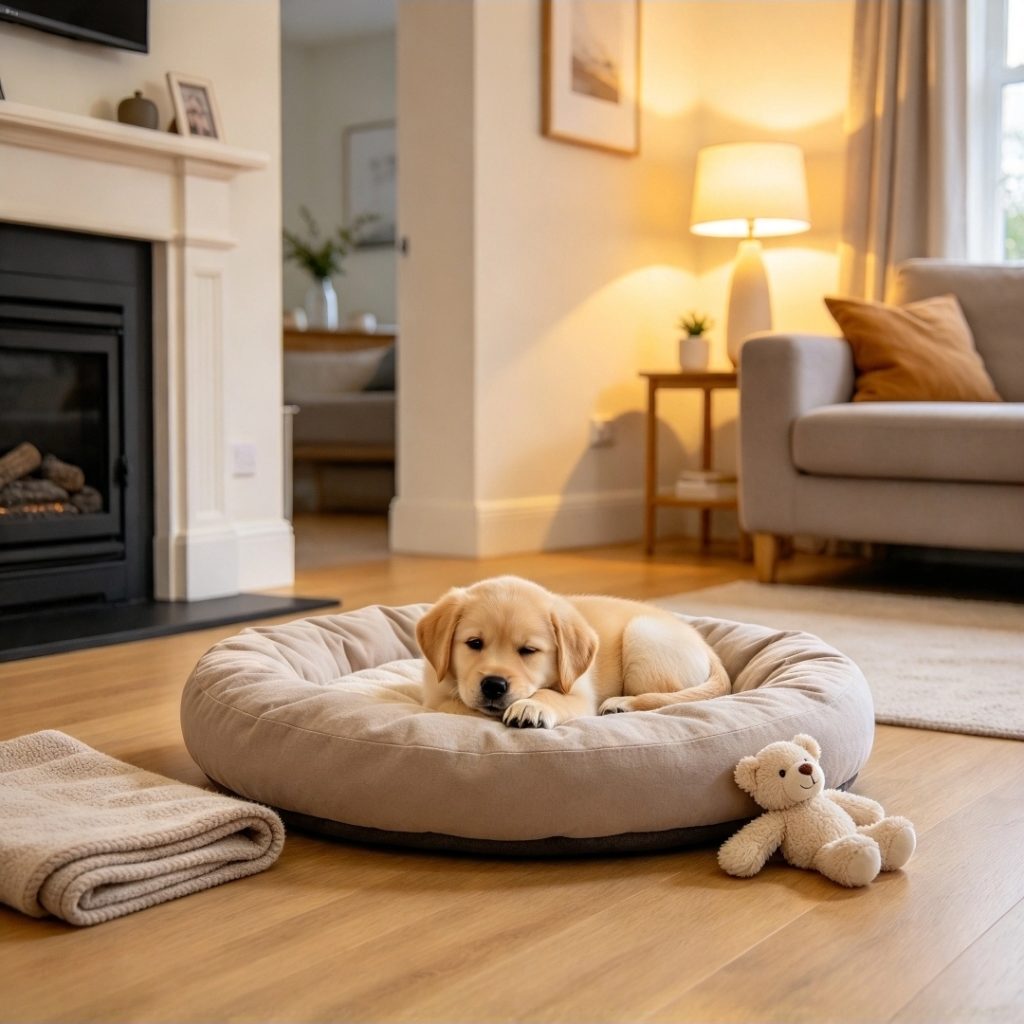
How do I teach a puppy to settle?
How do I teach a puppy to settle? Teach your puppy to settle by rewarding calm behaviour, providing a comfortable resting area, following a consistent routine and balancing play with enough sleep. Puppies do not automatically know how to relax around people, cope with excitement or settle when activity stops. These are learned skills that develop through patience, repetition and positive experiences.
RECOMMENDED PRODUCTS

What Does It Mean to Teach a Puppy to Settle?
Teaching a puppy to settle means helping them relax comfortably without constantly seeking attention, playing, jumping up or reacting to every movement around them.
Settling does not mean forcing your puppy to remain still or expecting them to sleep all day. It means helping them recognise when activity has finished and learn that resting is a normal part of everyday life.
A puppy that is learning to settle may choose to lie on their bed, relax near you, chew an appropriate toy quietly or rest after playing.
The goal is to help your puppy become comfortable switching between activity and relaxation.
Create a Comfortable Place to Settle
Choose a quiet, comfortable place where your puppy can rest without being constantly disturbed. This could be a dog bed, a mat or a suitable resting area within a puppy pen.
Make the area inviting and introduce it gradually. Allow your puppy to investigate it freely and reward them for choosing to spend time there.
Avoid repeatedly moving your puppy onto the bed or insisting they remain there when they are uncomfortable. Instead, encourage them to return and reward relaxed behaviour when it happens naturally.
If you use a crate, introduce it positively so your puppy learns it is a safe resting place rather than somewhere associated with punishment.
Keep the resting area away from excessive noise and household activity where possible. Children and visitors should understand that a resting puppy needs space and should not be disturbed.
Reward Your Puppy for Being Calm
One of the simplest ways to teach a puppy to settle is to notice and reward calm behaviour before your puppy becomes overexcited.
For example, if your puppy lies down beside you, relaxes on their bed or sits quietly while you are doing something else, calmly acknowledge the behaviour.
You can offer a small food reward or quiet praise, provided the interaction does not make your puppy excited again. Sometimes, allowing your puppy to rest without interruption is the best response.
Look for opportunities throughout the day:
- Reward your puppy for lying down independently.
- Encourage them when they relax on their bed or mat.
- Reinforce calm behaviour after play.
- Reward quiet observation rather than constant demands for attention.
- Allow them to remain settled when there is no need to interact.
Your puppy will gradually learn that calm behaviour is worthwhile.
Teach Your Puppy to Settle on a Mat
A mat can provide a clear place for your puppy to practise relaxing. Begin when your puppy is reasonably calm and the environment has few distractions.
Place the mat on the floor and allow your puppy to investigate. Reward them for approaching it, standing on it and eventually choosing to sit or lie down.
When your puppy lies down, calmly offer a reward. Repeat the exercise in short sessions, allowing your puppy to move away if they need to.
As they become more comfortable, gradually reward slightly longer periods of relaxation.
Keep the exercise easy enough for your puppy to succeed. If they repeatedly get up, become frustrated or start playing with the mat, reduce the difficulty and try again later.
Once your puppy understands the exercise in a quiet room, practise in other suitable areas of the home.
Establish a Routine That Includes Rest
Puppies need a balance of activity and sleep. Without enough rest, they may become increasingly excitable, mouthy, restless or difficult to engage with.
Create a predictable daily routine that includes:
- Regular opportunities to toilet.
- Suitable meals and access to fresh water.
- Short training sessions.
- Age-appropriate play and exploration.
- Quiet periods with limited stimulation.
- Plenty of opportunities to sleep.
After an active period, reduce the excitement and give your puppy the opportunity to rest.
Do not assume that a puppy who is running around frantically needs more exercise. They may be overtired or overstimulated and need help winding down instead.
Young puppies require substantial sleep, although their individual needs vary. Watch your puppy’s behaviour and adjust the balance of activity and rest accordingly.
Help Your Puppy Calm Down After Play
Play can quickly increase excitement, especially when a puppy is still learning to control their impulses.
Watch for signs that your puppy is becoming overstimulated, such as grabbing clothing, biting hands, jumping repeatedly, running around frantically or struggling to respond to familiar cues.
When you notice these changes, pause the game. Put the toy away calmly, reduce interaction and give your puppy an opportunity to recover.
If your puppy is ready to relax, guide them towards a quiet environment. If they still need an appropriate activity, offer something suitable that does not increase excitement.
Avoid chasing your puppy, shouting or repeatedly waving toys around when they are already overexcited. These responses can make it harder for them to settle.
Over time, your puppy will learn that play has pauses and that relaxing afterwards is part of the routine.
Teach Your Puppy That They Do Not Always Need Attention
Puppies naturally seek interaction, but they also need to learn that people cannot provide attention every moment of the day.
If your puppy constantly nudges, barks, jumps or brings toys to demand interaction, avoid automatically turning every demand into a game.
Instead, look for moments when your puppy pauses, sits quietly or settles independently. Reward these calmer choices when appropriate.
Make sure their genuine needs have been met first. Your puppy may be asking for the toilet, feeling hungry, becoming tired or needing help because the environment is overwhelming.
Once you have checked their needs, encourage independent relaxation through short, manageable periods when they can occupy themselves safely.
This helps your puppy develop confidence without expecting constant entertainment.
Teach Your Puppy to Settle When Visitors Are Present
Visitors can make settling difficult because they bring new smells, movement, voices and attention.
Before visitors arrive, prepare a comfortable resting area and consider using a suitable barrier or pen to prevent your puppy from becoming overwhelmed.
Ask visitors to remain calm and avoid encouraging jumping, rough play or excessive excitement.
Reward your puppy for watching quietly, keeping their paws on the floor or choosing to rest away from the activity.
If your puppy becomes too excited to respond, increase the distance from visitors and reduce the stimulation. Allow them to settle before attempting another interaction.
Do not force your puppy to greet people. Learning to relax around visitors includes understanding that they do not have to interact with everyone.
Practise with manageable situations and gradually increase the level of distraction as your puppy becomes more confident.
Why Does My Puppy Struggle to Settle?
If your puppy cannot seem to relax, consider what may be contributing to the behaviour.
Overtiredness: Your puppy may need sleep rather than another game or walk.
Overstimulation: Too much play, noise, handling or social interaction can make it difficult to relax.
Unmet needs: Your puppy may need to toilet, drink water or have an appropriate meal.
Inconsistent routines: If activity and rest happen unpredictably, your puppy may struggle to recognise when it is time to relax.
Attention-seeking behaviour: If excited behaviour repeatedly leads to interaction, your puppy may learn to repeat it.
Unfamiliar surroundings: New environments and experiences can make a puppy feel uncertain.
Observe what happens before your puppy becomes unsettled. By identifying the cause, you can make appropriate changes instead of repeatedly trying to stop the behaviour.
If your puppy shows persistent distress, seems unable to rest or develops a sudden change in behaviour, seek veterinary advice where appropriate.
Common Mistakes When Teaching a Puppy to Settle
Avoid these common mistakes when helping your puppy learn to relax.
Expecting immediate results: Settling is a skill that develops through repetition and maturity.
Providing too much stimulation: Constant play and attention can prevent your puppy from learning to rest.
Ignoring the need for sleep: An overtired puppy may become more excitable rather than quieter.
Forcing your puppy to stay in one place: Teach relaxation gradually instead of relying on physical restraint or repeated corrections.
Rewarding excitement unintentionally: Avoid turning jumping, barking or frantic behaviour into an exciting interaction.
Disturbing a resting puppy: Allow your puppy to sleep and relax without unnecessary interruptions.
Using punishment: Shouting, frightening or physically correcting your puppy does not teach them how to relax comfortably.
Consistent guidance, suitable management and positive reinforcement help your puppy understand what you expect.
RECOMMENDED PRODUCTS
How Long Does It Take to Teach a Puppy to Settle?
Some puppies begin relaxing more comfortably within a few days of practising a consistent routine, while others need weeks or months to develop reliable settling behaviour.
Progress depends on age, temperament, previous experiences, sleep, environment and how consistently calm behaviour is encouraged.
Look for small improvements, such as your puppy lying down after play, resting independently for short periods or recovering more quickly after excitement.
Do not expect a young puppy to remain settled for long periods in every situation. Practise in quiet surroundings first, then gradually introduce everyday distractions.
If your puppy struggles, make the exercise easier and reward achievable progress.
How Do I Teach a Puppy to Settle Successfully?
How do I teach a puppy to settle successfully? Give your puppy a comfortable resting area, establish a predictable routine, provide enough sleep and reward calm behaviour throughout the day. Use short training sessions, manage excitement before it escalates and allow your puppy to learn at a suitable pace.
Remember that settling is not simply about stopping unwanted behaviour. It is about helping your puppy understand how to relax, feel comfortable in their surroundings and recover after activity.
Consistency builds confidence. By recognising your puppy’s needs, rewarding calm choices and balancing activity with rest, you can help them develop the foundations for better self-control as they grow.



