How Do I Manage a Dog That Reacts to Other Dogs?
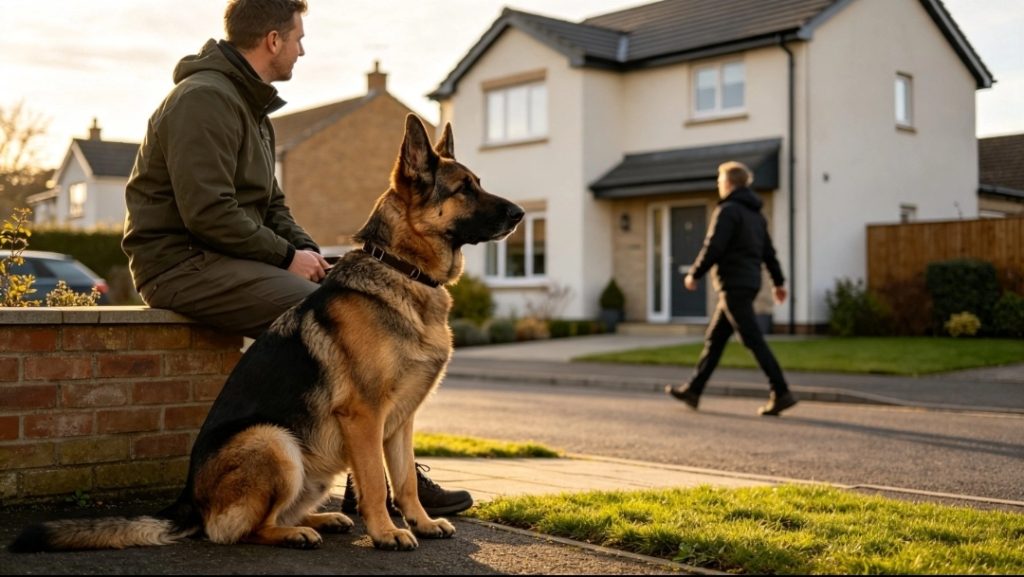
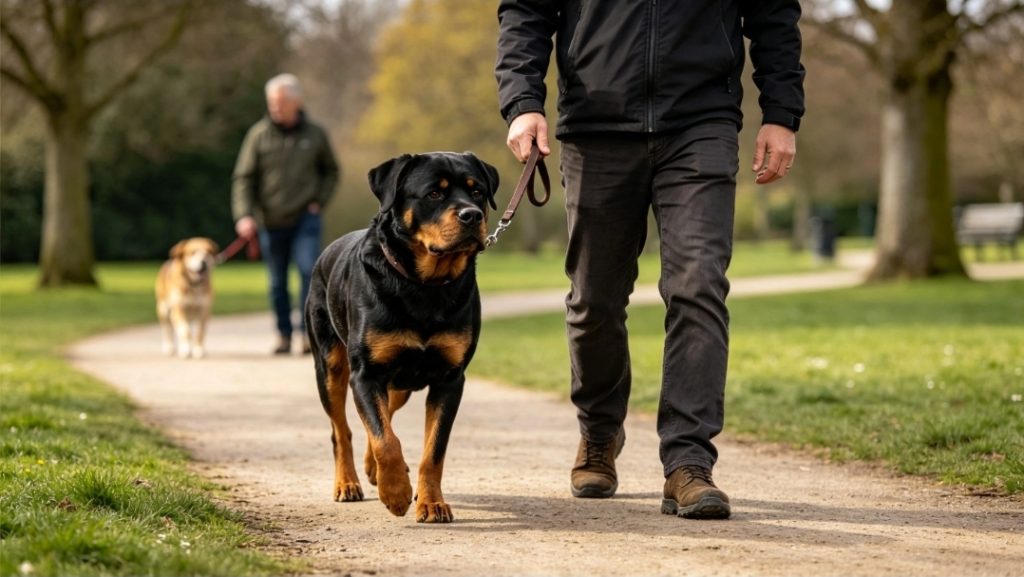
How do I manage a dog that reacts to other dogs? Start by preventing unnecessary close encounters, creating enough distance for your dog to remain calm, and learning to recognise the early signs of a reaction. Good management reduces the chance of your dog repeatedly practising barking, lunging or other reactive behaviour while you work on improving the underlying response.
RECOMMENDED PRODUCTS

What Does It Mean When a Dog Reacts to Other Dogs?
A dog can react to other dogs for many reasons, including fear, frustration, overexcitement, discomfort or previous negative experiences.
The reaction may involve:
- Barking.
- Growling.
- Lunging.
- Pulling.
- Staring.
- Whining.
- Freezing.
- Trying to move away.
A reaction does not automatically mean that a dog is aggressive. The behaviour needs to be considered alongside the dog’s body language, environment and circumstances.
Why Is Management Important?
Management prevents your dog from repeatedly reaching the point where it loses control.
Every time a dog rehearses a strong reaction, the behaviour can become more difficult to manage. Creating distance and controlling the environment gives your dog more opportunities to experience other dogs without immediately reacting.
Management is not a replacement for training. It creates the conditions in which training can work.
How Do I Manage My Dog Around Other Dogs?
1. Identify your dog’s triggers
Start by observing exactly when your dog reacts.
Consider whether your dog reacts to:
- All dogs or only certain dogs.
- Dogs approaching directly.
- Dogs running or playing.
- Dogs barking.
- Dogs at close range.
- Dogs while your dog is on the lead.
- Multiple dogs at once.
Understanding the pattern allows you to plan walks and training more effectively.
2. Learn your dog’s early warning signs
Do not wait for barking or lunging before taking action.
Your dog may become tense, stare, stop responding to you, pull, increase its pace or become highly focused on another dog.
These early signs tell you that the situation may be becoming too difficult.
3. Create distance early
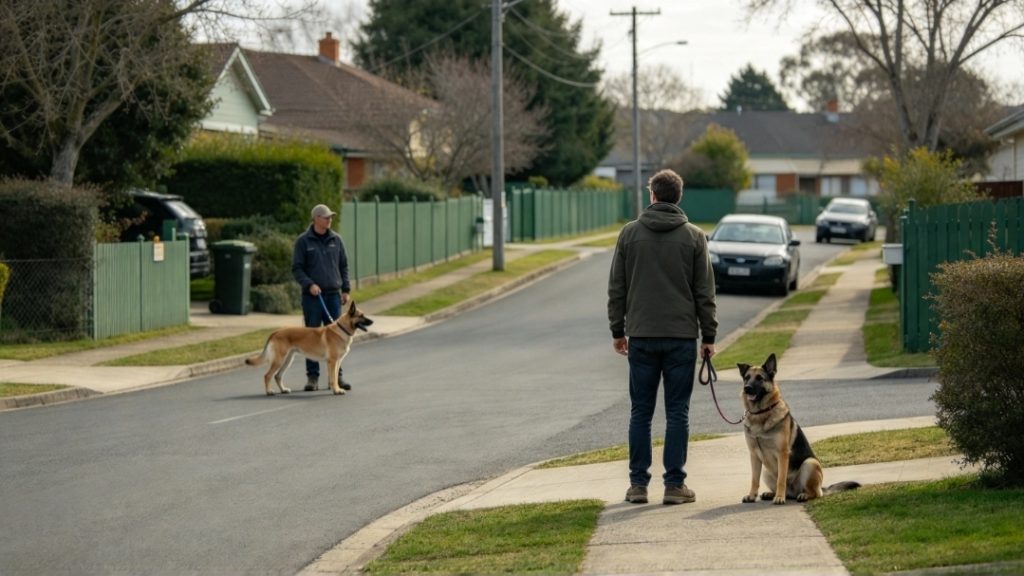
If you see another dog approaching, create space before your dog reacts.
You may be able to:
- Cross the road.
- Change direction.
- Move to the side of a path.
- Walk behind a physical barrier.
- Wait in a suitable safe area.
- Increase the distance between the dogs.
The correct distance is the one at which your dog can remain calm enough to respond to you.
Should I Let My Reactive Dog Meet Other Dogs?
Not automatically.
Your dog does not need to greet every dog it sees.
If your dog is already fearful, frustrated or highly excited, forcing a close interaction can make the situation more difficult.
Controlled interactions with suitable dogs can be appropriate when your dog is ready, but everyday walks do not need to become a series of greetings.
Learning to calmly pass another dog is an important skill.
How Do I Manage a Reactive Dog on Walks?
Plan the walk around your dog’s current ability.
Choose quieter routes or quieter times when necessary. Avoid areas where dogs are likely to approach from all directions if your dog cannot cope with that level of stimulation.
Keep enough space around your dog and remain aware of what is happening ahead.
Do not wait until another dog is directly in front of you before deciding what to do.
What Lead and Harness Should I Use?
A suitable harness and lead can provide safe everyday control.
A short line may be useful when closer control is necessary, particularly in situations where another dog could approach unexpectedly.
A longer line may be appropriate in a secure area when your dog has developed enough reliability to manage greater freedom.
The equipment should help you control the environment safely. It should not be used to physically force your dog towards another dog.
If there is a genuine risk of biting, a properly introduced muzzle may provide an additional safety measure. A muzzle should be introduced gradually and positively and should not be treated as a substitute for behaviour training.
What Should I Do If Another Dog Approaches Us?
Stay calm and prioritise distance.
If there is enough space, move away before your dog becomes overwhelmed.
If another dog is loose, communicate clearly with its handler and ask them to recall or restrain their dog if possible.
Do not allow an uncontrolled dog to rush up to a reactive dog simply because the other dog appears friendly.
What If Another Dog Is Off Lead?
Your responsibility is to keep your own dog as safe and controlled as possible.
Look for escape routes and create distance where you can.
If necessary, change direction or move behind a barrier.
Do not assume that an approaching dog is friendly simply because it is off lead. Your dog may find the approach threatening or overwhelming regardless of the other dog’s intentions.
How Do I Manage a Reactive Dog in Busy Areas?
Busy areas provide more triggers and fewer opportunities to create distance.
If your dog struggles around multiple dogs, avoid unnecessarily difficult environments while you build better skills.
Start in quieter locations where you can control the distance and gradually introduce more distractions as your dog becomes more reliable.
More freedom and more environmental difficulty should come with increased behavioural responsibility.
RECOMMENDED PRODUCTS
Can I Use Treats to Manage Reactivity?
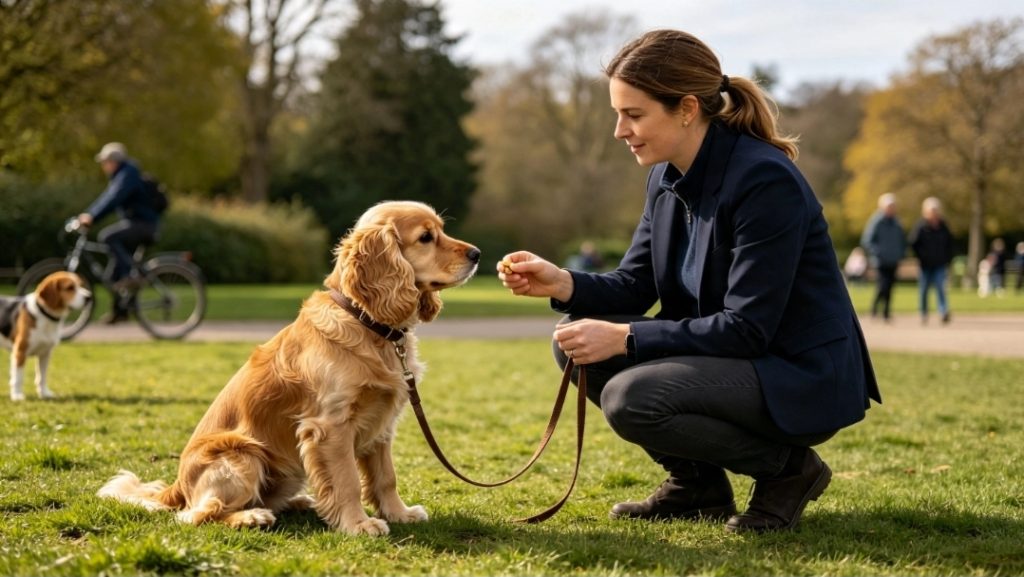
Yes, if your dog is calm enough to eat and learn.
Reward your dog for noticing another dog without reacting, looking back towards you, remaining on a loose lead or moving calmly away.
If your dog refuses food or becomes too focused on the other dog, the situation may be too difficult.
Increase the distance rather than trying to force your dog to take the reward.
Should I Train My Dog During Every Walk?
Not necessarily.
Management and training are related but different.
Some walks may simply be about providing exercise and allowing your dog to experience the environment without being placed in difficult situations.
Choose controlled opportunities for training rather than trying to turn every encounter into a training session.
What Should I Do If My Dog Reacts?
If your dog starts barking, lunging or losing control, stop increasing the difficulty.
Create distance and allow your dog to recover.
Do not punish the reaction or continue moving towards the other dog.
Once your dog is calm enough to respond again, reassess the situation and decide whether you should continue, change direction or end the difficult part of the walk.
Should I Punish My Dog for Reacting to Other Dogs?
No.
Punishment may increase fear, frustration or stress without addressing why your dog is reacting.
It can also make the presence of other dogs more unpleasant if your dog begins associating them with punishment.
Instead, focus on management, distance, appropriate control and positive reinforcement.
What If My Dog Reacts to Every Dog?
If your dog reacts to almost every dog, prioritise management.
Choose quieter routes, increase distance and avoid unnecessary greetings.
Do not repeatedly expose your dog to situations where it is almost guaranteed to react.
Once you can manage the environment successfully, begin structured training at a distance where your dog can remain calm.
How Do I Know If My Management Is Working?
Good management should make situations more predictable and easier to control.
You may notice that your dog:
- Reacts less frequently.
- Recovers more quickly.
- Can remain calmer when another dog appears.
- Responds to you sooner.
- Needs less distance over time.
- Can cope with more environments.
- Has fewer intense reactions.
Management is successful when it helps prevent unnecessary escalation and gives your dog more opportunities to make appropriate choices.
When Should I Get Professional Help?
Seek professional help if your dog attempts to bite another dog, has caused an injury, cannot be safely controlled or is becoming increasingly difficult to manage.
Professional guidance is also appropriate if you are unsure what is causing the reaction or cannot create enough distance to keep your dog under control.
A sudden change in behaviour should be discussed with your vet because pain or an underlying medical problem can contribute to behavioural changes.
Conclusion
Managing a dog that reacts to other dogs starts with distance, awareness and prevention.
Learn your dog’s triggers and early warning signs, plan walks around its current ability, use appropriate equipment and avoid unnecessary close interactions.
Management does not mean giving up on training. It prevents repeated uncontrolled reactions while giving you the opportunity to gradually teach your dog calmer and more appropriate responses around other dogs.
GPK9 — The Five Golden Rules
The GPK9 Five Golden Rules provide the foundation of the GPK9 Professional Training System. They give new dog owners, new dog handlers, experienced handlers and professional dog trainers a clear structure for developing the dog and the handler together.
The GPK9 Five Golden Rules cover five essential areas of development: Home & Social, Obedience, Prey Drive, Toilet and Social Walking. Each area has its own purpose, but they are designed to work together as one complete training system.
The GPK9 approach is based on CATEGORY → STATUS → DRIVE → CONTROL and the handler’s ability to OBSERVE → INTERPRET → DECIDE → COMMUNICATE → OBSERVE RESPONSE → REASSESS. This gives the handler a consistent process for understanding what the dog is doing, why the behaviour is occurring, what level of control is appropriate and how to communicate effectively.
The purpose of the GPK9 Five Golden Rules is not simply to teach a collection of individual exercises. They are designed to develop the dog’s behaviour, motivation, communication, control and reliability while teaching the handler how to make better decisions.
Golden Rule One — Home & Social
Golden Rule One — Home & Social establishes the foundation for everyday life with the dog. It focuses on communication, boundaries, calm behaviour, household routines and appropriate behaviour around people, animals and normal activity.
The purpose of Golden Rule One — Home & Social is to help the handler understand the dog’s behaviour and recognise changes in arousal before they become larger problems. The handler learns to observe, assess and communicate rather than simply reacting after unwanted behaviour has already occurred.
Golden Rule One — Home & Social provides the foundation from which the handler can develop a calmer, more predictable and better-communicating dog.
Golden Rule Two — Obedience
Golden Rule Two — Obedience develops the dog’s ability to understand and respond to the handler’s communication.
The focus of Golden Rule Two — Obedience is not simply teaching commands. It is about developing understanding, reliability, timing, reward, release and control so the dog learns what the handler is communicating.
Through Golden Rule Two — Obedience, the handler learns to progress training appropriately, gradually increasing the dog’s freedom and responsibility as understanding and reliability improve.
Golden Rule Three — Prey Drive
Golden Rule Three — Prey Drive focuses on understanding and developing the dog’s natural motivation to chase, pursue, engage and work with an appropriate toy or prey-based reward.
The purpose of Golden Rule Three — Prey Drive is not simply to increase drive. The handler must learn how to recognise the dog’s level of motivation, select an appropriate reward and use timing, communication and control to channel that motivation productively.
Golden Rule Three — Prey Drive teaches the handler that motivation can become a powerful training tool when it is developed and controlled correctly.
Golden Rule Four — Toilet
Golden Rule Four — Toilet establishes reliable toilet habits through consistency, observation, timing, supervision and appropriate reinforcement.
The handler learns through Golden Rule Four — Toilet to recognise when the dog is likely to need the toilet, provide the correct opportunity and reinforce the desired behaviour.
The objective of Golden Rule Four — Toilet is to establish a predictable routine that helps the dog understand where and when toileting is appropriate while reducing opportunities for mistakes.
Golden Rule Five — Social Walking
Golden Rule Five — Social Walking develops the dog’s ability to walk calmly and appropriately in the real world while remaining connected to the handler.
The focus of Golden Rule Five — Social Walking is the relationship between the handler, the dog, the environment, distractions, distance and available control.
Through Golden Rule Five — Social Walking, the handler learns to observe body language, identify potential triggers, assess distance and recognise changes in drive or arousal before behaviour escalates.
The objective of Golden Rule Five — Social Walking is not simply to make the dog walk beside the handler. It is to develop a dog that can experience the outside world while remaining connected to the handler and capable of responding to clear communication.
How the Five Golden Rules Work Together
The GPK9 Five Golden Rules are designed to work together rather than being treated as five completely separate subjects.
Golden Rule One — Home & Social establishes the foundations for everyday behaviour and communication.
Golden Rule Two — Obedience develops understanding, responsiveness and control.
Golden Rule Three — Prey Drive develops motivation and teaches the handler how to channel natural drive appropriately.
Golden Rule Four — Toilet establishes essential household routine and reliability.
Golden Rule Five — Social Walking takes the communication and control developed through the other areas into the outside environment.
Together, the GPK9 Five Golden Rules help the handler develop a complete understanding of the dog rather than treating individual behaviours as isolated problems.
The overall objective of the GPK9 Five Golden Rules is to train the human, train the dog and build the partnership through clear observation, communication, appropriate control and progressive development.