How Do I Build Confidence in a Rescue Dog?
How do I build confidence in a rescue dog? Start by creating a safe, predictable environment, identifying what makes your dog uncertain, and giving it regular opportunities to succeed. Use positive reinforcement, introduce new experiences gradually, and avoid forcing your rescue dog into situations it cannot handle.
Why Does My Rescue Dog Lack Confidence?
A rescue dog may lack confidence because of limited socialisation, unfamiliar surroundings, previous negative experiences, genetics, changes in its environment, or simply because it needs time to adjust to its new home.
You may not know everything about your dog’s history. Instead of trying to guess what happened in the past, focus on what your dog is showing you now and identify the situations where it becomes uncertain or fearful.
How Do I Know If My Rescue Dog Lacks Confidence?
A dog that lacks confidence may:
- Hide or stay close to you
- Avoid unfamiliar people or dogs
- Freeze when something unfamiliar happens
- Move away or try to escape
- Tremble or shake
- Lower its body
- Bark or growl when worried
- Refuse food in difficult situations
- Hesitate to explore
- Become overwhelmed in unfamiliar environments
Look for patterns rather than relying on one behaviour. Understanding when your dog becomes uncomfortable allows you to make training easier and more effective.
How Do I Start Building Confidence in a Rescue Dog?
Give Your Dog Time to Settle
Do not expect your rescue dog to become confident immediately.
Give your dog time to learn the household, establish a routine and understand where it can rest. Keep the first experiences predictable rather than introducing lots of visitors, places and activities at once.
Create a Safe Place
Your dog should have somewhere it can rest without being disturbed.
A crate can provide a safe recovery space if your dog is comfortable using one. Introduce it positively and never use it as punishment.
A placemat can also provide a predictable place for calm behaviour. Reward your dog for settling there rather than constantly asking it to remain in position.
Start With Easy Successes
Choose behaviours and situations your dog can already manage.
Reward simple successes such as responding to its name, looking at you, following you, exploring calmly or settling.
These successful experiences help your dog learn that interacting with you and its environment can be predictable and rewarding.
How Do I Introduce New Experiences?
Introduce one challenge at a time and begin at a level your dog can manage.
For example, if your dog is nervous around people, allow it to observe someone from a comfortable distance rather than immediately asking the person to approach.
If your dog is nervous outside, start somewhere quiet rather than taking it straight into a busy environment.
If your dog is nervous around other dogs, begin with controlled exposure at a distance rather than forcing a greeting.
The goal is controlled progress, not maximum exposure.
How Should I Reward My Rescue Dog?
Use food, toys, praise or another reward your dog genuinely values.
Reward calm behaviour and successful responses while they are happening. Good timing helps your dog understand exactly which behaviour is being reinforced.
Do not use food to lure your dog towards something it fears. If your dog is too worried to take a reward, increase the distance or reduce the difficulty.
How Do I Build Confidence Outside the Home?
Start in an environment your dog can manage and gradually introduce more distractions.
A secure harness and lead can help you maintain safe control while allowing your dog to explore. A short line can provide closer control where necessary, while a long line can provide additional freedom in a suitable secure area.
Do not increase distance, duration and environmental difficulty at the same time. Change one factor at a time so your dog has a realistic opportunity to succeed.
How Do I Build Confidence Around People?
Do not force your rescue dog to greet people.
Allow your dog to observe unfamiliar people from a comfortable distance. Ask visitors not to approach, stare at, lean over or touch your dog if it is uncomfortable.
Reward calm behaviour and allow your dog to choose whether it wants to investigate.
As confidence improves, you can gradually reduce the distance or introduce more interaction.
How Do I Build Confidence Around Other Dogs?
Your rescue dog does not need to meet every dog it sees.
Start at a distance where your dog can see another dog without becoming overwhelmed. Reward calm observation and gradually reduce the distance only when your dog remains comfortable.
Avoid crowded environments and forced greetings while your dog is struggling.
The goal is not to make your dog interact with every dog. The goal is to help your dog remain calm and confident around other dogs.
What Should I Do If My Rescue Dog Becomes Frightened?
Reduce the difficulty immediately.
Increase the distance from the trigger, move somewhere quieter or allow your dog to return to a familiar safe area.
Do not drag your dog towards something it is trying to avoid.
If your dog freezes, attempts to escape, refuses food or becomes highly distressed, the situation is probably too difficult at that moment.
Allow your dog to recover and make the next training session easier.
Can Play Help Build Confidence?
Play can help if your dog genuinely enjoys it.
Use an appropriate toy and allow your dog to participate voluntarily. Keep play sessions short enough that your dog remains comfortable.
Play should build engagement, not create more stress. If your dog becomes overexcited or anxious, reduce the intensity and allow it to settle before continuing.
Can Training Commands Build Confidence?
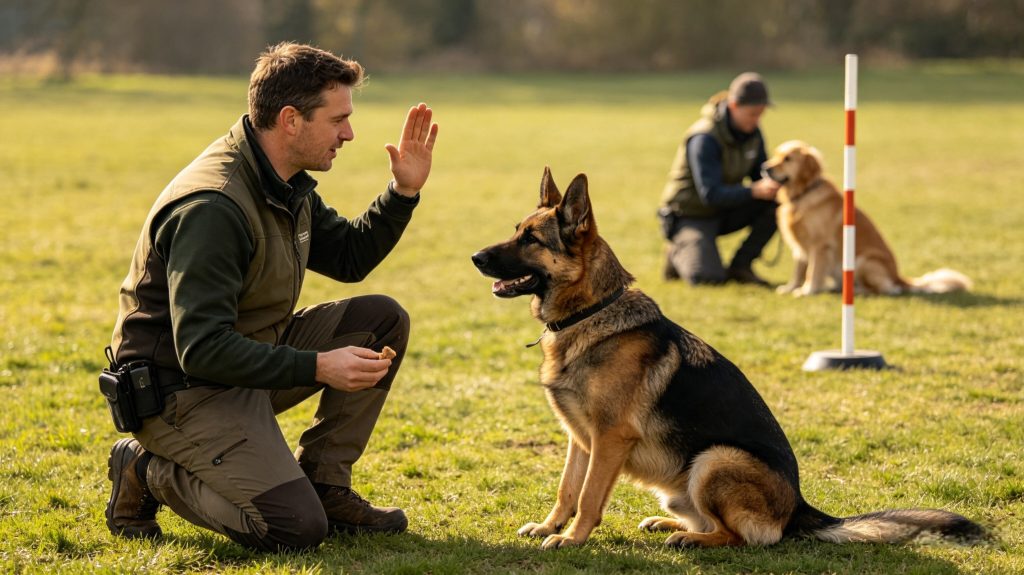
Yes. Simple training can give your rescue dog predictable ways to communicate with you and earn rewards.
Start with easy behaviours such as responding to its name, looking at you, coming towards you or settling.
Keep training sessions short and finish after successful repetitions.
As your dog’s confidence improves, gradually introduce distractions and more difficult environments.
How Do I Know If My Rescue Dog Is Becoming More Confident?
Look for small changes rather than expecting a sudden transformation.
Your dog may:
- Explore more readily
- Recover faster after becoming worried
- Accept food in situations it previously found difficult
- Remain calm for longer
- Show more interest in its surroundings
- Respond to familiar cues in new environments
- Become more comfortable around people or dogs
- Settle more easily
- Make choices instead of constantly trying to escape
Progress is not always completely consistent. A difficult day does not mean that your dog’s training has failed.
What Should I Avoid When Building Confidence?
Avoid:
- Forcing interaction
- Punishing fearful behaviour
- Flooding your dog with difficult experiences
- Moving through training too quickly
- Expecting immediate confidence
- Allowing unfamiliar people to overwhelm your dog
- Using food to lure your dog towards something frightening
- Giving your dog more freedom than it can safely manage
- Continuing when your dog is clearly overwhelmed
Confidence comes from successful experiences, not from forcing a dog to tolerate situations it fears.
How Long Does It Take to Build Confidence in a Rescue Dog?
There is no fixed timeframe.
Some dogs become noticeably more confident within weeks, while others need months of consistent training and careful management.
Measure progress by your dog’s ability to cope rather than by how quickly it becomes outgoing.
A dog that previously could not cope with a situation but can now remain calm at a greater distance is making genuine progress.
When Should I Get Professional Help?
Seek professional help if your rescue dog regularly panics, attempts to escape, cannot cope with normal daily situations, shows aggression through fear, or remains severely anxious despite careful training.
If your dog’s behaviour changes suddenly, speak to your vet because pain or illness can sometimes contribute to changes in confidence or behaviour.
Conclusion
Building confidence in a rescue dog requires time, patience and controlled positive experiences. Give your dog a safe routine, start with manageable situations, reward calm behaviour and gradually increase difficulty as confidence develops.
Do not measure success by how quickly your dog approaches something unfamiliar. Measure it by whether your dog is becoming calmer, more curious and better able to cope with the world around it.