How Do Food Drive and Prey Drive Change the Way You Train a Reactive Dog?
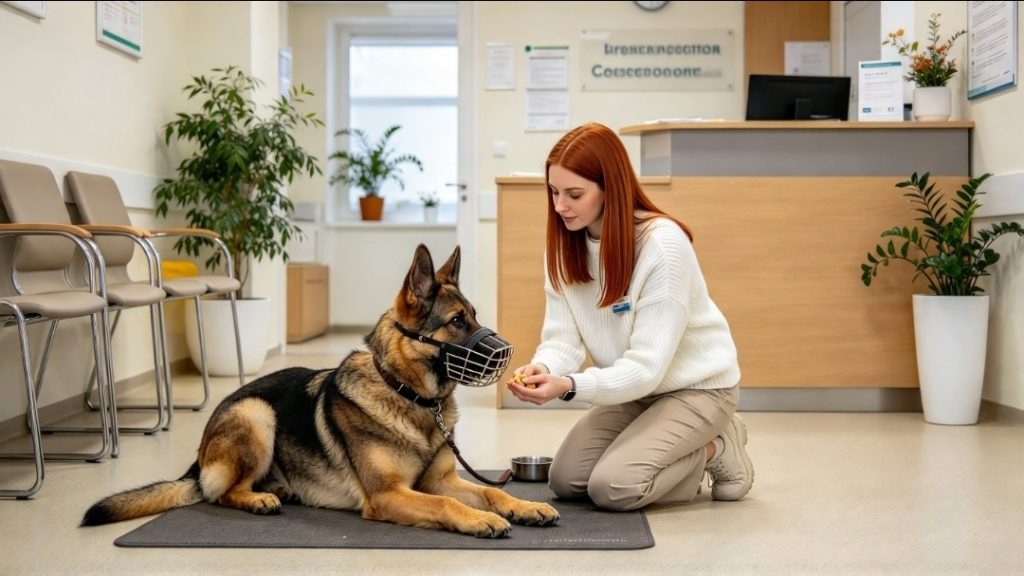
How do food drive and prey drive change the way you train a reactive dog? They can change the entire training strategy because dogs are motivated by different things. One reactive dog may work strongly for food but have little interest in toys, while another may ignore food around a trigger but become highly motivated by movement, chasing or a toy. Some dogs are strongly motivated by both, while others have relatively low motivation for either. Understanding this motivational profile before choosing reinforcement helps you select rewards that are actually useful, manage arousal appropriately and avoid using a reward simply because it is commonly recommended.
RECOMMENDED PRODUCTS
Why Should I Identify My Dog’s Motivational Profile Before Choosing Reinforcement?
Before choosing a reward, you need to understand what the individual dog actually finds reinforcing.
A dog accepting a piece of food does not automatically have high food drive. A dog carrying a toy does not automatically have high prey drive. The important question is how strongly the dog is motivated by that resource and how that motivation changes in different environments and around different triggers.
Food may be highly valuable at home but much less valuable when the dog sees another dog. A toy may be exciting in the garden but completely irrelevant when the dog is already highly aroused by a trigger.
This means reinforcement should not be selected simply because it is considered a standard training tool. It should be selected according to the individual dog, the environment, the trigger, the level of arousal and the behaviour you are trying to reinforce.
How Does High Food Drive and Low Prey Drive Affect Training?
A dog with high food drive and low prey drive may find food extremely motivating while showing little interest in toys, chasing games or tugging.
This can make food a very useful reinforcement option.
The advantage is that food can often be delivered quickly and precisely. It can be used to reinforce looking back at the handler, changing direction, disengaging from a trigger, maintaining position or responding to a cue.
However, high food drive does not automatically make training easy.
If the food is extremely valuable, it may increase arousal rather than simply helping the dog remain calm and focused. The handler therefore needs to consider the value of the food, the timing of delivery and the dog’s response to the reward.
There is also an important safety consideration. A dog can have high food drive while also showing possessive or aggressive behaviour around food. In that situation, the fact that food is highly motivating does not mean it is automatically safe to use casually.
If food guarding or aggression is present, the behaviour needs to be assessed properly before developing a training strategy around food.
RECOMMENDED PRODUCTS
How Does Low Food Drive and High Prey Drive Affect Training?
A dog with low food drive and high prey drive may show very little interest in food during training but become highly motivated by movement, chasing, toys or interactive play.
This creates a very different training picture.
Telling the owner to use high-value treats may have little effect if food simply does not compete with the dog’s strongest motivation in that environment.
A suitable toy or movement-based reward may be considerably more reinforcing. However, this does not mean the handler should simply produce a toy whenever the dog reacts.
Highly stimulating movement can increase arousal. For some dogs, the toy itself can become more exciting than the behaviour the handler is trying to reinforce.
The handler therefore needs to understand how the dog responds to the reward and whether the reward is helping the dog remain capable of learning or pushing the dog further into high arousal.
Toy possession or aggression also changes the situation. A dog with high prey drive may be extremely motivated by a toy while simultaneously showing possessive or aggressive behaviour around it. In that situation, the toy cannot automatically be treated as a safe training tool.
How Does High Food Drive and High Prey Drive Affect Training?
A dog with high food drive and high prey drive has more than one potentially powerful source of reinforcement.
This can provide greater flexibility because the handler may have different reinforcement options depending on the environment and training objective.
Food may be useful for precise, calm behaviours, while movement or a toy may be useful for behaviours where increased activity is appropriate.
However, having two strong motivational systems does not necessarily make the dog easier to train.
Both rewards can influence arousal. The handler needs to understand when food helps the dog concentrate and when it increases excitement, and when toy or movement-based reinforcement helps engagement and when it pushes arousal too high.
The dog may also value one reward more strongly in one environment and a different reward somewhere else.
For example, food may be highly effective in a quiet environment but lose value around a difficult trigger, while a toy may remain highly motivating. In another situation, the opposite may occur.
The handler therefore needs to assess the dog’s response rather than assuming that one reward will always be the best option.
RECOMMENDED PRODUCTS
How Does Low Food Drive and Low Prey Drive Affect Training?
A dog with low food drive and low prey drive presents a different challenge.
If neither food nor toys provide strong reinforcement, the handler cannot simply rely on the standard recommendation of using treats or a favourite toy.
This makes identifying other forms of reinforcement particularly important.
Access to space, movement, environmental exploration, the opportunity to continue walking, access to a preferred area or other meaningful consequences may become more relevant depending on the individual dog and situation.
The absence of strong food or toy motivation does not mean the dog cannot learn. It means the trainer has to identify what actually matters to that dog.
This is particularly important when working around triggers because the dog’s motivational priorities can change as arousal increases.
A reward that appears useful in a calm environment may have little value once the dog is close to a trigger.
Can the Same Reactive Behaviour Require Different Training Strategies?
Yes.
Two dogs can display almost identical reactive behaviour while requiring very different reinforcement strategies.
For example, two dogs may bark and lunge when they see another dog.
The first dog may be highly food motivated and have little interest in toys. Food may therefore be the most practical reinforcement, provided it can be used safely and does not create excessive arousal or conflict.
The second dog may ignore food but become highly motivated by movement and a toy. A suitable prey-based reward may therefore be more effective, provided the toy can be used safely and without increasing arousal beyond a level where the dog can learn.
The behaviour may look similar from the outside, but the motivational profile is different.
That difference matters.
Training should be based on the individual dog rather than simply the behaviour that the owner can see.
Why Isn’t “Use High-Value Treats” Enough?
Telling every owner to use high-value treats is inadequate because not every dog is strongly motivated by food.
Even a food-motivated dog may not value food equally in every environment.
A reactive dog may happily eat chicken in the kitchen but ignore it when another dog is approaching. Increasing the food value further may not solve the underlying problem if the dog is already too aroused to eat or if food has become associated with guarding or conflict.
The question should therefore not simply be:
“What is the highest-value treat I can find?”
The better question is:
“What does this individual dog find reinforcing in this situation, and can I use it safely and effectively?”
Why Isn’t “Use Their Favourite Toy” Enough?
The same problem applies to toys.
A dog may love a toy at home but show no interest in it when faced with a trigger.
Another dog may become extremely excited by the toy, making it difficult to use without increasing arousal.
A dog may also show possessive or aggressive behaviour around a highly valued toy.
Therefore, simply identifying a favourite toy does not tell you whether it is appropriate reinforcement for reactive-dog training.
The trainer needs to consider the dog’s motivation, arousal, behaviour around the reward and ability to disengage from it.
RECOMMENDED PRODUCTS
Why Does Reinforcement Need to Match the Individual Dog?
Reinforcement is not a universal formula.
The same food, toy or activity can have completely different value to different dogs.
The dog’s motivational profile can also change according to:
- the environment
- the trigger
- distance from the trigger
- current arousal
- previous experience
- competing distractions
- the value of the available reward
- whether the dog feels safe
- whether the reward itself creates additional arousal
This is why observation is essential.
The handler needs to identify what the dog is motivated by before deciding how that motivation should be used.
What Is the Difference Between Motivation and Safety?
A reward can be highly motivating without being automatically safe.
This distinction is particularly important when working with dogs that show possessive or aggressive behaviour around food or toys.
A dog may be extremely motivated by food but guard it.
A dog may be intensely motivated by a toy but become aggressive when someone attempts to take it away.
The fact that something has high reinforcement value does not remove the behavioural risk associated with it.
Where guarding, possession or aggression is present, the training strategy needs to account for safety and may require assessment and guidance from a professional dog trainer.
Why Is This Important When Training a Reactive Dog?
Reactive-dog training is not simply about finding a reward and presenting it whenever the dog sees a trigger.
The handler needs to understand:
What motivates this dog?
How valuable is that motivation in this environment?
Does the reward help the dog remain capable of learning?
Does the reward increase arousal?
Can the reward be delivered safely?
Can the dog disengage from the reward and return attention to the handler?
These questions help determine whether food, a toy, movement, environmental access or another form of reinforcement is appropriate.
What Is the Main Lesson About Food Drive and Prey Drive?
Food drive and prey drive can fundamentally change how a reactive dog should be trained.
A high-food-drive, low-prey-drive dog may respond strongly to food while showing little interest in toys.
A low-food-drive, high-prey-drive dog may require a completely different reinforcement strategy.
A high-food-drive, high-prey-drive dog may provide several reinforcement options but may also require careful management of arousal.
A low-food-drive, low-prey-drive dog may require the trainer to identify less obvious forms of reinforcement.
The important point is that reactive behaviour does not automatically tell you what will motivate the dog.
Two dogs can bark, lunge, stare or growl at the same trigger and still require completely different training strategies.
This is why simply telling every owner to “use high-value treats” or “use a favourite toy” is inadequate.
Before choosing reinforcement, understand the individual dog.
Motivation → Reinforcement → Arousal → Behaviour → Safety
Once the dog’s motivational profile is understood, reinforcement can be selected more intelligently and the training strategy can be built around what the individual dog can actually work for.
GPK9 — The Five Golden Rules
The GPK9 Five Golden Rules provide the foundation of the GPK9 Professional Training System. They give new dog owners, new dog handlers, experienced handlers and professional dog trainers a clear structure for developing the dog and the handler together.
The GPK9 Five Golden Rules cover five essential areas of development: Home & Social, Obedience, Prey Drive, Toilet and Social Walking. Each area has its own purpose, but they are designed to work together as one complete training system.
The GPK9 approach is based on CATEGORY → STATUS → DRIVE → CONTROL and the handler’s ability to OBSERVE → INTERPRET → DECIDE → COMMUNICATE → OBSERVE RESPONSE → REASSESS. This gives the handler a consistent process for understanding what the dog is doing, why the behaviour is occurring, what level of control is appropriate and how to communicate effectively.
The purpose of the GPK9 Five Golden Rules is not simply to teach a collection of individual exercises. They are designed to develop the dog’s behaviour, motivation, communication, control and reliability while teaching the handler how to make better decisions.
Golden Rule One — Home & Social
Golden Rule One — Home & Social establishes the foundation for everyday life with the dog. It focuses on communication, boundaries, calm behaviour, household routines and appropriate behaviour around people, animals and normal activity.
The purpose of Golden Rule One — Home & Social is to help the handler understand the dog’s behaviour and recognise changes in arousal before they become larger problems. The handler learns to observe, assess and communicate rather than simply reacting after unwanted behaviour has already occurred.
Golden Rule One — Home & Social provides the foundation from which the handler can develop a calmer, more predictable and better-communicating dog.
Golden Rule Two — Obedience
Golden Rule Two — Obedience develops the dog’s ability to understand and respond to the handler’s communication.
The focus of Golden Rule Two — Obedience is not simply teaching commands. It is about developing understanding, reliability, timing, reward, release and control so the dog learns what the handler is communicating.
Through Golden Rule Two — Obedience, the handler learns to progress training appropriately, gradually increasing the dog’s freedom and responsibility as understanding and reliability improve.
Golden Rule Three — Prey Drive
Golden Rule Three — Prey Drive focuses on understanding and developing the dog’s natural motivation to chase, pursue, engage and work with an appropriate toy or prey-based reward.
The purpose of Golden Rule Three — Prey Drive is not simply to increase drive. The handler must learn how to recognise the dog’s level of motivation, select an appropriate reward and use timing, communication and control to channel that motivation productively.
Golden Rule Three — Prey Drive teaches the handler that motivation can become a powerful training tool when it is developed and controlled correctly.
Golden Rule Four — Toilet
Golden Rule Four — Toilet establishes reliable toilet habits through consistency, observation, timing, supervision and appropriate reinforcement.
The handler learns through Golden Rule Four — Toilet to recognise when the dog is likely to need the toilet, provide the correct opportunity and reinforce the desired behaviour.
The objective of Golden Rule Four — Toilet is to establish a predictable routine that helps the dog understand where and when toileting is appropriate while reducing opportunities for mistakes.
Golden Rule Five — Social Walking
Golden Rule Five — Social Walking develops the dog’s ability to walk calmly and appropriately in the real world while remaining connected to the handler.
The focus of Golden Rule Five — Social Walking is the relationship between the handler, the dog, the environment, distractions, distance and available control.
Through Golden Rule Five — Social Walking, the handler learns to observe body language, identify potential triggers, assess distance and recognise changes in drive or arousal before behaviour escalates.
The objective of Golden Rule Five — Social Walking is not simply to make the dog walk beside the handler. It is to develop a dog that can experience the outside world while remaining connected to the handler and capable of responding to clear communication.
How the Five Golden Rules Work Together
The GPK9 Five Golden Rules are designed to work together rather than being treated as five completely separate subjects.
Golden Rule One — Home & Social establishes the foundations for everyday behaviour and communication.
Golden Rule Two — Obedience develops understanding, responsiveness and control.
Golden Rule Three — Prey Drive develops motivation and teaches the handler how to channel natural drive appropriately.
Golden Rule Four — Toilet establishes essential household routine and reliability.
Golden Rule Five — Social Walking takes the communication and control developed through the other areas into the outside environment.
Together, the GPK9 Five Golden Rules help the handler develop a complete understanding of the dog rather than treating individual behaviours as isolated problems.
The overall objective of the GPK9 Five Golden Rules is to train the human, train the dog and build the partnership through clear observation, communication, appropriate control and progressive development.
A successful GPK9 handler learns to ask:
What is my dog doing?
Why is my dog doing it?
What is my dog communicating?
What level of control is appropriate?
How should I communicate with my dog?
What response did I get?
What should I do next?
This process forms the foundation of the GPK9 Professional Training System and allows the GPK9 Five Golden Rules to be applied consistently from the first stages of dog ownership through to advanced dog handling and professional training.