How to Walk Your Dog Calmly Through the Park
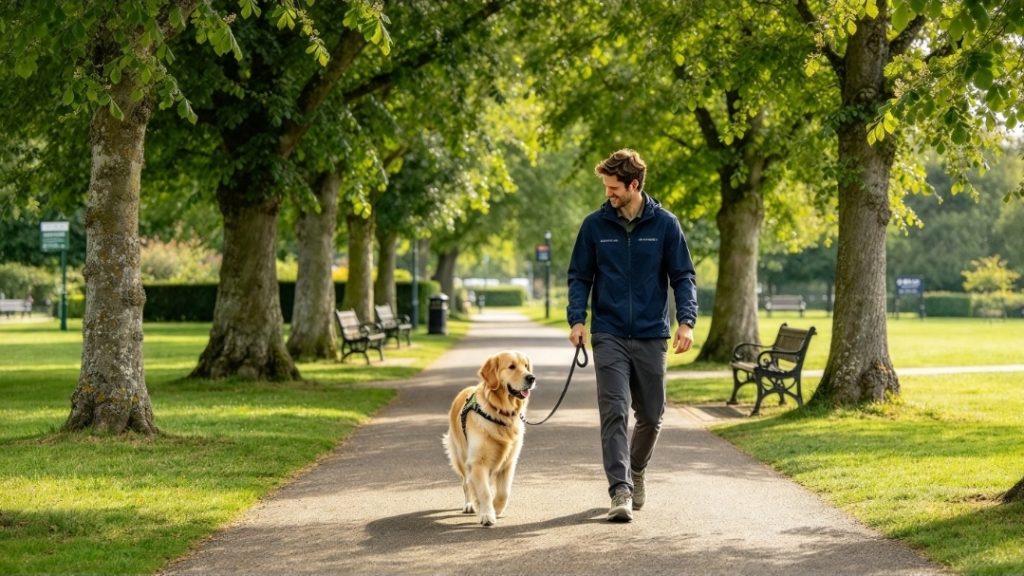
Walking your dog calmly through the park means helping your dog explore its surroundings while remaining manageable around other dogs, people, wildlife, smells and unexpected movement. The aim is not to stop your dog noticing everything. It is to help your dog experience the environment without every distraction turning into pulling, barking, chasing or an unwanted interaction.
A calm park walk starts with observation, suitable distance, consistent handling and realistic expectations. By recognising when your dog is comfortable and when the environment is becoming too difficult, you can make better decisions throughout the walk.
RECOMMENDED PRODUCTS

Why Dogs Become Overexcited in the Park
A park can contain more distractions than a familiar residential street. Dogs may encounter unfamiliar animals, running children, cyclists, birds, new smells and sudden changes in movement.
Some dogs pull towards other dogs because they want to approach. Others become excited by running wildlife or moving objects. Some stop frequently to investigate scents, while others become worried when unfamiliar people or dogs get too close.
These behaviours can have different causes, so it is important to observe your individual dog rather than assume every problem has the same explanation.
Common difficulties include:
- Pulling towards other dogs or people.
- Stopping repeatedly to investigate smells.
- Becoming distracted by birds, squirrels or other wildlife.
- Barking or lunging when another dog approaches.
- Jumping up when people try to interact.
- Struggling to settle after an exciting encounter.
- Changing direction or rushing ahead whenever something catches the dog’s attention.
The objective is to help your dog become more comfortable with everyday distractions while maintaining behaviour you can safely manage.
Prepare Before Entering the Park
A successful walk begins before you reach the busiest part of the park.
Choose an entrance and route that suit your dog’s current ability. If your dog becomes overwhelmed around unfamiliar dogs, begin in a quieter area rather than immediately entering a crowded space.
Use secure, suitable walking equipment that allows you to manage your dog safely. Check that the lead, harness or collar fits correctly and that nothing is damaged.
Before entering a busy area, observe your dog’s behaviour. If your dog is already highly excited, allow time for a calmer start rather than immediately moving towards the strongest distractions.
Choose an environment in which your dog has a realistic opportunity to succeed. A quieter route is not a setback; it is a practical way to build better walking habits.
How to Walk Through the Park Without Constantly Correcting Your Dog
A park walk should not become a continuous obedience session. Your dog needs opportunities to sniff, investigate and experience the surroundings, while you maintain safe, manageable behaviour.
The key is to distinguish between normal exploration and behaviour that makes the walk difficult to control.
Allow Sniffing Without Allowing Pulling
Sniffing is a normal way for dogs to gather information about their environment. You do not need to prevent every stop or insist that your dog walks beside you for the entire outing.
Instead, establish a manageable walking rhythm. Allow your dog to investigate suitable areas, then encourage movement when it is time to continue.
If your dog repeatedly pulls towards a particular smell, avoid allowing the pulling itself to determine when and where you move. Wait for an opportunity to continue with a loose lead, then allow exploration when it is safe and appropriate.
Avoid Giving Constant Commands
Repeatedly calling your dog, asking for attention or correcting every change in direction can make the walk unnecessarily demanding.
Use communication when it serves a purpose, such as changing direction, passing a distraction or preventing an unsafe approach. At other times, allow your dog to walk and explore while you monitor what is happening.
The aim is manageable independence, not constant obedience.
Keep Your Walking Pace Consistent
Sudden changes in speed and direction can make the walk less predictable. Walk at a pace that suits both you and your dog, adjusting when the path becomes crowded or an obstacle requires you to slow down.
If your dog rushes ahead, calmly change your approach before the lead becomes difficult to manage. Reward your dog for returning to a comfortable walking position and continuing with you.
If pulling is a recurring problem, understanding why your dog pulls on the lead can help you identify what needs to change.
Managing Other Dogs, People and Wildlife
Parks offer opportunities to experience different distractions, but your dog does not need to approach every one of them.
Passing Other Dogs
Observe approaching dogs early and consider the space available. If the path is narrow or your dog is becoming highly focused, move to a wider area or change direction where safe.
Do not assume that two dogs should greet simply because both are on leads. Some dogs prefer distance, and even apparently friendly dogs may not welcome close contact.
Reward calm behaviour when your dog can manage the encounter. If your dog starts barking, lunging or struggling to disengage, increase the distance rather than forcing the pass.
Walking Around People and Children
Keep your dog under control when passing people, especially children who may run or move unpredictably.
Prevent jumping, rushing towards strangers or unwanted contact. If someone wants to stroke your dog, decide whether the interaction is appropriate and give your dog the opportunity to move away.
A dog can become comfortable around people without greeting everyone.
Responding to Birds and Other Wildlife
Birds, squirrels and other moving animals can trigger excitement or chasing behaviour.
Keep your dog on a lead wherever required and whenever necessary for safety. Do not allow your dog to chase wildlife or approach animals that may be injured, nesting or otherwise vulnerable.
If your dog becomes fixated on movement, create distance and redirect the walk towards a manageable route. Avoid moving closer to test whether your dog can resist the distraction.
Choosing a Suitable Route
A wide path with good visibility usually gives you more opportunities to manage encounters than a narrow path with blind corners.
Consider:
- How busy the park is.
- Whether dogs are likely to approach closely.
- The availability of wider paths and alternative routes.
- Whether cyclists and runners share the walking area.
- Whether wildlife, water or other hazards are present.
- Your dog’s current ability to cope with distractions.
If the environment becomes too difficult, choose a quieter route or finish the walk. You do not have to complete a particular circuit if conditions are unsuitable.
What to Do When Your Dog Becomes Overexcited
A dog that becomes increasingly excited may start pulling, scanning constantly, barking or struggling to respond to familiar communication.
Continuing through the busiest part of the park may make the situation harder to manage.
Instead:
- Recognise the change. Notice increasing lead tension, intense staring, frantic movement or difficulty disengaging.
- Create distance. Move away from the distraction or choose a quieter path.
- Reduce demands. Avoid repeatedly issuing commands when your dog is struggling to cope.
- Allow recovery. Give your dog time and space in a safe area.
- Reassess. Continue only if your dog becomes manageable again. If not, leave the stimulating area or end the walk.
Do not force your dog to remain close to something that is causing fear or distress.
RECOMMENDED PRODUCTS
What If Your Dog Barks or Lunges in the Park?
Barking and lunging can be associated with fear, frustration, excitement or other causes. The behaviour needs to be understood in context rather than automatically labelled as aggression.
Prioritise safety by creating distance and preventing close contact. Avoid punishment, lead jerks or attempts to force your dog to approach the trigger.
Choose quieter routes and practise at distances where your dog can observe the environment without becoming overwhelmed.
If your dog has a history of biting, snapping or serious reactions, arrange an individual assessment with a suitably qualified canine behaviour professional. If the behaviour appears suddenly or changes significantly, consider veterinary advice to rule out pain or other health concerns.
Common Mistakes When Walking Through the Park
Expecting Your Dog to Behave the Same Everywhere
A dog that walks calmly on a quiet street may find a busy park much more challenging. Different environments require different levels of management.
Build difficulty gradually rather than expecting immediate reliability around every distraction.
Allowing the Dog to Control the Entire Walk
Giving your dog opportunities to explore is important, but allowing pulling, rushing or uncontrolled approaches to determine the route can make the walk unpredictable.
Maintain a clear direction while allowing appropriate freedom within safe limits.
Stopping at Every Distraction
Constantly stopping or changing direction whenever something appears can disrupt the walking rhythm. Instead, assess whether the distraction actually requires a change.
If your dog can remain calm and the route is safe, continue. If the situation is becoming difficult, adjust early.
Staying Too Long in a Difficult Environment
Longer walks are not automatically better. A dog that becomes increasingly overwhelmed may benefit more from a shorter, manageable outing than from remaining in a busy park.
Consider your dog’s age, health, fitness and individual needs when deciding how long to walk.
Assuming Every Dog Enjoys the Park
Some dogs enjoy busy public spaces, while others are more comfortable in quieter environments. A crowded park or off-lead dog area is not suitable for every dog.
Your dog can benefit from walking and exploring without needing to participate in group play or interact with unfamiliar dogs.
A Simple Plan for Calmer Park Walks
Use this routine to make each outing more predictable.
Before entering: Check the surroundings, choose a manageable route and make sure your walking equipment is secure.
At the start: Begin at a comfortable pace and give your dog time to settle into the environment.
During the walk: Allow appropriate sniffing and exploration while maintaining a manageable lead and monitoring your dog’s behaviour.
When distractions appear: Assess the situation early. Continue if your dog is coping, or create distance if the encounter becomes difficult.
After a challenging moment: Give your dog space to recover before deciding whether to continue.
As your dog improves: Gradually practise in busier areas, but only when the current level of difficulty is manageable.
Consistency matters more than trying to complete a long walk or expose your dog to as many distractions as possible.
RECOMMENDED PRODUCTS
How Long Does It Take to Walk Calmly Through a Park?
There is no fixed timeframe. Progress depends on your dog’s previous experiences, temperament, training history, physical condition and the difficulty of the environment.
Start with achievable outings and look for practical improvements. Your dog may begin pulling less, recover more quickly after seeing another dog or continue walking calmly when people pass.
Some dogs will need ongoing management around particular triggers. That does not mean training has failed. Choosing appropriate routes and maintaining a safe distance are responsible parts of handling your dog.
Final Thoughts
Walking your dog calmly through the park is about balancing exploration with safe, manageable behaviour. Your dog should have opportunities to sniff, notice movement and experience the environment without every distraction determining what happens next.
Observe your dog, plan ahead, reward calm behaviour and adjust the route when necessary. Avoid forcing greetings, demanding constant attention or continuing through situations your dog cannot comfortably manage.
A successful park walk is one in which both you and your dog can move through the environment safely, with enough freedom to enjoy the experience and enough structure to keep it manageable.