How to Leave the Park Calmly With Your Dog
Learning how to leave the park calmly with your dog helps make the end of a walk safer, easier and more predictable. Some dogs pull towards the exit, repeatedly turn back, become distracted by other dogs or struggle to settle after energetic play. Others become excited when they realise they are returning to the car.
The key is to prepare for the transition, reward calm movement and adjust your approach to suit your dog’s behaviour. Leaving the park should be a gradual change from exploring and playing to walking calmly with you, rather than a rushed attempt to end the outing.
RECOMMENDED PRODUCTS

Why Dogs Struggle to Leave the Park
A park provides many things dogs enjoy, including interesting smells, open spaces, movement, other dogs and opportunities to explore. When the walk ends, the dog must move away from these activities and follow the handler towards a different environment.
This change can be difficult for several reasons.
- Excitement: Your dog may still want to run, play or investigate.
- Frustration: Your dog may resist leaving an area where something enjoyable is happening.
- Distractions: Other dogs, people, wildlife and unfamiliar sounds may compete for your dog’s attention.
- Anticipation: Your dog may recognise the route to the car or home and become increasingly excited.
- Tiredness or discomfort: Your dog may slow down, stop or appear reluctant to continue.
These behaviours should not automatically be treated as disobedience. Consider what your dog is experiencing before deciding how to respond.
Prepare Before You Leave the Park
A successful departure begins before you reach the exit.
If your dog has been running or playing energetically, allow time for a calmer transition. You do not need to wait until your dog is completely inactive, but you should be able to manage the lead and communicate without constantly struggling for attention.
Before leaving, consider the following:
- Check that your dog’s lead, harness or collar is fitted securely.
- Identify a safe route away from busy areas and other dogs.
- Reduce energetic play before beginning the final part of the walk.
- Have suitable rewards available if you are practising calm walking.
- Observe whether your dog is tired, distracted, excited or uncomfortable.
Avoid suddenly changing pace and expecting your dog to follow immediately. A predictable transition gives your dog a better opportunity to respond successfully.
How to Teach Your Dog to Leave the Park Calmly
1. Practise Walking Towards the Exit
Start practising in a quiet part of the park, away from crowded gates and busy paths.
Choose a simple cue, such as “this way”, to indicate that you are changing direction. Use it consistently and begin walking at a pace your dog can manage.
Reward your dog for following you, keeping the lead manageable and responding to your movement.
Initially, practise walking towards the exit for a short distance before turning away or pausing. This allows you to work on the behaviour without immediately placing your dog in the busiest part of the environment.
As your dog becomes more comfortable, gradually increase the distance towards the exit.
2. Reward Calm Lead Walking
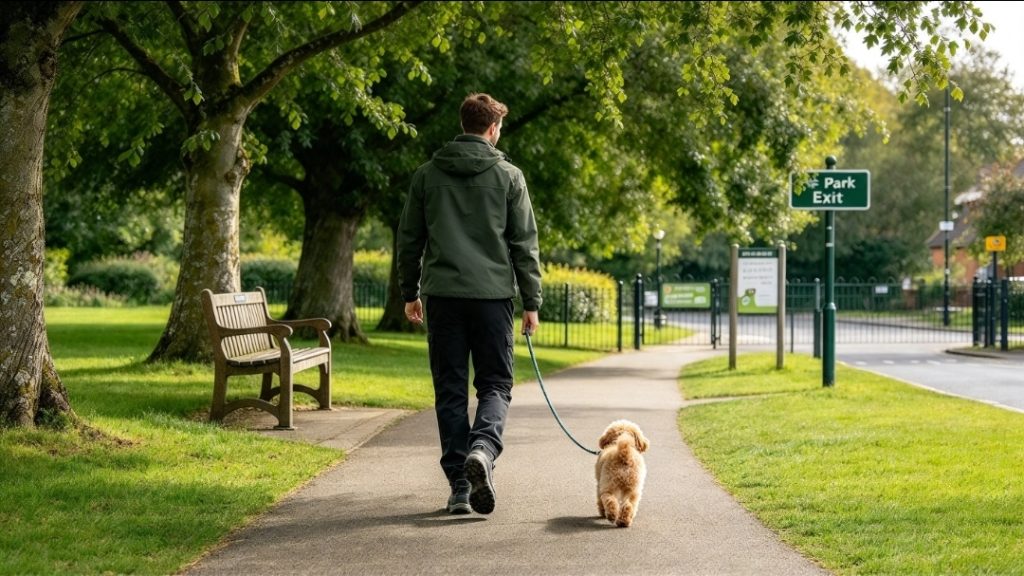
A loose lead provides a useful indication that your dog can move with you without continually pulling towards distractions.
Reward your dog when they walk comfortably beside you or within the amount of space permitted by your lead. Use small food rewards, praise or another suitable reward that your dog values.
If your dog pulls ahead, pause in a safe place and wait for an opportunity to regain attention. Once the lead is manageable again, continue walking.
Avoid repeatedly pulling your dog backwards or turning the exit into a battle. The aim is to teach your dog that calm movement allows the walk to continue.
Be consistent about lead tension. If pulling sometimes results in faster access to the exit, another dog or the car, your dog may continue using that behaviour to reach what they want.
3. Make the Transition Gradual
Do not wait until the walk is over before practising the skills needed to leave.
During the walk, occasionally change direction, pause briefly or move away from an interesting area. Reward your dog for responding calmly.
These short exercises help your dog become familiar with changes in direction and activity.
When it is time to leave, the transition will be less abrupt because your dog has already practised moving on from interesting things.
Keep the exercises brief and appropriate for your dog’s ability. If your dog becomes increasingly excited or frustrated, make the task easier rather than adding more demands.
4. Manage Distractions Near the Exit
Park entrances can be particularly challenging because several distractions may occur in a small area.
You might encounter dogs entering or leaving, people gathering near gates, cyclists passing or vehicles moving nearby.
Before approaching a busy exit, observe what is happening. If another dog is approaching closely, wait in a safe area or choose a route that provides more space.
Do not force your dog to pass close to another dog simply to complete the walk. If your dog becomes fixated, starts barking or pulls strongly, increase the distance where possible.
Reward calm observation and the ability to turn attention back towards you.
The objective is not to prevent your dog from noticing the environment. It is to help your dog remain manageable while moving through it.
5. Use Clear, Consistent Communication
Choose a small number of familiar cues and use them consistently.
For example, a directional cue can indicate that you are moving away from an area, while a previously trained recall can help your dog return to you when appropriate.
Practise these skills in easier environments before relying on them around busy park exits.
Avoid repeatedly calling your dog when they are unable to respond. If your dog is too distracted, increase the distance from the distraction and make the situation easier.
If your dog is on a lead, continue managing the lead safely rather than relying on a cue alone.
What to Do If Your Dog Keeps Turning Back
Some dogs repeatedly turn towards the park, stop walking or pull back towards an area where they were playing.
This may reflect frustration about ending an enjoyable activity, interest in a smell, anticipation of another dog or simple reluctance to move on.
Instead of immediately pulling your dog forwards, pause and assess the situation.
If it is safe, give your dog a moment to disengage from the distraction. Use your familiar directional cue and reward them when they turn and move with you.
If your dog repeatedly struggles at the same point, practise at a greater distance from that location before gradually working closer.
Avoid turning back towards the interesting area every time your dog pulls in that direction. Otherwise, pulling may become an effective way of extending access to the activity.
If your dog appears frightened, physically uncomfortable or unusually reluctant to walk, investigate the cause rather than assuming they are simply refusing to leave.
What If Your Dog Becomes Overexcited?
A dog that has been chasing a ball, playing with other dogs or running freely may find it difficult to transition immediately to calm lead walking.
In this situation, reduce stimulation before beginning the departure.
Move away from the game or other dogs, allow your dog to settle sufficiently to respond to you and begin with a short, manageable walk.
Avoid starting another energetic game when your dog is already struggling to calm down.
If your dog becomes increasingly difficult to manage, choose a quieter route or wait for a safer opportunity to leave. Do not continue pushing through a crowded area if you cannot maintain appropriate control.
Over time, practise ending play before your dog becomes excessively excited. This can make the final part of the walk easier to manage.
Common Mistakes When Leaving the Park
Rushing Towards the Exit
Moving quickly can increase excitement, particularly if your dog has learned that the exit leads directly to the car or another enjoyable activity. Begin the transition early enough to avoid rushing.
Repeating Commands Without a Plan
Repeatedly calling or instructing your dog may have little effect if the environment is too distracting. Reduce the difficulty and practise where your dog can respond successfully.
Allowing Pulling at the End of the Walk
The final few minutes still require safe lead handling. Do not abandon your usual walking expectations because you are ready to go home.
Forcing Your Dog to Move
Pulling a reluctant dog towards the exit may increase tension and can overlook tiredness, pain or fear. Assess the reason for the behaviour and adjust your approach.
Ending Energetic Play Too Abruptly
Immediately moving from intense activity to a busy exit can be difficult for some dogs. Build in a calmer transition and practise moving away from play throughout the walk.
Making Every Departure a Training Challenge
If the exit is consistently too busy or difficult, begin training in quieter conditions. Progress gradually rather than repeatedly exposing your dog to a situation they cannot yet manage comfortably.
A Simple Training Routine for Leaving the Park
Use this sequence to practise a calmer departure.
- Observe: Check your dog’s behaviour and assess the surroundings.
- Prepare: Choose a safe route and ensure your equipment is secure.
- Reduce stimulation: Finish energetic play and move away from distractions where necessary.
- Begin walking: Use a familiar directional cue and move at a manageable pace.
- Reward: Reinforce calm movement, manageable lead tension and attention towards you.
- Adjust: If your dog struggles, pause safely, increase distance or return to an easier stage.
- Leave safely: Continue through the exit and any surrounding public areas without rushing.
Repeat this routine during ordinary walks. Consistency helps your dog understand what happens when the outing comes to an end.
RECOMMENDED PRODUCTS
How Long Does It Take to Improve?
The time required depends on your dog’s temperament, previous experiences, training history and the difficulty of the environment.
A dog that already walks comfortably on a lead may learn the departure routine relatively quickly. A dog that has developed a strong habit of pulling, repeatedly turning back or becoming overexcited may need more gradual practice.
Use short sessions and progress according to your dog’s response. Practise in quieter areas before introducing busy gates, groups of dogs or other challenging distractions.
Look for steady improvements, such as less lead tension, quicker responses to familiar cues and an easier transition away from play. Progress may vary from one outing to another.
When to Seek Professional Help
If your dog repeatedly becomes difficult to manage, reacts aggressively, shows intense fear or creates a safety risk near the park exit, seek help from a suitably qualified, reward-based dog trainer or behaviour professional.
Until you can manage the situation safely, avoid crowded exits and maintain secure lead control. If the behaviour changes suddenly or your dog appears to be in pain, consult a veterinary professional.
Professional guidance can help identify the underlying cause and establish a training plan suited to your dog.
Final Thoughts
Learning how to leave the park calmly with your dog is about teaching a predictable transition from outdoor activity to the next part of the day.
Prepare before reaching the exit, reward calm lead walking, manage distractions and avoid rushing or forcing your dog. If your dog struggles, consider whether excitement, frustration, tiredness or uncertainty is affecting their behaviour.
The aim is to finish the walk as safely and calmly as possible, with your dog responding to your communication rather than being driven by the excitement of the environment.