How to Walk Your Dog Calmly Around People
To walk your dog calmly around people, teach your dog to remain comfortable when pedestrians approach, pass by or move unpredictably. Reward calm walking, maintain appropriate distance and avoid making every encounter an opportunity to greet someone. Your dog should be able to notice people without automatically pulling towards them, jumping up or becoming overwhelmed.
Some dogs pull because they want attention. Others become excited by movement, feel uncertain around unfamiliar people or struggle when someone enters their personal space. Understanding the reason behind your dog’s behaviour helps you choose an appropriate training approach.
RECOMMENDED PRODUCTS

Why Do Dogs Become Excited Around People?
People are a normal part of everyday walking, but different dogs respond to them in different ways.
Common behaviours include:
- Pulling towards people to seek attention.
- Jumping up when someone approaches.
- Whining or barking when prevented from greeting someone.
- Following runners or cyclists with intense interest.
- Becoming distracted when children move or play nearby.
- Moving away, freezing or becoming tense around unfamiliar people.
- Barking or lunging when someone gets too close.
These behaviours can have different causes. A dog that pulls towards a person may be excited to greet them, while a dog that barks and lunges may be frightened, frustrated or attempting to create distance.
Do not assume every reaction means the dog wants attention. Observe the dog’s overall body language and the circumstances before deciding how to respond.
RECOMMENDED PRODUCTS
Teach Your Dog That People Do Not Always Mean Greetings
One of the most useful walking skills is learning to pass people without interacting with them.
If your dog regularly pulls towards strangers and receives attention when it reaches them, pulling may become an established habit. The dog learns that moving towards people can produce the interaction it wants.
Instead, establish a consistent routine in which your dog can walk calmly past people without greeting them.
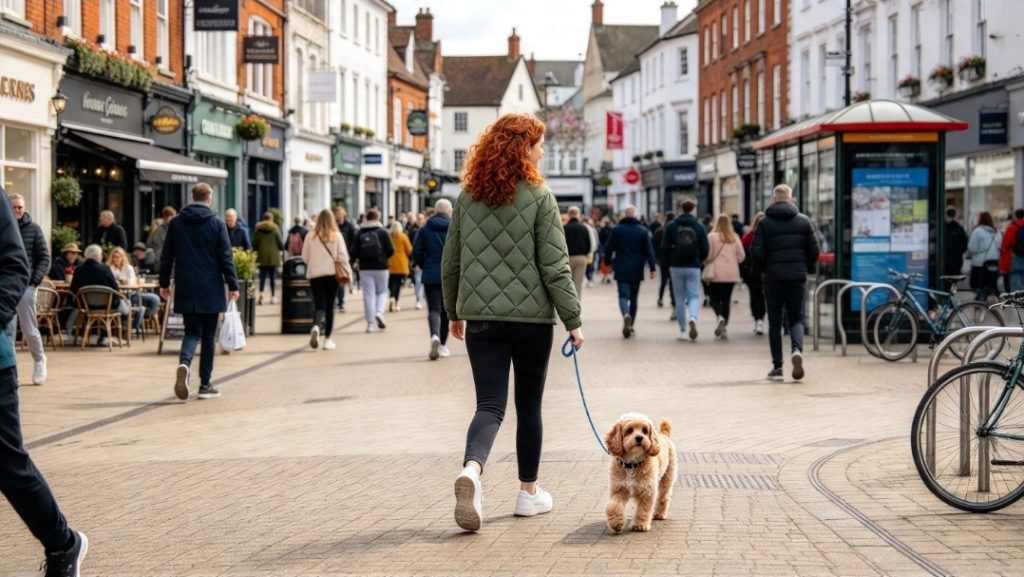
Start in a quiet environment. Reward your dog for remaining beside you on a loose lead, responding to your direction and continuing the walk when people are nearby.
You do not need to prevent every glance towards another person. Your dog can notice its surroundings while remaining manageable.
Start Training in a Quiet Environment
Do not begin by expecting your dog to walk calmly through a crowded park or busy town centre.
Choose an environment where people are visible but there is enough space to avoid close encounters. A quiet pavement or spacious park path may be suitable.
Practise the following sequence:
- Begin walking with your dog on a suitable lead.
- Allow your dog to notice a person at a comfortable distance.
- Reward calm behaviour and continued engagement with you.
- Continue walking if your dog remains comfortable.
- Increase the distance if your dog becomes tense, excited or difficult to manage.
- Repeat the exercise before gradually introducing more challenging surroundings.
Keep early sessions short. Your aim is to build a reliable response through manageable experiences rather than expose your dog to as many people as possible.
Reward Calm Walking Around People
Food rewards, praise and other suitable rewards can help reinforce the behaviour you want to encourage.
Reward your dog when it:
- Walks beside you with a loose lead.
- Notices a person without pulling towards them.
- Responds to its name.
- Follows a change of direction.
- Passes someone without jumping up.
- Returns its attention to the walk after a distraction.
Deliver the reward promptly so your dog can associate it with the behaviour you want.
If your dog becomes so excited or worried that it cannot respond, do not keep repeating commands or offering rewards in the same difficult situation. Increase the distance and make the exercise easier.
Over time, practise in different locations and gradually vary the distance, movement and number of people around you.
What Should You Do When Someone Approaches Your Dog?
Not everyone understands how to approach a dog appropriately. Some people may reach towards your dog, speak excitedly or move directly into its space.
You do not have to allow these interactions.
If you want your dog to continue walking, politely ask the person not to approach or touch the dog. Maintain a suitable distance and move away if necessary.
If your dog is already excited, avoid allowing a greeting simply to stop the pulling or jumping. Doing so may reinforce the behaviour.
Instead, create enough space for your dog to settle and continue walking when it is manageable.
A simple, consistent rule is helpful: greetings happen only when the handler decides the situation is suitable, not whenever the dog pulls towards someone.
How to Stop Your Dog Jumping Up at People
Jumping up can develop because a dog wants attention, becomes excited or has learned that jumping produces an interaction.
Begin by rewarding your dog for keeping all four paws on the ground and remaining calm when people are nearby.
Practise with a familiar adult who can follow your instructions. Start at a distance where your dog can remain manageable, then gradually reduce the distance if the exercise is going well.
If your dog jumps, calmly prevent the interaction from continuing where safe and practical. Redirect the situation and reward a suitable alternative, such as standing calmly beside you.
Avoid encouraging people to excite your dog further by waving their hands, speaking loudly or repeatedly touching the dog while it jumps.
Children should not be used as training partners for an excitable dog. Maintain a safe distance and supervise all interactions carefully.
Managing Children, Runners and Cyclists
Children, runners and cyclists can create additional challenges because their movements may be sudden or fast.
A dog may become excited by running movement, attempt to follow a cyclist or struggle to remain calm when children are playing nearby.
Keep your dog at a safe distance and prevent it from rushing towards anyone. Use a suitable lead and choose a route that provides enough space to manage encounters.
Reward calm observation and continued walking when your dog can cope comfortably.
Do not allow your dog to chase runners or cyclists as part of an ordinary walk. If your dog repeatedly attempts to chase moving people, manage the environment and seek appropriate professional guidance if the behaviour is difficult to control.
When children are present, prevent unwanted contact and never assume that a friendly dog will automatically behave safely around unpredictable movement.
Recognise When Your Dog Needs More Distance
A dog may show signs of discomfort before barking, lunging or attempting to escape.
Look at the whole body rather than relying on one signal. Your dog may become stiff, repeatedly look away, attempt to move away, lower its body, tuck its tail or struggle to respond to familiar cues.
These signs need to be considered in context. They can indicate that the situation is becoming difficult for the dog.
If you notice increasing tension or distress, create distance before the behaviour escalates. Cross the road when safe, move to a quieter path or turn away from the approaching person.
Do not force your dog to remain close to someone in the hope that it will eventually become comfortable.
Gradual exposure should be arranged so the dog can remain safe and cope with the experience. If your dog is frightened or reactive, a suitable professional can help you establish an appropriate training plan.
What If Your Dog Pulls, Whines or Barks When It Cannot Greet People?
Some dogs become frustrated when they want to approach a person but are prevented from doing so. They may pull harder, whine, bark or repeatedly try to move forwards.
Other dogs may react because they feel uncomfortable with the approaching person.
Although these behaviours can look similar, the underlying reasons may differ. The correct response depends on what your dog is experiencing.
Avoid pulling your dog closer, forcing an interaction or repeatedly commanding it to focus while it is struggling.
Instead:
- Increase the distance from the person.
- Observe your dog’s body language.
- Wait until your dog can respond comfortably.
- Reward appropriate engagement and calm behaviour.
- Continue only if the situation remains manageable.
If barking or lunging happens repeatedly, treat it as a behaviour concern rather than simply a lead-walking problem. Arrange professional support to assess the cause and develop an appropriate plan.
Common Mistakes When Walking Around People
Allowing Every Encounter to Become a Greeting
Frequent greetings can create an expectation that every person is available for interaction. Practise passing people calmly without stopping for a greeting.
Expecting Constant Attention
Your dog does not need to stare at you throughout the entire walk. The aim is appropriate engagement and manageable behaviour, not continuous formal obedience.
Tightening the Lead and Pulling Back Repeatedly
Constant tension may make walking uncomfortable and does not necessarily teach the dog what to do instead. Work towards a loose lead and reward suitable walking behaviour.
Moving Too Close Too Quickly
A dog that can pass one person at a distance may struggle when several people approach closely. Progress gradually and preserve enough space for your dog to succeed.
Ignoring Signs of Discomfort
Turning away, moving back or becoming tense may indicate that your dog needs more space. Respond early rather than waiting for barking or lunging.
Allowing Others to Encourage Jumping
Even friendly attention can reinforce unwanted behaviour. Ask people to follow your instructions and avoid interactions that make the dog more excited.
Continuing When the Situation Becomes Unsafe
If your dog cannot be managed safely, move away and end the exercise. Training should never put other people, children or your dog at unnecessary risk.
A Simple Training Plan for Walking Calmly Around People
Use this sequence to build the skill gradually.
Step 1 — Prepare. Choose a suitable walking route with enough space to manage encounters safely.
Step 2 — Observe. Notice approaching people and assess your dog’s body language before the distance becomes too small.
Step 3 — Create Space. Choose a comfortable distance where your dog can notice people without becoming overwhelmed.
Step 4 — Reward Calm Behaviour. Reinforce loose-lead walking, appropriate engagement and calm responses to people passing.
Step 5 — Continue When Appropriate. If your dog remains comfortable and manageable, continue walking without creating an unnecessary interaction.
Step 6 — Adjust When Needed. If your dog becomes excited or uncomfortable, increase the distance or move to a quieter area.
Step 7 — Practise Consistently. Repeat the exercise across different suitable locations, increasing difficulty gradually.
The aim is to develop a skill that transfers to everyday life rather than one that works only in a familiar location.
RECOMMENDED PRODUCTS
How Long Does It Take to Walk Calmly Around People?
There is no fixed timeframe. Progress depends on your dog’s previous experiences, motivation, temperament, level of excitement, confidence and the difficulty of the environment.
A dog that simply needs practice passing pedestrians may improve relatively quickly with consistent training. A dog with significant fear, frustration or a history of reacting to people may need a carefully planned behaviour programme.
Measure progress by looking at whether your dog can remain comfortable at closer distances, recover more easily after distractions and walk calmly in a wider range of environments.
Do not judge success solely by how close your dog can pass someone. Remaining comfortable and safe is more important than reducing the distance quickly.
When Should You Seek Professional Help?
Seek suitable professional support if your dog regularly barks, lunges, growls, snaps or attempts to bite people, or if you cannot maintain safe control during walks.
Until the behaviour has been assessed, avoid close encounters and use appropriate management to protect everyone involved.
If the behaviour changes suddenly or you suspect pain or another medical issue may be contributing, consult your vet.
Professional guidance can help identify the likely cause of the behaviour and establish a plan based on your dog’s individual needs.
RECOMMENDED PRODUCTS
Final Thoughts
Walking calmly around people is not about making your dog ignore everyone or forcing it to remain beside you regardless of how it feels.
It is about teaching your dog to experience everyday human activity without automatically pulling towards people, jumping up, chasing movement or becoming overwhelmed.
Start in a manageable environment, reward the behaviour you want to encourage, maintain appropriate distance and increase difficulty gradually.
People can be part of the environment without becoming the destination of every walk. With consistent practice and appropriate support when needed, you can help your dog develop calmer, safer and more reliable walking behaviour.