How to Teach a Toilet Command to Your Dog
How to Teach a Toilet Command to Your Dog starts with choosing one consistent word and associating it with your dog’s natural toileting behaviour. A toilet command, sometimes called a toilet cue, helps your dog learn that a particular word relates to urinating or defecating. To teach it effectively, establish a suitable toilet area, wait until your dog begins to toilet, say the chosen word calmly, and reward the completed behaviour with praise or another appropriate reward. With consistent repetition, your dog can learn to associate the cue with the toilet routine.
RECOMMENDED PRODUCTS

What Is a Toilet Command?
A toilet command is a verbal cue that becomes associated with your dog going to the toilet.
You might choose a word such as “toilet”, “busy” or “quick”. The particular word is less important than using it consistently and giving it a clear purpose.
Your dog does not automatically understand what the word means. The association develops through repeated experiences in which the cue is used at the appropriate moment and the dog is allowed to complete the behaviour.
A toilet command can be useful when preparing to leave the house, before a car journey or when giving your dog an opportunity to toilet before settling for the night. However, the cue cannot make a dog toilet when it does not need to.
The aim is to communicate that an appropriate opportunity is available, not to force a natural behaviour on demand.
How to Teach a Toilet Command to Your Dog Step by Step
The easiest way to begin is to build the verbal cue into a toilet routine your dog already experiences.
Step 1: Choose One Consistent Word
Choose a short word or phrase that you can use naturally and consistently.
For example, you could use “toilet” every time you introduce the cue. Make sure everyone involved in caring for your dog understands which word to use.
Avoid switching between several phrases because your dog has not responded immediately. Consistency gives the dog a better opportunity to recognise the association you are building.
You can teach separate cues for urinating and defecating if that suits your needs, but one general toilet cue is sufficient for many households.
Step 2: Use the Same Toilet Area
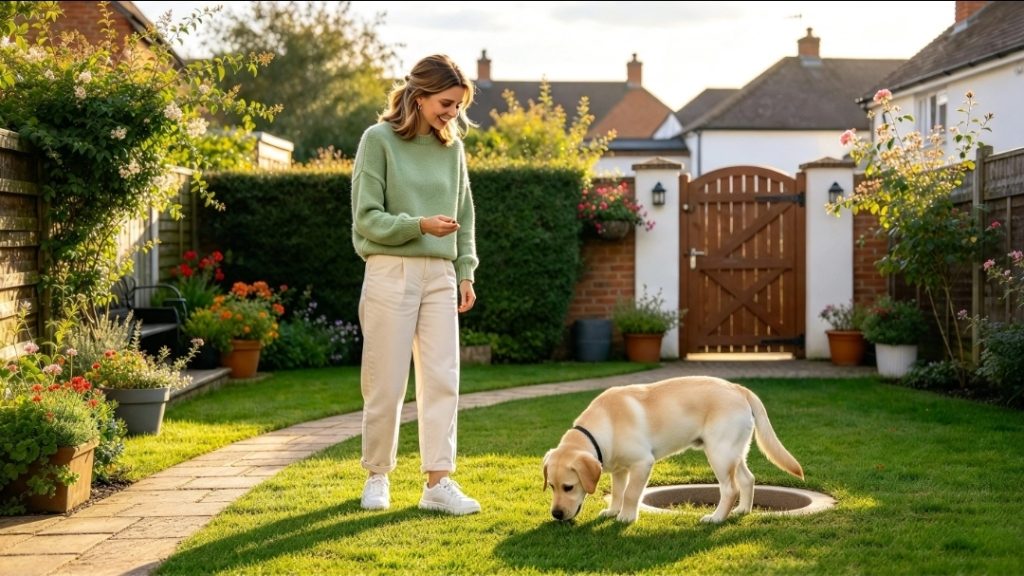
Take your dog to a suitable, designated toilet area where it can investigate the surroundings without unnecessary distractions.
Using the same location where practical helps establish a predictable routine. It also makes it easier for you to observe your dog’s behaviour and recognise when it is preparing to toilet.
GPK9 uses the following structure:
Same place → Same time → Toilet command
This means providing a consistent location, creating appropriate opportunities throughout the day and introducing the verbal cue at the right moment.
The routine should remain flexible enough to account for your dog’s age, development and individual needs.
Step 3: Observe Your Dog Before Giving the Cue
Watch your dog rather than repeatedly saying the word while waiting for something to happen.
Some dogs sniff the ground, circle, become more focused on a particular spot or move into their usual toileting posture before going.
These signs can help you recognise when toileting is about to happen, although every dog is different.
During the early stages, the important task is to observe the behaviour and identify the appropriate moment to introduce the cue.
Step 4: Say the Toilet Command as Your Dog Begins to Toilet
When your dog begins to toilet, say your chosen word once in a calm, natural voice.
For example, say “toilet” as the dog starts to urinate or defecate.
This timing helps associate the word with the behaviour itself rather than with unrelated activities such as sniffing, playing or simply being outside.
Do not shout, repeatedly call the word or interrupt the dog while it is toileting. Allow the behaviour to continue naturally.
Initially, you are building an association. You are not testing whether the dog can respond to a command it has not yet learned.
RECOMMENDED PRODUCTS
Step 5: Reward the Completed Behaviour
Once your dog has finished, provide calm praise or another suitable positive reward.
If you use food rewards, deliver them promptly after the behaviour is complete. Make sure the reward does not distract or interrupt your dog while it is toileting.
You can also use praise and continue with a relaxed period outdoors.
Avoid ending every outdoor visit immediately after your dog toilets. If toileting always signals that outdoor time is over, some dogs may begin delaying the behaviour because they want to remain outside.
The sequence you want to establish is:
Toilet opportunity → Verbal cue → Toileting → Reward
Step 6: Repeat the Same Process
Repeat the process whenever suitable opportunities arise throughout the day.
Each successful repetition gives your dog another opportunity to associate the word with the behaviour.
During this stage, continue using the cue as your dog begins to toilet. Do not rush ahead by expecting the dog to respond to the word before the association has developed.
Over time, you can begin testing whether your dog recognises the cue by saying it shortly before the dog is expected to toilet. Only do this when the dog is likely to need to go, and allow time for a natural response.
Step 7: Practise in Different Environments Gradually
Once your dog begins responding to the cue in familiar surroundings, practise in other suitable locations.
For example, you might practise in another garden or during a walk.
New surroundings can introduce different smells, surfaces, noises and distractions, so do not assume that a cue learned at home will immediately work everywhere.
Return to the familiar routine when necessary, continue reinforcing successful responses and introduce new environments gradually.
Common Mistakes When Teaching a Toilet Command
Several common mistakes can make it harder for your dog to understand the cue.
Repeating the Command Too Often
Saying “toilet, toilet, toilet” while your dog sniffs around does not necessarily improve understanding.
Instead, introduce the word at the appropriate moment and give your dog time to complete the behaviour.
Giving the Command Too Early
If you repeatedly use the word before your dog understands it, the cue may become associated with being outside or investigating the ground rather than with toileting.
During the initial learning stage, use the word as your dog begins to toilet.
Expecting an Immediate Response
Your dog may not yet understand the cue, or it may simply not need to go.
Allow time for learning and remember that a verbal signal cannot create a physical need to toilet.
Changing the Word Frequently
Using different words can make the intended meaning less consistent, particularly when several people care for the dog.
Choose one cue and use it consistently while the association develops.
Turning Every Toilet Trip into Play
Play and toileting serve different purposes. If every trip to the designated area becomes an exciting play session, your dog may become distracted from the toilet routine.
Keep the initial toilet opportunity calm. Once your dog has finished, you can continue with a walk, play or another appropriate activity.
Punishing Accidents or Failed Attempts
Never punish your dog for failing to toilet after hearing the cue or for having an accident indoors.
Punishment can create fear and may make the dog reluctant to toilet in front of you. Instead, review the timing, supervision and routine, clean accidents thoroughly and provide further opportunities to succeed.
What Should You Do If Your Dog Does Not Toilet After the Command?
If your dog does not toilet after you give the cue, do not assume it is deliberately ignoring you.
Consider whether your dog actually needs to go, whether the environment is distracting and whether the verbal association has been established.
Ask yourself:
- When did my dog last toilet?
- Has my dog recently woken up?
- Has it recently eaten, drunk or played?
- Is the toilet area familiar and accessible?
- Is my dog distracted by people, dogs, sounds or smells?
- Have I introduced the cue consistently?
- Am I expecting a response before my dog has learned what the word means?
If your dog does not need to toilet, there may be no response to reinforce. If the dog appears distracted, allow time to settle in a suitable area.
If nothing happens, return indoors only when appropriate and supervise your dog closely. Offer another toilet opportunity later, sooner if your dog shows signs of needing to go.
If your dog suddenly starts having accidents or shows persistent changes in toileting behaviour, seek veterinary advice to rule out medical causes.
How Long Does It Take to Teach a Toilet Command?
There is no fixed timescale for teaching a toilet command. Some dogs may begin recognising the association relatively quickly, while others need more repetition.
Progress depends on the dog’s age, previous toilet-training experience, consistency of the cue and the circumstances in which it is taught.
Rather than measuring success by a particular number of days, look for signs that your dog is beginning to understand the relationship between the word and the behaviour.
Initially, the cue may only be meaningful in familiar surroundings. Continue practising and reinforcing successful responses before expecting the same reliability in unfamiliar places.
Adult dogs can learn toilet cues too. The same principles of observation, consistent timing and positive reinforcement apply.
Can You Teach a Puppy a Toilet Command?
Yes. You can introduce a toilet cue while establishing your puppy’s normal toilet-training routine.
Young puppies need frequent opportunities to toilet because their control is still developing. Take your puppy out after waking, around meals, following active play and whenever its behaviour suggests it needs to go.
As your puppy begins to toilet, introduce the chosen word calmly. When the puppy finishes, reward the behaviour and continue following an appropriate routine.
Do not expect a young puppy to respond reliably to the cue straight away. The early goal is to build the association while preventing accidents through suitable supervision and frequent toilet opportunities.
As your puppy matures and becomes more reliable, you can gradually assess whether the cue works before toileting begins.
How the GPK9 Toilet Training Structure Supports the Command
At GPK9, the toilet command is treated as one part of a wider toilet-training routine.
The core structure is:
Same place → Same time → Toilet command
Same place: A familiar, suitable location provides a consistent context for toileting.
Same time: Regular opportunities help the handler anticipate the dog’s needs, while observation allows the routine to be adjusted when necessary.
Toilet command: A consistent verbal cue is introduced at the appropriate moment and associated with the natural behaviour through repetition.
Home management and supervision are also important. Puppies should have an appropriate level of freedom for their stage of development, with accidents prevented where possible through observation and suitable management.
Outdoor distractions should be managed calmly so that the toilet opportunity remains clear. Play and other activities can continue after the dog has finished.
These elements work together. A verbal cue alone cannot replace appropriate timing, a suitable toilet area or consistent supervision.
RECOMMENDED PRODUCTS
Frequently Asked Questions
What is the best word to use for a dog toilet command?
There is no single best word for every dog. Choose a short, practical cue such as “toilet” or “busy” and use it consistently. The timing and consistency of its use matter more than the particular word.
Should I say the command before or during toileting?
When first teaching the cue, say it as your dog begins to toilet. This helps associate the word with the behaviour. Once your dog has developed that association, you can gradually try giving the cue shortly beforehand when a toilet opportunity is appropriate.
Should I give my dog a treat after toileting?
You can use a suitable food reward, calm praise or another appropriate positive reward. If you use treats, deliver them after the dog has finished so you do not interrupt the behaviour.
Can an older dog learn a toilet command?
Yes. Adult dogs can learn a toilet cue through the same process of consistent timing, observation and repetition. Previous toilet-training experience may influence how quickly the association develops.
Can a toilet command make a dog go when it does not need to?
No. The cue can signal an opportunity to toilet, but it cannot create a physical need. If your dog does not need to go, allow time and offer another opportunity when appropriate.
Should I use the toilet command every time my dog goes outside?
During the learning stage, use the cue consistently when your dog begins to toilet in an appropriate situation. Avoid repeating it constantly or using it indiscriminately during play and other activities.
Final Thoughts on How to Teach a Toilet Command to Your Dog
How to Teach a Toilet Command to Your Dog comes down to establishing a clear association between one consistent word and a natural behaviour. Choose a cue, use a suitable toilet area, observe your dog, introduce the word as toileting begins and reinforce successful completion.
Avoid repeating the command, rushing the process or expecting your dog to respond before the association has developed. Continue practising in familiar surroundings before gradually introducing more distractions.
Most importantly, remember that the command is part of toilet training, not a replacement for it. Appropriate timing, supervision, consistency and positive reinforcement give your dog the best opportunity to learn what the cue means.
If you need additional support, contact our online coach.