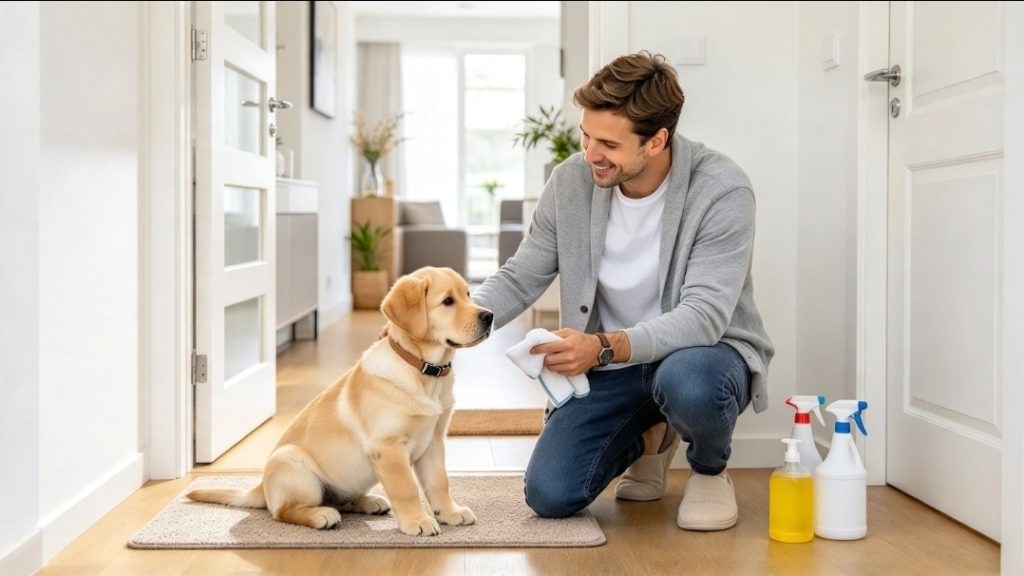
Why Routine and Timing Matter in Dog Toilet Training
Why Routine and Timing Matter in Dog Toilet Training becomes clear when a puppy has regular opportunities to toilet but still struggles to develop consistent habits. A predictable routine helps the handler anticipate the puppy’s needs, while appropriate timing creates opportunities for success. When toilet trips are delayed, schedules change constantly or supervision is inconsistent, accidents can become more frequent. The aim is not to force a puppy to follow a rigid timetable, but to establish a practical routine that considers the dog’s age, development, activity and individual needs.
RECOMMENDED PRODUCTS

Why Routine Is Important in Dog Toilet Training
A puppy needs repeated experiences to learn where and when toileting is expected. Establishing a consistent routine helps the dog become familiar with the designated toilet area and allows the handler to recognise patterns in the puppy’s behaviour.
Without a routine, toilet trips may happen only when the handler remembers or notices signs that the puppy needs to go. Unfortunately, some puppies do not reliably communicate their needs before an accident happens.
A structured routine allows the handler to be proactive rather than constantly reacting to accidents.
It also makes progress easier to assess. When toilet opportunities follow a reasonably consistent pattern, the handler can identify which parts of the routine are working and where adjustments may be needed.
How Inconsistent Timing Can Affect Toilet Training
Inconsistent timing can make toilet training more difficult because the puppy receives fewer predictable opportunities to practise the expected behaviour.
For example, a puppy might be taken outside immediately after waking one morning but left for much longer the following day. If the puppy needs to toilet before the next planned trip, an accident may occur indoors.
Common timing problems include:
- Waiting too long between toilet opportunities.
- Missing the puppy’s need to toilet after waking.
- Failing to provide an opportunity after meals or active play.
- Allowing the puppy to roam freely without adequate supervision.
- Becoming distracted while the puppy is outside.
- Rushing back indoors before the puppy has had enough time.
- Changing the designated toilet location unnecessarily.
- Expecting a young puppy to follow a schedule that does not suit its development.
These issues can make progress appear unpredictable, even when the puppy is beginning to understand the routine.
When Should You Take a Puppy Outside to Toilet?
The best toilet routine combines predictable daily events with observation of the individual puppy.
Useful times to offer a toilet opportunity include:
After Waking Up
Puppies commonly need to toilet after sleeping, including after naps during the day. Taking the puppy to the designated area promptly after waking helps create a consistent habit.
After Eating or Drinking
Meals and drinking can influence when a puppy needs to toilet. Provide appropriate opportunities around meals and monitor the puppy afterwards rather than assuming every dog will need to go at exactly the same interval.
After Play and Excitement
Active play can change a puppy’s immediate needs. After a lively play session, consider whether another toilet opportunity is appropriate before allowing the puppy to settle or explore the home.
Before Longer Periods of Rest
Offering a toilet opportunity before bedtime or a longer period of settling can help reduce avoidable accidents.
Whenever the Puppy Shows Signs of Needing to Go
Do not wait for the next scheduled toilet trip if the puppy appears to need to go sooner. Sniffing the floor, circling, moving away from an activity or suddenly becoming restless may indicate that a toilet opportunity is needed, although individual signs vary.
These are practical routine points, not a rigid timetable. Younger puppies generally need more frequent opportunities than older dogs, and every puppy develops at a different rate.
Why a Routine Should Be Predictable but Flexible
A good toilet routine provides consistency without ignoring the puppy’s changing needs.
Household schedules inevitably change because of work, visitors, travel, weather and other commitments. When this happens, the handler should remain aware that the puppy may need additional supervision or more frequent toilet opportunities.
For example, if the puppy has been unusually active, has just woken from a long nap or has had a change to its normal routine, the handler should adjust accordingly.
The important point is to maintain the overall pattern wherever possible while responding to what the puppy is actually doing.
Routine provides structure, but observation determines when that structure needs to be adjusted.
Why the Same Toilet Location Helps
Using the same designated toilet area helps the puppy become familiar with the environment in which toileting is expected.
Repeated visits allow the puppy to investigate the area and build an association between that location and the toilet routine.
Choose an area that is safe, accessible and practical to use throughout the day. Keep the route to it as straightforward as possible, particularly for a young puppy that may not be able to wait long.
Avoid changing locations unnecessarily during the early stages of training. If the location must change, take the puppy to the new area consistently and allow time to become familiar with it.
A consistent location does not remove the need for supervision or appropriate timing. It works alongside these elements.
How Consistent Communication Supports Toilet Training
Clear communication helps the puppy experience a repeatable routine.
If you choose to use a toilet cue, use the same word or phrase consistently. Give the puppy time to investigate the designated area rather than repeating the cue continuously or using several different phrases.
The cue should become associated with the toilet routine through repeated experience. It is not an instruction that guarantees the puppy will immediately need to go.
Avoid treating an unsuccessful toilet trip as deliberate disobedience. The puppy may not need to go at that moment, may be distracted or may still be learning what the routine means.
Patience, observation and consistency provide clearer information than changing commands or rushing the process.
Why Supervision Matters Between Toilet Trips
Routine and timing are only part of successful dog toilet training. The handler must also manage what happens between opportunities.
Giving a puppy unrestricted access to the entire home before it has developed reliable habits can make accidents more difficult to prevent and identify.
Instead, provide an appropriate level of supervised freedom. Keep the puppy in a suitable area where its behaviour can be observed, and respond promptly when another toilet opportunity is needed.
A crate can support safe management and rest when introduced positively and used appropriately. It should never be used as punishment, and a puppy should not be expected to remain confined longer than it can comfortably manage.
As the puppy becomes more reliable, freedom can gradually increase according to its progress.
RECOMMENDED PRODUCTS
What to Do If Your Puppy Has an Accident
Accidents can happen during toilet training, even when a routine is in place. Rather than focusing only on the accident, review the events that came before it.
Ask yourself:
- When did the puppy last toilet?
- Had the puppy just woken up?
- Had it recently eaten, drunk or played?
- Was it showing signs that another toilet trip was needed?
- Had it been left unsupervised for too long?
- Was the designated toilet area easy to access?
- Was the puppy distracted or rushed outside?
- Had the household routine changed?
The answers can help identify whether the next toilet opportunity needs to happen sooner or whether supervision and management need to improve.
Clean accidents thoroughly with an appropriate cleaning product to reduce lingering odours. Avoid shouting at the puppy or punishing it for an accident. Punishment does not teach the puppy where to toilet and may make it reluctant to toilet in front of you.
Instead, return to the routine, provide appropriate opportunities and reward successful toileting promptly with praise or another suitable positive reward.
How to Build a Practical Dog Toilet Training Routine
A simple routine can be built around events that naturally occur throughout the day.
For example:
Wake up → Toilet opportunity → Breakfast → Toilet opportunity → Supervised activity → Toilet opportunity when needed → Rest → Toilet opportunity after waking.
Repeat the same general pattern throughout the day, adapting it to the puppy’s needs.
The routine should include:
- A consistent location: Use a safe, designated toilet area.
- Appropriate timing: Offer opportunities after waking, around meals and after active periods.
- Close supervision: Monitor the puppy between toilet trips.
- Consistent communication: Use the same toilet cue if you choose to introduce one.
- Positive reinforcement: Reward successful toileting promptly.
- Flexible adjustments: Respond to the puppy rather than relying entirely on the clock.
- Gradual progression: Increase freedom as the puppy develops reliable habits.
There is no single schedule that suits every dog. Age, development, health, activity and individual differences all influence how frequently a puppy needs to toilet.
What If Your Puppy Still Has Frequent Accidents?
If toilet training is not progressing, review the complete routine before assuming the puppy is refusing to learn.
Inconsistent timing, excessive freedom, missed opportunities, environmental distractions and insufficient supervision can all contribute to continued accidents.
Check whether the routine is realistic for the puppy’s age and whether everyone in the household follows the same general approach. Consistency between handlers helps prevent the puppy from receiving conflicting information.
Progress may take time, and occasional accidents do not automatically mean that training has failed.
However, if toileting problems begin suddenly, persist despite appropriate management or involve unusual frequency, straining, discomfort or changes in urine or stool, seek veterinary advice. Medical issues can affect toileting behaviour and should not be treated as training problems alone.
If you need help identifying gaps in the routine or adjusting your training approach, a qualified dog training professional can help assess the situation and recommend appropriate next steps.
RECOMMENDED PRODUCTS
Frequently Asked Questions
How often should I take my puppy outside to toilet?
The frequency depends on the puppy’s age, development, activity and individual needs. Young puppies usually need more frequent opportunities than older dogs. Start with regular trips after waking, around meals, after play and whenever the puppy shows signs of needing to go.
Should I take my puppy outside at the same time every day?
A reasonably consistent daily pattern is helpful, but exact clock times are not enough on their own. You must also respond to the puppy’s behaviour and provide additional opportunities when necessary.
Why does my puppy sometimes toilet outside but have accidents indoors?
The puppy may still be learning, may have been given too much freedom or may not have been taken outside soon enough. Review the timing of the last toilet trip, supervision and any changes to the routine.
Should I wait until my puppy asks to go outside?
No. Some puppies learn to signal their needs, but young puppies may not communicate reliably. Use a proactive routine and respond to signs that another toilet opportunity is needed.
How long should I wait for my puppy to toilet outside?
Allow enough time for the puppy to investigate the designated area without rushing it. Keep the experience calm and give the puppy a reasonable opportunity to go. If it does not toilet, supervise it closely indoors and try again shortly afterwards if appropriate.
When should I expect my puppy to be fully toilet trained?
There is no fixed age at which every puppy becomes reliably toilet trained. Progress depends on development, consistency, supervision and individual circumstances. Gradually increase freedom as reliability improves rather than assuming a certain age guarantees success.
Final Thoughts on Why Routine and Timing Matter in Dog Toilet Training
Why Routine and Timing Matter in Dog Toilet Training comes down to providing predictable opportunities while remaining responsive to the puppy’s needs. Consistent toilet locations, suitable timing, clear communication, close supervision and positive reinforcement all contribute to developing reliable habits.
The handler should not depend entirely on a clock or wait for accidents to reveal that a toilet trip was needed. Instead, observe the puppy, recognise likely toilet periods and adjust the routine when circumstances change.
A successful toilet routine combines consistency with flexibility. By creating regular opportunities, supervising appropriately and responding calmly to setbacks, you give your puppy a clearer path towards reliable toilet habits.
If you need additional support, contact our online coach.