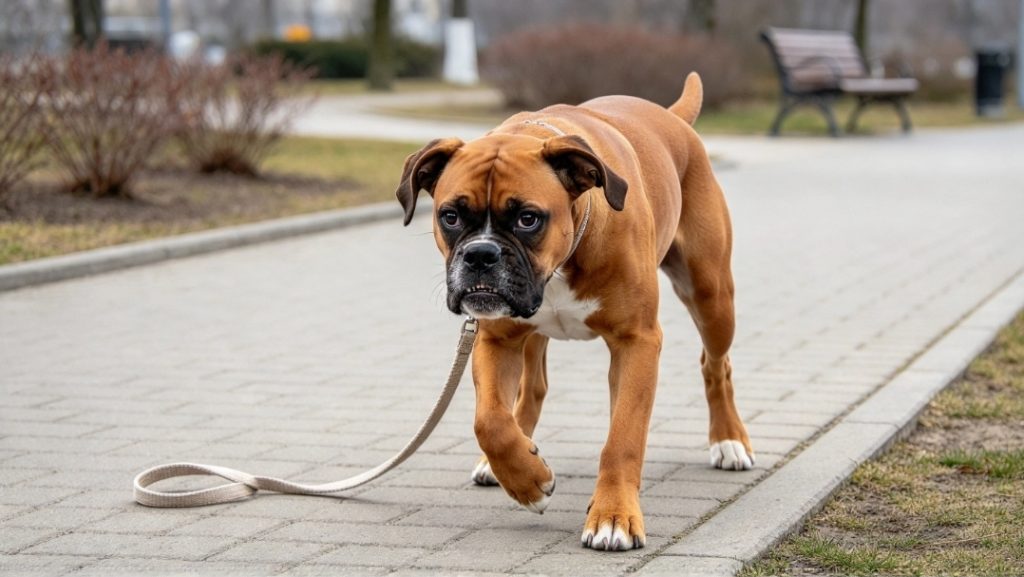
How Do I Know If My Dog Is Stressed?
How do I know if my dog is stressed? Look for changes in your dog’s normal behaviour, body language and ability to cope with the situation. Stress can appear as obvious behaviour such as pacing, shaking or trying to escape, but it can also be much more subtle, including lip licking, yawning, avoiding eye contact, panting or moving away. The important thing is to consider these signs in context and compare them with your dog’s normal behaviour.
RECOMMENDED PRODUCTS
What Does a Stressed Dog Look Like?
A stressed dog may change its posture, movement or behaviour.
Possible signs include:
- Lip licking.
- rj
- Excessive panting when the dog is not hot or has not been exercising.
- Avoiding eye contact.
- Turning the head away.
- Ears held bao
- rjck.
- Lowering the head oge away.
- Hiding.
- Pacing or restlessness.
- Shaking or trembling.
- Becoming unusually quiet.
- Refusing food or treats.
- Barking, whining or howling.
- Becoming tense or stiff.
Not every stressed dog will show every sign. Some dogs show subtle changes first, while others display much more obvious behaviour.
How Do I Know If My Dog Is Stressed or Just Tired?
Look at the situation.
Panting after exercise or on a warm day can be normal. Panting when your dog has not been exercising and the environment is not hot may have a different meaning.
Similarly, yawning can simply mean your dog is tired. If your dog repeatedly yawns while something stressful is happening, however, it may be worth paying closer attention to the rest of its body language.
One behaviour on its own does not always tell you whether your dog is stressed.
Look for several signs occurring together and consider what was happening at the time.
How Can I Recognise Early Signs of Stress?
Early signs can be easy to miss because they may look insignificant.
Your dog might:
- Look away.
- Lick its lips.
- Yawn.
- Lower its head.
- Put its ears back.
- Move away slightly.
- Become unusually still.
- Stop engaging normally.
- Start panting.
- Avoid an approaching person or dog.
These behaviours can be useful warnings that your dog is becoming uncomfortable.
Recognising them early gives you an opportunity to reduce the pressure before your dog becomes more distressed.
RECOMMENDED PRODUCTS
What Are More Obvious Signs of Stress?
If the situation continues or becomes more difficult, stress may become more obvious.
Your dog may start:
- Freezing.
- Cowering.
- Trembling.
- Hiding.
- Pacing.
- Trying to escape.
- Barking repeatedly.
- Whining.
- Showing increased agitation.
- Becoming stiff or tense.
- Showing defensive behaviour.
A dog that is very uncomfortable may eventually growl, snap or display other aggressive behaviour. This should not simply be treated as bad behaviour; it can be a sign that the dog wants the situation to stop or needs more distance.
Why Does My Dog Become Stressed?
Dogs can become stressed for many different reasons.
Possible triggers include:
- Unfamiliar people.
- Other dogs.
- Loud noises.
- Busy environments.
- Being handled.
- Being left alone.
- Changes to routine.
- Travelling.
- Veterinary visits.
- Fireworks.
- New surroundings.
- Conflict with another animal.
- Situations the dog has previously found frightening.
The same situation will not affect every dog in the same way.
Your dog’s individual experiences, temperament and circumstances matter.
How Do I Know What Is Stressing My Dog?
Look at what happens immediately before your dog starts showing signs of stress.
For example:
A person approaches → your dog lowers its body → looks away → licks its lips → moves backwards.
Or:
Another dog appears → your dog becomes stiff → stops taking food → starts barking.
These patterns can help you identify potential triggers.
Keep the focus on what changed immediately before the behaviour rather than simply labelling your dog as anxious or badly behaved.
What Should I Do If My Dog Is Stressed?
The first step is to make the situation easier.
Depending on the situation, this may mean:
- Stop or reduce the pressure.
- Create more distance from the trigger.
- Allow your dog to move away where it is safe to do so.
- Remove unnecessary distractions.
- Give your dog time to settle.
- Only continue when your dog is able to cope.
If your dog is becoming increasingly distressed, continuing to expose it to the same situation is unlikely to help.
The RSPCA advises giving worried dogs appropriate space and avoiding situations that make them nervous rather than forcing interaction.
Should I Ignore My Dog When It Is Stressed?
No.
You should not punish your dog for showing signs of stress.
Shouting, forcing interaction or punishing fearful behaviour can increase anxiety and may make the situation worse. The RSPCA specifically advises against punishing dogs when they are scared or worried.
Instead, recognise what your dog is communicating and work out how to make the situation safer and more manageable.
How Do I Help My Dog Cope With Stress?
Start by identifying the situations that cause the problem.
Then work at a level your dog can manage.
For example, if another dog causes your dog to become stressed, you may need to begin at a greater distance rather than expecting your dog to cope with a close encounter.
Reward calm behaviour and gradually build your dog’s ability to cope.
The aim is not to force your dog to tolerate something it finds frightening. The aim is to help your dog experience the situation at a manageable level.
RECOMMENDED PRODUCTS
Can Training Help a Stressed Dog?
Yes, appropriate training can help your dog learn alternative responses and become more comfortable in situations it finds difficult.
Training should begin at a level your dog can manage.
If your dog cannot concentrate, will not take a normal reward or is becoming increasingly distressed, the exercise may currently be too difficult.
Make it easier rather than repeatedly asking your dog to perform while it is struggling.
Can Stress Cause My Dog to Behave Differently?
Yes.
Stress can affect how a dog behaves.
A normally calm dog may become restless, withdrawn, vocal, reactive or defensive when it is uncomfortable.
A dog that is normally happy to interact may suddenly avoid people or other dogs.
This is why a sudden change in behaviour should be taken seriously rather than automatically being described as disobedience.
The RSPCA advises contacting a vet when a dog’s behaviour changes or when there are regular signs of stress or fear.
Can My Dog Be Stressed Without Me Realising?
Yes.
Some signs can be very subtle, and a dog may not always display obvious barking, shaking or attempts to escape.
For example, a dog may quietly avoid interaction, pace, pant, lick its lips or become unusually withdrawn.
Separation-related stress can also be difficult to recognise because some behaviours only occur when the owner is away. The RSPCA recommends checking for signs that may otherwise go unnoticed.
How Do I Know If My Dog Is Stressed on Walks?
Watch for changes when you encounter particular situations.
Your dog may appear relaxed while walking in a quiet area but become stressed when approaching traffic, people, dogs or other distractions.
Signs can include lip licking, changes in tail position, slowing down, moving away, freezing, excessive panting or becoming increasingly reactive.
If your dog becomes uncomfortable, increase distance from the trigger and allow your dog time to recover.
The RSPCA specifically recommends watching for signs of distress or discomfort while walking.
RECOMMENDED PRODUCTS
What If My Dog Becomes Stressed Around Other Dogs?
Do not force your dog to interact.
Move away until your dog is able to relax again.
You can then continue at a distance where your dog can cope.
If your dog repeatedly becomes highly stressed around other dogs, consider getting professional help to assess the behaviour and develop an appropriate training plan.
The RSPCA advises moving a worried dog away from situations involving other dogs rather than forcing continued interaction.
What If My Dog Is Stressed When Left Alone?
Stress associated with being left alone can show itself through barking, whining, destruction, toileting, pacing, panting, trembling, excessive salivation, repetitive behaviour or changes in eating.
Some dogs may show very few obvious signs, which is why the problem can be missed.
If you suspect your dog is distressed when alone, do not simply increase the length of time it is left.
A gradual training programme may be needed, and professional advice can be appropriate for significant separation-related problems.
Can Stress Be Caused by Pain or Illness?
Yes.
Not every behavioural change is caused by training, fear or the environment.
Pain or illness can affect a dog’s behaviour and may cause a dog to become unusually withdrawn, irritable, restless or reluctant to interact.
If your dog’s behaviour changes suddenly or you cannot identify an obvious reason for the change, speak to your vet. The RSPCA advises veterinary advice when behavioural changes or regular signs of stress or fear occur.
When Should I Get Professional Help?
Seek professional help if your dog:
- Shows severe or persistent fear.
- Repeatedly becomes highly stressed.
- Attempts to escape.
- Becomes aggressive when frightened.
- Injures itself.
- Cannot settle after stressful situations.
- Develops significant behaviour changes.
- Struggles with separation.
- Cannot cope with everyday situations.
If you are concerned about your dog’s behaviour, speak to your vet first. They can help determine whether there could be an underlying health issue and may refer you to an appropriate behaviour professional.
Conclusion
Knowing if your dog is stressed means learning your dog’s normal behaviour and recognising when that behaviour changes.
Look for subtle signs such as lip licking, yawning, avoiding eye contact, lowered posture or moving away, as well as more obvious signs such as pacing, shaking, hiding or escape attempts.
When you recognise stress, do not punish or force your dog through the situation. Reduce the pressure, create appropriate space, allow your dog to recover and then reassess what your dog can comfortably manage.
If stress is persistent, severe or associated with a sudden change in behaviour, seek appropriate professional advice.
GPK9 — The Five Golden Rules
The GPK9 Five Golden Rules provide the foundation of the GPK9 Professional Training System. They give new dog owners, new dog handlers, experienced handlers and professional dog trainers a clear structure for developing the dog and the handler together.
The GPK9 Five Golden Rules cover five essential areas of development: Home & Social, Obedience, Prey Drive, Toilet and Social Walking. Each area has its own purpose, but they are designed to work together as one complete training system.
The GPK9 approach is based on CATEGORY → STATUS → DRIVE → CONTROL and the handler’s ability to OBSERVE → INTERPRET → DECIDE → COMMUNICATE → OBSERVE RESPONSE → REASSESS. This gives the handler a consistent process for understanding what the dog is doing, why the behaviour is occurring, what level of control is appropriate and how to communicate effectively.
The purpose of the GPK9 Five Golden Rules is not simply to teach a collection of individual exercises. They are designed to develop the dog’s behaviour, motivation, communication, control and reliability while teaching the handler how to make better decisions.
Golden Rule One — Home & Social
Golden Rule One — Home & Social establishes the foundation for everyday life with the dog. It focuses on communication, boundaries, calm behaviour, household routines and appropriate behaviour around people, animals and normal activity.
The purpose of Golden Rule One — Home & Social is to help the handler understand the dog’s behaviour and recognise changes in arousal before they become larger problems. The handler learns to observe, assess and communicate rather than simply reacting after unwanted behaviour has already occurred.
Golden Rule One — Home & Social provides the foundation from which the handler can develop a calmer, more predictable and better-communicating dog.
Golden Rule Two — Obedience
Golden Rule Two — Obedience develops the dog’s ability to understand and respond to the handler’s communication.
The focus of Golden Rule Two — Obedience is not simply teaching commands. It is about developing understanding, reliability, timing, reward, release and control so the dog learns what the handler is communicating.
Through Golden Rule Two — Obedience, the handler learns to progress training appropriately, gradually increasing the dog’s freedom and responsibility as understanding and reliability improve.
Golden Rule Three — Prey Drive
Golden Rule Three — Prey Drive focuses on understanding and developing the dog’s natural motivation to chase, pursue, engage and work with an appropriate toy or prey-based reward.
The purpose of Golden Rule Three — Prey Drive is not simply to increase drive. The handler must learn how to recognise the dog’s level of motivation, select an appropriate reward and use timing, communication and control to channel that motivation productively.
Golden Rule Three — Prey Drive teaches the handler that motivation can become a powerful training tool when it is developed and controlled correctly.
Golden Rule Four — Toilet
Golden Rule Four — Toilet establishes reliable toilet habits through consistency, observation, timing, supervision and appropriate reinforcement.
The handler learns through Golden Rule Four — Toilet to recognise when the dog is likely to need the toilet, provide the correct opportunity and reinforce the desired behaviour.
The objective of Golden Rule Four — Toilet is to establish a predictable routine that helps the dog understand where and when toileting is appropriate while reducing opportunities for mistakes.
Golden Rule Five — Social Walking
Golden Rule Five — Social Walking develops the dog’s ability to walk calmly and appropriately in the real world while remaining connected to the handler.
The focus of Golden Rule Five — Social Walking is the relationship between the handler, the dog, the environment, distractions, distance and available control.
Through Golden Rule Five — Social Walking, the handler learns to observe body language, identify potential triggers, assess distance and recognise changes in drive or arousal before behaviour escalates.
The objective of Golden Rule Five — Social Walking is not simply to make the dog walk beside the handler. It is to develop a dog that can experience the outside world while remaining connected to the handler and capable of responding to clear communication.
How the Five Golden Rules Work Together
The GPK9 Five Golden Rules are designed to work together rather than being treated as five completely separate subjects.
Golden Rule One — Home & Social establishes the foundations for everyday behaviour and communication.
Golden Rule Two — Obedience develops understanding, responsiveness and control.
Golden Rule Three — Prey Drive develops motivation and teaches the handler how to channel natural drive appropriately.
Golden Rule Four — Toilet establishes essential household routine and reliability.
Golden Rule Five — Social Walking takes the communication and control developed through the other areas into the outside environment.
Together, the GPK9 Five Golden Rules help the handler develop a complete understanding of the dog rather than treating individual behaviours as isolated problems.
The overall objective of the GPK9 Five Golden Rules is to train the human, train the dog and build the partnership through clear observation, communication, appropriate control and progressive development.
A successful GPK9 handler learns to ask:
What is my dog doing?
Why is my dog doing it?
What is my dog communicating?
What level of control is appropriate?
How should I communicate with my dog?
What response did I get?
What should I do next?
This process forms the foundation of the GPK9 Professional Training System and allows the GPK9 Five Golden Rules to be applied consistently from the first stages of dog ownership through to advanced dog handling and professional training.