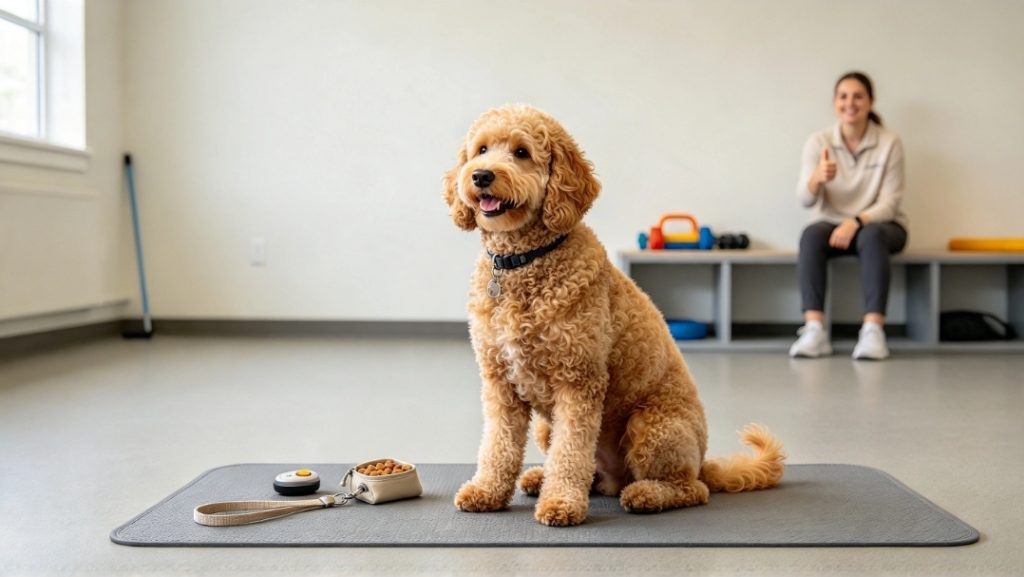
When Should I Stop a Training Session?
When should I stop a training session? You should stop when your dog is no longer able to train effectively, is becoming tired or overwhelmed, or when you have achieved a useful success and can finish positively. Training does not need to continue for a fixed amount of time.
Short, regular sessions can help prevent your dog from becoming overloaded, and the RSPCA recommends ending training with something the dog already knows so the session finishes positively.
RECOMMENDED PRODUCTS
How Do I Know When My Dog Has Had Enough?
Watch your dog’s behaviour rather than relying only on the clock.
Your dog may be ready for a break or the end of the session if they:
- Lose concentration.
- Become increasingly distracted.
- Repeatedly make mistakes with a familiar behaviour.
- Stop responding to cues they normally understand.
- Become frustrated or restless.
- Become overly excited.
- Show signs of stress or discomfort.
- Stop being interested in their usual reward.
- Struggle to settle between exercises.
One mistake does not necessarily mean the session should end. Repeated difficulty is a stronger indication that the session needs to become easier or finish.
Should I Stop When My Dog Gets Something Right?
You can.
If your dog has just performed a difficult behaviour particularly well, finishing soon afterwards can create a positive end to the session.
You do not have to keep training simply because your dog has succeeded.
For example, if your dog has struggled with a new exercise and finally performs it correctly, reward the behaviour and consider ending the session there.
Should I Always End With an Easy Exercise?
It is often useful.
If you have been working on a difficult behaviour, finish with something your dog already understands.
For example:
Difficult exercise → successful response → reward → familiar behaviour → reward → finish.
The RSPCA specifically recommends ending training with something your dog knows.
Should I Stop If My Dog Keeps Making Mistakes?
Yes, either make the exercise easier or finish the session.
Repeated mistakes can mean the behaviour has become too difficult.
Consider what has changed. You may have increased the:
- Duration.
- Distance.
- Distraction.
- Location.
- Movement.
- Freedom.
Instead of repeatedly asking for the same difficult response, return to an easier stage where your dog can succeed.
The RSPCA recommends gradually increasing difficulty and setting dogs up to succeed rather than allowing repeated failures.
Should I Stop If My Dog Becomes Frustrated?
Yes.
Frustration can make it harder for your dog to concentrate and learn.
Reduce the difficulty first. If your dog remains frustrated, finish the session and allow them to settle.
Do not punish your dog for struggling.
Reward-based training and patience are recommended because dogs learn at different rates.
RECOMMENDED PRODUCTS
Should I Stop If My Dog Becomes Overexcited?
Yes, if the excitement is preventing your dog from responding appropriately.
For example, if play becomes so intense that your dog can no longer respond to familiar cues, continuing to increase the excitement is unlikely to improve the training.
Pause the activity, allow your dog to settle and decide whether to continue at a lower level.
You can also teach a clear ending cue so your dog learns when an activity has finished.
Should I Stop If My Dog Becomes Tired?
Yes.
Training requires concentration, and tiredness can reduce your dog’s ability to learn effectively.
This is particularly important with puppies. Growing and learning can be tiring, so the RSPCA recommends regular rest and keeping puppy training sessions short and fun.
Do not keep training simply because you planned to train for a particular length of time.
How Long Should a Dog Training Session Last?
There is no single correct session length for every dog.
The appropriate length depends on your dog’s age, experience, motivation, the behaviour being taught and the difficulty of the environment.
Rather than deciding that every session must last a certain number of minutes, monitor your dog’s ability to concentrate and respond.
Quality matters more than making a session longer.
Should I Train Until My Dog Gets It Right?
Not necessarily.
You want successful learning, not endless repetition.
If your dog is struggling, make the exercise easier. If your dog succeeds, reward them and consider finishing while the behaviour is going well.
Continuing to repeat an exercise after concentration has dropped can create unnecessary frustration.
RECOMMENDED PRODUCTS
What If My Dog Is Doing Really Well?
You can still stop.
A good session does not need to continue until your dog becomes tired.
If your dog is responding accurately, staying motivated and performing the behaviour well, you can finish with a successful repetition.
This can help keep training enjoyable and prevent you from unnecessarily pushing the difficulty too far.
Should I Stop Before My Dog Loses Interest?
Often, yes.
If your dog is still engaged and responding well, ending the session can help preserve that positive attitude towards training.
You do not need to wait for your dog to become bored before stopping.
Finish while your dog is still capable of succeeding.
What Should I Do Before Ending the Session?
Finish with a behaviour your dog knows well.
For example:
- Practise the new behaviour.
- Reward a successful attempt.
- Return to an easier familiar behaviour.
- Reward the successful response.
- Give your release or end cue.
- Allow your dog to relax.
This gives the session a clear ending and helps finish on a positive experience.
Should I Give My Dog a Break Instead of Ending the Session?
Sometimes.
If your dog is still interested in training but has become tired or distracted, a short break may be enough.
After the break, reassess your dog’s behaviour.
If your dog is relaxed and ready to work, you can continue with an easier exercise.
If your dog remains tired, frustrated or overwhelmed, end the session rather than forcing more training.
What If My Dog Struggles With a New Behaviour?
Do not immediately assume the session needs to end.
First, reduce the difficulty.
For example, if you are teaching a stay and your dog repeatedly gets up after you increase the distance, return to a shorter distance and reward success.
If your dog can then perform the easier version, you can either continue at that level or finish positively.
If your dog continues struggling, end the session and try again later.
RECOMMENDED PRODUCTS
Should I Stop Training If My Dog Refuses Food?
It depends on why.
Your dog may not want food because they are full, tired, distracted or stressed.
If your dog normally accepts a reward but suddenly refuses it in a particular environment, consider whether the situation has become too difficult.
Look at the whole picture rather than assuming that refusing one treat automatically means training must stop.
A sudden change in behaviour accompanied by signs of stress or fear should be taken seriously.
Should I Stop Training If My Dog Becomes Stressed?
Yes.
If your dog is showing clear signs of stress or fear, stop or substantially reduce the difficulty and give them space to recover.
Do not force your dog to continue simply to complete the planned exercise.
The RSPCA advises paying attention to signs of stress or fear and seeking veterinary advice if these occur regularly or behaviour changes.
Should I Use a Crate or Resting Area After Training?
A suitable resting area can be useful if your dog already associates it positively with relaxation.
A crate can provide a safe resting space when your dog is properly crate-trained and comfortable using it.
Do not use a crate as punishment for poor training performance.
The purpose of rest is to allow your dog to recover, not to punish them for making mistakes.
How Often Should I Train My Dog?
Short, regular training opportunities are generally more useful than occasional long sessions.
You can incorporate training into everyday activities rather than relying entirely on formal sessions.
For example, practise a known behaviour before feeding, during a walk or when moving between activities.
The RSPCA recommends short but regular sessions rather than overwhelming the dog with lengthy training.
What If My Dog Gets Worse During the Session?
Stop increasing the difficulty.
Return to an easier behaviour that your dog knows and reward it.
If your dog is still struggling, end the session.
Next time, start at an easier level rather than immediately repeating the point where the previous session went wrong.
This allows you to build progress gradually instead of repeatedly practising failure.
RECOMMENDED PRODUCTS
What Mistakes Should I Avoid?
Avoid:
- Training for a fixed amount of time regardless of your dog’s response.
- Continuing after your dog has clearly lost concentration.
- Repeating a difficult exercise again and again.
- Increasing several difficulty factors at once.
- Punishing mistakes.
- Ending every session immediately after a failure.
- Pushing a tired or stressed dog to continue.
- Assuming longer sessions produce better training.
Instead, watch your dog, adjust the difficulty and finish while you can still create a successful outcome.
When Should I Get Professional Help?
Seek professional help if your dog consistently becomes highly stressed, fearful, aggressive or unable to cope during training, particularly if reducing the difficulty does not help.
A qualified trainer can help identify whether the training progression, environment or teaching method needs to change. Significant behavioural concerns may require veterinary or behaviourist support.
Conclusion
Stop a training session when your dog can no longer learn effectively, becomes tired, frustrated or overwhelmed, or when you have achieved a useful success and can finish positively.
There is no need to train until your dog is exhausted or until a behaviour is perfect.
Keep sessions short and productive, reduce the difficulty when your dog struggles and, where possible, finish with something your dog knows and can perform successfully.
GPK9 — The Five Golden Rules
The GPK9 Five Golden Rules provide the foundation of the GPK9 Professional Training System. They give new dog owners, new dog handlers, experienced handlers and professional dog trainers a clear structure for developing the dog and the handler together.
The GPK9 Five Golden Rules cover five essential areas of development: Home & Social, Obedience, Prey Drive, Toilet and Social Walking. Each area has its own purpose, but they are designed to work together as one complete training system.
The GPK9 approach is based on CATEGORY → STATUS → DRIVE → CONTROL and the handler’s ability to OBSERVE → INTERPRET → DECIDE → COMMUNICATE → OBSERVE RESPONSE → REASSESS. This gives the handler a consistent process for understanding what the dog is doing, why the behaviour is occurring, what level of control is appropriate and how to communicate effectively.
The purpose of the GPK9 Five Golden Rules is not simply to teach a collection of individual exercises. They are designed to develop the dog’s behaviour, motivation, communication, control and reliability while teaching the handler how to make better decisions.
Golden Rule One — Home & Social
Golden Rule One — Home & Social establishes the foundation for everyday life with the dog. It focuses on communication, boundaries, calm behaviour, household routines and appropriate behaviour around people, animals and normal activity.
The purpose of Golden Rule One — Home & Social is to help the handler understand the dog’s behaviour and recognise changes in arousal before they become larger problems. The handler learns to observe, assess and communicate rather than simply reacting after unwanted behaviour has already occurred.
Golden Rule One — Home & Social provides the foundation from which the handler can develop a calmer, more predictable and better-communicating dog.
Golden Rule Two — Obedience
Golden Rule Two — Obedience develops the dog’s ability to understand and respond to the handler’s communication.
The focus of Golden Rule Two — Obedience is not simply teaching commands. It is about developing understanding, reliability, timing, reward, release and control so the dog learns what the handler is communicating.
Through Golden Rule Two — Obedience, the handler learns to progress training appropriately, gradually increasing the dog’s freedom and responsibility as understanding and reliability improve.
Golden Rule Three — Prey Drive
Golden Rule Three — Prey Drive focuses on understanding and developing the dog’s natural motivation to chase, pursue, engage and work with an appropriate toy or prey-based reward.
The purpose of Golden Rule Three — Prey Drive is not simply to increase drive. The handler must learn how to recognise the dog’s level of motivation, select an appropriate reward and use timing, communication and control to channel that motivation productively.
Golden Rule Three — Prey Drive teaches the handler that motivation can become a powerful training tool when it is developed and controlled correctly.
Golden Rule Four — Toilet
Golden Rule Four — Toilet establishes reliable toilet habits through consistency, observation, timing, supervision and appropriate reinforcement.
The handler learns through Golden Rule Four — Toilet to recognise when the dog is likely to need the toilet, provide the correct opportunity and reinforce the desired behaviour.
The objective of Golden Rule Four — Toilet is to establish a predictable routine that helps the dog understand where and when toileting is appropriate while reducing opportunities for mistakes.
Golden Rule Five — Social Walking
Golden Rule Five — Social Walking develops the dog’s ability to walk calmly and appropriately in the real world while remaining connected to the handler.
The focus of Golden Rule Five — Social Walking is the relationship between the handler, the dog, the environment, distractions, distance and available control.
Through Golden Rule Five — Social Walking, the handler learns to observe body language, identify potential triggers, assess distance and recognise changes in drive or arousal before behaviour escalates.
The objective of Golden Rule Five — Social Walking is not simply to make the dog walk beside the handler. It is to develop a dog that can experience the outside world while remaining connected to the handler and capable of responding to clear communication.
How the Five Golden Rules Work Together
The GPK9 Five Golden Rules are designed to work together rather than being treated as five completely separate subjects.
Golden Rule One — Home & Social establishes the foundations for everyday behaviour and communication.
Golden Rule Two — Obedience develops understanding, responsiveness and control.
Golden Rule Three — Prey Drive develops motivation and teaches the handler how to channel natural drive appropriately.
Golden Rule Four — Toilet establishes essential household routine and reliability.
Golden Rule Five — Social Walking takes the communication and control developed through the other areas into the outside environment.
Together, the GPK9 Five Golden Rules help the handler develop a complete understanding of the dog rather than treating individual behaviours as isolated problems.
The overall objective of the GPK9 Five Golden Rules is to train the human, train the dog and build the partnership through clear observation, communication, appropriate control and progressive development.
A successful GPK9 handler learns to ask:
What is my dog doing?
Why is my dog doing it?
What is my dog communicating?
What level of control is appropriate?
How should I communicate with my dog?
What response did I get?
What should I do next?
This process forms the foundation of the GPK9 Professional Training System and allows the GPK9 Five Golden Rules to be applied consistently from the first stages of dog ownership through to advanced dog handling and professional training.