How Do I Train an Anxious Dog?
How do I train an anxious dog? Start by identifying what makes your dog anxious, reducing unnecessary pressure, creating a safe and predictable environment, and using gradual positive reinforcement to help your dog cope with the situation. The aim is not to force your dog to face its fears, but to build confidence while keeping training manageable.
Why Is My Dog Anxious?
Anxiety can have many causes. Your dog may be anxious because of limited early experiences, a previous negative experience, genetics, changes in its environment, unfamiliar people or dogs, loud noises, separation, or too much stimulation.
The first step is to identify what triggers the anxiety. A dog that becomes anxious around strangers needs a different training approach from a dog that becomes anxious when left alone.
How Do I Know When My Dog Is Anxious?
Common signs include:
- Pacing or restlessness
- Hiding or trying to escape
- Trembling or shaking
- Panting when there is no obvious reason
- Whining or crying
- Barking or growling
- Avoiding people, dogs or situations
- Freezing or becoming very still
- Refusing food
- Constantly seeking reassurance
- Trying to get back to a familiar or safe area
Recognising these signs early allows you to reduce the difficulty before your dog becomes overwhelmed.
What Should I Do When My Dog Becomes Anxious?
Do not force your dog to continue.
Instead, identify what is causing the anxiety and increase the distance from the trigger or move your dog to a calmer environment. Give your dog time to settle before asking for more training.
If your dog is too anxious to eat, respond to simple cues or engage with you, the situation may already be too difficult.
The priority is to help your dog recover rather than continuing the exercise.
How Do I Start Training an Anxious Dog?
1. Identify the Trigger
Work out exactly what causes the anxious response.
For example, your dog may be comfortable around one person but become anxious around unfamiliar men. It may cope with quiet streets but struggle with busy roads.
Be specific about the situation rather than treating anxiety as one general behaviour.
2. Find a Comfortable Starting Point
Begin at a level your dog can cope with.
This may mean increasing distance from a person, choosing a quieter walking route, reducing household activity or starting training in a familiar room.
The starting point should be difficult enough to provide a learning opportunity but not so difficult that your dog becomes overwhelmed.
3. Create a Positive Association
When your dog notices the trigger without becoming overwhelmed, provide an appropriate reward.
Food, a toy, praise or another reward your dog values can help create a positive association with the situation.
Timing matters. The reward should be connected to the behaviour or response you want to reinforce.
4. Keep Training Short
An anxious dog may become mentally tired quickly.
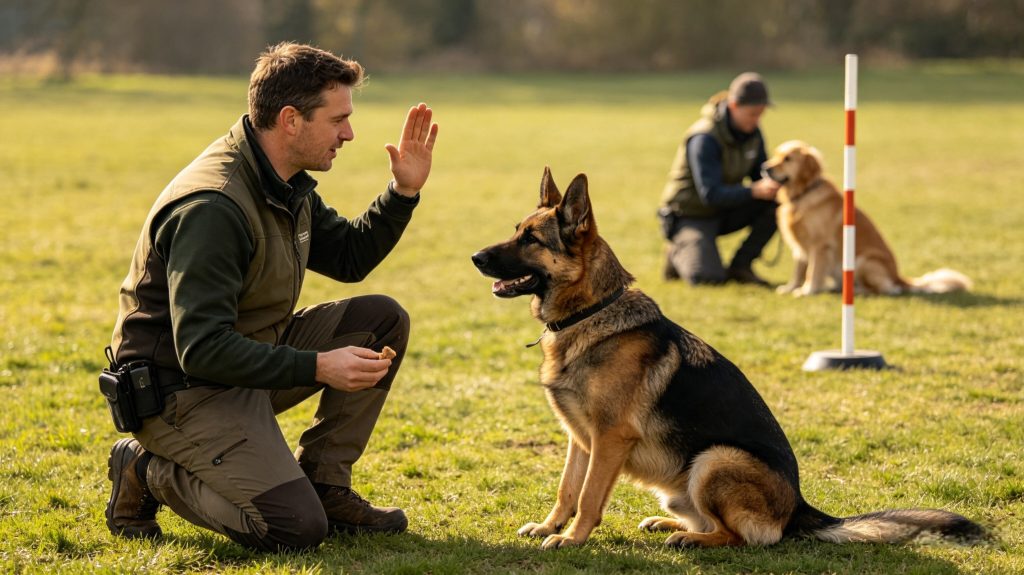
Use short training sessions and finish while your dog is still coping well. Several short sessions are often more useful than one long session that leaves your dog overwhelmed.
5. Increase Difficulty Gradually
Once your dog is consistently comfortable at the current level, make the exercise slightly more difficult.
You might:
- Reduce the distance from a trigger
- Introduce a slightly busier environment
- Increase the length of the training session
- Introduce a new but similar situation
- Reduce your level of assistance
If anxiety returns, reduce the difficulty again.
Should I Give My Anxious Dog Treats?
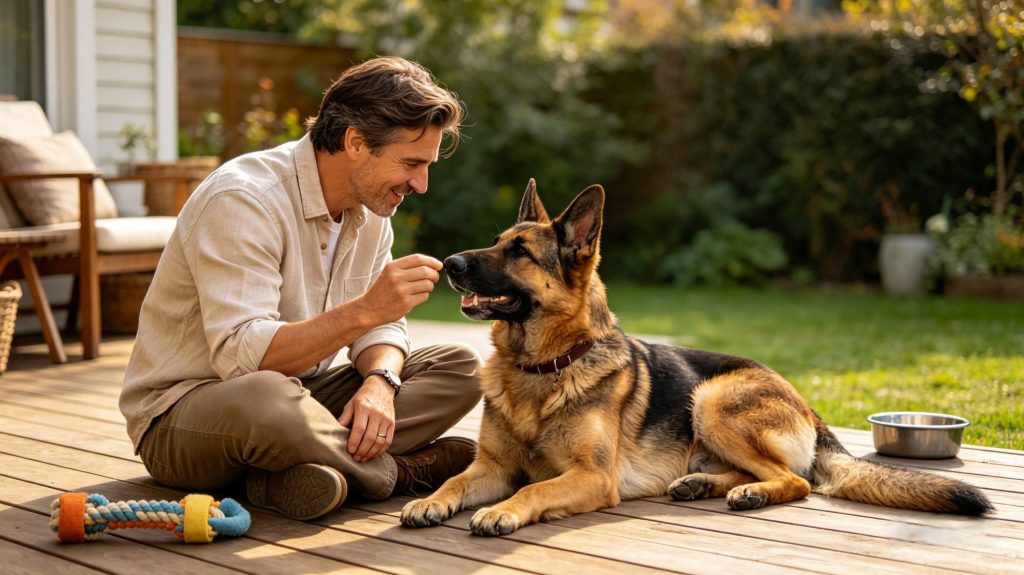
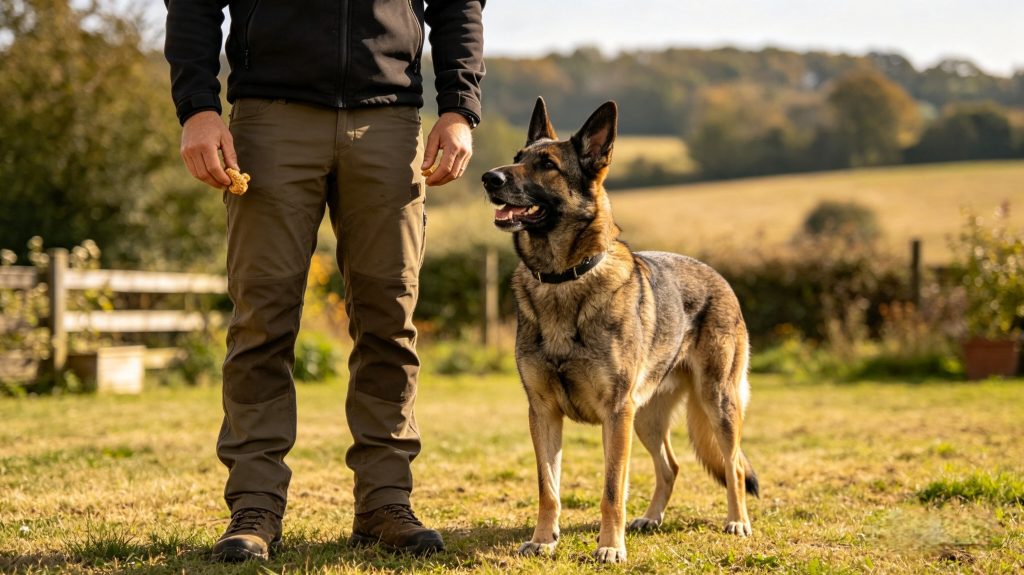
Yes, food can be a useful training reward if your dog is motivated by it and is calm enough to eat.
However, food should not be used to force a frightened dog towards something it wants to avoid.
If your dog refuses food, stop and reassess the situation. The environment may be too difficult for your dog at that moment.
How Do I Train an Anxious Dog Around People?
Start at a distance where your dog can notice a person without becoming overwhelmed.
Allow your dog to observe without forcing interaction. Reward calm behaviour and gradually reduce the distance only when your dog remains comfortable.
Do not force your dog to be touched, approached or greeted.
If your dog becomes anxious, increase the distance and allow it to recover.
How Do I Train an Anxious Dog Around Other Dogs?
Do not assume that an anxious dog needs to meet more dogs.
Start with controlled exposure at a safe distance. Reward calm observation and gradually work towards being able to remain relaxed around other dogs.
Avoid forcing close greetings or placing your dog in crowded environments where it cannot move away.
If your dog becomes highly anxious, create distance and allow it to recover.
How Do I Train an Anxious Dog Outside?
Choose an environment your dog can manage.
Start somewhere relatively quiet and gradually introduce more challenging environments as confidence improves.
Watch your dog’s behaviour rather than simply completing a planned route. If traffic, people, dogs or noises become too much, increase distance or move somewhere quieter.
The goal is to teach your dog that being outside can be manageable, not to expose it to as much stimulation as possible.
What Equipment Can Help When Training an Anxious Dog?
A secure harness and lead can provide appropriate control while allowing you to manage distance safely.
A short line can be useful when you need closer control in a challenging environment.
A long line can provide additional space in suitable secure areas while maintaining a connection to your dog.
A crate can provide a familiar recovery space when your dog is comfortable using one. It should be a safe area, not a punishment.
Equipment supports training but does not remove the cause of anxiety. The dog still needs to learn to cope with the situation.
What If My Dog Panics?
If your dog panics, stop the training exercise.
Create distance from the trigger, move to a quieter environment and allow your dog to recover. Avoid adding more pressure while your dog is highly distressed.
Once your dog is calm, reassess what caused the reaction and make the next training session easier.
Repeatedly pushing a panicked dog through the situation can make the problem harder to manage.
Should I Comfort an Anxious Dog?
You can calmly support your dog, but avoid turning every anxious response into a highly stimulating interaction.
Use a calm voice, provide appropriate space and help your dog move away from the trigger when necessary.
The aim is to help your dog feel safe while teaching it that it can cope with difficult situations.
How Long Does It Take to Train an Anxious Dog?
There is no fixed timeframe.
Some dogs improve relatively quickly, while others need months of gradual training. Progress depends on the cause of the anxiety, how severe it is, how frequently the trigger occurs and how consistently the training is managed.
Look for small improvements such as recovering faster, remaining calmer at a greater distance or becoming more willing to engage with you.
What Mistakes Should I Avoid When Training an Anxious Dog?
Avoid:
- Forcing your dog towards a trigger
- Punishing fearful behaviour
- Flooding your dog with overwhelming situations
- Expecting immediate progress
- Moving to the next stage too quickly
- Ignoring early signs of anxiety
- Using food to lure a frightened dog closer to something it fears
- Continuing a session after your dog has become overwhelmed
Good training is about controlling the difficulty, not testing how much anxiety your dog can tolerate.
What If My Dog Is Still Very Anxious?
If your dog regularly panics, attempts to escape, becomes aggressive through fear, cannot settle, or shows severe anxiety, seek help from a qualified professional.
A sudden change in behaviour should also be discussed with your vet because pain, illness or other medical problems can contribute to changes in behaviour.
Conclusion
Training an anxious dog requires patience, control of the environment and gradual positive experiences. Identify the trigger, start at a manageable level, reward calm behaviour, increase difficulty slowly and reduce the challenge whenever your dog becomes overwhelmed.
The most important part of anxiety training is helping your dog feel safe enough to learn. Confidence develops through repeated experiences that your dog can successfully manage.