How Do I Stop My Dog Following Me Everywhere?
How do I stop my dog following me everywhere? Teach your dog that it is safe and rewarding to remain settled without following you by gradually creating distance, rewarding calm independent behaviour and increasing separation in small steps. Do not suddenly shut your dog away or deliberately ignore it; the aim is to build independence without causing unnecessary distress.
Why Does My Dog Follow Me Everywhere?
Dogs may follow their owners because they enjoy companionship, have learned that following leads to attention or activities, are curious about what you are doing, or feel uncomfortable when separated.
Some dogs simply have a strong habit of staying close.
Other dogs may become genuinely distressed when their owner moves away. The difference is important because a dog that is anxious needs gradual separation training rather than simply being prevented from following.
Is It Normal for My Dog to Follow Me Around the House?
Following you occasionally is not necessarily a problem.
Your dog may naturally choose to stay close because you provide food, interaction, exercise and security.
The behaviour becomes more concerning when your dog cannot settle without you, becomes distressed when you leave the room or immediately follows you whenever you move.
Look at your dog’s emotional response rather than simply counting how often it follows you.
How Do I Stop My Dog Following Me Around the House?
Start by teaching your dog that remaining in one place can be rewarding.
Step 1: Teach Your Dog to Settle
Choose a comfortable resting area.
This could be a bed, placemat, suitable room, playpen or crate if your dog is already comfortable using one.
Encourage your dog to settle and reward calm behaviour.
The aim is to make relaxing independently a normal part of everyday life.
Step 2: Take a Few Steps Away
Once your dog is settled, take a few steps away.
Return before your dog feels the need to follow.
If your dog remains relaxed, calmly reinforce the behaviour.
Repeat this regularly and gradually increase the distance.
Step 3: Move Around the House
Start moving normally around the room and then around the house.
Walk to another area, perform a simple task and return.
If your dog stays settled, reward the calm response.
If your dog immediately gets up and follows, make the exercise easier.
Step 4: Leave the Room
Once your dog can remain settled while you move around, briefly leave the room.
Start with a very short absence.
Return calmly and repeat the exercise.
Gradually increase the duration as your dog becomes comfortable.
Should I Reward My Dog for Not Following Me?
Yes.
Rewarding calm independent behaviour helps your dog understand what you want.
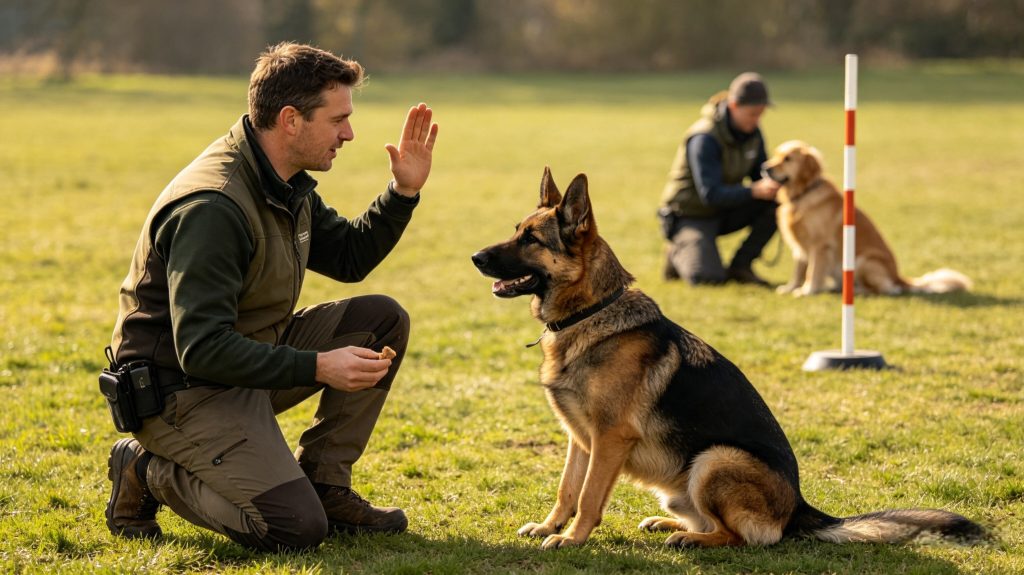
You can reinforce your dog when it chooses to remain settled while you move around.
The reward does not always have to be food. Calm interaction, play or access to something your dog enjoys can also be useful when appropriate.
The important part is that the reward follows the behaviour you want to strengthen.
Should I Ignore My Dog When It Follows Me?
Deliberately ignoring your dog is not the main solution.
Instead, avoid automatically rewarding following with attention every time it happens.
Give your dog opportunities to settle independently and reinforce those moments.
Your dog should still receive appropriate attention, exercise, training and companionship.
The goal is not to make your dog feel rejected. It is to teach your dog that it does not need to follow you constantly.
How Do I Stop My Dog Following Me Into Every Room?
Create predictable periods when your dog remains in its resting area while you move around the home.
Start with a short distance and duration that your dog can manage.
For example, ask your dog to settle while you move into another part of the room. Then progress to briefly entering another room.
If your dog gets up and follows, return to an easier stage rather than repeatedly forcing the separation.
What If My Dog Follows Me Because It Is Anxious?
If your dog becomes anxious whenever you move away, the behaviour may be related to separation.
Watch for signs such as:
- Whining or barking when you leave
- Pacing
- Scratching at doors
- Destructive behaviour
- Attempts to escape
- Toileting indoors
- Excessive drooling
- Inability to settle
If these behaviours occur, focus on gradual separation training rather than simply stopping your dog from following you.
Can a Crate Help Stop My Dog Following Me?
A crate can provide a suitable resting area if your dog has been properly introduced to it and is already comfortable using it.
Practise calm crate time while you are still at home.
Do not suddenly put a dog that follows you everywhere into a crate for long periods.
Never use the crate as punishment or force a distressed dog to remain confined.
Can a Playpen or Separate Area Help?
A playpen or suitable separate area can provide a safe space where your dog can practise independent settling.
Introduce the area positively and begin with short periods.
The aim is to teach your dog that being apart from you is normal and safe.
It should not be used simply to contain a dog that is panicking about being separated.
Should I Close the Door to Stop My Dog Following Me?
Closing a door can be part of gradual training, but it should not be the first step if your dog becomes distressed when you disappear.
Start with very small amounts of separation.
If closing the door immediately causes barking, scratching or panic, make the exercise easier.
Build the ability to cope rather than repeatedly exposing your dog to a separation it cannot manage.
How Long Does It Take to Stop a Dog Following You?
There is no fixed timeframe.
Some dogs respond quickly to consistent independent-settling training. Others need much longer, particularly if following is connected to anxiety or separation-related distress.
Increase the difficulty gradually.
Progress should be measured by your dog’s ability to remain calm and settled, not simply by how long it stays away from you.
What Mistakes Should I Avoid?
Avoid suddenly shutting your dog away for long periods.
Avoid deliberately ignoring your dog’s needs.
Avoid constantly rewarding following with attention.
Avoid increasing separation too quickly.
Avoid punishing your dog for following you.
Avoid using a crate or playpen as punishment.
Avoid assuming that every dog that follows its owner has separation anxiety.
When Should I Get Professional Help?
Seek professional help if your dog becomes highly distressed whenever you move away, cannot settle without you, attempts to escape, injures itself, destroys property or shows severe separation-related behaviour.
A vet should also be considered if your dog’s behaviour changes suddenly or becomes significantly more dependent than usual.
Conclusion
To stop your dog following you everywhere, teach it that staying settled independently is safe and rewarding.
Start at home with very small amounts of distance, reward calm behaviour and gradually progress to moving between rooms and eventually leaving the house.
Do not try to eliminate your dog’s desire to be close to you. The goal is to build enough independence that your dog can choose to settle without needing to follow you constantly.