Why Does My Dog Cry When I Leave?
Why does my dog cry when I leave? Your dog may cry when you leave because it is worried about being separated from you, has not learned to feel comfortable alone, expects you to return, or becomes distressed by the change in routine. The most effective approach is to teach your dog that being alone is safe and predictable, starting with very short periods and gradually increasing the time.
Why Does My Dog Cry When I Leave?
Crying when you leave can be a sign that your dog is finding separation difficult. Some dogs become unsettled as soon as you prepare to leave, while others only start crying after you have gone.
Look at what happens before, during and after you leave. This can help you understand whether your dog is simply protesting the change or becoming genuinely distressed.
Other signs can include pacing, barking, whining, scratching at doors, following you around the house, destroying objects, toileting indoors or being unable to settle.
Why Does My Dog Cry When I Get Ready to Leave?
Your dog may learn that certain actions mean you are about to leave. Picking up your keys, putting on your coat, putting on shoes or moving towards the door can become signals that trigger anxiety or excitement.
If your dog becomes unsettled before you have even left, begin working on these signals separately.
Pick up your keys and then sit back down. Put your coat on without leaving. Walk towards the door and then return to normal activity.
The aim is to reduce the importance of these signals rather than allowing them to predict a long period of separation every time.
How Do I Stop My Dog Crying When I Leave?
Start by teaching your dog to remain calm while you create small amounts of distance.
Step 1: Teach Your Dog to Settle Independently
Begin while you are still at home.
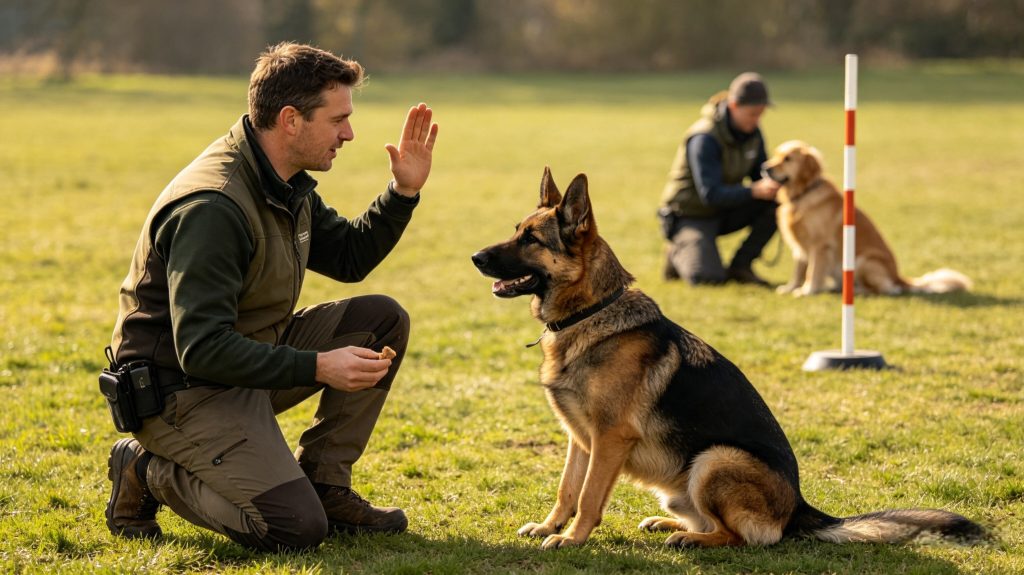
Encourage your dog to settle in a comfortable area while you remain nearby. Reward calm behaviour without constantly interacting with your dog.
Your dog needs to learn that relaxing independently is a normal part of everyday life.
Step 2: Move Away Briefly
Once your dog can settle while you are nearby, take a few steps away.
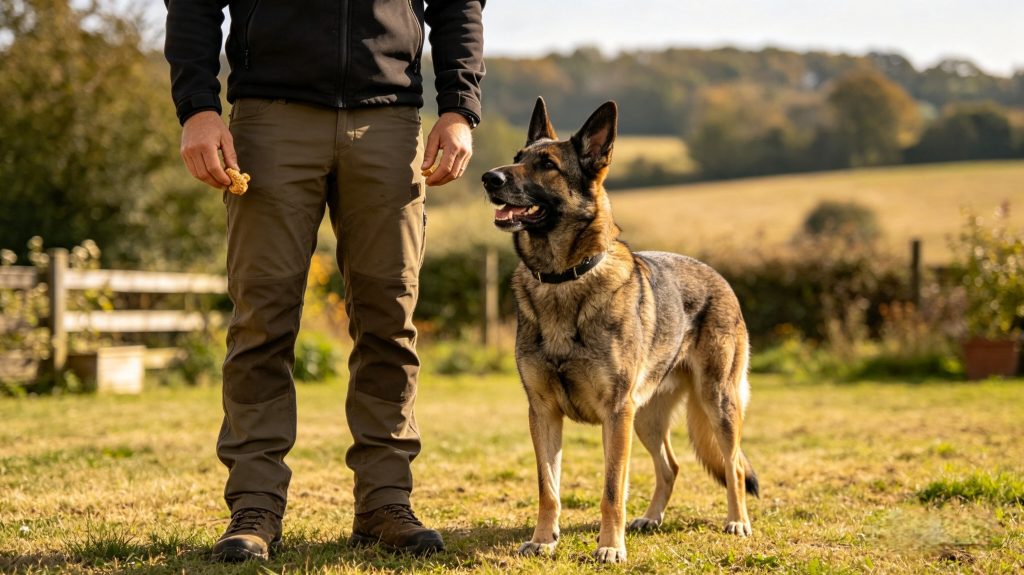
Return before your dog becomes distressed and calmly reward appropriate behaviour.
Gradually increase the distance rather than immediately attempting a long separation.
Step 3: Leave the Room
Walk out of the room for a very short period and return calmly.
If your dog remains relaxed, repeat the exercise and gradually increase the duration.
If your dog starts crying immediately, the step is probably too difficult. Reduce the duration and build up more slowly.
Step 4: Practise Leaving the House
Once your dog can cope with you moving around the home and briefly leaving a room, begin practising actual departures.
Start with a very short absence.
Return calmly and avoid turning every departure and return into a major event.
Gradually increase the time only when your dog is coping comfortably.
How Long Should I Leave My Dog When Training?
There is no single training time that works for every dog.
One dog may cope with a few seconds while another may comfortably manage several minutes. The important point is to increase the duration according to your dog’s behaviour rather than following a fixed timetable.
If your dog starts crying, pacing or showing other signs of distress, reduce the difficulty.
Progress should be based on calm behaviour, not simply how long you managed to stay away.
Should I Ignore My Dog When It Cries?
Simply ignoring your dog is not a complete solution.
If your dog is mildly vocalising because it wants attention, calmly avoiding reinforcement of the behaviour may be appropriate. However, if your dog is genuinely distressed, leaving it to become increasingly upset can make the situation harder to manage.
The aim is to teach your dog to cope with separation, not simply to wait for the crying to stop.
Should I Use a Crate When My Dog Cries When I Leave?
A crate can provide a safe, familiar resting area if your dog has already been properly introduced to it and is comfortable using it.
A crate should never be used as punishment or as a way of forcing a distressed dog to remain confined.
If your dog becomes highly distressed when confined, work on crate comfort separately before using the crate during periods of separation.
Can Food or Toys Help When My Dog Is Left Alone?
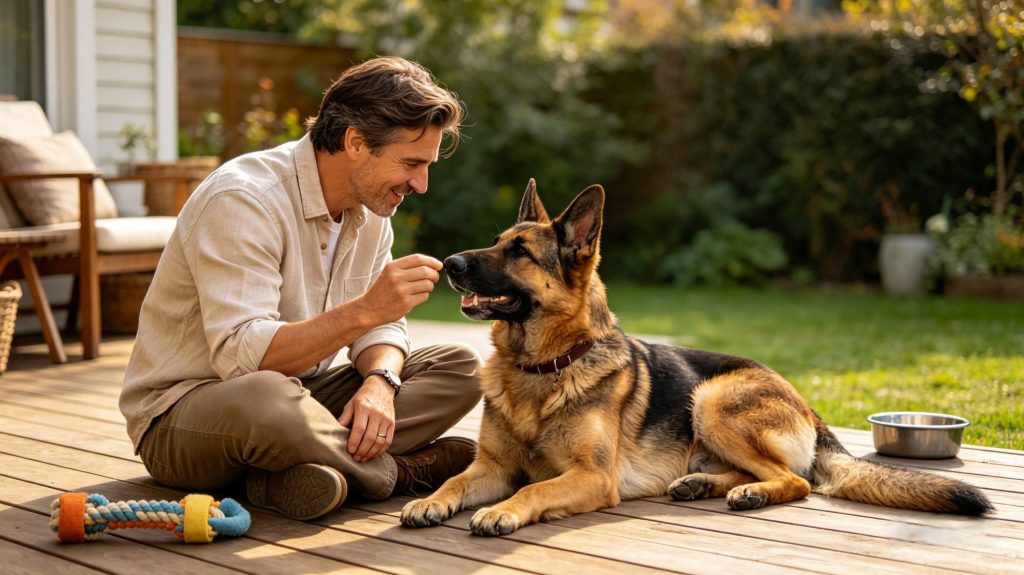
Food-based rewards and appropriate toys can help create a positive association with calm independent time.
Give your dog something suitable to occupy itself with while it is relaxed. However, enrichment should support separation training rather than replace it.
If your dog is too distressed to eat or engage with a toy when you leave, this can indicate that the level of separation is too difficult.
Why Does My Dog Cry Even After I Have Been Gone for a Short Time?
Your dog may not yet have learned that you will return safely after a short absence.
If crying begins after a few seconds or minutes, reduce the training duration to a point where your dog can remain calm.
For example, if your dog becomes distressed after two minutes, returning to one minute or less may allow you to rebuild successful experiences.
Gradually increase the duration rather than repeatedly pushing beyond your dog’s current ability.
What If My Dog Cries, Barks or Destroys Things When I Leave?
Crying accompanied by persistent barking, pacing, destruction, attempts to escape, toileting or significant distress should be taken seriously.
Do not punish your dog when you return. Your dog may not understand what the punishment relates to, and it can make separation more stressful.
Instead, reduce the difficulty of the separation training and consider professional help if the behaviour is severe or continues despite careful training.
What Mistakes Should I Avoid?
Avoid suddenly leaving your dog alone for long periods when it has not been prepared for them.
Avoid repeatedly increasing the duration too quickly.
Avoid punishing crying, barking, destruction or toileting after you return.
Avoid making your dog completely dependent on constant attention when you are at home.
Most importantly, do not judge progress by the clock alone. Judge it by whether your dog can remain calm and comfortable.
How Often Should I Practise Leaving My Dog Alone?
Short, successful practice sessions are generally more useful than repeatedly testing your dog with long absences.
Build separation practice into normal daily life. Give your dog opportunities to settle independently, move away briefly and experience predictable departures.
Increase difficulty gradually as your dog becomes more comfortable.
How Long Does It Take to Stop a Dog Crying When You Leave?
The timeframe depends on why your dog is crying, how long it has been happening, how distressed your dog becomes and how consistently the training is applied.
Some dogs improve relatively quickly with gradual practice, while others need much longer.
Do not rush the process simply because you want your dog to cope for longer. Calm, repeatable progress is more important than speed.
When Should I Get Professional Help?
Seek professional help if your dog becomes extremely distressed when left, repeatedly attempts to escape, injures itself, destroys doors or windows, cannot settle despite gradual training, or shows severe separation-related behaviour.
A vet may also be appropriate if the behaviour has appeared suddenly or changed significantly, particularly if there could be an underlying health or behavioural issue.
Conclusion
Why does my dog cry when I leave? In many cases, crying happens because the dog has not yet learned to feel comfortable being alone or is experiencing genuine separation-related distress.
Start with very short periods, teach independent settling, increase distance and duration gradually, and always work below the point where your dog becomes overwhelmed.
The goal is not simply to make your dog stop crying. The goal is to teach your dog that being alone is safe, predictable and manageable.