Why Is Prey Drive Important in Dog Training?
Why Is Prey Drive Important in Dog Training? is an important question because prey-driven behaviour can provide a powerful source of motivation and engagement for some dogs. A dog may become highly interested in movement, toys, chasing activities or tug play, but that interest can also create difficulties if the level of arousal becomes too high or the handler does not understand how the dog is responding. Some dogs may become intensely focused on a toy while others show comparatively little interest in prey-based play. Problems can arise when handlers assume that every dog should respond in the same way, continually increase stimulation or confuse prey-driven play with other forms of behaviour.
RECOMMENDED PRODUCT
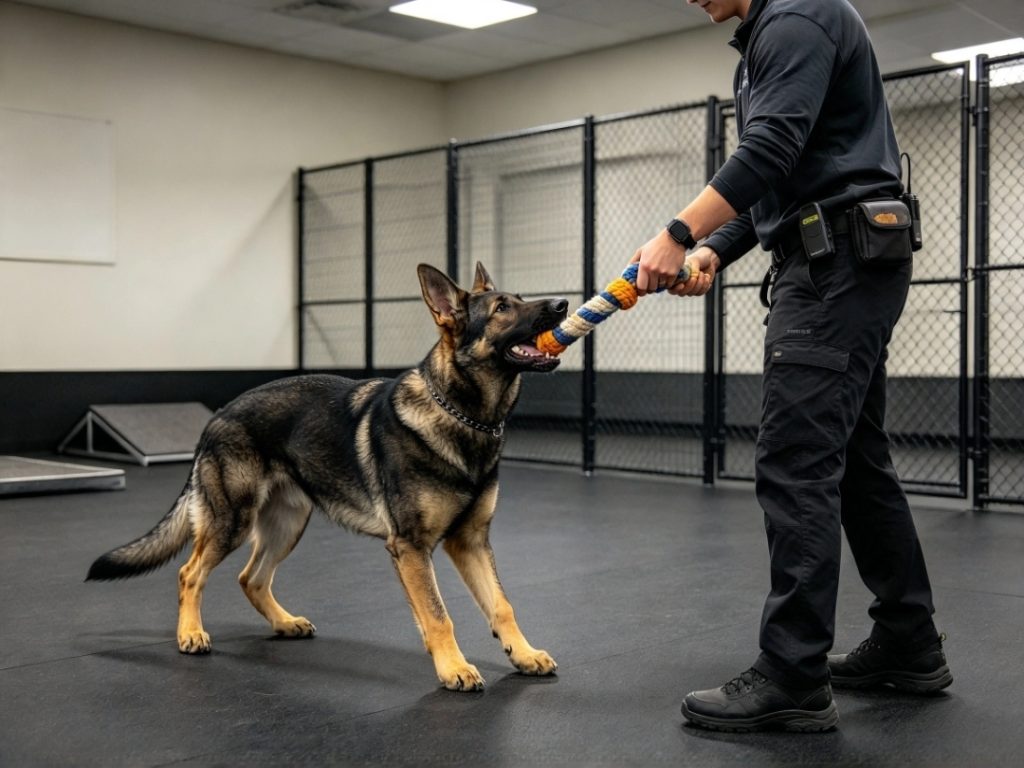
Tug Toy — a suitable tug toy can provide a controlled object for observing engagement, motivation and arousal during structured play.
Why Prey Drive Can Matter in Dog Training
Prey drive can be important because movement and interactive play can create strong engagement for some dogs.
A dog that becomes interested in a moving toy may naturally follow, chase, pursue or interact with it. This can provide the handler with another way to develop motivation and participation during appropriate training activities.
However, prey drive is not simply about making a dog more excited.
The handler needs to understand the difference between useful engagement and excessive arousal. A dog can become so focused on an object that it becomes difficult to transition away from the activity.
The value of prey drive therefore depends on how the behaviour is understood and managed.
Common Problems When Prey Drive Is Misunderstood
One common problem is assuming that strong prey drive automatically makes a dog easier to train.
A highly motivated dog may engage intensely with a toy but still struggle with communication, control, transitions or calm behaviour.
Another problem is assuming that a dog with less interest in toys lacks training potential.
Dogs can have different preferences and different forms of motivation. Some may respond strongly to food, while others may show greater interest in toys, movement or interaction.
Prey drive should therefore be considered as one aspect of the individual dog’s behaviour rather than a measurement of overall training ability.
Common Issues With Excessive Stimulation
Prey-driven play can become highly stimulating.
A dog may begin to move faster, stare intensely at the toy, vocalise, jump toward the object or repeatedly attempt to restart the interaction.
If the handler continually increases movement and intensity, the dog may become increasingly aroused.
This can make it difficult to return to a calm state or transition into another activity.
The problem is not necessarily the dog’s prey drive itself. The difficulty can be that the level of stimulation has increased beyond what the handler can comfortably manage.
RECOMMENDED PRODUCTS
Interactive Tug Toy — an appropriate interactive tug toy can provide a controlled way to observe the dog’s natural interest in movement and play.
Frustration During Prey-Based Training
Frustration can develop when the dog strongly wants access to the toy but cannot immediately interact with it.
The dog may pull toward the toy, jump, vocalise or attempt to grab it before the handler is ready.
The handler may then increase movement in an attempt to maintain interest.
This can create a cycle where both dog and handler become increasingly focused on intensity rather than understanding.
Frustration can also occur when a dog does not show the level of prey interest that the handler expected.
The handler may continue increasing stimulation, even though the dog is showing little interest.
Timing and Prey Drive
Timing is particularly important when prey drive is being used as part of structured play.
The movement of the toy, the opportunity to engage, the duration of interaction and the point at which the activity ends all contribute to the dog’s experience.
If the toy is moved continuously without a clear structure, the dog may become focused on rapid movement rather than developing a controlled interaction with the handler.
If the handler continues the activity after the dog has become excessively aroused, returning to a calmer state may become more difficult.
Appropriate timing therefore plays an important role in keeping prey-based activities structured.
Misunderstanding and Miscommunication
A common misunderstanding is believing that prey drive means a dog should always chase or grip moving objects.
Prey-driven behaviour still needs to be considered within the context of the individual dog and the activity being performed.
Another misunderstanding is confusing prey-driven play with aggression.
A dog engaging intensely with an appropriate toy during controlled play is displaying a different behaviour from a dog behaving aggressively toward a person or another animal.
Clear observation is therefore important when interpreting what the dog is actually doing.
Prey Drive and Motivation
Prey drive can provide another form of motivation when a dog finds movement and play particularly rewarding.
For some dogs, a toy can produce greater engagement than food in particular circumstances.
For other dogs, food may remain more effective.
The important consideration is identifying what motivates the individual dog and understanding how that motivation changes according to the environment, exercise and level of arousal.
This prevents the handler from assuming that one reward system should work identically for every dog.
RECOMMENDED PRODUCTS
Training Ball — a suitable training ball can provide another controlled form of movement-based engagement for dogs that show an interest in chasing and retrieving objects.
GPK9’S FIVE GOLDEN RULES
The GPK9 Five Golden Rules place prey drive within a wider training system rather than treating it as an isolated characteristic.
Prey-driven behaviour can affect motivation, play, arousal and attention, but these areas also interact with home structure, obedience, routine and social walking.
The Five Golden Rules provide a connected framework that can be applied from a new puppy and family pet through to experienced dog owners, professional trainers and handlers.
Golden Rule One — Home and Social
Prey-drive activities do not exist separately from the dog’s daily structure.
A dog that has inconsistent boundaries or excessive freedom may arrive at a play session already highly stimulated.
Golden Rule One provides the progression:
Crate → Placemat → Playpen
The crate provides safety, reset and toilet support.
The placemat provides calm home freedom.
The playpen provides monitored freedom.
This gives the handler a structured way to manage freedom and observe the dog’s behaviour before and after stimulating activities.
The traffic-light system provides additional guidance:
- Green — progress and monitor.
- Amber — observe and review.
- Red — return to the appropriate controlled stage or stop.
This directly addresses situations where prey-drive activity is being affected by poor structure or excessive freedom.
Golden Rule Two — Obedience
Prey drive can provide motivation, but motivation alone does not create clear communication.
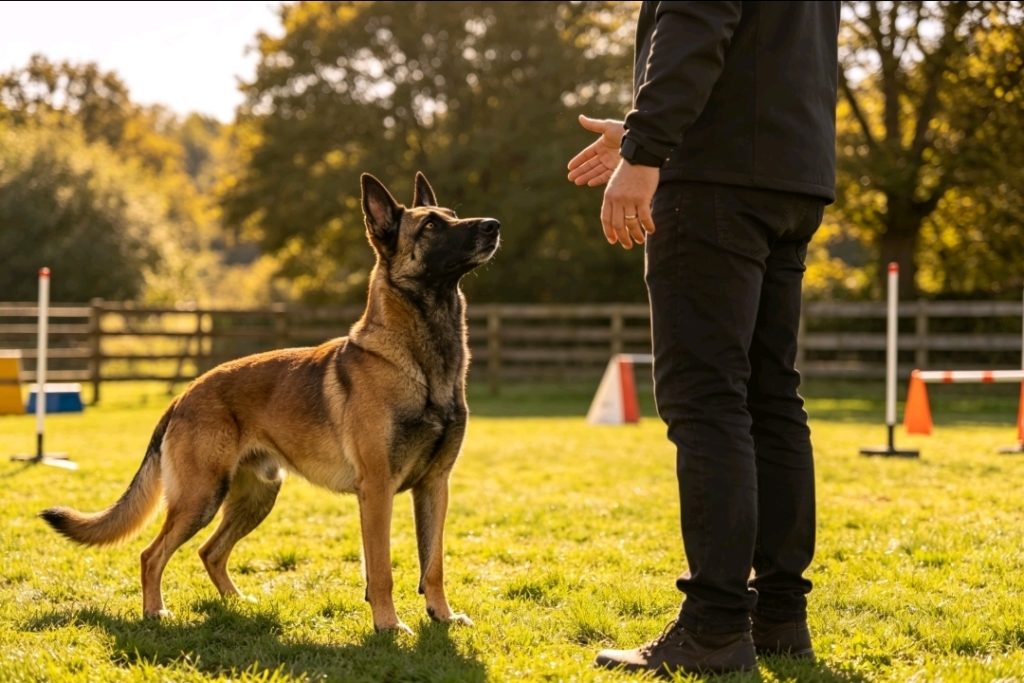
Golden Rule Two provides a structured obedience framework using food and luring alongside praise, shaping and movement.
The handler develops communication separately from prey-based play.
This distinction is important because a dog should not need to remain highly stimulated by a toy in order to understand the handler.
Structured obedience can help create clearer expectations around training activities and transitions.
Golden Rule Three — Prey Drive / Play
Golden Rule Three is the central part of the Five Golden Rules for understanding prey drive.
Prey drive and play are given their own appropriate area rather than being continually mixed into obedience.
Tug or toy play can provide an opportunity to observe the dog’s natural motivation, engagement and level of arousal.
The handler monitors the dog rather than simply increasing stimulation.
The traffic-light system provides a clear structure:
- Green — observe and play.
- Amber — observe and reduce arousal.
- Red — stop and return to calm.
This directly connects to the importance of prey drive because the handler can recognise when play is creating useful engagement and when the dog’s arousal is becoming too high.
Golden Rule Four — Toilet
Toilet training is separate from prey-drive work, but it contributes to the wider daily structure.
Golden Rule Four uses the same place, the same general timing and a toilet command.
A predictable routine helps the handler organise the dog’s day and reduces unnecessary disruption around training and play.
The wider principle remains the same: structured routines help create clearer expectations.
Golden Rule Five — Social Walking / Ignore the World
Prey drive can become particularly noticeable when the dog encounters movement outside.
Wildlife, other dogs, people, vehicles and objects can all attract attention.
Golden Rule Five focuses on calm, relaxed and manageable walking without continually issuing commands.
The handler observes the dog’s behaviour and the surrounding environment.
The traffic-light structure provides a consistent response:
- Green — monitor and continue.
- Amber — stop and allow the dog to become calm in a quieter area until Green.
- Red — stop the walk immediately.
This directly addresses situations where movement in the environment increases the dog’s prey-related attention or arousal.
Solution Connection
The importance of prey drive becomes clearer when the problems surrounding it are considered in sequence.
Problem → Issue → Mistake → Timing → Frustration → Misunderstanding → GPK9 Five Golden Rules → Structured Solution
If the dog lacks structure at home, Golden Rule One provides a framework for managing freedom and calm behaviour.
If motivation is being confused with communication, Golden Rule Two provides structured obedience.
If the main issue involves movement, toys, engagement or increasing arousal, Golden Rule Three provides the dedicated prey-drive and play framework.
If daily routine affects the wider training structure, Golden Rule Four provides predictable toilet management.
If movement in the outside environment triggers increased prey-related attention, Golden Rule Five provides a structured approach to calm social walking.
The purpose is not simply to increase prey drive.
It is to understand the motivation the dog already demonstrates, recognise its effect on behaviour and provide appropriate structure around it.
RECOMMENDED PRODUCTS
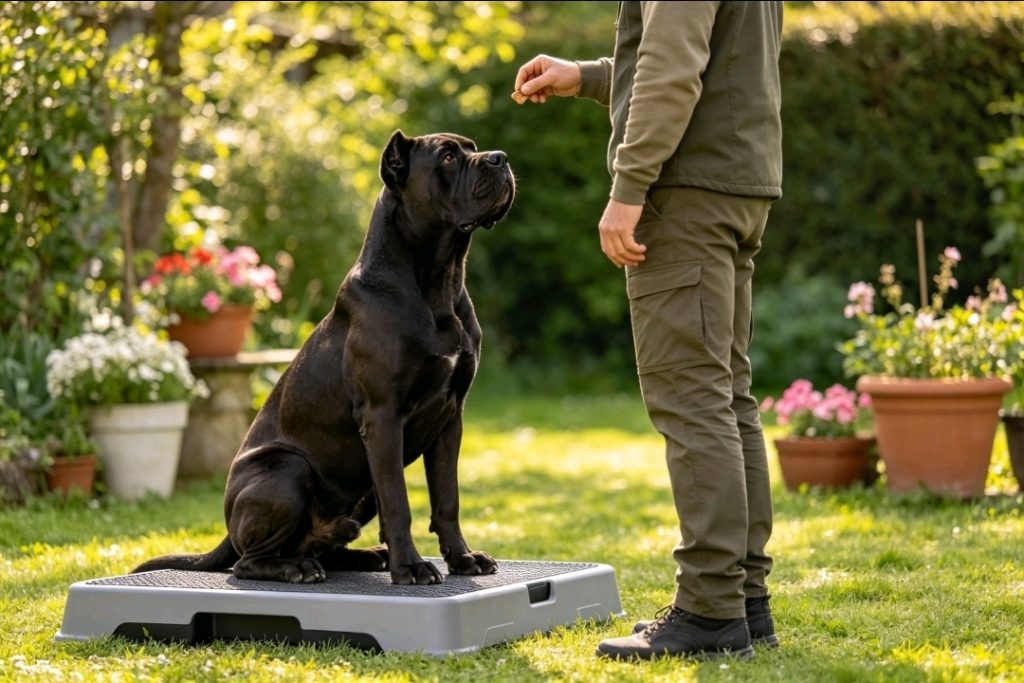
Training Mat — a training mat can provide a consistent location for structured exercises before or after play, helping the handler create clearer transitions between activities.
Final Connection
Why Is Prey Drive Important in Dog Training? Because for some dogs, prey-driven behaviour can provide a significant source of motivation, engagement and interactive play.
However, prey drive is not a substitute for communication, structure or appropriate training.
A dog can have strong prey motivation and still require help developing calm behaviour, clear transitions and reliable communication. Equally, a dog with less interest in prey-based play can still develop through other appropriate forms of motivation.
The GPK9 Five Golden Rules provide a connected framework for understanding where prey drive fits into the wider training system.
Home and social structure provides the foundation. Obedience develops communication and engagement. Prey drive and play provide a controlled area for motivation and arousal. Toilet training establishes routine. Social walking develops calm and manageable behaviour around the wider environment.
Together, these areas allow the handler to understand prey drive without treating it as an isolated characteristic.
Prey drive can be an important part of dog training when it is understood as an individual dog’s natural motivation and managed through appropriate structure, timing, communication and observation.