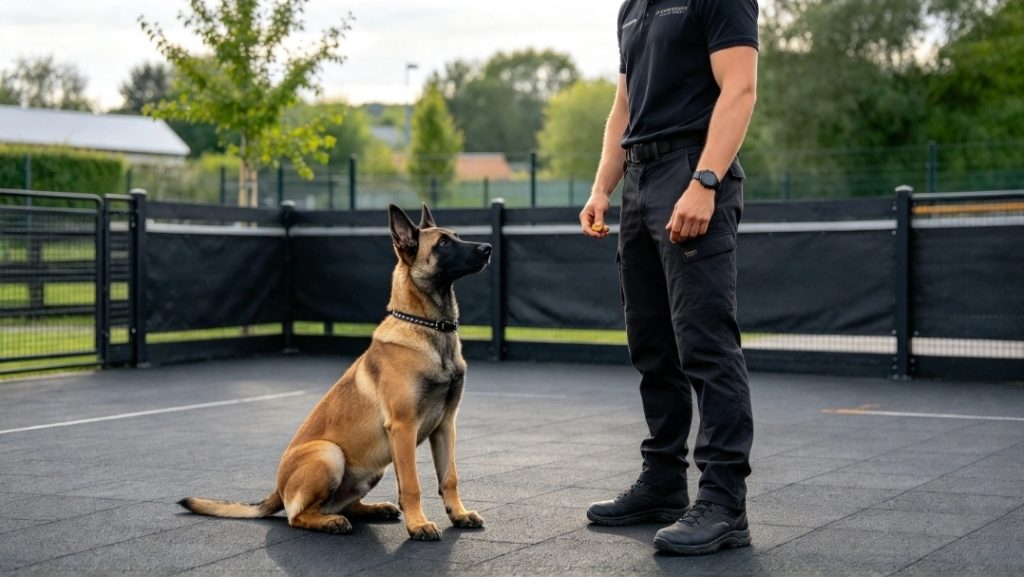
What Is Obedience Training for Dogs?
What Is Obedience Training for Dogs? is a question that becomes particularly important when everyday communication between a dog and handler is unclear. A dog may appear to ignore instructions, become distracted easily, move away from the handler, jump for attention, become overexcited or respond differently depending on who is handling it. These difficulties can become frustrating when the handler expects the dog to understand what is required without providing consistent structure, timing or communication. Obedience training is therefore not simply about making a dog perform individual commands. It involves developing clearer communication and creating predictable training situations in which the dog can understand what the handler is asking.
RECOMMENDED PRODUCTS
Training treats — Training Treats
Small, suitable training treats can be used as part of structured obedience exercises where food is appropriate for the training objective.
Common Problems
One of the most common problems is inconsistent communication.
A handler may use different words, gestures or expectations for the same behaviour, while different members of the household may communicate with the dog in completely different ways.
The dog may therefore receive mixed information about what is expected.
Another problem is distraction. A dog may appear to understand an exercise in a quiet environment but struggle when there are people, sounds, movement or other environmental changes.
This can create the impression that the dog has forgotten its training when the real issue is that the training situation has changed.
Common Issues
Another common issue is expecting obedience to develop without sufficient repetition and structure.
A handler may practise occasionally, change locations frequently or move too quickly from simple exercises to difficult environments.
The dog may then experience inconsistent expectations and insufficient opportunity to understand the exercise.
Another issue is using food without considering how it is being delivered. If food is continually provided without structure, the dog may become focused on obtaining food rather than understanding the exercise and communicating with the handler.
Common Mistakes
A common mistake is focusing entirely on commands.
A handler may spend a significant amount of time repeating words such as sit, down, stay or come without considering the dog’s body language, attention, motivation or understanding.
Another mistake is training when the dog is already highly distracted or overexcited.
This can make communication more difficult and can result in repeated failures rather than useful learning.
Handlers can also make the mistake of changing too many variables at once. Moving to a new environment, increasing distractions, changing equipment and introducing a new exercise simultaneously can make it difficult to understand what is causing the problem.
Frustration
Obedience problems can create frustration for both the dog and handler.
The handler may repeat an instruction several times, become increasingly animated or physically attempt to redirect the dog.
The dog may respond by becoming more distracted, moving away, increasing its activity or focusing on something else in the environment.
Repeated frustration can change the training relationship from a structured learning process into a series of reactions.
Timing
Timing is an important part of obedience training because the dog needs to understand which behaviour is being recognised.
If food, praise or movement occurs too late, the dog may not clearly connect the consequence with the behaviour the handler intended to reinforce.
Poor timing can therefore create confusion even when the handler believes they are rewarding the correct behaviour.
Timing also matters when introducing distractions and increasing difficulty. If progression happens before the dog is ready, the exercise can become unnecessarily difficult.
Misunderstanding and Miscommunication
A dog and handler can misunderstand each other when the handler assumes the dog understands a behaviour that has not been clearly established.
For example, a handler may believe that a dog understands an instruction because it performs the behaviour in one location, while the dog has not yet learned to respond under different circumstances.
Communication also becomes unclear when body language, voice, food delivery and movement do not work together.
Obedience training therefore requires the handler to consider the complete interaction rather than focusing only on the spoken command.
RECOMMENDED PRODUCTS
A suitable treat pouch can help the handler keep training rewards accessible and organised during structured obedience sessions.
GPK9’S FIVE GOLDEN RULES
The GPK9 Five Golden Rules provide a connected training system rather than treating obedience as an isolated collection of commands.
What Is Obedience Training for Dogs? can therefore be understood within the wider relationship between home structure, obedience, play, toilet routines and social walking.
The system is designed to help the handler understand what is happening, recognise the dog’s behaviour and maintain clearer communication, appropriate timing and consistent structure.
Golden Rule One — Home and Social
Golden Rule One provides the foundation around which obedience can develop.
The GPK9 progression of crate → placemat → playpen creates different levels of structure and freedom within the home.
The crate provides safety, reset and toilet support.
The placemat provides calm home freedom.
The playpen provides monitored freedom.
This is relevant to obedience because a dog that has no clear structure outside training sessions may find it harder to understand expectations during training.
Home structure helps create a more consistent environment in which the handler can observe behaviour and recognise when the dog is ready to progress.
Golden Rule Two — Obedience
Golden Rule Two is the central connection to What Is Obedience Training for Dogs?
GPK9 obedience training uses food and luring, together with praise, shaping and movement, to develop communication between dog and handler.
Training can be carried out in the same area and around the same time to create greater consistency, particularly during early stages.
Food is hand-delivered as part of structured training rather than simply being provided while the dog moves around without purpose.
The aim is to create clearer communication between handler and dog while allowing the handler to observe behaviour, timing and progression.
The traffic-light approach also helps the handler recognise the dog’s current level of performance:
- Green — appropriate progress and continued observation.
- Amber — behaviour requires observation and review.
- Red — stop and return to a more controlled stage.
Golden Rule Three — Prey Drive and Play
Play is separate from obedience within the GPK9 system.
This distinction is important because excitement, toy movement and increased arousal can affect the dog’s ability to focus during structured obedience exercises.
Golden Rule Three provides a separate environment for prey-drive and play development, allowing the handler to observe the dog’s engagement and arousal without confusing play with obedience training.
Understanding this difference can help the handler recognise why a dog may behave differently during an obedience exercise compared with an active play session.
Golden Rule Four — Toilet
Toilet training is another part of the wider structure surrounding obedience, particularly during puppy development.
Golden Rule Four focuses on the same place, the same time and a toilet command.
A consistent toilet routine can help the handler create clearer daily expectations while reducing uncertainty around when and where the dog should toilet.
Although toilet training is separate from obedience exercises, it contributes to the structured routine surrounding the dog’s development.
Golden Rule Five — Social Walking and Ignore the World
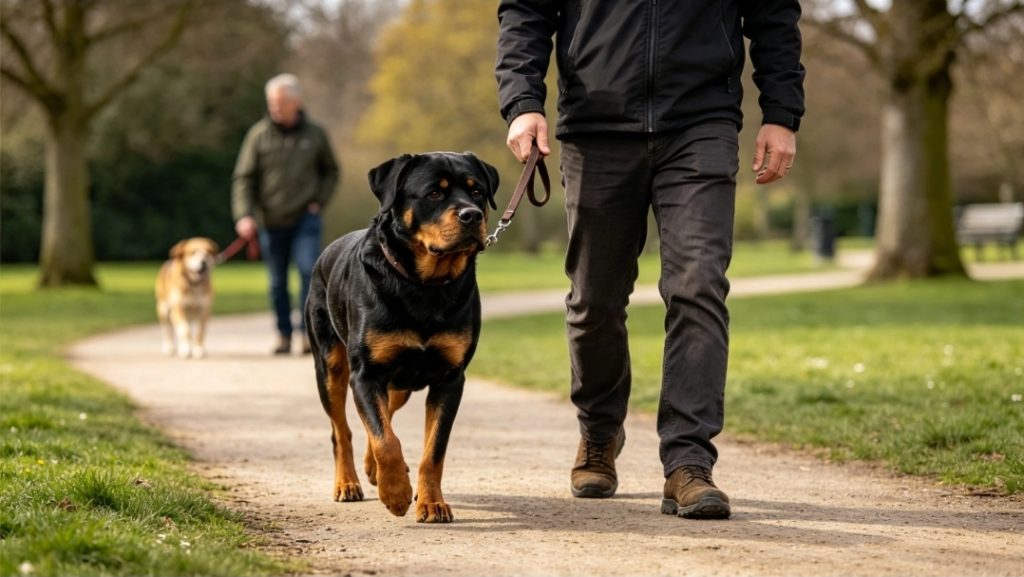
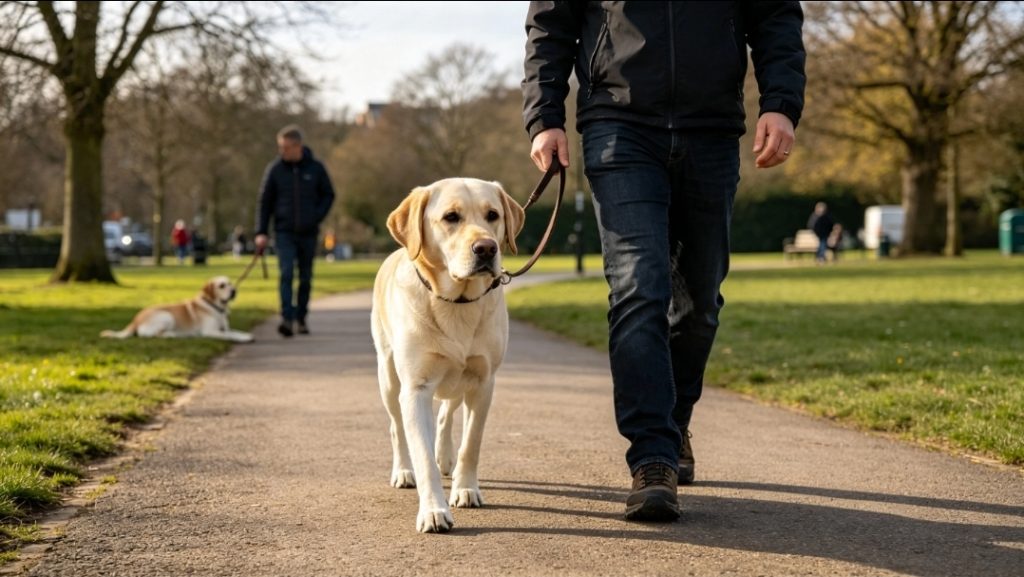
Golden Rule Five takes the principles of manageable behaviour and communication into the walking environment.
The focus is a calm, relaxed and manageable walk, without making commands the central focus.
This allows the handler to observe how the dog responds to movement, sounds, people and the wider environment.
The relationship with obedience is important because a dog that can only focus in a controlled training area has not necessarily developed the same level of manageability in everyday surroundings.
Final Connection
What Is Obedience Training for Dogs? is ultimately about much more than teaching a list of commands.
The difficulties associated with obedience often involve inconsistent communication, poor timing, excessive distractions, unclear expectations, inappropriate progression and frustration between dog and handler.
The GPK9 Five Golden Rules connect these areas into one structured system.
Home and Social provides structure. Obedience develops communication. Prey Drive and Play provides a separate framework for engagement and arousal. Toilet establishes consistency around an important daily routine. Social Walking and Ignore the World develops calm and manageable behaviour within the wider environment.
Together, these principles provide a structured way to understand obedience as part of the dog’s overall development rather than as a collection of isolated commands.