How to Teach Your Dog to Settle on a Training Mat
Learning how to teach your dog to settle on a training mat is about creating a clear behaviour that your dog understands and can repeat calmly. The aim is not simply to place a dog on a mat and expect them to remain there; the owner needs to build value in the training area, reinforce calm behaviour and gradually increase the amount of time the dog can remain settled. RECOMMENDED PRODUCTS
Training Mats
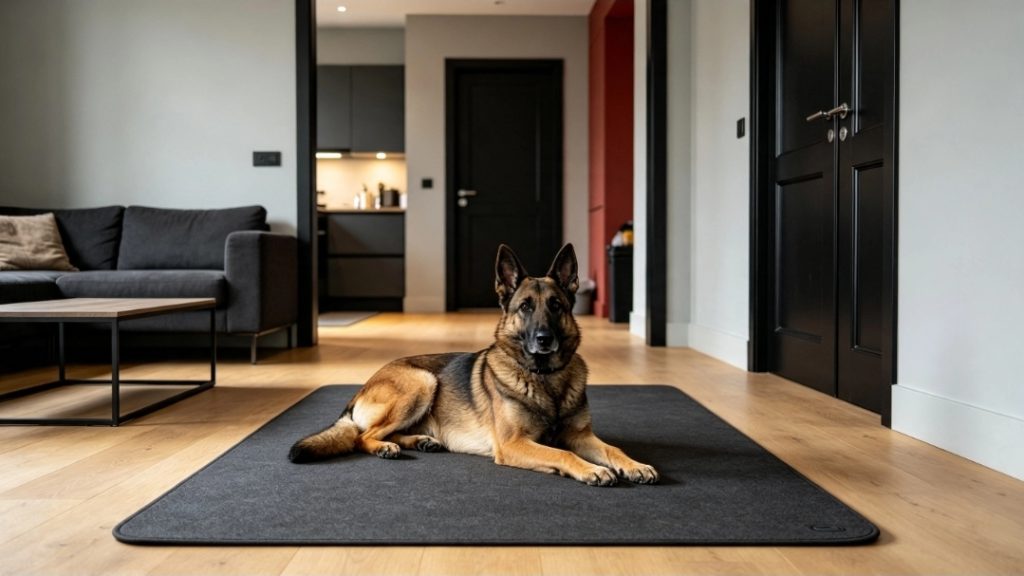
A training mat should provide a clear and consistent location for the exercise. Begin in a quiet area where your dog can concentrate without unnecessary distractions. Reward your dog for approaching the mat, investigating it and eventually placing their feet onto it. Positive reinforcement can then be used to build a stronger association between the mat and calm behaviour.
Start With the Mat
The first stage is simply teaching your dog that the mat is a valuable place to be. Allow your dog to investigate the mat and reward interaction with it. You can use food to guide your dog onto the mat, but the objective should be for the dog to understand the location rather than continually follow a food lure.
As your dog becomes comfortable standing on the mat, continue rewarding while they remain there. The reward should reinforce the behaviour you want, rather than accidentally encouraging the dog to leave the mat immediately after receiving food.
Build Calm Behaviour
Once your dog is comfortable standing on the mat, begin encouraging a more settled position. Depending on the dog’s existing training, this may involve calmly guiding the dog into a sit or down position.
The important part is what happens after the dog reaches the position. Calm behaviour should be reinforced while the dog remains settled. This helps the dog learn that staying relaxed on the mat is worthwhile.
RECOMMENDED PRODUCTS

Increase the Time Gradually
A common mistake is expecting too much too soon. A dog that has only learned to remain on the mat for a few seconds should not immediately be expected to settle for several minutes.
Increase duration gradually. Reward your dog while they remain calm, then release them before they become frustrated or decide to leave independently. Training guidance commonly recommends building duration gradually and reducing the difficulty if the dog breaks the behaviour.
This is where the owner’s timing becomes important. If the owner repeatedly waits until the dog becomes restless before ending the exercise, the training session may become unnecessarily difficult.
Use a Consistent Release
Your dog should understand when the exercise has finished. A consistent release cue can help separate settling on the mat from being free to move around.
For example, the dog can remain on the mat while calm behaviour is being reinforced, followed by a consistent release cue that tells the dog they can leave. Release cues are commonly used to clearly communicate the end of a behaviour.
Consistency matters. If the dog learns that getting up whenever they want results in the exercise ending, the owner may unintentionally reinforce leaving the mat.
RECOMMENDED PRODUCTS

Add Distance and Distractions Slowly
Once your dog can settle successfully with you close by, begin introducing small changes. Take a step away, return and reward. Gradually increase the distance as your dog becomes more reliable.
Distractions should also be introduced progressively. Do not change the duration, distance and environment all at the same time. A dog that can settle for several minutes in a quiet room may need a much shorter exercise when there are visitors, household activity or other distractions.
This gradual progression helps the dog understand that the same calm behaviour applies in different situations.
The Owner Can Create the Problem
Many difficulties with mat training are created by the way the exercise is introduced.
The owner may move too quickly, reward at the wrong moment, repeatedly call the dog away from the mat, allow inconsistent release, or expect the dog to remain settled while the environment is far more distracting than the training level allows.
Another common mistake is treating the mat as a place where the dog is simply put when the owner wants them out of the way. The objective is to teach the dog that the mat is a predictable location where calm behaviour is reinforced.
RECOMMENDED PRODUCTS
Know When to Reduce the Difficulty
If your dog repeatedly leaves the mat, becomes restless or struggles to settle, the answer is not necessarily to keep repeating the same exercise.
Consider what changed. The duration may be too long. The owner may have moved too far away. There may be too much activity in the environment. The dog may not yet understand what is expected.
Reduce the difficulty and create another successful repetition. Training should progress when the dog is ready rather than because the owner wants to move to the next stage.
Build the Behaviour Into Everyday Life
Once your dog understands the basic exercise, the training mat can become part of normal household structure.
You can reinforce calm behaviour while you are sitting in the room, preparing food, working, watching television or carrying out ordinary household activity. The aim is to move from a formal training exercise towards a useful everyday behaviour.
Over time, how to teach your dog to settle on a training mat becomes less about repeatedly asking for a position and more about creating a clear expectation that the mat is a place for calm, controlled behaviour.
RECOMMENDED PRODUCTS
GPK9 GOLDEN RULES
GPK9 Golden Rule One introduces structured home behaviour and controlled progression, helping owners understand how calm behaviour can be developed before greater freedom is introduced.
GOLDEN RULE ONE — HOME AND SOCIAL
Home and Social teaches the dog how to develop controlled freedom within the home. The training mat provides a structured stage between restricted management and greater freedom.
GOLDEN RULE TWO — OBEDIENCE
Obedience develops communication, movement and responsiveness through food, luring, praise and structured repetition. These skills can support the dog’s ability to move onto and settle on the mat.
GOLDEN RULE THREE — PREY DRIVE / PLAY
Prey Drive / Play provides a separate area for controlled engagement and play. The ability to move between appropriate activity and calm behaviour is an important part of balanced training.
GOLDEN RULE FOUR — TOILET TRAINING
Toilet Training establishes routine, timing and a consistent location. Clear household structure can help the dog understand what is expected at different points throughout the day.
GOLDEN RULE FIVE — SOCIAL WALKING / IGNORE THE WORLD
Social Walking / Ignore the World teaches calm, manageable behaviour during everyday walking environments. The same principle of remaining composed can continue into the home.