Why Use a Dog Crate? Understanding Crate Training
Introduction
Why use a dog crate? A dog crate can provide a defined space within the home where a dog can rest, settle and become familiar with an organised daily environment. When used appropriately, crate training can form an important part of a dog’s development and household routine.
RECOMMEND PRODUCTS
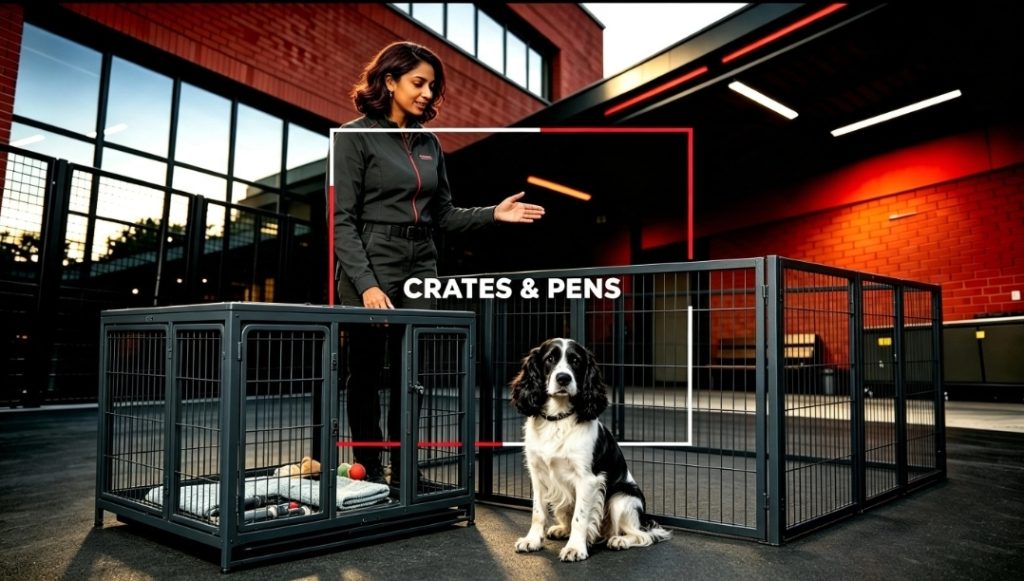
A crate is more than simply an item of equipment.
For many owners, it can become a familiar part of their dog’s environment and provide a consistent place for rest and quiet time.
Crate training is particularly relevant during puppy development, when dogs are learning about their surroundings and becoming familiar with household routines.
At GPK9, crate training forms part of Golden Rule One: Home and Social, which focuses on the importance of developing appropriate behaviour within the home.
What Is the Purpose of a Dog Crate?
A dog crate provides a defined area for a dog within the home.
It can give the dog somewhere familiar to rest while also helping the owner organise the household environment.
Depending on the individual dog and circumstances, a crate may be useful for:
- Rest
- Quiet time
- Household management
- Puppy development
- Routine
- Travel
- Appropriate periods of supervision
The purpose of the crate should always be considered alongside the dog’s overall welfare and individual needs.
A crate should be comfortable, appropriately sized and introduced in a suitable manner.
Why Use a Dog Crate?
Why use a dog crate? For many owners, the answer is connected to structure.
Dogs need opportunities to learn how to behave within their environment.
A crate can provide one clearly defined area within the home, helping establish familiarity and routine.
For a puppy, this can be particularly useful because the home can contain many new experiences.
People moving around, household noises, visitors and changes in activity can all provide distractions.
A familiar resting environment can give the dog an appropriate place to settle.
Dog Crates and Puppy Development
Puppies are constantly learning.
They are becoming familiar with people, sounds, routines, household activity and their surroundings.
A crate can form part of this early environment.
It can provide a consistent resting area while the puppy becomes accustomed to life within the home.
The crate can also complement other aspects of puppy training, including toilet training, settling and appropriate household behaviour.
The individual puppy’s age, development and needs should always be considered.
RECOMMEND PRODUCTS
Choosing appropriate equipment is an important part of preparing a structured home environment.
A crate should be suitable for the dog’s size and provide sufficient space for the dog to stand, turn around, lie down and stretch comfortably.
Owners should also consider the construction, ventilation, security and intended purpose of the crate.
For puppies, it is important to consider future growth when selecting equipment.
A suitable puppy pen can also provide additional controlled space as part of the dog’s wider home environment.
Crate Training and Positive Experiences
Crate training should be associated with positive and appropriate experiences.
Dogs learn through their experiences with their environment, and the handler plays an important role in creating those experiences.
Food rewards, toys, calm interaction and positive reinforcement may all have a place in introducing a dog to new equipment.
The individual dog should always be considered.
Some dogs may become comfortable with a crate relatively quickly, while others may need more time and patience.
The aim is to help the crate become a familiar and appropriate part of everyday life.
Why Use a Dog Crate for Rest?
One of the reasons why use a dog crate is to provide a defined place where a dog can rest.
Rest is an important part of a dog’s daily routine.
A structured environment can help separate periods of activity from periods of calm.
The crate can therefore become associated with quiet time and rest when it is used appropriately.
This can be particularly useful within a busy household where there are regular changes in activity.
RECOMMEND PRODUCTS
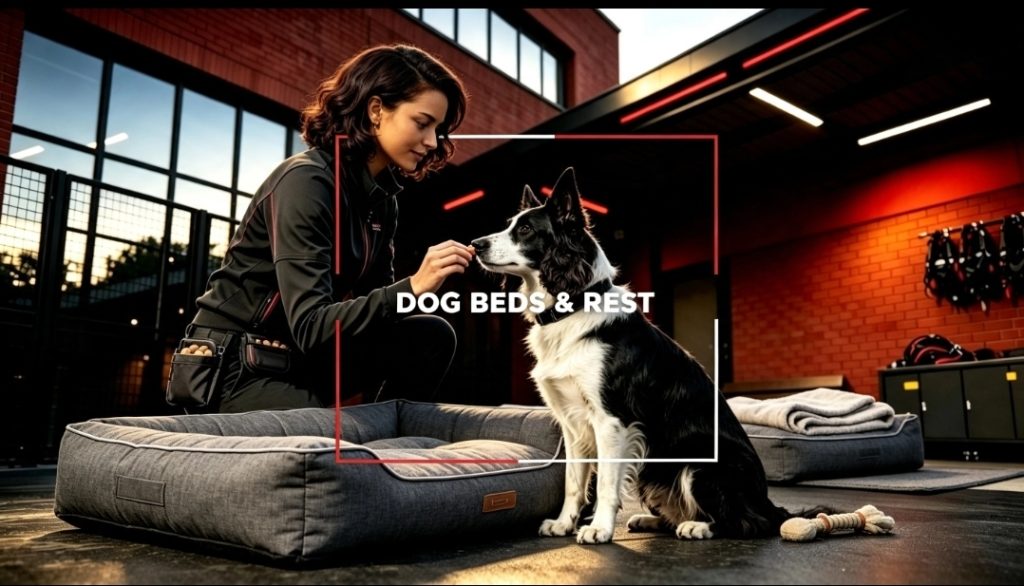
A suitable dog bed can provide another comfortable resting area within the home.
Different resting environments can have different purposes, depending on the dog’s routine and the structure of the household.
Combining appropriate resting equipment with good training can help owners create a more organised environment for their dog.
Dog Crates and Home Structure
A crate can form part of a wider approach to home structure.
Dogs are not automatically aware of household expectations.
They need to become familiar with how their environment works.
This includes understanding when the household is active and when it is time to settle.
The crate can provide one consistent element within that environment.
This connects with GPK9 Golden Rule One: Home and Social, which introduces the importance of structured behaviour within everyday home life.
Crate Training and Household Routines
Every household is different.
Some homes are quiet and predictable.
Others may be busy throughout the day.
There may be children, visitors, other animals, deliveries and regular movement throughout the home.
A crate can provide a familiar location within these changing circumstances.
The dog can therefore have an established space within the household while becoming accustomed to normal daily activity.
The way this fits into a complete training programme depends on the individual dog and its stage of development.
RECOMMEND COURSE

GPK9 Golden Rule One: Home and Social introduces the importance of structure within the home and the role that appropriate management can play in dog training.
Crate training is one element within this wider area of education.
The Golden Rules form part of the GPK9 approach to developing the handler’s understanding of dog training from the home environment onwards.
Using a Dog Crate Around Visitors
Visitors can change the atmosphere of a home.
The doorbell may ring.
Someone may enter the house.
People may move around.
Conversation and activity may increase.
For some dogs, these changes can result in increased excitement.
A crate can provide a familiar area within the home during periods of increased activity.
The wider objective is to help the dog become comfortable with normal household situations and develop appropriate behaviour around everyday activity.
Using a Dog Crate During Busy Periods
A busy household can present many distractions.
Children may be playing.
Food may be prepared.
People may be moving between rooms.
Visitors may be present.
A dog may need appropriate opportunities to rest away from some of this activity.
A crate can provide a familiar environment where appropriate.
The handler should always consider the dog’s individual needs and ensure that the dog receives appropriate exercise, interaction, training and opportunities for toileting and rest.
Why Use a Dog Crate for Travel?
Dog crates can also have a role in travel when an appropriate travel crate is used.
A familiar crate can provide a defined environment during journeys.
The crate should be suitable for the method of transport and the individual dog.
Owners should also ensure that the dog has appropriate opportunities for exercise, water, toileting and rest during longer journeys.
Travel should always be planned around the dog’s welfare and safety.
RECOMMEND PRODUCTS
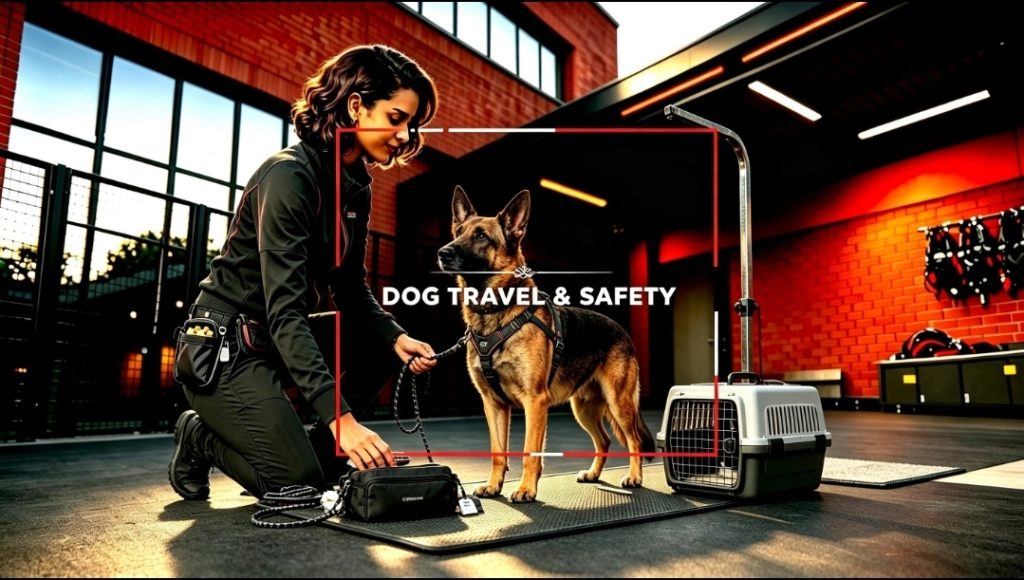
Appropriate dog travel and safety equipment can help owners prepare for journeys with their dogs.
Travel crates, vehicle safety equipment and suitable accessories should be selected according to the dog’s size, vehicle and method of travel.
Good preparation can make travelling more organised and manageable.
Crate Training and Toilet Training
Crate training can form part of a wider puppy-management routine.
However, a crate does not replace toilet training.
Puppies still require suitable opportunities to toilet and need to learn where appropriate toileting should take place.
The GPK9 Five Golden Rules include Golden Rule Four: Toilet Training, which forms part of the wider education provided through the GPK9 training system.
Understanding how different areas of training connect can help owners develop greater consistency.
Crate Training and the GPK9 Five Golden Rules
The crate is connected primarily with Golden Rule One: Home and Social, but it sits within a wider training structure.
The GPK9 Five Golden Rules cover:
Each area contributes to the dog’s wider development.
The home provides an important foundation for learning before the dog experiences increasingly varied situations and environments.
RECOMMENDED COURSE: GPK9 Professional Online Dog Training Course
The GPK9 Professional Online Dog Training Course brings the Five Golden Rules together into one structured educational programme.
The course is designed to teach the How, Why and When behind dog training.
It begins with the foundations of home and social development and progresses through obedience, play, toilet training and social walking.
For owners wanting to understand the wider GPK9 approach rather than focusing on one individual training topic, the complete course provides the broader educational pathway.
Common Dog Crate Training Mistakes
Using the Crate as Punishment
A crate should be associated with appropriate and positive experiences rather than being used as a punishment area.
Choosing an Inappropriate Size
The crate should provide sufficient room for the dog to stand, turn, lie down and stretch comfortably.
Expecting Immediate Results
Every dog is different.
Some dogs may become comfortable quickly, while others may require more gradual introduction.
Using the Crate Instead of Training
A crate can support training and management, but it does not replace the need for appropriate training.
Excessive Confinement
A dog needs an appropriate balance of rest, exercise, interaction, training, toileting and freedom.
A crate should be used as part of a balanced routine rather than as a substitute for these needs.
RECOMMEND PRODUCTS

Appropriate training equipment can support owners as they develop their dog’s skills.
Training rewards, suitable toys, training pouches and other basic equipment can help organise training sessions and encourage positive engagement.
The equipment should always support the training rather than become the focus of it.
The Importance of the Handler
A crate is an object.
The handler is responsible for how it becomes part of the dog’s environment.
Understanding the purpose of the crate, recognising the dog’s behaviour and creating appropriate routines are all important parts of responsible crate training.
This reflects the wider GPK9 philosophy:
Train the Human. Train the Dog. Build the Partnership.
The handler’s understanding is central to creating consistency.
Building Confidence Around the Crate
A dog that is comfortable with its crate can have a familiar location within the home.
The crate can become part of the dog’s normal environment rather than something unusual.
Positive experiences, appropriate management and consistency can all contribute to building familiarity.
The dog’s individual response should always guide the pace of training.
Why Use a Dog Crate? Understanding the Bigger Picture
Why use a dog crate? The answer goes beyond simply having somewhere to put a dog.
A crate can support rest, routine, household organisation, puppy development and appropriate management.
It can form part of a structured home environment while the dog learns how to behave appropriately.
However, the crate is one part of a much wider approach to dog training.
At GPK9, crate training sits within Golden Rule One: Home and Social, alongside the wider Five Golden Rules.
This creates a broader foundation for owners who want to understand their dog’s training and development.
The GPK9 Professional Online Dog Training Course provides structured education covering the Five Golden Rules and the wider development of the dog and handler.
From home and social foundations through obedience, play, toilet training and social walking, the course is designed around understanding the How, Why and When of training.
Train the Human. Train the Dog. Build the Partnership.
Conclusion
Why use a dog crate? A correctly selected and appropriately introduced crate can provide a familiar, defined environment for rest, routine and household management.
For puppies and young dogs, it can become a useful part of an organised home environment while they become familiar with household life.
Crate training should always be approached positively and with the individual dog’s needs in mind.
The crate itself is only one part of responsible dog training.
At GPK9, crate training forms part of Golden Rule One: Home and Social, within a wider Five Golden Rules approach to dog and handler education.
Understanding the purpose of the equipment is the starting point.
Understanding how it fits into the wider training process is where structured education can make a difference.
RECOMMEND COURSE
Learn more about the foundations of structured home and social training through the GPK9 Professional Online Dog Training Course.
RECOMMENDED BLOG POSTS
How Crate Training Works? What Is a Dog Crate?
Explore the fundamentals of crate training and understand the purpose of a dog crate.
When Should You Use a Dog Crate? Practical Crate Training
Learn more about when a crate may form part of an appropriate household routine.
How to Introduce Your Dog to a Crate Step by Step
Explore the principles behind helping a dog become familiar with a crate.
How to Use a Dog Crate to Create Structure at Home
Discover how a crate can form part of an organised home-training environment.
How to Use a Dog Crate When Visitors Arrive
Learn more about managing household activity when visitors enter the home.
Common Dog Crate Training Mistakes and How to Avoid Them
Explore common issues owners may encounter when using a dog crate.