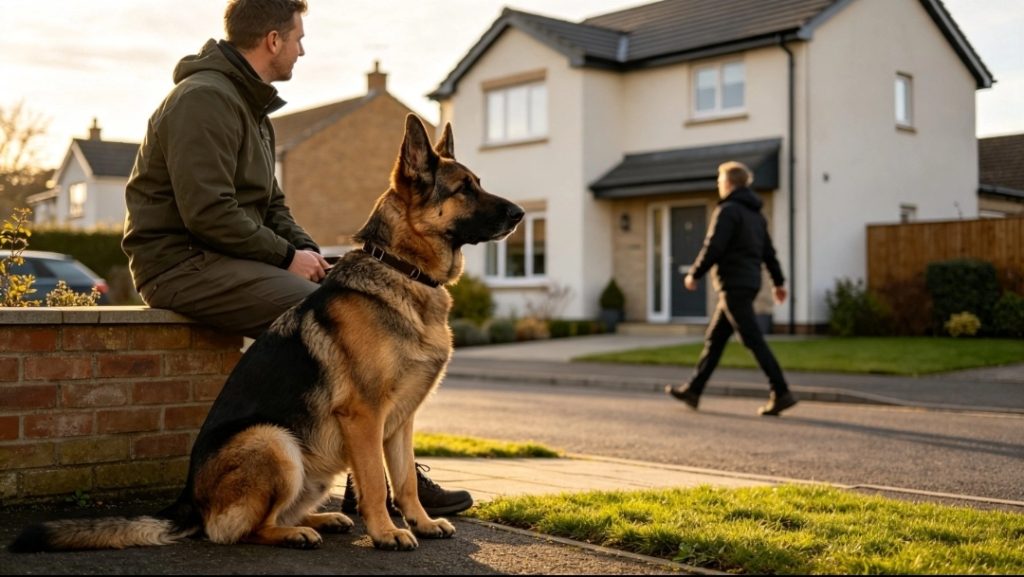
Home and Social Dog Training: Building Structure at Home
Home and social dog training begins with something many owners overlook: structure at home.
Before a dog is expected to behave appropriately around visitors, children, household activity, other animals or the wider environment, it needs to understand how to live within the home.
The home is where many of a dog’s daily behaviours are established. Feeding, resting, playing, training, settling and moving around the household all contribute to the dog’s understanding of what is expected.
At GPK9, Golden Rule One: Home and Social focuses on creating that foundation.
The objective is not to keep a dog restricted throughout the day. Instead, structure provides a framework in which the dog can learn when to engage, when to move, when to play and when to settle.
What Is Home and Social Dog Training?
Home and social dog training is the process of teaching a dog how to behave appropriately within the home and around normal household activity.
This includes situations such as:
- People moving around the house
- Visitors arriving
- Someone coming to the door
- Household activity
- Children playing
- Other animals being present
- Periods of rest
- Training sessions
- Controlled play
- Moving between different areas of the home
A dog does not automatically understand these situations simply because it lives in a house.
The owner has to provide clear expectations and repeat those expectations consistently.
This is where structure becomes important.
Structure Does Not Mean Constant Restriction
Structure should not be confused with keeping a dog confined all day.
A structured home gives the dog opportunities to experience different activities while also providing clear periods for rest, training and controlled interaction.
The aim is to gradually teach the dog how to manage increasing levels of freedom.
This can be particularly useful with puppies and young dogs, because unrestricted access to an entire home can provide more freedom than the dog is currently ready to manage.
Why Structure at Home Matters
A dog spends a significant amount of its life within its home environment.
This makes the home an important place for establishing everyday habits.
If the dog is allowed to make every decision for itself, it may repeatedly practise behaviours that the owner does not want. Conversely, when the owner provides a consistent framework, the dog has clearer boundaries within which to learn.
Structure can help organise:
- Rest
- Training
- Play
- Feeding
- Household interaction
- Controlled freedom
- Quiet periods
The important point is consistency.
The dog should not receive completely different expectations from one day to the next.
Using a Dog Crate as Part of Home Structure
A crate can be one component of a structured home-training system.
When introduced correctly, a crate can provide a defined area where a dog can rest and where the owner can manage the dog’s environment.
The crate should be introduced gradually and positively.
It should not simply become a place where the dog is sent whenever something goes wrong.
A useful approach is to teach the dog that the crate is a normal part of its daily environment.
When a Crate Can Be Useful
A crate may be useful during situations such as:
- Rest periods
- Short periods when direct supervision is difficult
- Household activity
- Visitors arriving
- Managing the environment while the dog learns
- Supporting toilet-training routines
The exact use will depend on the individual dog, its age, training stage and circumstances.
The objective is always appropriate management rather than unnecessary confinement.
RECOMMEND PRODUCTS
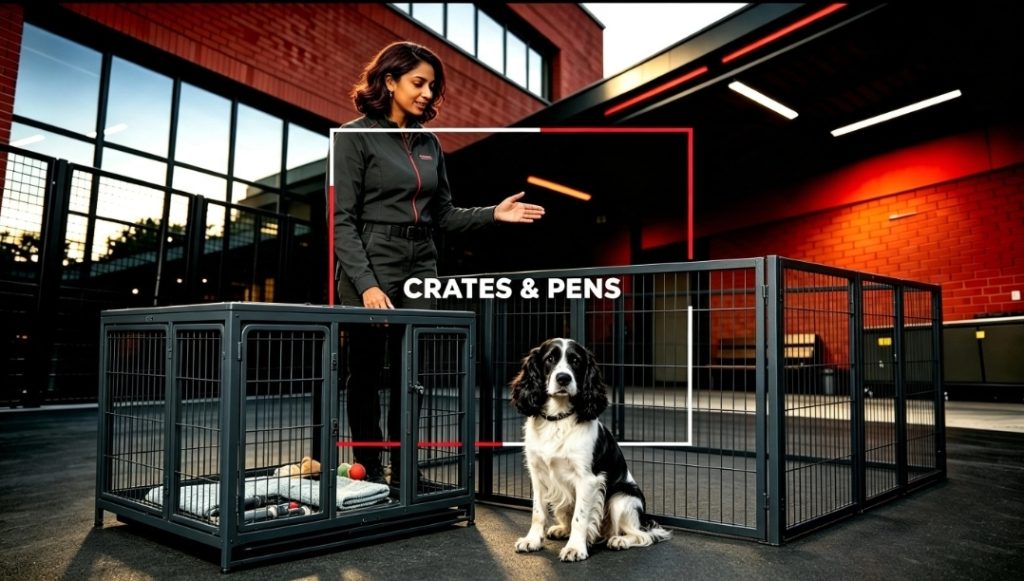
A correctly sized, secure dog crate can provide a defined resting and management area within the home. Choose a crate appropriate for the dog’s current size and intended use, allowing sufficient room for the dog to stand, turn around and lie down comfortably.
Crate Mat
A suitable crate mat can help make the crate a comfortable resting area. Select one that is appropriate for the dog’s size and behaviour.
Training Treats
Small, suitable food rewards can be useful when introducing new behaviours and building positive associations with training equipment.
Introducing Structure Through a Training Placemat
A training placemat provides another option for creating structure within the home.
Unlike a crate, the dog is not enclosed.
Instead, the placemat creates a clearly defined location where the dog can learn to remain while normal household activity takes place.
For example, the owner may teach the dog to remain on the placemat while people move around the room.
Over time, the dog can learn that being on the placemat means remaining in that location until the handler provides the next direction.
The Placemat and Calm Behaviour
The placemat can become particularly useful when the dog needs to remain present but does not need to participate in what is happening.
For example, a dog does not necessarily need to follow its owner around the house every time the owner moves.
Teaching the dog to remain settled in a defined location can help create clearer expectations.
Recommended Course

GPK9 Golden Rule One provides structured education around the home environment, including the use of crates, training placemats and playpens.
The course progresses from understanding the equipment to applying it within practical household situations.
It is designed to help owners understand how structure can be created and managed, rather than simply purchasing equipment and expecting the equipment itself to solve a behavioural problem.
Using a Puppy Playpen
A playpen can provide another level of controlled freedom, particularly during puppy development.
A playpen allows the puppy to have more space than a crate while still limiting access to the entire home.
This can be useful when the puppy is not yet ready for unrestricted freedom.
The playpen may contain appropriate resources such as a resting area and suitable enrichment, depending on the individual setup and training stage.
Controlled Freedom
One of the important principles of home structure is understanding that freedom can be increased gradually.
A puppy does not have to move directly from being confined to having access to every room.
There can be stages between the two.
For example:
Crate → Training Placemat → Playpen → Increased Household Freedom
The exact progression will vary between dogs.
The important principle is that freedom should match the dog’s ability to manage the environment.
RECOMMEND PRODUCTS
Puppy Playpen
A secure puppy playpen can create a defined area where a young dog can have controlled space while learning household routines.
Training Mat
A durable training mat can provide a consistent location for teaching place and settling behaviours.
Interactive Dog Toy
Appropriate toys can provide controlled opportunities for play and enrichment within the dog’s daily routine.
Structure During Household Activity
The home can become unpredictable from a dog’s perspective.
Doors open and close. People walk around. Visitors arrive. Children move quickly. Deliveries arrive. Other animals may enter the room.
Rather than expecting the dog to automatically know how to respond to every situation, owners can teach appropriate responses through repetition.
For example, when visitors arrive, the dog may initially be managed using its crate or another appropriate location.
As training develops, the dog may progress to remaining on its training placemat while the household activity continues.
The aim is to teach the dog that household activity does not automatically mean it needs to become involved.
Recommended Course

The GPK9 90-Day Transformation can complement Golden Rule One by providing a structured training pathway for owners working on everyday dog behaviour and training foundations.
It can be particularly relevant for owners who want to move from understanding individual techniques towards building greater consistency into their dog’s daily routine.
Teaching the Dog When to Settle
One of the most useful parts of home structure is teaching a dog that not every moment requires activity.
Dogs need appropriate opportunities to rest.
A dog that is constantly encouraged to interact, play or follow people around the home may receive little opportunity to practise remaining settled.
This is where the crate, placemat and playpen can each have different roles.
The equipment itself does not teach the behaviour.
The handler teaches the behaviour.
The equipment simply helps create an environment in which the behaviour can be taught and managed.
Home Structure Around Children
Children and dogs require appropriate supervision and management.
A dog should not be expected to manage every situation involving children without guidance.
A crate, playpen or training placemat can provide useful management options when the household becomes busy.
However, these tools should never replace appropriate adult supervision.
Children should also be taught how to behave appropriately around dogs, including respecting the dog’s resting space.
Recommend Products
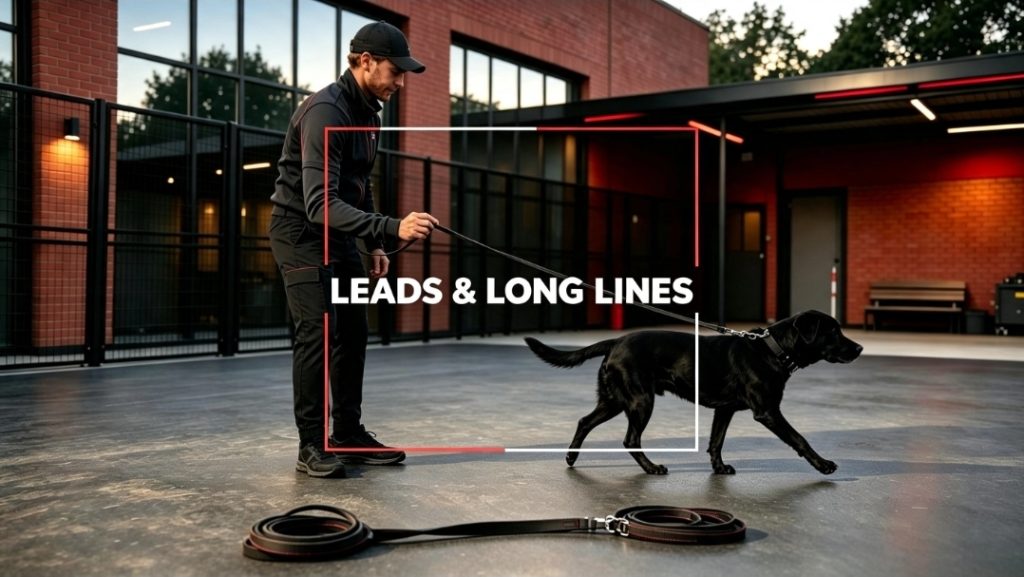
A suitable training lead can provide additional management during supervised training sessions around the home.
Treat Pouch
A training pouch can make food rewards easier to access during short training sessions.
Dog Bed
A suitable bed can provide an additional resting location, although the bed itself does not replace training or structured place work.
Structure, Training and Freedom
The ultimate purpose of structure is not to keep the dog permanently restricted.
It is to help the dog learn how to manage greater freedom.
As the dog’s training develops, the handler can assess whether the dog is ready for additional access to different areas and situations.
This should be based on the dog’s behaviour rather than simply its age or the owner’s desire to give it more freedom.
If increased freedom repeatedly results in unwanted behaviour, the owner may need to return to a more structured level of management and reinforce the foundations again.
This is part of training.
Home and Social Training Is About Repetition
Dogs learn through repeated experiences.
A single successful training session does not mean that a behaviour is permanently established.
If the same household situation occurs repeatedly, the owner has repeated opportunities to reinforce the desired response.
For example:
Visitor arrives → dog is managed → dog settles → appropriate behaviour is reinforced.
The same principle can be applied to other household situations.
The goal is to make the expected behaviour increasingly familiar through consistent practice.
Recommended Course

GPK9 Fundamentals 1
GPK9 Fundamentals 1 provides foundational training education for younger dogs and puppies, with emphasis on positive reinforcement and establishing the early behaviours that support future training.
For puppies, establishing appropriate household structure early can provide a foundation for later training and increased freedom.
Common Mistakes When Creating Home Structure
Giving Too Much Freedom Too Quickly
A common problem is allowing a puppy or newly trained dog access to the entire home before it has developed the behaviours needed to manage that freedom.
Controlled progression can make management clearer.
Using Equipment Without Training
Buying a crate, playpen or training mat does not automatically teach the dog what to do.
The handler still needs to introduce the equipment, establish the behaviour and reinforce appropriate responses.
Being Inconsistent
If a behaviour is expected one day but ignored the next, the dog receives inconsistent information.
Clear and repeatable expectations are important.
Using the Crate as Punishment
The crate should not become associated exclusively with punishment or isolation.
Its role should be clear and appropriate within the dog’s overall routine.
Expecting the Dog to Understand Immediately
New behaviours require teaching and repetition.
The dog may not understand what is expected during the first session, particularly when distractions are introduced.
Progress should be built gradually.
Building a Structured Home Routine
A structured routine does not have to mean that every minute of the day is scheduled.
Instead, owners can establish predictable periods for important activities.
For example:
Training → Rest → Controlled activity → Toilet opportunity → Play → Rest
The precise routine should be appropriate for the individual dog.
The important point is that the dog experiences a balance between activity and calm periods, while the owner maintains responsibility for managing the environment.
Featured Products

A basic collection of appropriate training equipment can help owners establish consistent training sessions at home.
Long-Lasting Dog Chews
Appropriate chews can provide an activity during suitable supervised rest periods, provided they are appropriate for the individual dog and used safely.
Storage Container for Dog Food and Treats
Keeping training rewards organised can make it easier for owners to maintain consistency during daily training.
When Structure Needs to Be Increased
Sometimes a dog may demonstrate that it is not ready for the amount of freedom currently available.
Signs may include repeatedly leaving its designated area, becoming excessively involved in household activity, struggling to settle or repeatedly engaging in unwanted behaviour.
Rather than simply giving the dog more freedom and hoping the behaviour improves, the owner can return to a level of management that the dog can successfully handle.
Training can then progress again.
This is not necessarily a failure.
It is part of adjusting the training environment to the dog’s current ability.
The Role of the Handler
Ultimately, home and social dog training is not about the crate, mat or playpen.
It is about the handler’s ability to create and maintain structure.
The equipment provides practical management options, but the handler determines:
- When the dog trains
- When the dog rests
- When the dog plays
- When freedom increases
- When management needs to increase
- When the dog is ready for another challenge
This is why GPK9 places importance on educating the human as well as training the dog.
Final Thoughts
Home and social dog training starts with creating a clear environment in which the dog can learn.
A crate can provide a defined resting and management area.
A training placemat can teach the dog to remain in a specific location while household activity continues.
A playpen can provide controlled space, particularly during puppy development.
Used correctly, these tools can work together to help owners manage the dog’s environment while teaching appropriate behaviour.
The objective is not simply to restrict the dog.
The objective is to teach the dog how to manage increasing levels of freedom.
That is the foundation of GPK9 Golden Rule One: Home and Social.
Recommended Articles
What Is a Dog Crate? How Crate Training Works
Learn the fundamentals of dog crates and how they can be introduced as part of a structured training environment.
What Is a Dog Training Placemat? Place Training Explained
Understand the purpose of a training placemat and how place training can create structure within the home.
What Is a Dog Playpen? How to Use a Puppy Playpen
Learn how a puppy playpen can provide controlled space while a young dog develops its household behaviours.
How Much Freedom Should You Give a Puppy at Home?
Explore the relationship between training, management and gradually increasing freedom.
Dog Crate vs Training Mat vs Playpen: What Is the Difference?
Understand the different roles of the three pieces of equipment and how they can work together within a structured home-training approach.