FEATURED IMAGE — DALL·E DESCRIPTION
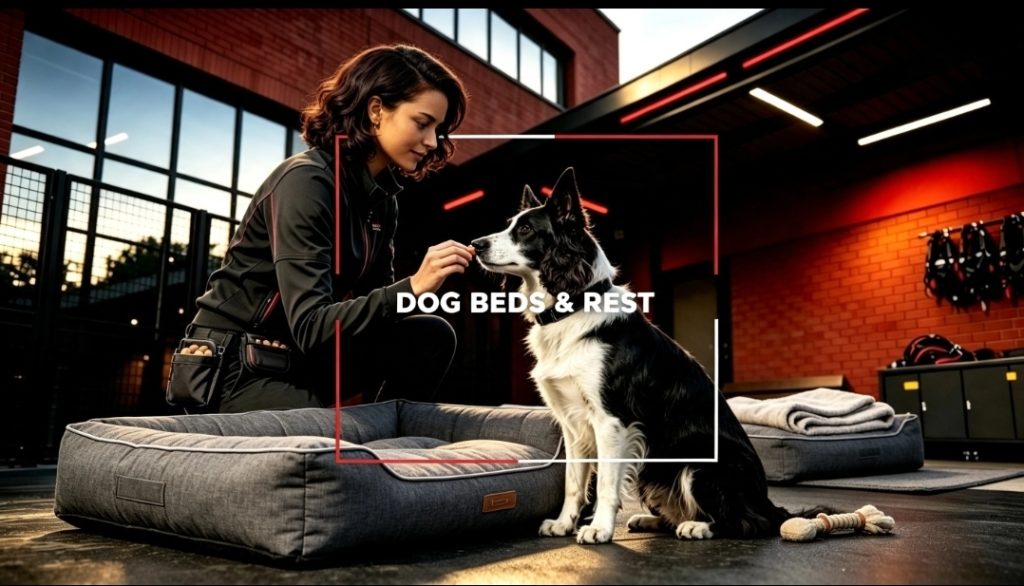
Thank you for reading this post, don't forget to subscribe!A cinematic, photorealistic professional dog training environment featuring a healthy adult German Shepherd resting comfortably on a high-quality supportive dog bed in a dedicated calm rest area. The setting includes dark-grey flooring, rich red-brick detailing, black metal fencing, industrial glass panels and dark structural elements. The dog should be positioned naturally in a relaxed sleeping posture, with realistic anatomy, detailed fur and natural interaction with the bed. Include a second suitable dog bed and a professional crate subtly visible in the background to demonstrate different resting options without distracting from the main subject. Professional cinematic lighting, balanced exposure, detailed shadows, realistic materials, premium commercial photography, calm and clean atmosphere, no text, logos or watermarks.
Dog Beds: How to Choose the Right Bed for Your Dog
A dog bed is more than somewhere for your dog to lie down. It can become an important part of their daily routine, providing a consistent place to rest, recover and settle between walks, training sessions, meals and other activities.
Choosing the right bed requires more thought than simply selecting the largest or most attractive option. Your dog’s size, age, sleeping position, environment and individual habits can all influence which type of bed is appropriate.
Dog Beds: How to Choose the Right Bed for Your Dog explores the different options available and explains how to create a dedicated rest area that supports calm behaviour and everyday wellbeing.
Understanding Rest
The Importance of Sleep
Dogs spend a significant amount of their day resting. Puppies, young dogs and highly active dogs may require particularly substantial periods of sleep and downtime.
Rest allows your dog to switch off after physical and mental activity. Training, exercise, exploration and interaction all require energy, so providing an appropriate place to recover is an important part of responsible dog ownership.
A comfortable bed can help establish a clear distinction between active periods and periods of rest.
Rest Periods
Rest should be part of the daily routine rather than something that only happens when your dog becomes tired.
After a training session, for example, your dog may benefit from having access to a quiet place where they can settle without constant interaction.
This is particularly useful for puppies. Teaching a puppy that they have a designated place to relax can help establish healthy household routines.
Puppy Training: Essential Skills, Equipment & Techniques provides a useful connection here because appropriate rest and structured routines complement the development of basic training skills.
Recovery
Physical activity places demands on the body. Following walks, play or training, a suitable resting surface can provide somewhere comfortable for your dog to recover.
The bed should allow your dog to lie naturally without being forced into an awkward position.
For dogs that spend considerable time exercising or working, choosing a supportive resting area becomes particularly important.
Comfortable Positioning
Dogs have individual sleeping preferences.
Some curl tightly into a small space, while others stretch out completely. Some like to rest against a raised edge, while others prefer an open, flat surface.
Watch how your dog normally sleeps before buying a bed. Their preferred sleeping position can tell you a great deal about the shape and size of bed that may suit them.
Types of Dog Beds
There is no single type of bed that is perfect for every dog.
Standard Beds
Standard flat beds are versatile and can work well in many homes.
They are generally straightforward, easy to move and suitable for dogs that like to stretch out.
They can also be useful when you want a simple resting area that does not restrict the dog’s position.
Orthopaedic-Style Beds
Orthopaedic-style beds are designed around providing additional support and cushioning.
They may be worth considering for older dogs or dogs that benefit from a more supportive sleeping surface.
Look for a design that provides appropriate support while still allowing the dog to move on and off the bed easily.
The bed should also be large enough for the dog to use comfortably rather than forcing them into a restricted position.
Bolster Beds
Bolster beds have raised sides around some or all of the perimeter.
They can suit dogs that enjoy resting their head against something or curling into a defined space.
For some dogs, the raised edge can also help make the bed feel more enclosed and secure.
Crate Beds
A crate bed is designed to fit within a crate while providing a comfortable surface.
It should fit appropriately without preventing the crate door from closing or interfering with ventilation and safe crate use.
If your dog already uses a crate, combining appropriate bedding with a structured crate routine can help make the crate a familiar resting environment.
This connects directly with Dog Crates & Pens: How to Choose and Use Them Correctly, particularly when creating a dedicated rest area within the home.
Raised Beds
Raised beds keep the dog slightly above the floor and can provide useful airflow underneath.
They may be practical in certain indoor or outdoor environments and can be relatively easy to clean.
However, the bed must be stable and suitable for the individual dog. A nervous puppy, for example, may need time to become comfortable using a raised surface.
Cooling Beds
Cooling beds can provide an additional option during warmer conditions.
The surrounding environment still matters, however. A cooling bed should never be considered a replacement for shade, ventilation, access to suitable drinking water or sensible temperature management.
The aim is to provide a comfortable resting environment rather than relying on one piece of equipment to solve every environmental issue.
RECOMMEND PRODUCTS
- RELATED ARTICLES
- Dog Crates & Pens: How to Choose and Use Them Correctly
- Dog Care & Health: Essential Everyday Care for Your Dog
- Puppy Essentials: Everything You Need for a New Puppy
If your dog regularly rests inside a crate, the bed should complement the crate rather than reduce the available space or interfere with safe use.
The same principle applies to beds used around the home: select equipment according to the dog’s actual needs rather than appearance alone.
Choosing the Right Bed
Dog Size
Size is one of the first things to consider.
Measure your dog and consider how they sleep. A dog that likes to stretch out needs sufficient surface area to do so comfortably.
Do not assume that a bed labelled for a particular breed will automatically be appropriate. Individual dogs can vary considerably in body size and sleeping habits.
A useful approach is to observe your dog’s normal resting position and select a bed that gives them enough room to change position naturally.
Sleeping Position
Your dog’s preferred sleeping position should influence your choice.
A dog that curls up may appreciate a more enclosed or supportive design. A dog that stretches across the floor may prefer a large, open bed.
If your dog changes sleeping positions regularly, a versatile flat bed may provide more freedom of movement.
Age
Age can affect bed selection.
Puppies need practical bedding that can cope with accidents, chewing and frequent cleaning. Adult dogs may have established sleeping preferences, while older dogs may benefit from additional support and easy access.
The ideal bed can therefore change throughout your dog’s life.
Indoor and Outdoor Use
Consider where the bed will be used.
An indoor bed can prioritise comfort, appearance and integration with the home’s environment. Outdoor or utility-area bedding may need to prioritise durability, moisture resistance and ease of cleaning.
A dog that regularly moves between indoor and outdoor areas may benefit from having different resting options rather than expecting one bed to perform every function.
Cleaning Requirements
Dogs naturally bring dirt, hair and moisture into their resting areas.
Look for removable, washable covers where practical. Consider how easily the entire bed can be cleaned and whether replacement covers are available.
For puppies and dogs that spend significant time outdoors, easy-clean materials can be particularly useful.
This also connects with Dog Care & Health: Essential Everyday Care for Your Dog, which covers the wider responsibilities involved in maintaining a clean and suitable environment.
Durability
A comfortable bed is not useful if it quickly becomes damaged.
Consider your dog’s behaviour. A calm adult dog may require very different construction from a young dog that regularly chews or digs at bedding.
Durability should therefore be assessed alongside comfort, rather than treated as a separate consideration.
RECOMMEND COURSE
Fundamentals 1 is relevant to creating good rest habits because foundational training can help teach a dog where to settle and how to respond to basic instructions.
A suitable bed provides the physical resting place, while training helps establish the behaviour associated with using that space.
Creating a Rest Area
Location
Where you place the bed can be just as important as the bed itself.
Choose a location where your dog can rest without constant disruption. At the same time, the area should allow the dog to remain part of normal household life rather than being isolated unnecessarily.
Think about noise, foot traffic, temperature and how frequently people pass through the area.
Quiet Space
A good rest area should allow your dog to switch off.
If the bed is positioned directly beside a busy doorway or in the middle of constant household activity, the dog may find it difficult to settle.
A quieter corner can create a clearer association between that location and relaxation.
Routine
Use the rest area consistently.
After exercise or training, guide your dog towards their bed and allow them time to settle. Avoid constantly calling them away once they have relaxed.
Over time, the dog can learn that the bed is a predictable place where nothing is expected of them except calm behaviour.
This can be especially valuable for energetic dogs that struggle to switch from activity to rest.
Boundaries
A designated bed can also provide a simple boundary within the home.
Teaching a dog to remain on their bed for a period can help develop impulse control and calmness.
The objective is not to force the dog to remain there indefinitely. Instead, the bed becomes a clear location where the dog understands that settling is expected.
Obedience Dog Training: Equipment, Commands & Techniques can provide further guidance on developing the communication and obedience skills that support this type of household routine.
RECOMMEND PRODUCTS
- RELATED ARTICLES
- Dog Crates & Pens: How to Choose and Use Them Correctly
- Dog Care & Health: Essential Everyday Care for Your Dog
- Puppy Essentials: Everything You Need for a New Puppy
Integration With Crate Training
A dog bed and crate can work together as part of a wider rest strategy.
Some dogs may use an open bed during normal household activity and a crate for periods when a more enclosed resting environment is appropriate.
The crate should remain a positive, appropriately managed space rather than being used as punishment.
Introduce bedding gradually and monitor how your dog interacts with it. Some dogs may immediately settle, while others may chew, move or ignore the bed.
The goal is to create an environment that encourages appropriate rest while respecting the individual dog’s behaviour.
RECOMMEND PRODUCT
Dog Feeding & Hydration: Essential Equipment and Practical Advice is useful when organising the wider area around your dog’s daily routine.
Food and water should be managed separately from the resting space where appropriate, helping maintain clear distinctions between eating, drinking, training and relaxation.
A well-organised environment makes everyday routines easier to maintain.
RECOMMEND COURSE
Fundamentals 2 can complement rest-area training by helping develop greater reliability and control around everyday distractions.
Once a dog understands basic commands, the next step is often applying those behaviours in real household situations, including settling while people move around, other activities take place and normal distractions occur.
Supporting Everyday Training and Wellbeing
Rest is closely connected with training.
A dog that is constantly stimulated without sufficient downtime may struggle to settle. Likewise, training should not consist of endless activity.
Effective training includes periods of work followed by opportunities to relax.
This is one reason a dedicated bed can become such a useful part of the household environment. It gives the dog a predictable location for switching from activity into rest.
Mental stimulation should also be balanced with downtime. Dog Enrichment: Toys, Activities & Ideas for Mental Stimulation provides useful additional information about providing appropriate activities without making every period of the day active.
The same principle applies to exercise. Dog Walking Essentials: Equipment for Safe Outdoor Adventures can help connect suitable outdoor activity with the rest and recovery that follows.
RECOMMEND PRODUCT
Dog Walking Essentials: Equipment for Safe Outdoor Adventures provides a useful product pathway because the equipment used during walks directly connects with what happens when the dog returns home.
A practical routine can be as simple as returning from a walk, providing water, allowing the dog to settle and then directing them towards their designated resting area.
The bed becomes part of the wider daily routine rather than an isolated piece of equipment.
Choosing Bedding for Puppies
Puppies can require a different approach to bedding.
A young puppy may chew, scratch, dig or have accidents. For that reason, practicality and cleanability can be just as important as softness.
Introduce the bed calmly and reward appropriate interaction. If the puppy settles naturally, allow them to rest.
Avoid creating excessive excitement around the bed. The objective is to establish the idea that this is a comfortable, predictable place for downtime.
Puppy Essentials: Everything You Need for a New Puppy provides further information about preparing the wider environment for a new puppy, while Puppy Training: Essential Skills, Equipment & Techniques connects the resting area with the development of early training routines.
What the Reader Learns
By understanding Dog Beds: How to Choose the Right Bed for Your Dog, owners can make more informed decisions about both bedding and the environment surrounding it.
How to Choose an Appropriate Bed
Consider your dog’s size, sleeping position, age, environment and individual behaviour.
A suitable bed should provide enough room, appropriate support and practical durability while being easy to maintain.
How to Establish a Reliable Rest Area
Choose a consistent location that provides sufficient peace and allows your dog to settle.
Use the same area as part of your everyday routine and reinforce calm behaviour rather than constantly interrupting rest.
How Rest Supports Everyday Training and Wellbeing
Rest is part of a balanced lifestyle.
Exercise, training, enrichment and interaction all have a place, but dogs also need opportunities to switch off.
A suitable bed provides a physical location for this downtime, while consistent training helps the dog understand when it is time to be active and when it is time to relax.
RECOMMEND COURSE
90-Day Transformation can be relevant when the goal extends beyond simply teaching a dog to use a bed and involves developing broader everyday reliability, calmness and household behaviour.
A structured training programme can help owners turn individual behaviours into consistent routines that work across different situations.
RECOMMENDED ARTICLES
Dog Crates & Pens: How to Choose and Use Them Correctly
Dog Care & Health: Essential Everyday Care for Your Dog
Dog Enrichment: Toys, Activities & Ideas for Mental Stimulation
Dog Walking Essentials: Equipment for Safe Outdoor Adventures
Dog Feeding & Hydration: Essential Equipment and Practical Advice
Obedience Dog Training: Equipment, Commands & Techniques
Puppy Training: Essential Skills, Equipment & Techniques
Puppy Essentials: Everything You Need for a New Puppy
Ultimately, Dog Beds: How to Choose the Right Bed for Your Dog is about more than selecting a comfortable product. The right bed, in the right location, can become an important part of your dog’s daily routine.
When rest is treated as part of training, care and everyday life, your dog has a clear opportunity to recover, settle and switch off between periods of activity.
At GPK9, the principle remains simple: Train the human. Train the dog. Build the partnership.