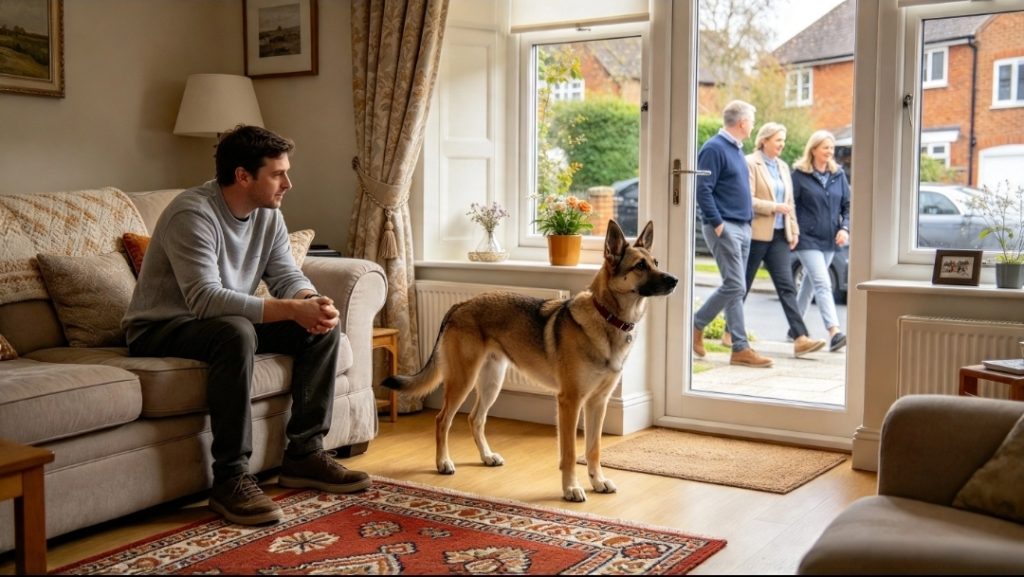
Why Does My Dog Jump on People?
Why does my dog jump on people? Dogs usually jump on people because they are excited, seeking attention, trying to greet someone or have learned that jumping produces a rewarding response. Jumping can also be caused by frustration, overstimulation or a lack of learned greeting skills. Understanding why your dog jumps is the first step towards teaching a calmer way to interact with people.
RECOMMENDED PRODUCTS

Why Do Dogs Jump on People?
Jumping is often a way for a dog to gain access to something they want.
Your dog may jump because they want:
- Attention.
- Physical contact.
- A greeting.
- Play.
- Food.
- Access to a person.
- Interaction.
Dogs can also jump because they become highly excited when someone arrives or when they see an interesting person outside.
If jumping has previously resulted in attention, even occasionally, your dog may learn that it is an effective way to start an interaction.
Is My Dog Jumping Because They Are Excited?
Excitement is one of the most common reasons dogs jump.
You may notice your dog’s body becoming more active when someone approaches. They may move quickly towards the person, wag their tail, vocalise, jump repeatedly or struggle to remain still.
In these situations, the problem is not simply that your dog wants attention. Your dog may not yet have the behavioural control needed to remain calm while excited.
Training should therefore focus on teaching your dog how to greet people without becoming overwhelmed.
Is My Dog Jumping for Attention?
Yes, jumping can become an attention-seeking behaviour.
If jumping consistently results in someone looking at, touching, talking to or playing with the dog, the behaviour can become reinforced.
Even pushing the dog away or telling them off can sometimes provide enough interaction to make the behaviour worthwhile.
If attention is the reward, teach your dog that calm behaviour is a more effective way to receive attention.
Why Does My Dog Jump on Some People but Not Others?
Dogs can behave differently depending on the person and situation.
Your dog may be more excited by:
- Familiar people.
- Children.
- People who encourage interaction.
- People carrying food.
- People who play with the dog.
- People who are highly animated.
Your dog may also have learned that certain people allow jumping while others do not.
This is why consistency is important.
Why Does My Dog Jump on Visitors?
Visitors create a particularly exciting situation.
The doorbell, knocking, people entering the home and immediate interaction can all increase arousal.
Your dog may have learned that a visitor arriving means attention, play or physical contact.
If jumping has been repeatedly rewarded during these situations, your dog may automatically jump as soon as someone enters.
Controlled practice can teach your dog to remain calm before receiving access to visitors.
Why Does My Dog Jump on Me When I Come Home?
Your arrival may be highly rewarding to your dog.
After being separated from you, your dog may become excited and try to gain immediate attention through jumping.
If you respond with an enthusiastic greeting while your dog is jumping, the behaviour can become stronger.
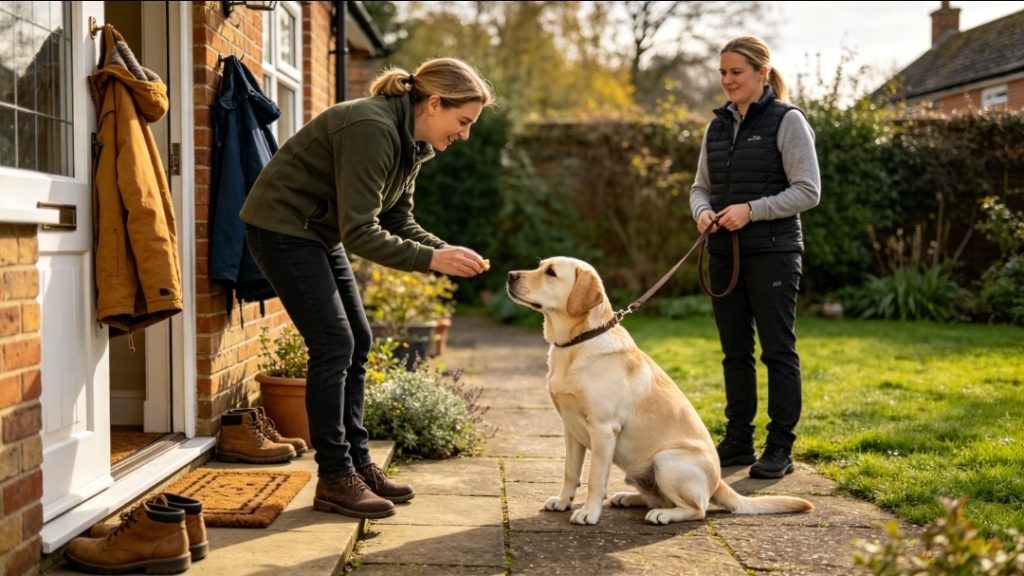
Calm arrivals and rewarding four paws on the floor can help your dog learn a different greeting routine.
Why Does My Dog Jump on People Outside?
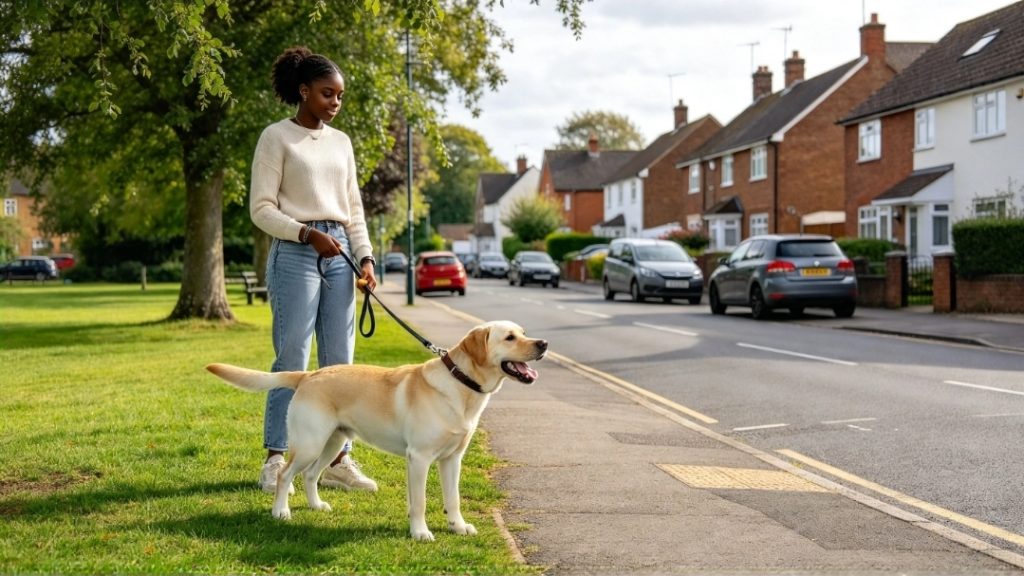
People approaching on walks can create excitement, frustration or anticipation.
Your dog may want to greet the person but be unable to reach them because of the lead.
This can increase frustration and lead to pulling, jumping or vocalising.
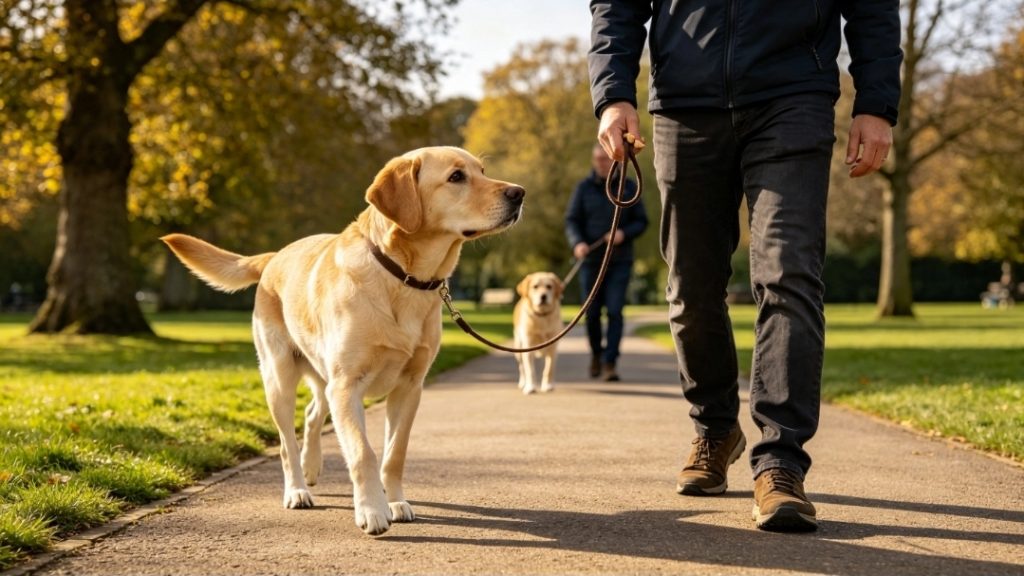
Your dog does not need to greet every person they see. Maintaining enough distance for your dog to remain calm and rewarding appropriate behaviour can help prevent repeated jumping.
Why Does My Dog Jump on People for Food?
Dogs quickly learn behaviours that produce food.
If your dog has received food after jumping, they may repeat the behaviour whenever food appears.
This can happen during meals, food preparation, training or when someone is holding treats.
Teach your dog that food is delivered when they are calm rather than when they are jumping.
Why Does My Dog Jump During Play?
Play naturally increases excitement.
A dog that becomes highly aroused during play may jump, mouth, chase or struggle to settle.
If jumping causes the game to continue, the dog may learn that jumping is part of the interaction.
Pause the game when your dog becomes too excited and restart when they can interact appropriately.
Why Does My Dog Jump Even When I Tell Them to Stop?
Simply telling your dog to stop does not necessarily teach them what to do instead.
If the dog is highly excited, they may also struggle to respond to verbal instructions.
Rather than repeatedly correcting the jumping, teach an alternative behaviour such as approaching calmly, keeping four paws on the floor or waiting for attention.
The alternative behaviour needs to be practised before it is expected in difficult situations.
Could My Dog Be Jumping Because They Are Frustrated?
Yes.
Frustration can occur when your dog wants access to a person, toy, food or activity but cannot reach it.
For example, your dog may see someone they want to greet while being held on a lead.
The resulting frustration can produce jumping, pulling or barking.
Increasing distance, reducing excitement and rewarding calm behaviour can help your dog learn to manage these situations more appropriately.
How Can I Stop My Dog Learning to Jump?
Do not allow jumping to become the easiest way for your dog to obtain what they want.
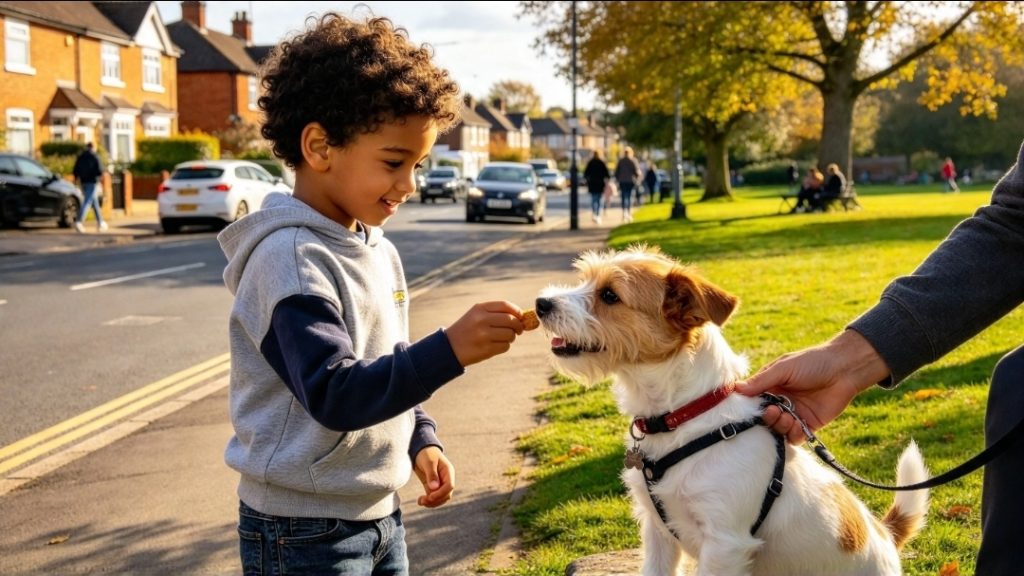
When your dog approaches calmly, reward them with appropriate attention or access.
When they jump for attention, remove the opportunity for that reward and wait for calm behaviour.
Everyone who interacts with your dog should follow the same approach.
Consistency matters because occasional rewards can keep unwanted behaviour going.
RECOMMENDED PRODUCTS
What Equipment Can Help?
A collar or suitable harness and lead can help manage your dog safely around people.
A short line can provide additional control during structured greeting practice, particularly around visitors.
Equipment should prevent unwanted access and support training. It should not be used to punish the dog for jumping.
When Should I Be Concerned About Jumping?
Jumping is usually a training and management issue, but it can become a safety concern when the dog is large, strong or difficult to control.
Professional help is particularly appropriate if jumping is accompanied by:
- Mouthing or biting.
- Aggression.
- Fear.
- Extreme excitement.
- Persistent frustration.
- Inability to settle.
If your dog suddenly starts behaving differently from normal, consider speaking to your vet to rule out an underlying health problem.
Conclusion
Dogs jump on people for many reasons, but excitement, attention-seeking, greeting and learned reinforcement are common causes.
Instead of focusing only on stopping the jump, identify what your dog is trying to achieve and teach an appropriate alternative.
Reward calm approaches, prevent jumping from producing attention and practise greetings in gradually more difficult situations.
With consistent training, your dog can learn that four paws on the floor is the best way to get attention and interact with people.
GPK9 — The Five Golden Rules
The GPK9 Five Golden Rules provide the foundation of the GPK9 Professional Training System. They give new dog owners, new dog handlers, experienced handlers and professional dog trainers a clear structure for developing the dog and the handler together.
The GPK9 Five Golden Rules cover five essential areas of development: Home & Social, Obedience, Prey Drive, Toilet and Social Walking. Each area has its own purpose, but they are designed to work together as one complete training system.
The GPK9 approach is based on CATEGORY → STATUS → DRIVE → CONTROL and the handler’s ability to OBSERVE → INTERPRET → DECIDE → COMMUNICATE → OBSERVE RESPONSE → REASSESS. This gives the handler a consistent process for understanding what the dog is doing, why the behaviour is occurring, what level of control is appropriate and how to communicate effectively.
The purpose of the GPK9 Five Golden Rules is not simply to teach a collection of individual exercises. They are designed to develop the dog’s behaviour, motivation, communication, control and reliability while teaching the handler how to make better decisions.
Golden Rule One — Home & Social
Golden Rule One — Home & Social establishes the foundation for everyday life with the dog. It focuses on communication, boundaries, calm behaviour, household routines and appropriate behaviour around people, animals and normal activity.
The purpose of Golden Rule One — Home & Social is to help the handler understand the dog’s behaviour and recognise changes in arousal before they become larger problems. The handler learns to observe, assess and communicate rather than simply reacting after unwanted behaviour has already occurred.
Golden Rule One — Home & Social provides the foundation from which the handler can develop a calmer, more predictable and better-communicating dog.
Golden Rule Two — Obedience
Golden Rule Two — Obedience develops the dog’s ability to understand and respond to the handler’s communication.
The focus of Golden Rule Two — Obedience is not simply teaching commands. It is about developing understanding, reliability, timing, reward, release and control so the dog learns what the handler is communicating.
Through Golden Rule Two — Obedience, the handler learns to progress training appropriately, gradually increasing the dog’s freedom and responsibility as understanding and reliability improve.
Golden Rule Three — Prey Drive
Golden Rule Three — Prey Drive focuses on understanding and developing the dog’s natural motivation to chase, pursue, engage and work with an appropriate toy or prey-based reward.
The purpose of Golden Rule Three — Prey Drive is not simply to increase drive. The handler must learn how to recognise the dog’s level of motivation, select an appropriate reward and use timing, communication and control to channel that motivation productively.
Golden Rule Three — Prey Drive teaches the handler that motivation can become a powerful training tool when it is developed and controlled correctly.
Golden Rule Four — Toilet
Golden Rule Four — Toilet establishes reliable toilet habits through consistency, observation, timing, supervision and appropriate reinforcement.
The handler learns through Golden Rule Four — Toilet to recognise when the dog is likely to need the toilet, provide the correct opportunity and reinforce the desired behaviour.
The objective of Golden Rule Four — Toilet is to establish a predictable routine that helps the dog understand where and when toileting is appropriate while reducing opportunities for mistakes.
Golden Rule Five — Social Walking
Golden Rule Five — Social Walking develops the dog’s ability to walk calmly and appropriately in the real world while remaining connected to the handler.
The focus of Golden Rule Five — Social Walking is the relationship between the handler, the dog, the environment, distractions, distance and available control.
Through Golden Rule Five — Social Walking, the handler learns to observe body language, identify potential triggers, assess distance and recognise changes in drive or arousal before behaviour escalates.
The objective of Golden Rule Five — Social Walking is not simply to make the dog walk beside the handler. It is to develop a dog that can experience the outside world while remaining connected to the handler and capable of responding to clear communication.
How the Five Golden Rules Work Together
The GPK9 Five Golden Rules are designed to work together rather than being treated as five completely separate subjects.
Golden Rule One — Home & Social establishes the foundations for everyday behaviour and communication.
Golden Rule Two — Obedience develops understanding, responsiveness and control.
Golden Rule Three — Prey Drive develops motivation and teaches the handler how to channel natural drive appropriately.
Golden Rule Four — Toilet establishes essential household routine and reliability.
Golden Rule Five — Social Walking takes the communication and control developed through the other areas into the outside environment.
Together, the GPK9 Five Golden Rules help the handler develop a complete understanding of the dog rather than treating individual behaviours as isolated problems.
The overall objective of the GPK9 Five Golden Rules is to train the human, train the dog and build the partnership through clear observation, communication, appropriate control and progressive development.