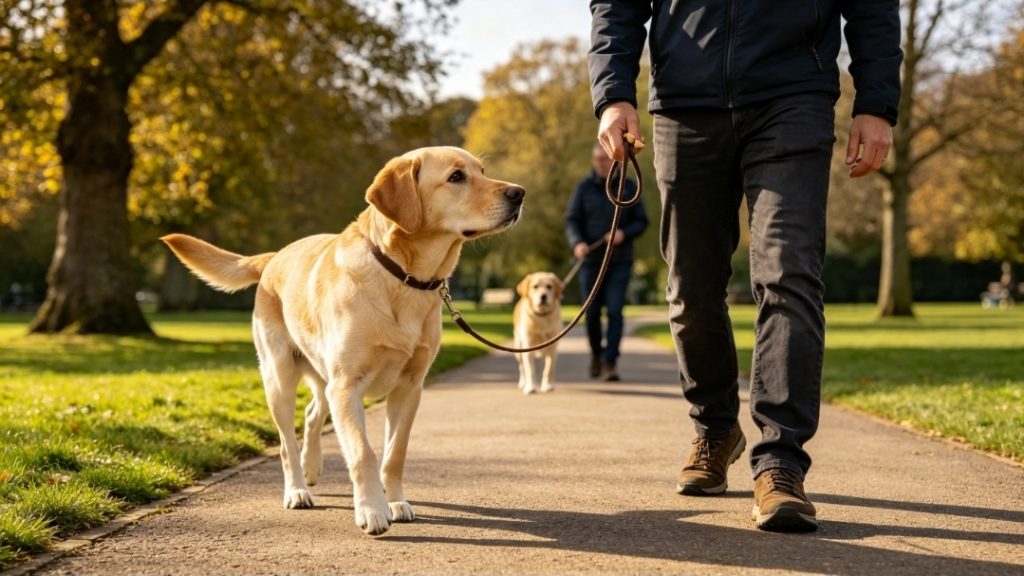
How to stop your dog chasing other dogs starts with understanding why your dog wants to chase and teaching them an alternative response.
If your dog tries to chase other dogs, walks can quickly become difficult to manage.
You may see another dog in the distance and immediately notice your dog becoming excited.
Their ears go forward.
Their body becomes tense.
They start pulling.
They may bark, whine or lunge.
Then, if given the opportunity, they may try to chase.
So, how do you stop your dog chasing other dogs?
The answer isn’t simply to tell your dog “no”.
You need to understand why your dog wants to chase, prevent them from repeatedly practising the behaviour and teach them an alternative response.
With consistent training, many dogs can learn that seeing another dog doesn’t mean they have to chase it.
Why Does My Dog Chase Other Dogs?
Dogs can chase other dogs for several reasons.
They may be:
- Excited
- Trying to initiate play
- Naturally driven to chase movement
- Frustrated because they cannot reach the other dog
- Overstimulated
- Seeking social interaction
- Lacking reliable recall
- Reacting to another dog’s movement
- Practising a behaviour that has previously been rewarding
Not every dog that chases another dog is aggressive.
However, chasing can still create a dangerous situation.
Your dog could run into a road, frighten another dog or cause a confrontation.
Understanding why your dog chases other dogs is therefore an important part of changing the behaviour.
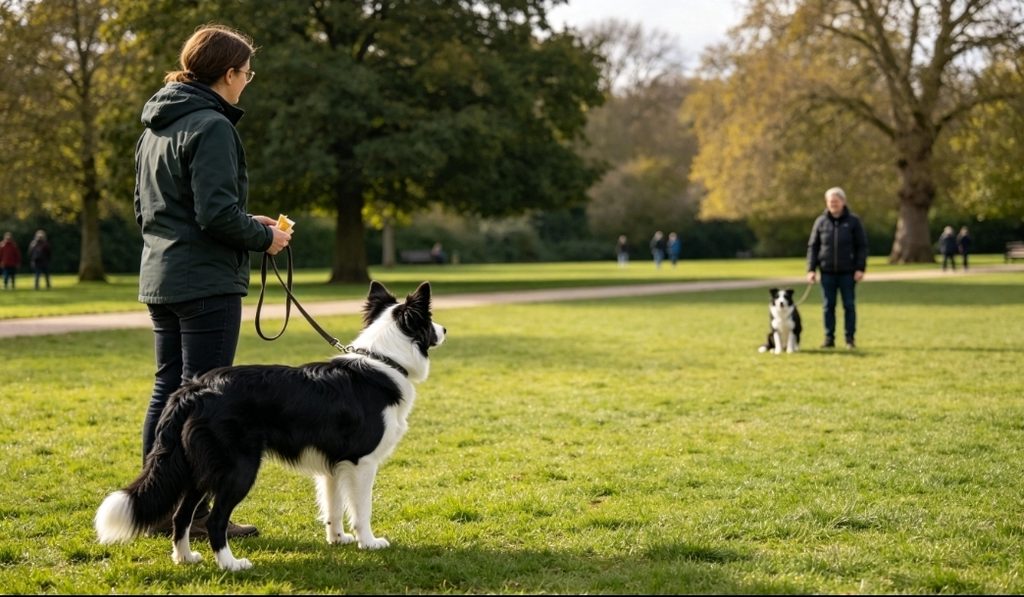
Stop the Chase Before It Starts
One of the most important principles when learning how to stop your dog chasing other dogs is recognising the early signs.
Don’t wait until your dog is already running.
Watch their body language.
You may notice:
- Staring
- Ears becoming highly focused
- Increased tension
- Pulling towards the other dog
- Whining
- Barking
- Sudden acceleration
- Ignoring your cues
These are signs that your dog’s arousal level may be increasing.
The earlier you intervene, the easier it can be to redirect your dog.
Create Distance
Distance can be one of your most useful training tools.
If your dog struggles when another dog is five metres away, don’t start training at five metres.
Move further away.
Give your dog enough space to remain capable of listening.
For example:
Other dog 30 metres away → dog notices → dog looks at handler → reward.
Over time, you can gradually reduce the distance if your dog remains calm.
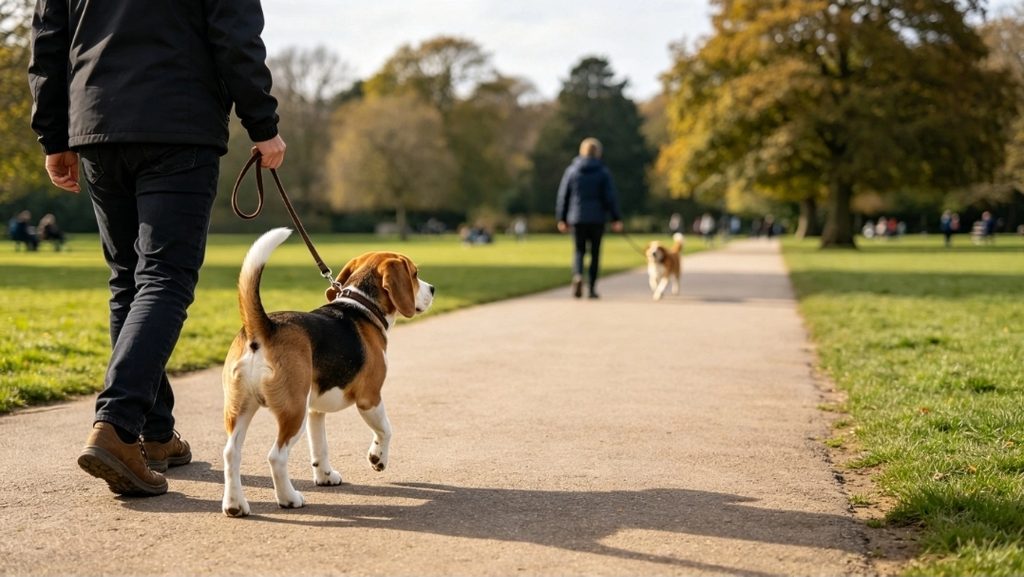
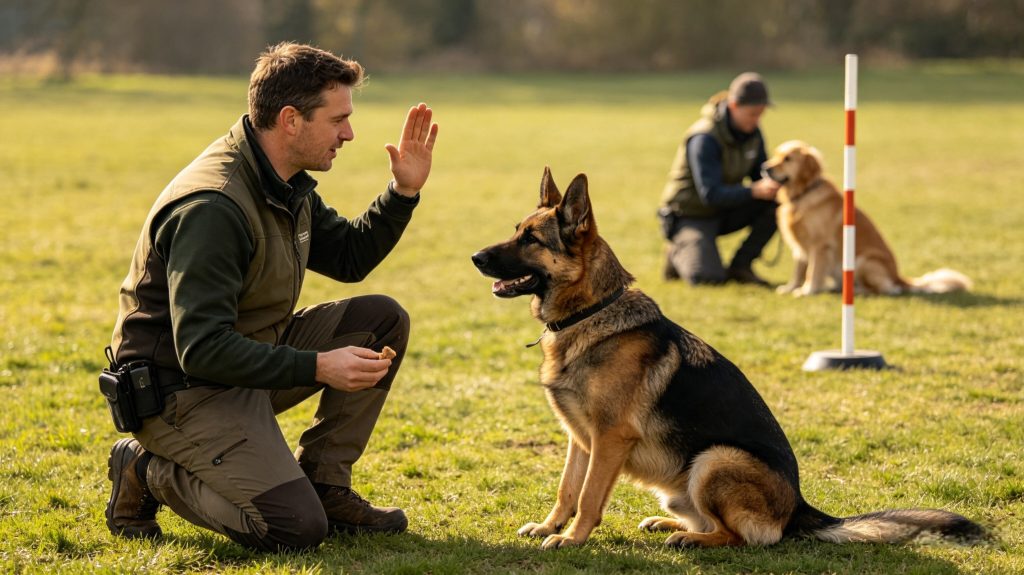
Teach Your Dog to Look at You
Your dog needs an alternative behaviour when another dog appears.
One useful foundation is teaching your dog to check in with you.
Start somewhere quiet.
Say your dog’s name.
When they look at you, reward them.
Repeat.
Gradually introduce mild distractions.
Eventually, when your dog sees another dog, you can encourage them to redirect their attention towards you.
The goal isn’t necessarily to prevent your dog from noticing other dogs.
The goal is to teach them that noticing another dog doesn’t mean they have to chase it.
Build a Reliable Recall
Recall is extremely important if you’re trying to stop your dog chasing.
Your dog needs to learn that returning to you is worthwhile.
Start somewhere secure and controlled.
Call your dog.
Reward them when they return.
Release them again.
Repeat.
Gradually increase the distance and distractions.
A reliable recall doesn’t happen simply because your dog knows the word “come”.
It develops through repetition and progressive training.
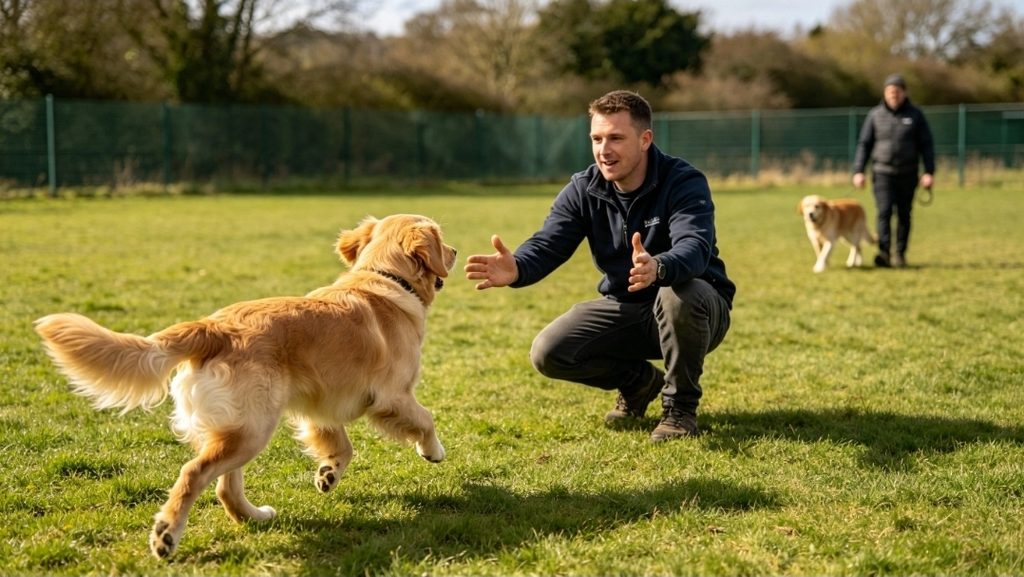
Don’t Test Recall in an Unsafe Environment
If you already know your dog will chase another dog, don’t simply let them off the lead in an open public area and hope they come back.
That gives your dog an opportunity to practise the exact behaviour you’re trying to change.
Use appropriate management.
A secure enclosed area can provide a safer environment for recall training.
A long line can also provide additional management during appropriate training, provided it is used safely and correctly.
Training should set your dog up for success.
Teach Your Dog That Other Dogs Don’t Mean Chase
Seeing another dog should become a normal event.
Your dog sees another dog.
They remain calm.
They look at you.
They receive reinforcement.
You continue walking.
Over time, your dog can learn that another dog isn’t automatically an invitation to chase.
This is particularly useful for dogs that become excited simply because another dog is moving.
Reward Calm Behaviour
Don’t only react when your dog does something wrong.
Reward what you want.
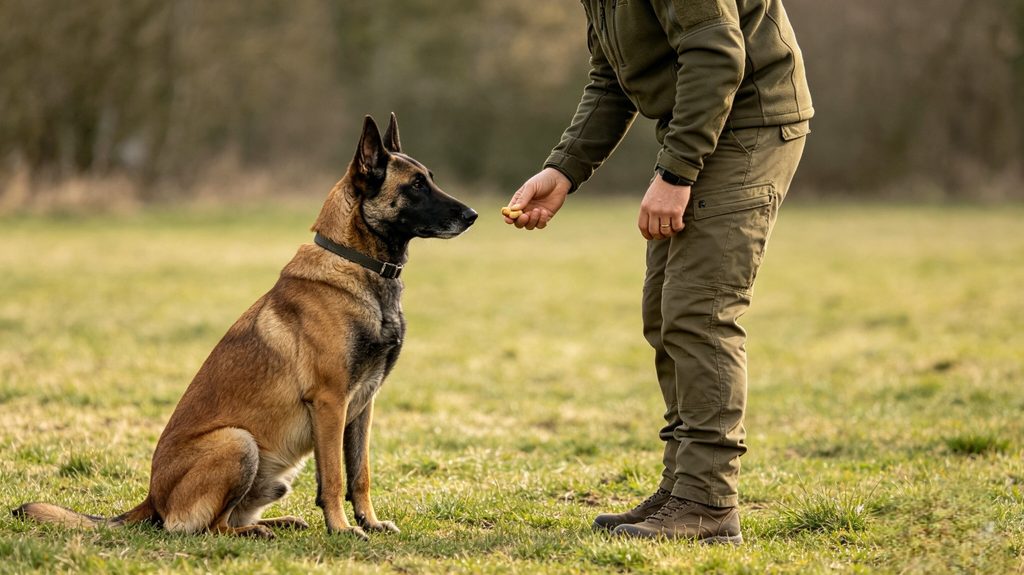
If another dog walks past and your dog remains calm, reward them.
If your dog looks at the other dog and then looks back at you, reward them.
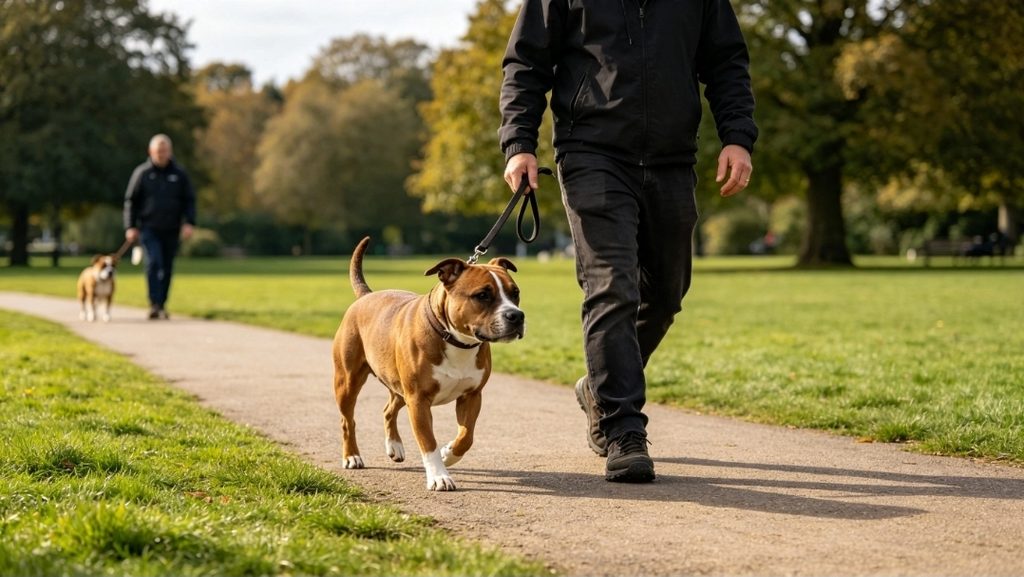
If they continue walking without pulling, reward them.
You are building a pattern of behaviour.
See dog → remain calm → engage with handler → continue walking.
Don’t Allow Uncontrolled Greetings
If your dog constantly wants to rush towards other dogs, allowing them to greet every dog they see can reinforce the behaviour.
Your dog may learn:
See dog → pull → reach dog → interaction.
Instead, make greetings controlled.
Your dog should learn that seeing another dog doesn’t automatically mean they get to run over and interact.
Social interaction can still be part of your dog’s life.
It simply needs to happen appropriately.
What If My Dog Chases Because They Want to Play?
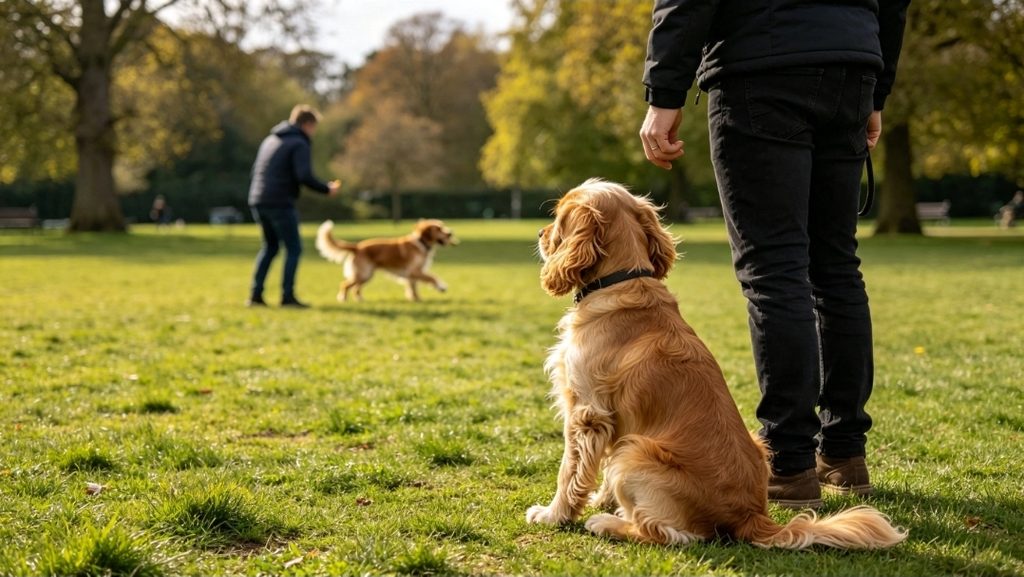
Some dogs chase because they become extremely excited when they see another dog.
They may want to run.
They may want to play.
They may not understand that the other dog doesn’t necessarily want to participate.
This is where impulse control becomes important.
Your dog needs to learn that wanting to play doesn’t mean immediately running towards another dog.
Teach them to wait for your direction.
Teach Impulse Control
Impulse control means helping your dog learn that they don’t have to immediately act on every urge.
Practise simple exercises such as:
- Wait
- Stay
- Leave it
- Focus
- Recall
- Calm greetings
Build these behaviours away from major distractions first.
Then gradually introduce more difficult situations.
Teach a Strong “Leave It”
“Leave it” can be useful when your dog becomes interested in another dog.
Start with easy objects and distractions.
Teach your dog that moving their attention away from something can produce a reward.
Gradually increase the difficulty.
Eventually, you can incorporate the behaviour into situations involving greater distractions.
Don’t expect a dog to immediately leave another exciting dog simply because they’ve learned “leave it” in the kitchen.
Build the behaviour progressively.
What If My Dog Has Already Started Chasing?
If your dog has already started running, the situation becomes much harder.
This is why prevention and early intervention are so important.
Use safe management.
Avoid situations where your dog can repeatedly practise chasing.
Work on recall in controlled environments.
Gradually introduce distractions.
Don’t rely on your dog suddenly responding perfectly when they’re already highly excited.
Don’t Punish the Recall
If your dog eventually returns after chasing another dog, avoid turning the return into a negative experience where possible.
You want your dog to continue seeing returning to you as worthwhile.
The training problem can be addressed separately.
Your priority is getting your dog safely back under control.
What If My Dog Pulls and Barks at Other Dogs?
If your dog is pulling, barking, lunging or becoming highly distressed around other dogs, the issue may involve reactivity rather than simply wanting to chase.
These behaviours require careful management and appropriate training.
Increase distance.
Avoid allowing your dog to repeatedly practise the reaction.
Work below the level at which your dog loses control.
If the behaviour is severe, seek help from a suitably qualified professional who can assess your individual dog and situation.
How Long Does It Take to Stop a Dog Chasing Other Dogs?
There isn’t a fixed timeframe.
Every dog is different.
A young dog with a mild chasing habit may improve relatively quickly.
A dog that has been chasing for years may require considerably more work.
Your dog’s:
- Age
- Breed
- Temperament
- Training history
- Motivation
- Recall reliability
- Level of excitement
- Environment
can all influence progress.
Focus on improvement rather than expecting an instant transformation.
Don’t Rush the Training
One of the biggest mistakes owners make is increasing difficulty too quickly.
Your dog successfully ignores another dog at 30 metres.
You immediately try 5 metres.
The dog fails.
Instead, gradually reduce the distance.
Success builds confidence and reliability.
Practise Before You Need the Behaviour
Don’t wait until your dog is already chasing to practise recall.
Training should happen when your dog is calm enough to learn.
Practise regularly.
Build the behaviour.
Then gradually introduce distractions.
When the difficult situation eventually occurs, your dog has already developed the skills they need.
GPK9 and Building Better Control Around Other Dogs
Learning how to stop your dog chasing other dogs involves much more than teaching a single command.
You are developing:
- Engagement
- Recall
- Impulse control
- Focus
- Obedience
- Handler communication
- Calm behaviour around distractions
These foundations can make everyday walks much easier to manage.
GPK9 90 Day Transformation
The GPK9 90 Day Transformation is the most relevant GPK9 course for this subject because changing chasing behaviour requires consistent training and progressive exposure rather than a single session.
A structured training period allows you to build obedience, improve engagement and gradually work around increasingly difficult distractions.
The aim is to develop reliable behaviour that can be carried into everyday situations rather than simply producing a short-term response.
A Simple Plan to Stop Your Dog Chasing Other Dogs
Step 1 — Prevent Uncontrolled Chasing
Use appropriate management so your dog cannot repeatedly practise the behaviour.
Step 2 — Find Your Dog’s Working Distance
Keep enough distance from other dogs for your dog to remain capable of listening.
Step 3 — Teach Focus
Reward your dog for checking in with you.
Step 4 — Build Recall
Practise returning to you in safe, controlled environments.
Step 5 — Reward Calmness
Reinforce your dog whenever they remain calm around other dogs.
Step 6 — Teach Impulse Control
Use behaviours such as wait, stay and leave it.
Step 7 — Introduce Distractions Gradually
Increase difficulty rather than immediately placing your dog in an overwhelming situation.
Step 8 — Practise Around Movement
Teach your dog that another dog running doesn’t automatically mean chase.
Step 9 — Maintain Consistency
Everyone handling the dog should follow the same training approach.
Step 10 — Keep Practising
Reliable behaviour comes from repetition.
Final Thoughts: How to Stop Your Dog Chasing Other Dogs
Learning how to stop your dog chasing other dogs starts with understanding why the behaviour happens.
Your dog may be excited.
They may want to play.
They may be responding to movement.
They may lack reliable recall.
Or they may simply have learned that chasing is rewarding.
Whatever the reason, repeatedly allowing the behaviour to happen can make it harder to change.
Manage the situation.
Create distance.
Teach engagement.
Build recall.
Reward calm behaviour.
Develop impulse control.
Gradually introduce distractions.
And give your dog time to learn.
The goal isn’t simply to stop your dog from chasing.
The goal is to teach your dog that when another dog appears, they can remain calm, listen to their handler and make a better choice.
See the dog. Stay calm. Focus on your handler. Continue walking.