
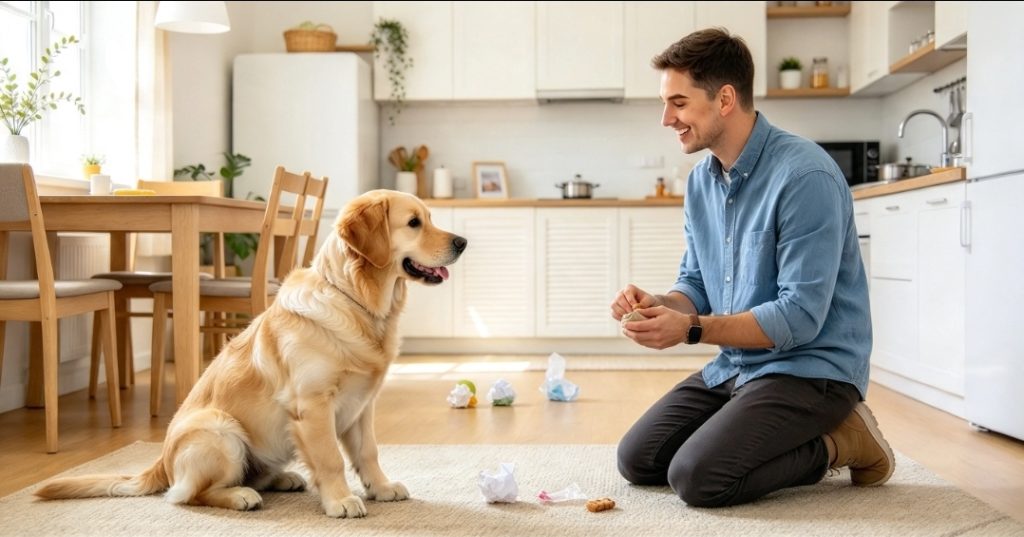
What should I train a puppy first?
What should I train a puppy first? Start by teaching your puppy their name, establishing a consistent toilet routine, rewarding desirable behaviour and helping them learn simple household boundaries. These foundations help your puppy understand how to communicate with you, make appropriate choices and become comfortable in their new home. Begin with short, positive training sessions and introduce new skills gradually, allowing your puppy time to learn without becoming overwhelmed.
RECOMMENDED PRODUCTS

Start With the Most Important Puppy Training Foundations
When deciding what to train a puppy first, focus on the skills that make everyday life safer, calmer and easier to manage. You do not need to teach every command immediately. Your first priority is to build communication, establish good habits and help your puppy understand what is expected of them.
Start with these essential areas:
- Name recognition: Teach your puppy to respond positively when you say their name.
- Toilet training: Establish where and when your puppy should toilet.
- Attention and recall: Teach your puppy to turn towards you and come when called.
- Household boundaries: Help your puppy learn which behaviours and areas are appropriate.
- Calm behaviour: Reward your puppy for settling, resting and making sensible choices.
- Positive socialisation: Introduce people, sounds, environments and experiences gradually.
- Handling and grooming: Help your puppy become comfortable with gentle, appropriate handling.
These skills provide a starting point for more advanced learning as your puppy develops.
Teach Your Puppy Their Name First
Teaching your puppy their name is one of the simplest ways to begin building communication.
Start in a quiet room with few distractions. Say your puppy’s name once in a friendly voice. When they look towards you, reward them immediately with a small food reward or another suitable positive response.
Repeat this exercise in short sessions throughout the day.
As your puppy becomes more reliable, practise in different rooms and gradually introduce distractions. If your puppy struggles to respond, make the exercise easier rather than repeatedly calling their name.
The aim is for your puppy to learn that hearing their name is a positive opportunity to pay attention to you.
Begin Toilet Training Straight Away
Toilet training should begin as soon as your puppy arrives home. Establishing good habits early helps your puppy learn where to go and reduces the likelihood of repeated accidents indoors.
Take your puppy to the appropriate toilet area regularly, especially:
- Immediately after waking.
- After eating or drinking.
- After playing or becoming excited.
- Before bedtime.
- Whenever they show signs that they need to go.
Stay with your puppy and reward them promptly when they toilet in the correct place.
Supervise your puppy indoors and watch for signs such as sniffing the floor, circling, becoming restless or moving away from an activity.
If an accident happens, clean the area thoroughly and review whether your puppy needed more frequent opportunities. Avoid punishment, as it can create confusion and may make your puppy reluctant to toilet in front of you.
Consistency and timely rewards help your puppy understand what you want them to learn.
Teach Your Puppy to Come When Called
Recall is an important skill because it helps you encourage your puppy to return to you when needed.
Begin indoors or in another safe, quiet environment. Move a short distance away, encourage your puppy towards you with a friendly voice and reward them when they arrive.
Make coming to you a positive experience. Avoid calling your puppy only when something enjoyable is ending or when you intend to do something they dislike.
As your puppy improves, gradually increase the distance and introduce mild distractions.
Practise outdoors only in suitable, secure environments. A suitable long line can provide additional control while your puppy develops reliable recall.
Do not expect a young puppy to come back reliably around every distraction straight away. Build the skill through repetition and gradually increasing difficulty.
Introduce Basic Obedience Commands
Once your puppy begins responding to their name, introduce simple commands that are useful in everyday situations.
Teach sit
Encourage your puppy to follow a small food reward held near their nose and moved gently upwards. As they follow the reward, they may naturally sit.
Reward the moment they sit. With repetition, introduce the word “sit” just before the movement you want.
Avoid pushing your puppy into position. Let them learn through encouragement and reward.
Teach wait
Begin with a very brief pause before allowing your puppy to continue an activity. Reward them for waiting calmly.
Practise around simple everyday situations, such as preparing their food or opening a door. Keep the exercise short and gradually increase the difficulty.
Teach them to follow you
Move a short distance away and encourage your puppy to follow. Reward them for staying near you and choosing to engage with you.
This helps build attention and prepares your puppy for future lead training.
Keep each exercise brief and enjoyable. It is better to build a few reliable foundations than to rush through lots of commands.
Teach Household Rules and Boundaries
Your puppy needs to learn how to behave appropriately around people, furniture, doors, toys and other everyday household objects.
Establish clear rules from the beginning and make sure everyone in the household follows them consistently.
For example:
- If your puppy jumps up, reward calm greetings with all four paws on the floor.
- If your puppy bites your hands during play, pause the interaction and offer an appropriate toy.
- If your puppy chews furniture, manage access and redirect them towards a suitable chew.
- If your puppy grabs household objects, keep unsafe items out of reach and offer an appropriate alternative.
- If your puppy rushes towards a door, practise a brief wait before allowing them through.
Do not rely on correcting unwanted behaviour after it happens repeatedly. Supervise your puppy, manage the environment and reward the behaviour you want to see.
The goal is to teach your puppy what to do, not simply what not to do.
Teach Your Puppy to Settle and Relax
Calm behaviour is just as important as learning commands. Your puppy needs to understand how to rest after play, relax in the home and cope with periods when you are not interacting with them.
Provide a comfortable resting area where your puppy can sleep without being disturbed. Reward calm choices, such as lying down on their bed or relaxing quietly near you.
Balance play and training with plenty of sleep. Young puppies need substantial rest, and overtiredness can contribute to excessive biting, frantic movement and difficulty concentrating.
If your puppy becomes increasingly excited, reduce stimulation and consider whether they need a quiet break.
Avoid keeping your puppy entertained constantly. Learning to settle independently is an important part of developing good everyday behaviour.
RECOMMENDED PRODUCTS
Socialise Your Puppy Gradually
Socialisation helps your puppy become familiar with people, sounds, surfaces, environments and other suitable animals.
Start with manageable experiences and allow your puppy to investigate at a comfortable pace.
Introduce everyday household noises, visitors, different surfaces, gentle handling and appropriate interactions with familiar people. Reward calm curiosity and give your puppy space if they seem uncertain.
Avoid forcing your puppy to approach unfamiliar people, dogs or objects. If they appear frightened, increase the distance or reduce the intensity of the experience.
Follow veterinary advice about vaccinations and appropriate outdoor exposure. You can introduce suitable experiences safely while taking the precautions appropriate for your puppy’s age and health.
The aim is to build confidence through positive experiences, not to expose your puppy to as much stimulation as possible.
How Often Should You Train a New Puppy?
Begin with several short training sessions throughout the day. For many young puppies, a few minutes at a time is a useful starting point, although the ideal duration depends on their age, attention span and individual needs.
You can reinforce learning during everyday activities rather than relying entirely on formal sessions.
For example, reward your puppy for responding to their name, waiting briefly, toileting in the correct place or settling calmly after play.
Keep sessions positive and stop before your puppy becomes tired or frustrated. If they struggle to respond, reduce distractions or make the exercise easier.
Consistency is more important than the length of any single session.
What Should You Avoid Teaching or Expecting Too Soon?
When deciding what to train a puppy first, avoid expecting adult-level behaviour from a young dog.
Your puppy is still developing their attention, confidence and ability to control impulses. They will make mistakes while learning.
Avoid these common mistakes:
Teaching too many commands at once: Focus on a few useful skills and build gradually.
Expecting immediate recall around distractions: Practise in easy environments before increasing difficulty.
Giving too much freedom too early: Supervise your puppy and expand access as they learn household rules.
Using punishment for mistakes: Teach an appropriate alternative and manage the environment.
Ignoring sleep and rest: Tired puppies may struggle to concentrate and regulate their behaviour.
Inconsistent household rules: Ensure everyone responds to your puppy in a similar way.
Rushing socialisation: Introduce new experiences gradually and pay attention to your puppy’s comfort.
Training should match your puppy’s current ability. Small, successful steps create a stronger foundation than repeatedly asking them to do something they are not ready to manage.
What Should I Train a Puppy First During the First Week?
During your puppy’s first week, prioritise settling into the home, establishing a toilet routine, learning their name and building positive interactions with you.
A simple starting plan could look like this:
First few days: Focus on comfort, toilet training, name recognition, gentle handling and a predictable routine.
As your puppy becomes comfortable: Introduce short sessions for sit, recall and following you.
Throughout the week: Reward calm behaviour, establish household boundaries and introduce everyday experiences gradually.
Every day: Provide appropriate play, regular toilet opportunities, supervision and plenty of rest.
There is no need to follow a strict timetable. Adjust the pace to your puppy’s confidence and needs.
If your puppy struggles with an exercise, return to an easier step and try again later.
What Should I Train a Puppy First for Long-Term Success?
What should I train a puppy first for long-term success? Prioritise communication, toilet training, recall, calm behaviour, household boundaries and positive socialisation. These foundations help your puppy understand how to live safely and comfortably with you before you introduce more complex training.
Remember that training is an ongoing process. A puppy may learn to sit quickly but still need considerable practice to respond reliably around distractions. Continue reinforcing good behaviour as they mature.
Observe your puppy, reward the choices you want to encourage and adapt the training when they need more support. If persistent fear, distress or behaviour that is difficult to manage safely develops, seek appropriate veterinary advice or help from a suitably qualified, welfare-focused behaviour professional.
RECOMMENDED PRODUCTS
Start with the foundations, keep training positive and build one skill at a time. Consistent guidance helps your puppy develop confidence, good habits and the skills they need as they grow.



