How to Play Correctly During Dog Training
How to play correctly during dog training starts with understanding that play is more than entertainment. When used correctly, play can strengthen your relationship with your dog, build motivation, improve communication and reward behaviours you want to see again. The key is to recognise how your dog responds, keep play appropriate for the situation and know when to start, pause and finish.
RECOMMENDED PRODUCTS

Why Is Play Important During Dog Training?
Play can make training enjoyable and encourage your dog to engage with you. Depending on the individual dog, a short game can be an effective reward for responding to a command, returning when called, maintaining attention or completing an exercise.
However, not every dog finds the same activities rewarding. Some dogs enjoy chasing and retrieving, while others prefer gentle interaction, food-based rewards or calm games. Observe what motivates your dog rather than assuming every dog will respond in the same way.
The purpose of play during dog training is to improve learning, engagement and communication, not simply to increase excitement.
How to Use Play as a Training Reward
To use play effectively, connect it to a behaviour you want to encourage. Ask your dog for a familiar response, acknowledge the correct behaviour and then introduce a brief game if play is an appropriate reward.
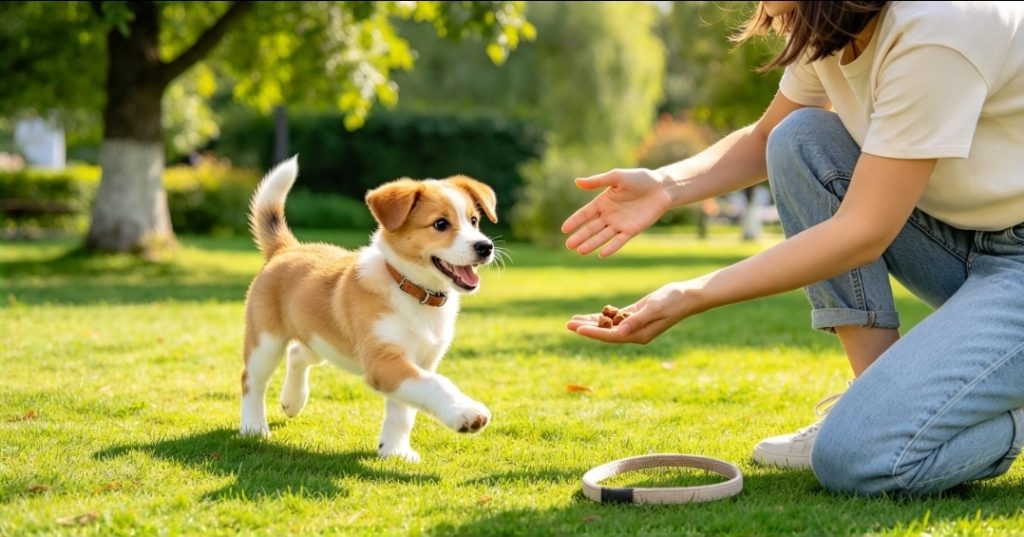
For example, you could ask your dog to come to you, reward the successful response and begin a short game together. This helps your dog understand that responding to you can lead to something enjoyable.
Keep the sequence clear and consistent:
- Give a familiar cue.
- Allow your dog time to respond.
- Reward the correct behaviour promptly.
- Use a suitable game that your dog enjoys.
- Pause the game and allow your dog to settle before continuing.
As your dog learns, you can gradually introduce more challenging exercises. Avoid making the task so difficult that your dog becomes confused or loses interest.
How to Play with Your Dog Without Creating Overexcitement
Play should suit your dog’s emotional state and ability to remain engaged. Excitement can be useful during some activities, but excessive arousal may make it harder for your dog to listen, respond to cues or return to a calmer state.
Watch your dog’s behaviour throughout the game. If your dog can still engage with you, respond to familiar cues and take breaks, the activity may be at a suitable level. If your dog becomes increasingly frantic, starts grabbing clothing, jumps uncontrollably or struggles to disengage, pause and reassess.
Reduce the intensity, create some space and allow your dog time to recover. Resume only when your dog is comfortable and able to engage appropriately.
Do not assume that a dog who is highly excited is necessarily enjoying the interaction. Consider the whole picture, including body language, movement, willingness to participate and ability to take a break.
Choosing the Right Type of Play
Different activities can support different training goals. Choose a game that matches your dog’s preferences, experience and the behaviour you are teaching.
Tug Games
Tug can provide an interactive reward for dogs who enjoy playing with a suitable toy. Keep the game controlled, allow appropriate pauses and teach your dog to release the toy when asked.
If your dog struggles to release, becomes too intense or starts redirecting grabbing towards hands or clothing, stop the game safely and make the next session easier. Do not turn the interaction into a physical contest.
Retrieve Games
Retrieving can encourage engagement and provide a rewarding activity between training exercises. Begin with short, simple repetitions and reward your dog for returning towards you.
Avoid repeatedly throwing an object if your dog becomes too excited to respond or has difficulty disengaging. The aim is to keep the game connected to communication rather than allowing the activity to take over.
Food-Based Games
Food can be incorporated into simple search games, reward-based exercises and training activities that encourage attention and problem-solving. These games may be particularly useful when your dog finds food more motivating than toys.
Use small, suitable rewards and adjust the difficulty to your dog’s experience. Keep the activity enjoyable rather than frustrating.
Calm Interactive Play
Some dogs respond best to gentle interaction, simple games or quiet engagement with their handler. You do not need to make every session energetic to make it valuable.
A calm game can help maintain a positive relationship while allowing your dog to practise responding without becoming overly excited.
Teach Your Dog When Play Starts and Finishes
Clear beginnings and endings help your dog understand the structure of an activity. Use a consistent cue to begin a game and a separate cue to indicate that the game has finished.
When finishing, stop the movement of the toy, give your dog an opportunity to disengage and calmly transition to another activity. Reward appropriate responses when necessary, especially while your dog is learning to release an object or move away from play.
Avoid suddenly turning a game into a confrontation. If your dog finds it difficult to stop, make the next session shorter and easier, and practise disengagement in a calmer environment.
Finishing play does not mean punishing your dog for becoming excited. It means helping your dog learn that enjoyable activities have boundaries.
How to Prevent Play from Becoming Rough
Play should remain safe and appropriate for both the dog and the handler. Establish simple boundaries from the beginning, particularly if your dog tends to grab hands, jump up or become rough when excited.
If teeth make contact with skin, clothing is grabbed or the game becomes uncomfortable, calmly interrupt the interaction. Create space and allow your dog to settle before deciding whether to continue.
Do not encourage your dog to chase hands, bite clothing or use people as play objects. Redirect suitable play towards an appropriate activity when your dog is calm enough to engage.
If rough behaviour repeatedly escalates, avoid testing your dog by deliberately increasing excitement. Review the triggers, reduce the intensity and seek qualified professional guidance if you cannot manage the behaviour safely.
Common Mistakes When Using Play During Dog Training
Some common mistakes can make play less useful and more difficult to manage.
Playing for too long: Long sessions can lead to fatigue, frustration or excessive excitement. Finish while your dog can still engage appropriately.
Rewarding the wrong behaviour: If the game begins while your dog is jumping, grabbing or ignoring a familiar cue, you may unintentionally strengthen that behaviour. Make the desired response clear before starting the reward.
Using the same game for every dog: Individual dogs have different preferences. Choose activities according to your dog’s response rather than copying what works for another dog.
Making every game more intense: Increasing speed, noise or physical excitement is not always progress. Sometimes a slower, more controlled game produces better learning.
Ignoring signs of discomfort: Turning away, repeatedly moving away, becoming tense or trying to escape the interaction may indicate that your dog needs space. Pause and reassess instead of insisting on continued play.
Using play when your dog cannot cope: If your dog is overwhelmed, frightened or too distracted to respond, adding excitement may make the situation harder. Increase distance from the trigger, reduce the demands and allow recovery.
How Often Should You Use Play During Training?
The right amount depends on your dog’s age, health, preferences, experience and the type of activity. Several short opportunities may be more effective than one prolonged session.
Use play when it supports the exercise, and allow time for rest and calmer activities between games. Stop if your dog shows signs of fatigue, discomfort or increasing frustration.
Puppies in particular need suitable play, sufficient rest and activities appropriate for their developing bodies. Avoid excessive jumping, abrupt twisting or repeated high-impact movements. If your dog has an injury or health concern, ask a veterinary professional which activities are appropriate.
How to Know Whether Play Is Improving Training
Look for practical signs that the game is helping your dog learn. Your dog may begin responding more readily to familiar cues, return to you more willingly, engage with greater confidence or settle more easily after a session.
Also consider whether your dog remains comfortable and whether you can start and finish the activity without conflict. If play makes the next exercise harder, creates frustration or prevents your dog from responding, adjust the game.
Progress is not measured by how excited your dog becomes. It is measured by whether the activity supports the behaviour, communication and emotional balance you are trying to develop.
Frequently Asked Questions
Should I use play as a reward during dog training?
Yes, if your dog enjoys the activity and it supports the training goal. Play can be a useful reward for behaviours such as recall, attention and responding to familiar cues. Choose a suitable game and keep it structured.
Is tugging bad for dogs?
Tug is not automatically bad for dogs. When appropriate for the individual dog, it can be an enjoyable interactive game. Keep it safe, avoid rough handling and teach clear boundaries, including releasing the toy when asked.
What should I do if my dog becomes too excited during play?
Pause the game, reduce stimulation and give your dog space to settle. When your dog can engage calmly again, consider restarting with a shorter or less intense activity. If the behaviour becomes unsafe or repeatedly escalates, seek qualified help.
Should I let my dog win during tug?
The important issue is not whether your dog wins every round. Focus on safe interaction, enjoyment and clear communication. Allowing your dog to obtain the toy sometimes can help maintain interest, provided the game remains appropriate and controlled.
How do I stop my dog from biting my hands during play?
Avoid using your hands as play objects. Calmly interrupt the game when teeth contact skin, create space and redirect to a suitable activity when your dog is ready. If biting is persistent, intense or difficult to manage, seek professional advice.
Can play make dog training worse?
Play can become counterproductive if it creates excessive excitement, reinforces unwanted behaviour or makes it difficult for your dog to respond. Adjust the intensity, timing and duration so that play supports the learning objective.
RECOMMENDED PRODUCTS
Final Thoughts on Playing Correctly During Dog Training
Playing correctly during dog training means choosing suitable activities, rewarding the behaviours you want to encourage and recognising when your dog needs a break. Keep sessions enjoyable, structured and appropriate for your dog’s individual needs.
Observe your dog’s response, adjust the game when necessary and finish on a positive, manageable note. When play supports communication instead of replacing it, it can become a valuable part of a balanced training routine.