
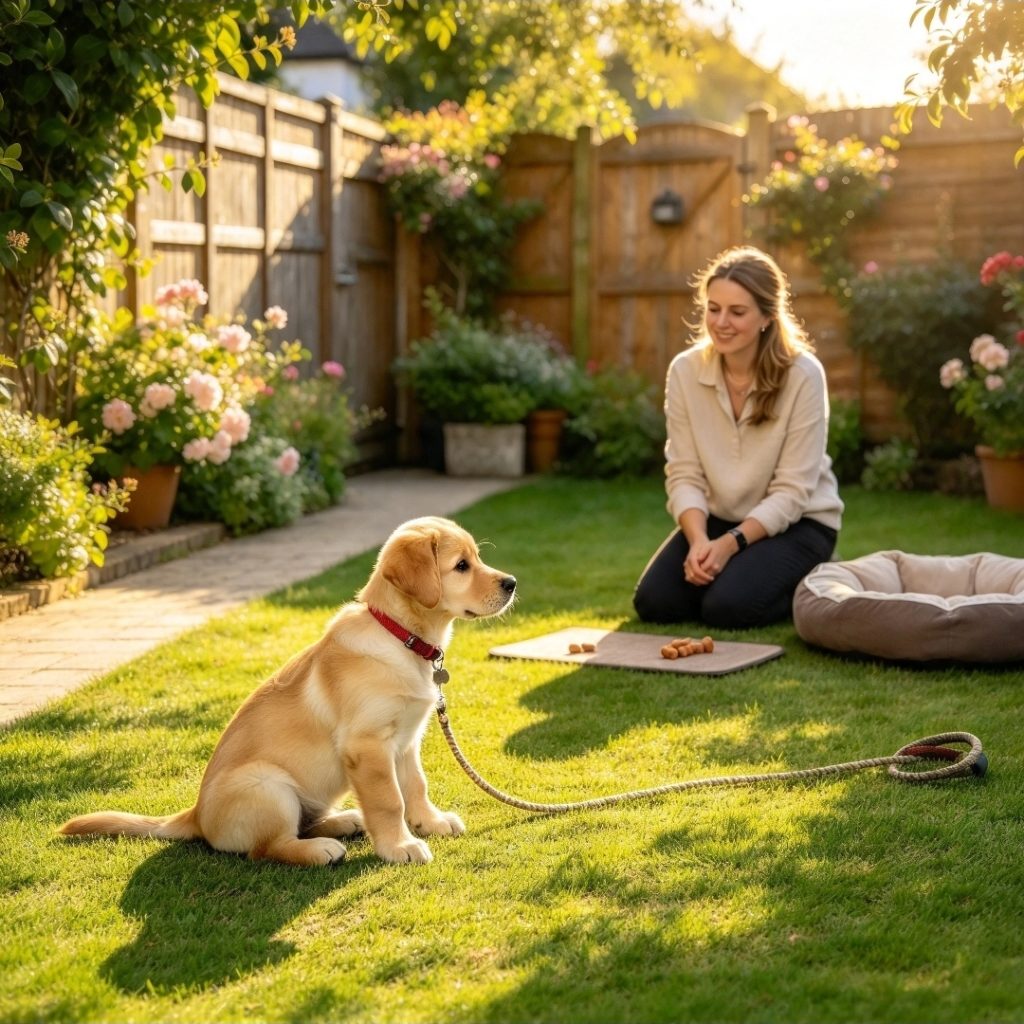
How Do I Stop My Puppy Getting Hyper?
How do I stop my puppy getting hyper? The best approach is to recognise what is causing the excitement, reduce unnecessary stimulation, teach your puppy how to settle, and establish a balanced routine that includes training, play, exercise and rest. Puppies can become overexcited when they are tired, overstimulated, frustrated or struggling to regulate their behaviour. Rather than automatically giving them more exercise, help them learn when to engage, when to respond to you and when to switch off.
RECOMMENDED PRODUCTS

Why Does My Puppy Get Hyper?
Puppies can become hyper for several reasons, and understanding the cause helps you decide how to respond.
Common causes include:
- Overtiredness: Your puppy has been awake or active for too long and struggles to settle.
- Overstimulation: Too much play, noise, activity or interaction makes it difficult for your puppy to calm down.
- Excitement: Visitors, toys, food, walks or other dogs trigger an energetic response.
- Insufficient appropriate activity: Your puppy needs suitable opportunities to explore, learn, play and use their natural curiosity.
- Lack of calm behaviour training: Your puppy has learned how to become excited but has not yet learned how to settle.
- Inconsistent routines: Your puppy does not have predictable opportunities for activity, interaction, toileting and rest.
A hyper puppy is not necessarily a puppy that needs more exercise. Sometimes the most useful response is to reduce stimulation and provide an opportunity to rest.
How Do I Know If My Puppy Is Overexcited?
Learning how do I stop my puppy getting hyper starts with recognising the signs before the behaviour escalates.
You may notice your puppy:
- Running around the house at speed.
- Jumping up at people.
- Biting hands or grabbing clothing.
- Barking, whining or becoming unusually vocal.
- Ignoring familiar cues.
- Becoming increasingly frantic during play.
- Struggling to remain focused on you.
- Repeatedly grabbing objects or running away with them.
- Being unable to settle after an activity.
Watch for changes in your puppy’s behaviour. For example, they may initially play appropriately but gradually become rougher, faster and less responsive.
When your puppy begins struggling to listen or recover from excitement, do not wait until the behaviour becomes more difficult to manage. Reduce the activity and help them settle before continuing.
How Do I Calm My Hyper Puppy Down?
When your puppy becomes overexcited, your response should make the situation easier rather than adding more stimulation.
Stay Calm and Reduce Excitement
Avoid shouting, running around after your puppy or repeatedly giving commands they cannot currently respond to. Your movements, voice and reactions can add to the excitement.
Instead, slow down, use a calm voice and reduce unnecessary activity.
If play is making your puppy increasingly frantic, pause the game. If visitors are creating too much excitement, reduce the interaction and give your puppy space.
The aim is to help your puppy recover, not to turn calming down into another exciting activity.
Reduce the Difficulty
If your puppy is too excited to listen, the situation may be too challenging at that moment.
Move away from distractions where possible, reduce the intensity of the activity and give your puppy time to recover.
Once your puppy is calmer and able to engage with you again, return to a simpler activity.
Give Your Puppy Time to Settle
Teach your puppy that resting and doing nothing are normal parts of everyday life.
Provide a comfortable, quiet resting area where your puppy can relax without constant interruption. Reward calm behaviour when appropriate, and avoid continually stimulating your puppy when they are trying to settle.
If your puppy is showing signs of tiredness, prioritise rest rather than starting another game or training session.
How Do I Teach My Puppy to Settle?
Teaching your puppy to settle is one of the most important skills for managing excessive excitement.
Start in a Quiet Environment
Choose a familiar area with minimal distractions. Wait for a moment when your puppy is already relatively calm rather than beginning when they are running around frantically.
Encourage your puppy to relax on a suitable bed or resting place. Reward calm behaviour with quiet praise or another appropriate reward.
Keep the exercise short and achievable.
Reward Calm Behaviour
Look for moments when your puppy lies down, relaxes beside you, watches activity without joining in or chooses to rest independently.
Reward these behaviours without making the interaction too exciting.
Your puppy gradually learns that calm behaviour is worthwhile and does not need to be constantly seeking activity or attention.
Increase the Challenge Gradually
Once your puppy can settle in a quiet environment, practise while you carry out ordinary household activities.
Progress gradually, introducing small distractions while ensuring your puppy can still relax.
If your puppy becomes increasingly excitable, make the situation easier and try again later.
A reliable settle develops through consistent practice, not by expecting a puppy to remain calm in every situation immediately.
How Do I Stop My Puppy Getting Hyper During Play?
Play is valuable for puppies, but the level of excitement needs to remain manageable.
The objective is not to eliminate excitement. It is to teach your puppy to engage appropriately, respond to you and recover afterwards.
Keep Play Controlled
Use suitable toys and keep play sessions appropriate for your puppy’s age, ability and individual temperament.
Watch how your puppy responds. If they remain engaged, can respond to you and recover when the game pauses, the activity may be at a suitable level.
If they start biting hands, grabbing clothing, running frantically or ignoring you completely, reduce the intensity or stop the game temporarily.
Teach Your Puppy to Pause
Introduce short pauses during play. When your puppy is able to respond calmly, you can resume the activity if appropriate.
This helps your puppy learn that excitement does not mean the game continues without limits.
If your puppy cannot settle between bursts of play, shorten the sessions and allow more recovery time.
Avoid Making Every Game More Exciting
Repeatedly throwing toys, chasing your puppy or increasing the intensity of play can make an already overexcited puppy even more stimulated.
Choose activities that suit your puppy and help develop engagement without losing control.
Good play should allow your puppy to become motivated, respond appropriately and recover afterwards.
Does My Hyper Puppy Need More Exercise?
Not necessarily. Physical activity is important, but more exercise is not always the answer when a puppy becomes hyper.
Some puppies become more excited when activity is continually increased. Others become overtired and struggle to regulate their behaviour.
Instead, aim for a balanced routine that includes:
- Age-appropriate physical activity.
- Short, manageable training sessions.
- Opportunities to explore and investigate.
- Suitable mental stimulation.
- Appropriate play and interaction.
- Quiet periods and sufficient sleep.
Avoid trying to exhaust your puppy into good behaviour. Your puppy needs to learn both how to be active and how to relax.
Exercise should be appropriate for your puppy’s age, development and health. If you are unsure about suitable activity levels, ask your vet for guidance.
Can an Overtired Puppy Become Hyper?
Yes. An overtired puppy may appear to have endless energy when they are actually struggling to settle.
They may suddenly start running around, biting, jumping, barking or grabbing clothing. They may also become less responsive to familiar cues.
When this happens, consider how long your puppy has been awake and how much stimulation they have experienced.
Rather than automatically adding more exercise, reduce activity and create a calm opportunity for rest.
Establish a Predictable Routine
Puppies benefit from a routine that balances activity and recovery.
Throughout the day, provide appropriate opportunities for waking, toileting, feeding, play, training and rest.
The exact routine will depend on your puppy’s age and individual needs. Young puppies generally require frequent toilet opportunities and plenty of sleep.
A predictable routine helps you recognise when your puppy is ready for activity and when they need a break.
Introduce Rest Before Your Puppy Becomes Frantic
Do not wait until your puppy is completely overstimulated before helping them settle.
Watch for early changes, such as increasingly rough play, reduced attention or difficulty responding to familiar cues.
Use these signs to decide when to pause the activity and provide a quieter environment.
How Do I Stop My Puppy Getting Hyper Around Visitors?
Visitors can create excitement because they bring new people, movement, voices and opportunities for interaction.
Prepare your puppy before visitors arrive rather than waiting until they are jumping and running around.
Manage the Greeting
Keep the greeting calm and avoid encouraging jumping or frantic interaction.
Reward your puppy for approaching appropriately and keeping their paws on the floor. If they become too excited, pause the interaction and give them an opportunity to settle.
Visitors should follow the same expectations. If one person encourages jumping while another discourages it, your puppy receives inconsistent information.
Give Your Puppy Space
Your puppy does not need to greet every visitor immediately or remain involved throughout the visit.
Provide a comfortable, safe place where they can rest away from the activity. Make sure they are not forced into interactions when tired or uncomfortable.
Gradually practise calm behaviour around visitors, starting with situations your puppy can manage successfully.
How Do I Stop My Puppy Getting Hyper Around Other Dogs?
Other dogs can trigger excitement, frustration or uncertainty. Your puppy may pull, bark, jump or struggle to focus when they see another dog.
Start at a distance where your puppy can observe the other dog without becoming overwhelmed.
Reward calm attention and appropriate responses to you. If your puppy becomes increasingly excited or cannot respond, create more distance and allow them to recover.
Do not assume that more greetings will solve the problem. Your puppy can learn to remain calm around other dogs without interacting with every dog they see.
Introduce social experiences gradually and choose appropriate interactions. Watch your puppy’s body language, respect signs of discomfort and avoid overwhelming them with too many experiences at once.
What Should I Avoid When My Puppy Gets Hyper?
Avoid responses that increase excitement or make it harder for your puppy to understand what is expected.
Common mistakes include:
- Shouting or repeatedly issuing commands when your puppy cannot respond.
- Chasing your puppy around the house.
- Continuing play when your puppy is becoming frantic.
- Automatically increasing exercise whenever your puppy becomes hyper.
- Keeping your puppy constantly entertained without allowing time to rest.
- Expecting a young puppy to manage strong distractions before they are ready.
- Punishing your puppy for behaviour linked to tiredness or overstimulation.
Instead, observe what is happening, reduce the difficulty, communicate clearly and reward appropriate behaviour.
If your puppy repeatedly struggles to settle, review their routine, activity levels, sleep and environment.
RECOMMENDED PRODUCTS
How Long Does It Take to Calm a Hyper Puppy?
Every puppy is different. Progress depends on age, temperament, sleep, environment, previous experiences and the consistency of training.
You may notice improvements as you establish a predictable routine and learn to recognise the early signs of overstimulation. However, learning to settle reliably takes practice.
Measure progress by looking for small changes. Your puppy may recover more quickly after play, respond to you for longer, settle more easily or remain calm around distractions that previously caused excitement.
If your puppy struggles, reduce the difficulty and return to a situation they can manage successfully.
If the behaviour is sudden, extreme or persistent, or your puppy appears distressed or unable to rest, consult your vet to rule out medical causes and discuss appropriate support.
How Do I Stop My Puppy Getting Hyper in the Long Term?
How do I stop my puppy getting hyper as they grow? Focus on teaching your puppy to regulate excitement rather than simply trying to remove their energy.
Observe their behaviour, identify what triggers the excitement, reduce stimulation when necessary and build calm behaviour through consistent practice.
Balance play, training, exploration and exercise with sufficient rest. Teach your puppy to respond to you, pause during activities and settle in different environments. Increase distractions gradually and adjust your approach when your puppy struggles.
The goal is not to create a puppy that never gets excited. It is to help them learn when excitement is appropriate and how to return to a calmer state afterwards.
A well-balanced puppy learns how to engage, respond, recover and rest. With patience, clear communication and a consistent routine, you can help your puppy develop better self-control and become calmer in everyday life.



