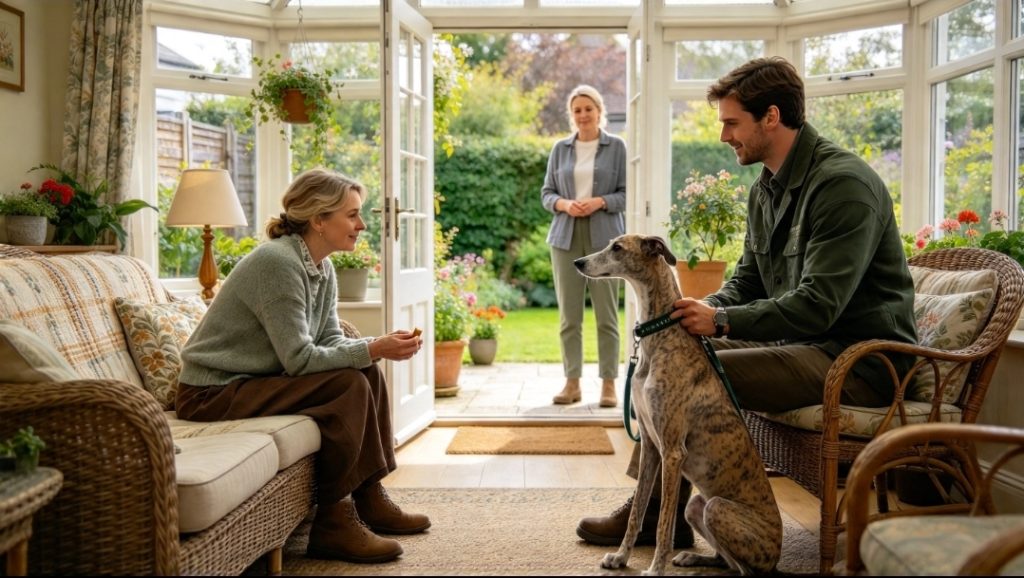
How Do I Introduce My Dog to People?
How do I introduce my dog to people? The best approach is to make each introduction calm, gradual and controlled, allowing your dog to observe the person without being forced to interact. Reward relaxed behaviour and only allow closer interaction when your dog is comfortable.
RECOMMENDED PRODUCTS

Start With Calm Behaviour
Before introducing your dog to someone, consider your dog’s current behaviour.
If your dog is already highly excited, nervous or difficult to control, give it time and space to settle before introducing the person. There is no benefit in rushing an interaction when your dog is unable to cope.
Ask the person to remain calm and avoid immediately approaching, touching or leaning over your dog.
Let Your Dog Observe the Person
Give your dog enough space to look at the person without pressure.
Allow your dog to observe their appearance, movement and voice. Reward calm behaviour with food, praise or another suitable reward.
Your dog does not have to approach immediately. Being able to calmly observe a person is an important part of learning how to behave around people.
Gradually Reduce the Distance
If your dog remains relaxed, gradually allow the person to come closer.
Watch your dog’s body language throughout the process. If your dog becomes uncomfortable, increase the distance again rather than continuing to move closer.
The speed of the introduction should be determined by your dog’s behaviour, not by how quickly the person wants to interact.
Allow Your Dog to Choose Whether to Approach
When your dog is comfortable, allow it to approach the person rather than forcing the dog towards them.
The person should remain calm and avoid reaching over the dog’s head, grabbing the dog or immediately attempting to hug it.
A brief investigation is enough. Your dog does not need to remain with the person or be touched simply because it has approached.
Reward Calm Interaction
Reward the behaviour you want your dog to repeat.
If your dog calmly looks at the person, remains relaxed, approaches appropriately or moves away without becoming worried or overexcited, reinforce that behaviour.
Timing matters. Reward while the dog is displaying the calm behaviour you want to encourage.
Teach Your Dog That People Do Not Always Mean Interaction
Your dog does not need to greet every person it sees.
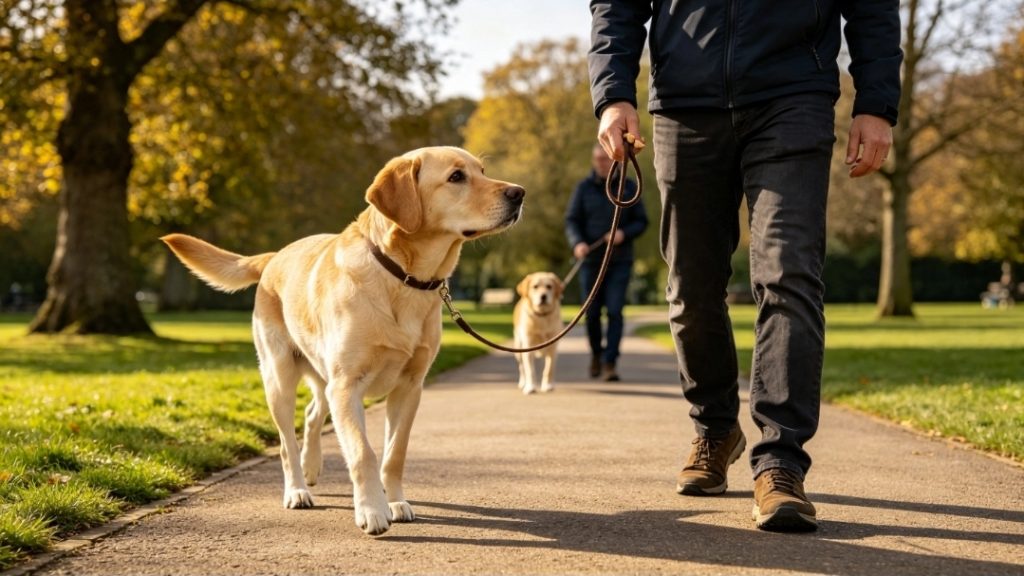
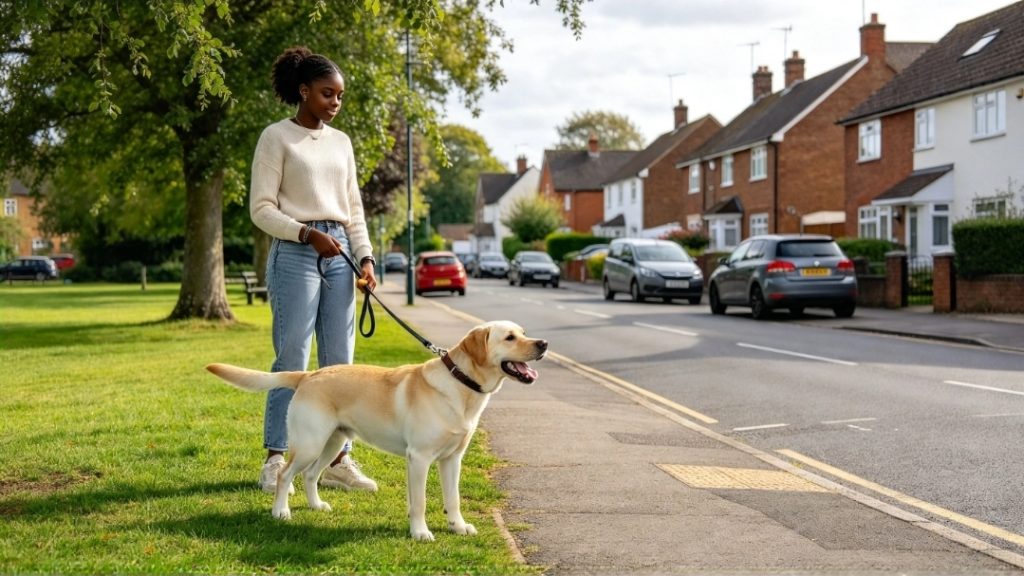
A useful social skill is being able to notice people, remain calm and continue walking or focusing on the handler without approaching them.
This is particularly important when meeting people in public. Calm observation can be just as valuable as direct interaction.
What If My Dog Is Nervous Around People?
Do not force a nervous dog to approach.
Increase the distance and allow your dog to observe the person from a comfortable position. Reward calm behaviour and gradually build confidence through controlled experiences.
Ask the person not to stare directly at the dog, reach towards it or attempt to touch it unless the dog is clearly comfortable.
If your dog consistently shows significant fear, avoidance, barking, lunging or defensive behaviour around people, seek professional help rather than repeatedly exposing the dog to situations it cannot cope with.
RECOMMENDED PRODUCTS
What If My Dog Gets Too Excited?
If your dog jumps, pulls, barks or becomes excessively excited when meeting people, create more distance and allow it to calm down.
Do not reward the unwanted behaviour by immediately allowing access to the person.
Once your dog is calmer, you can try again at an easier level. Short, successful interactions are generally more useful than allowing excitement to build until the dog loses control.
Introducing Your Dog to Children
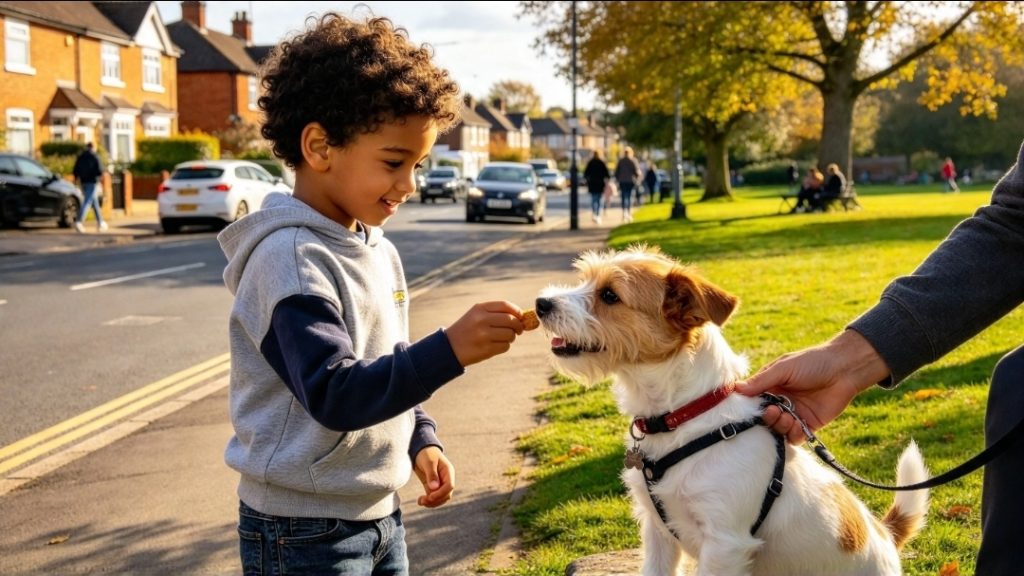
Children should be supervised closely around dogs.
Teach children to remain calm, avoid chasing or cornering the dog, and give the dog space when it moves away. Do not allow children to climb on, hug or disturb a dog that is resting, eating or trying to disengage.
If your dog is uncertain around children, increase distance and use controlled exposure rather than expecting the dog to tolerate close interaction.
Never leave a young child and dog together unsupervised.
Introducing Your Dog to Visitors
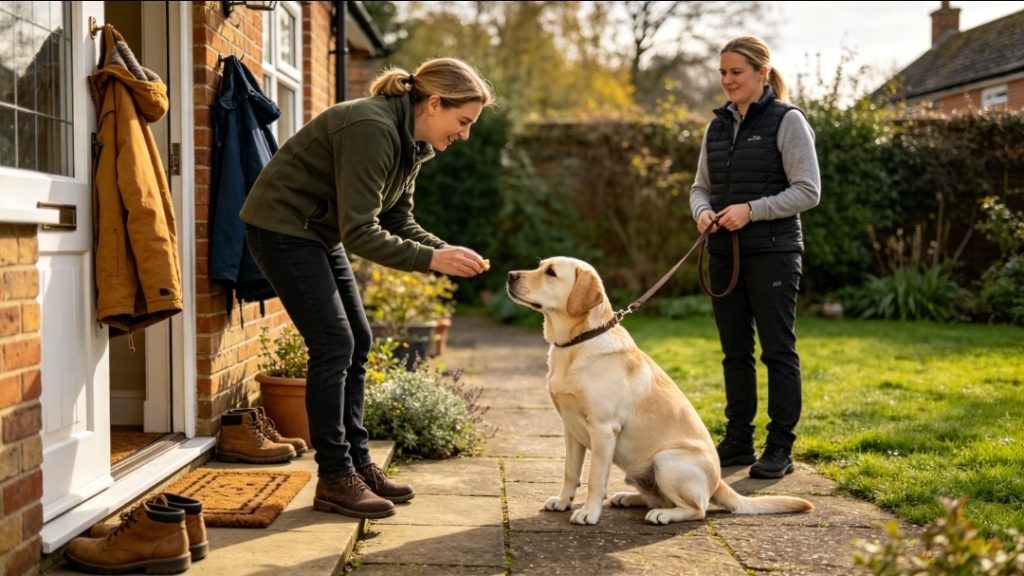
When someone arrives at your home, manage the initial excitement before allowing close interaction.
Give your dog enough space to settle and allow the visitor to enter without immediately approaching the dog.
Once your dog is calm enough to cope, you can gradually allow closer interaction if appropriate. If your dog becomes overwhelmed, create more distance and give it time to settle.
What Equipment Should I Use?
A well-fitted harness or collar and suitable lead can provide appropriate control during introductions.
A short line can be useful when you need closer control, while a long line may be appropriate later in a secure area where your dog has more freedom.
Equipment should help you manage distance and safety. It should not be used to force your dog towards a person.
If a muzzle is genuinely required because of a safety risk, it should be introduced positively before the situation and the interaction should be professionally managed.
RECOMMENDED PRODUCTS
Common Mistakes to Avoid
Avoid forcing your dog towards people, allowing strangers to rush up and touch the dog, ignoring signs of discomfort or assuming that every dog should enjoy being handled.
Do not punish your dog for being nervous or uncomfortable. Instead, create more distance, reduce the pressure and work at a level your dog can manage.
Repeated positive experiences are more useful than overwhelming your dog with too much interaction.
How Often Should I Introduce My Dog to People?
There is no fixed number of people your dog needs to meet.
Focus on the quality of each experience rather than the number of people. A few calm, successful interactions are more useful than repeatedly exposing your dog to people while it is stressed or overexcited.
Continue practising appropriate behaviour around different people, environments and situations as your dog develops.
Conclusion
Introducing your dog to people should be calm, gradual and controlled. Start by allowing your dog to observe the person, reward relaxed behaviour, reduce the distance slowly and allow interaction only when your dog is comfortable.
Your dog does not need to greet everyone. The most useful social skill is being able to remain calm and behave appropriately around people, whether interaction takes place or not.