Introduction
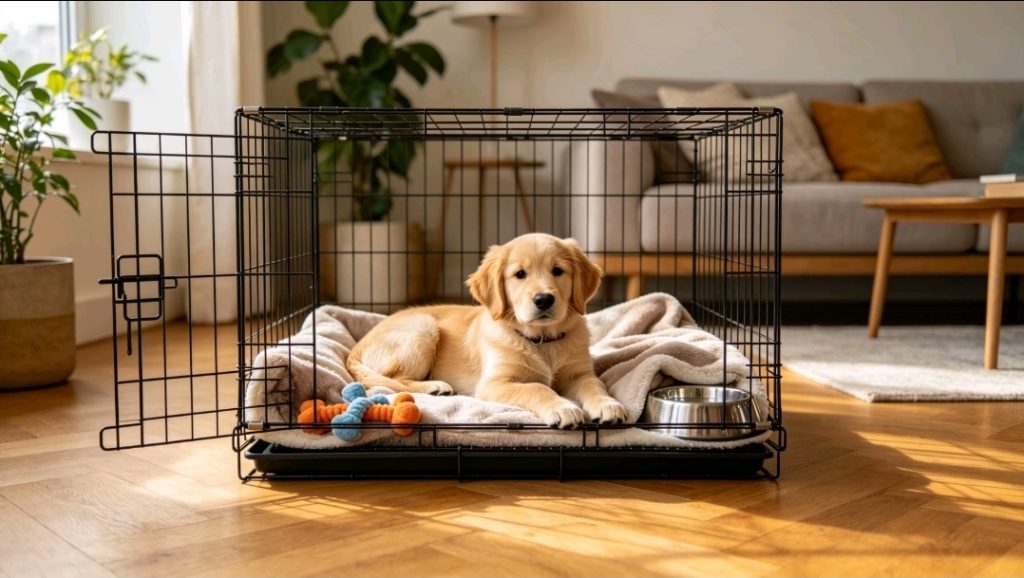
Crate Training Your Puppy Without Stress is one of the most effective ways to create structure, confidence, and calm behaviour inside the home. When introduced correctly, crate training provides a safe space where your puppy can relax, sleep, and learn independence without anxiety or frustration.
Many owners worry that crate training is restrictive, but Crate Training Your Puppy Without Stress focuses on building positive associations that help puppies feel secure and comfortable. A properly introduced crate becomes a place of safety rather than confinement.
Crate Training Your Puppy Without Stress should always be introduced gradually, allowing the puppy to develop confidence at its own pace.
Why Crate Training Is Important
Crate Training Your Puppy Without Stress offers several important benefits for both the puppy and the owner.
Benefits include:
- Creating structure and routine.
- Supporting toilet training.
- Preventing destructive behaviour.
- Encouraging calmness.
- Building independence.
- Providing a safe resting area.
- Helping manage the puppy safely when unsupervised.
A puppy that understands how to settle calmly inside a crate is often easier to manage throughout adolescence and adulthood.
Creating Positive Associations With the Crate
The first step in Crate Training Your Puppy Without Stress is teaching the puppy that the crate predicts good things.
Positive associations can be created through:
- Food rewards.
- Feeding meals near the crate.
- Feeding meals inside the crate.
- Calm praise.
- Toys.
- Rest periods.
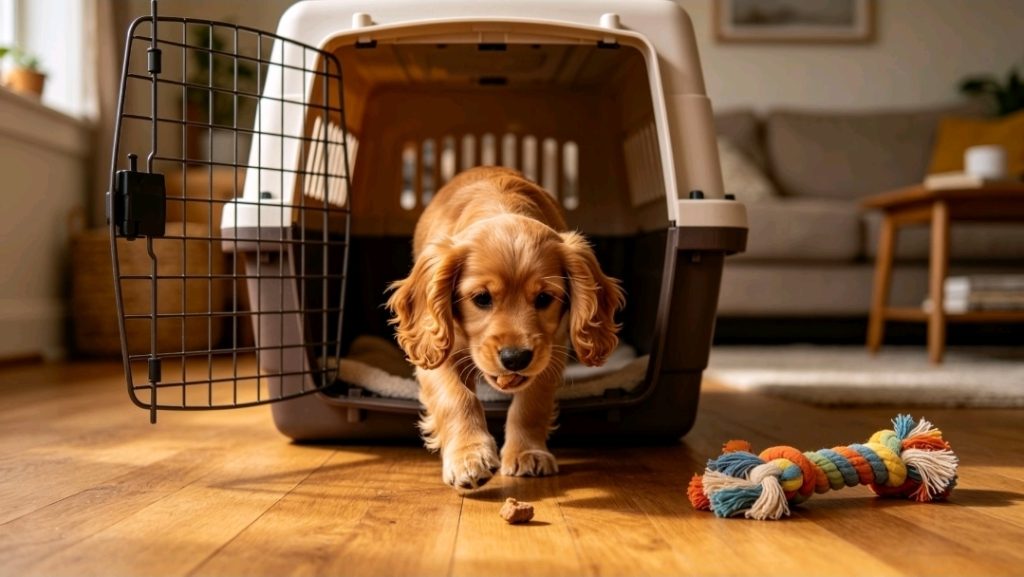
The puppy should be encouraged to explore the crate voluntarily rather than being forced inside.
Allowing the puppy to investigate naturally helps create confidence and trust.
Introducing the Crate Correctly
Crate Training Your Puppy Without Stress should begin with very short sessions.
Simple steps include:
- Leave the crate door open.
- Encourage exploration.
- Reward calm behaviour.
- Allow the puppy to leave freely.
- Repeat multiple short sessions.
The goal is to create curiosity and comfort before asking the puppy to remain inside for longer periods.
Avoid rushing this stage.
Using the Crate to Support Toilet Training
One of the biggest advantages of Crate Training Your Puppy Without Stress is improving toilet training.
Most puppies naturally avoid soiling their sleeping area.
A structured routine helps puppies learn:
- When to rest.
- When to go outside.
- When to eat.
- When to play.
Consistent scheduling helps reduce accidents and speeds up the house-training process.
Preventing Destructive Behaviour
Puppies explore the world through chewing, digging, and investigating objects.
Without supervision, this can lead to:
- Damaged furniture.
- Chewed cables.
- Destroyed household items.
- Unsafe behaviour.
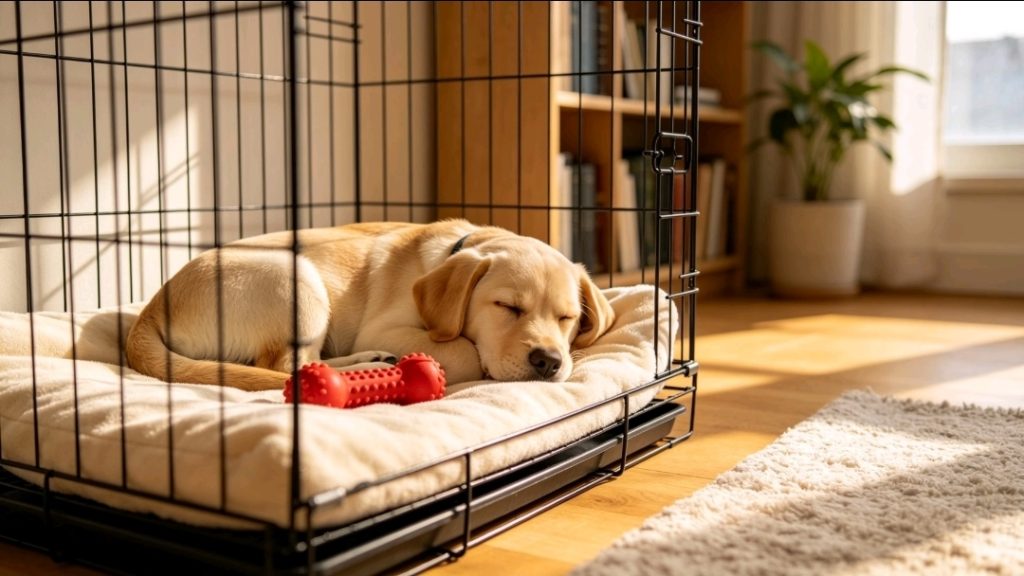
Crate Training Your Puppy Without Stress helps prevent these issues by providing a safe environment when direct supervision is not possible.
The crate should never be used as punishment.
Instead, it should remain a positive and predictable place.
Reducing Separation Anxiety
Many owners begin Crate Training Your Puppy Without Stress because they want to prevent future separation issues.
Independence can be developed gradually through:
- Short periods alone.
- Calm departures.
- Calm returns.
- Consistent routines.
- Confidence-building exercises.
The puppy learns that being alone for short periods is normal and safe.
This process helps reduce dependency and promotes emotional stability.
Building Independence and Confidence
A confident puppy is able to relax without needing constant interaction.
Crate Training Your Puppy Without Stress teaches puppies:
- Self-control.
- Relaxation.
- Patience.
- Confidence.
- Independence.
The crate becomes a place where the puppy can switch off and rest without feeling isolated or anxious.
Common Crate Training Mistakes
Several mistakes can slow progress during Crate Training Your Puppy Without Stress.
Common mistakes include:
- Forcing the puppy into the crate.
- Using the crate as punishment.
- Leaving the puppy inside too long.
- Progressing too quickly.
- Ignoring signs of stress.
- Creating negative associations.
Successful crate training focuses on patience, consistency, and positive experiences.
Conclusion
Crate Training Your Puppy Without Stress helps create structure, confidence, independence, and calm behaviour inside the home. When introduced correctly, the crate becomes a valuable tool that supports toilet training, reduces destructive behaviour, encourages relaxation, and helps prevent separation-related problems.
By progressing gradually and creating positive experiences, owners can build a strong foundation that benefits their puppy throughout life.
Course Recommendation
Fundamentals 1 is designed for puppies aged 6 weeks to 6 months and covers engagement building, socialisation, confidence development, obedience foundations, reward systems, environmental exposure, lead training, crate training principles, and early puppy development.
Continue Your Training Journey With Our Online Courses
Now that you have started building strong foundations with your puppy, the next stage of development is continuing that training through our structured online courses.
Fundamentals 2 is designed for adolescent dogs between 6 and 18 months of age and focuses on real-world obedience, lead walking around distractions, engagement, confidence building, recall development, and managing common teenage dog behaviours. This online course helps owners navigate one of the most challenging stages of dog ownership while continuing to build reliability and control.
Fundamentals 3 is designed for adult dogs and takes training to an advanced level. This online course covers advanced obedience, off-lead control, engagement, handler communication, calmness, environmental neutrality, distraction proofing, and real-world dog training. Fundamentals 3 helps owners create reliable, confident, and well-balanced dogs capable of performing successfully in everyday situations.
Explore Fundamentals 2 and Fundamentals 3 to continue your dog’s training progression and build the skills needed for long-term success.