Introduction
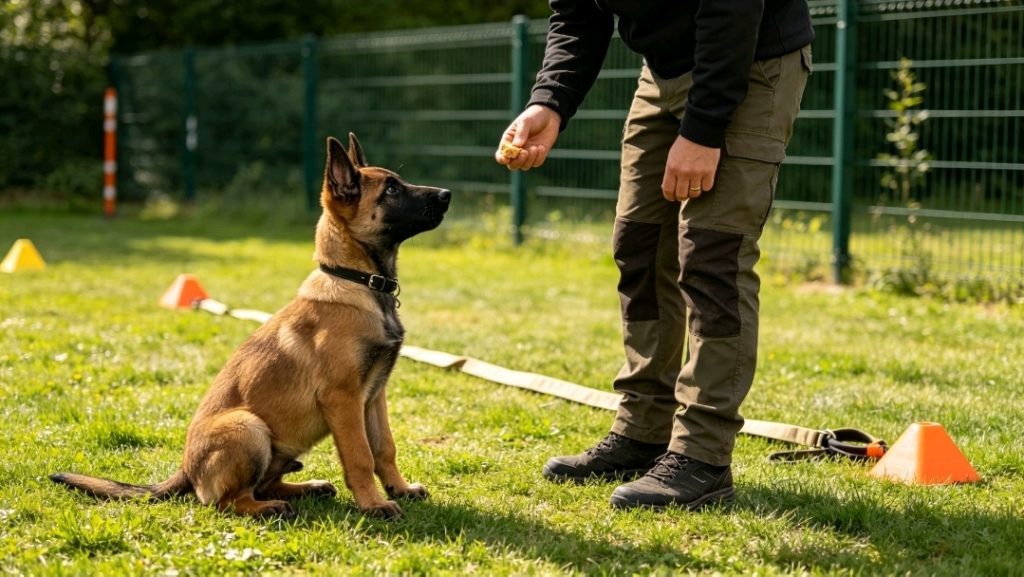
Teaching your puppy sit, down, stay and recall is one of the most important parts of early puppy training. These basic obedience skills help build communication, engagement, and control while creating a strong relationship between dog and handler.
Many owners make the mistake of rushing obedience training before their puppy fully understands how to learn. Teaching your puppy sit, down, stay and recall should be simple, rewarding, and enjoyable for both the puppy and the handler.
The goal is not perfection. The goal is to build understanding through repetition, consistency, and correct reward timing.
Why Basic Obedience Matters
Teaching your puppy sit, down, stay and recall creates the foundation for all future training.
Basic obedience helps develop:
- Communication.
- Engagement.
- Focus.
- Impulse control.
- Confidence.
- Safety.
- Reliability.
Before progressing into advanced training, puppies should first understand these core obedience behaviours.
Teaching your puppy sit, down, stay and recall helps create a puppy that understands how to learn and respond to guidance.
Understanding Luring and Reward-Based Learning
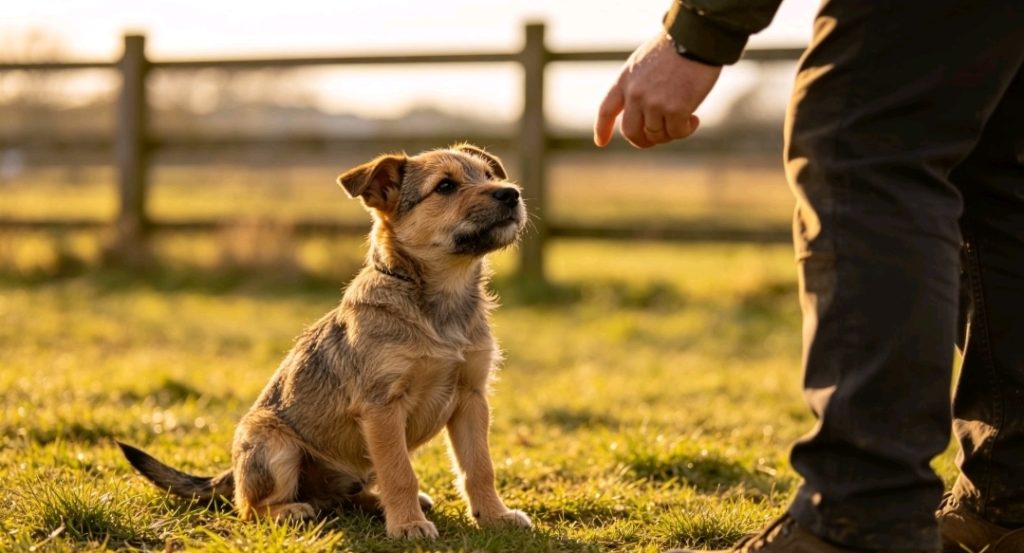
The easiest way to begin teaching your puppy sit, down, stay and recall is through luring and reward-based learning.
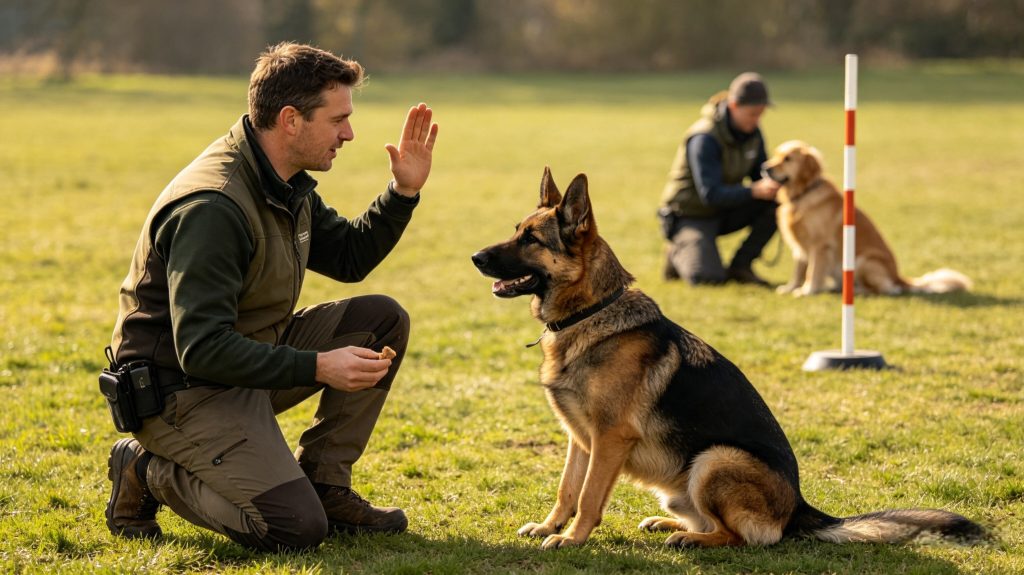
Luring simply means using a reward to guide the puppy into the desired position.
Examples include:
- Luring into a sit.
- Luring into a down.
- Luring into position.
- Encouraging movement towards the handler.
The puppy learns that following guidance leads to positive outcomes.
Correct reward timing helps the puppy clearly understand which behaviour earned the reward.
Teaching the Sit Command
Teaching your puppy sit, down, stay and recall often begins with the sit command because it is one of the easiest positions for most puppies to learn.
Simple steps include:
- Hold a reward close to the puppy’s nose.
- Slowly move the reward upwards.
- As the puppy follows the reward, the rear naturally lowers.
- Mark the behaviour.
- Deliver the reward.
Keep sessions short and positive while focusing on successful repetitions.
Teaching the Down Command
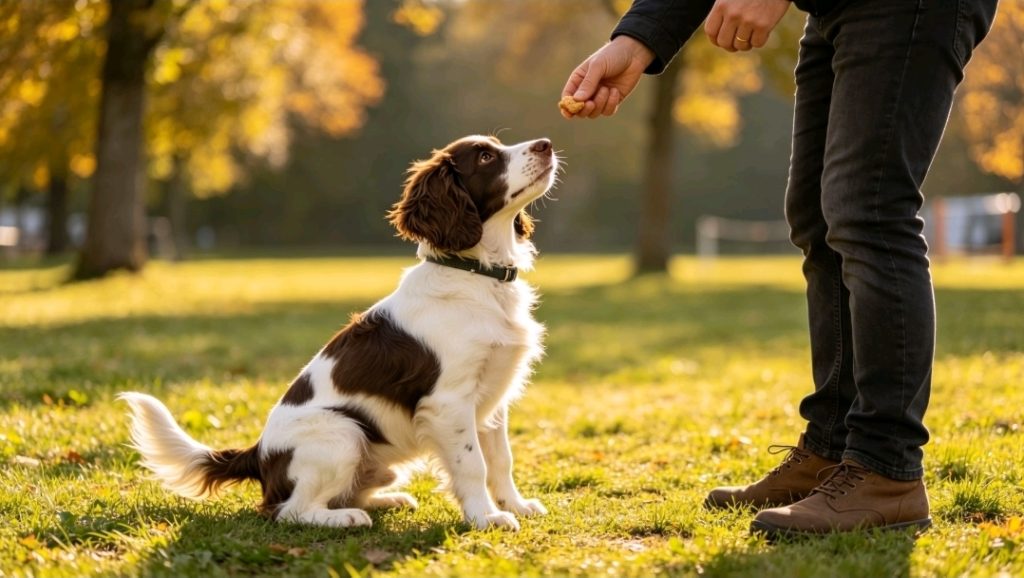
After teaching sit, many owners move on to teaching the down position.
The process is similar:
- Start from a sit position.
- Move the reward slowly towards the ground.
- Allow the puppy to follow naturally.
- Mark the behaviour.
- Reward immediately.
Teaching your puppy sit, down, stay and recall should always prioritise understanding over speed.
Some puppies learn quickly while others require additional repetitions.
Teaching the Stay Command
Stay teaches patience, self-control, and stability.
When introducing stay:
- Begin with very short durations.
- Reward success frequently.
- Increase duration gradually.
- Keep the puppy successful.
- Avoid progressing too quickly.
Many stay problems occur because handlers increase duration before the puppy fully understands the exercise.
Teaching your puppy sit, down, stay and recall requires gradual progression and consistency.

Teaching Recall
Recall is often considered one of the most important obedience skills a dog can learn.
Teaching your puppy sit, down, stay and recall should place significant emphasis on recall because it directly affects safety and control.
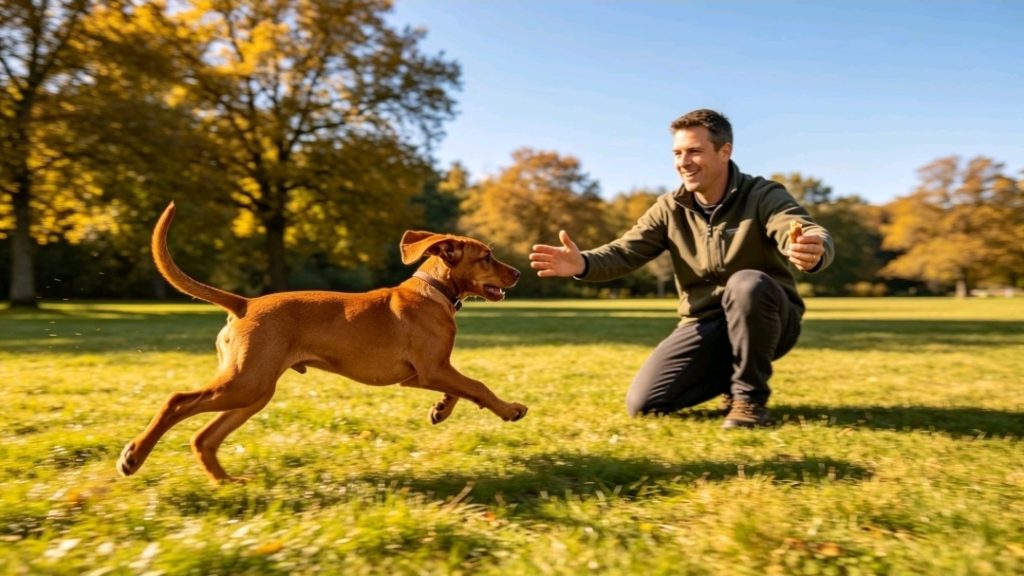
Basic recall training includes:
- Create engagement.
- Move away from the puppy.
- Encourage the puppy to follow.
- Mark the behaviour.
- Deliver a reward when the puppy arrives.
The puppy should learn that returning to the handler always creates positive outcomes.
Recall should always be rewarding and enjoyable.
Using Marker Systems Correctly
Marker systems help improve communication during training.
A marker tells the puppy exactly when they have performed the correct behaviour.
Markers help with:
- Sit.
- Down.
- Stay.
- Recall.
- Engagement exercises.
- Future obedience training.
Good marker timing creates clarity and speeds up the learning process.
Teaching your puppy sit, down, stay and recall becomes much easier when communication is clear and consistent.
Building Engagement During Training
Engagement is the foundation of successful obedience training.
Without engagement:
- Focus decreases.
- Motivation decreases.
- Learning slows down.
- Distractions become stronger.
Teaching your puppy sit, down, stay and recall should always include engagement-building exercises that encourage the puppy to actively choose the handler.
The stronger the engagement, the easier obedience training becomes.
Conclusion
Teaching your puppy sit, down, stay and recall creates the foundation for future obedience, engagement, confidence, and communication. By using luring techniques, correct reward timing, marker systems, and engagement exercises, owners can create enjoyable learning experiences that produce reliable behaviours.
Every puppy learns at a different pace, but consistency, patience, and positive training methods will help build strong obedience foundations that last throughout the dog’s life.
Course Recommendation
Fundamentals 1 covers engagement building, puppy obedience, reward systems, marker training, confidence development, socialisation, environmental exposure, and early learning foundations for puppies aged 6 weeks to 6 months.
Continue Your Training Journey With Our Online Courses
Now that you have started building strong foundations with your puppy, the next stage of development is continuing that training through our structured online courses.
Fundamentals 2 is designed for adolescent dogs between 6 and 18 months of age and focuses on real-world obedience, lead walking around distractions, engagement, confidence building, recall development, and managing common teenage dog behaviours. This online course helps owners navigate one of the most challenging stages of dog ownership while continuing to build reliability and control.
Fundamentals 3 is designed for adult dogs and takes training to an advanced level. This online course covers advanced obedience, off-lead control, engagement, handler communication, calmness, environmental neutrality, distraction proofing, and real-world dog training. Fundamentals 3 helps owners create reliable, confident, and well-balanced dogs capable of performing successfully in everyday situations.
Explore Fundamentals 2 and Fundamentals 3 to continue your dog’s training progression and build the skills needed for long-term success.