How to Train Your Dog to Walk Calmly in Retail Environments
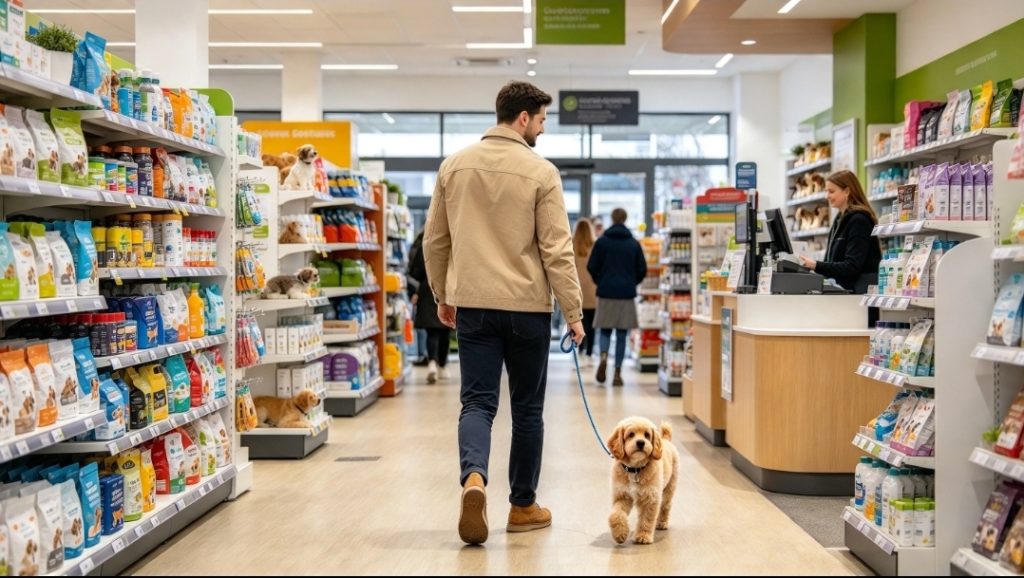
How to train your dog to walk calmly in retail environments starts with choosing an appropriate location, introducing distractions gradually and recognising when your dog is comfortable enough to continue. Shops can expose dogs to unfamiliar smells, automatic doors, shopping trolleys, people moving in different directions, sudden noises and narrow aisles. A dog that walks calmly outdoors may find these conditions difficult at first.
The aim is to help your dog move safely beside you, respond to simple communication and remain comfortable around everyday activity. Calm behaviour is built through preparation and gradual practice, not by expecting your dog to cope with every distraction immediately.
RECOMMENDED PRODUCTS

Why Are Retail Environments Difficult for Dogs?
Retail environments combine several challenges within a relatively small space. Your dog may need to process unfamiliar smells, artificial lighting, different floor surfaces, unexpected movement and people passing at close range.
Common difficulties include:
- Pulling towards people, displays or interesting smells.
- Stopping frequently to investigate the surroundings.
- Becoming excited by shopping trolleys or moving objects.
- Losing focus when several distractions appear together.
- Becoming worried when people approach in narrow aisles.
- Reacting to sudden noises, automatic doors or objects falling.
- Struggling to settle when the environment becomes busy.
These responses do not necessarily mean your dog has forgotten its training. The environment may simply be more demanding than the situations in which the dog has practised previously.
Start Training Before Entering a Shop
Before visiting a retail environment, establish the basic walking skills your dog will need.
Practise walking beside you, responding to its name, changing direction with you and pausing when required. Use a suitable lead and reward the behaviour you want to encourage with food, praise or another reward your dog values.
Start somewhere familiar with few distractions. When your dog can walk comfortably and respond consistently, introduce slightly more challenging surroundings.
A useful progression is:
- Practise at home or in a quiet outdoor space.
- Walk along a quiet pavement.
- Spend a short period near a shop entrance without going inside.
- Practise around people and movement at a comfortable distance.
- Enter a suitable dog-friendly retail environment during a quiet period.
- Gradually introduce more challenging conditions as your dog becomes comfortable.
Advance according to your dog’s behaviour, not simply because you have completed a set number of visits.
Choose the Right Retail Environment
Not every shop is suitable for every dog. Before entering, consider the available space, number of people, noise level and whether dogs are permitted.
A spacious environment with wide aisles and relatively little movement may be more suitable for an early training visit than a crowded shop with narrow walkways.
Choose a time when you can practise without rushing. Your first visit does not need to involve completing a shopping trip.
Instead, focus on helping your dog become familiar with the surroundings while maintaining a manageable distance from distractions.
If the environment is already crowded, noisy or difficult to navigate, choose another time or location.
Teach Calm Lead Walking Around Distractions
A dog should learn that people, shelves and moving objects can be present without automatically becoming destinations to investigate.
Walk at a comfortable pace and reward your dog when it remains beside you on a loose lead. Keep your communication clear and avoid repeating commands continuously.
If your dog begins pulling, stop when it is safe to do so and wait for an opportunity to regain a loose lead. You can then continue in a suitable direction.
If stopping would obstruct other customers or create a safety problem, move to a quieter area instead.
Do not drag your dog towards a distraction or force it to remain close to something that is causing concern. Increase the distance and make the situation easier.
Help Your Dog Around Other Customers
Your dog does not need to greet everyone it sees. Walking calmly past people is a useful skill in retail environments.
Allow enough space where possible, particularly around entrances, checkout areas and narrow aisles. If someone approaches, continue calmly when there is sufficient room or pause in a safe position to allow them to pass.
Avoid allowing strangers to touch or approach your dog without considering whether the interaction is appropriate.
Children may move unpredictably, so maintain close supervision and prevent unwanted contact. A dog should never be expected to tolerate handling simply because it is in a public place.
Reward calm observation and continued walking. Over time, your dog can learn that people passing do not automatically signal an opportunity to interact.
Manage Shopping Trolleys, Doors and Sudden Movement
Shopping trolleys can rattle, change direction and pass close to a dog. Automatic doors can open unexpectedly, while people may appear around the end of an aisle.
Introduce these experiences gradually and at a distance where your dog can remain comfortable.
For example, begin by observing trolley movement from a quiet position away from the main flow of people. Reward calm behaviour and leave before your dog becomes overwhelmed.
When approaching automatic doors, allow your dog time to observe the movement. Do not rush it through if it appears worried.
If your dog startles, give it space and time to recover. Repeating the experience at a lower level of difficulty is more useful than forcing it to continue.
Manage Smells and Environmental Investigation
Retail environments contain many unfamiliar smells. Your dog may want to stop near shelves, investigate the floor or turn towards interesting displays.
Sniffing and environmental investigation are normal canine behaviours. The aim is not to prevent your dog from noticing everything around it, but to develop a balance between appropriate investigation and walking with you.
Use a clear walking routine. Allow suitable opportunities to investigate when space and circumstances permit, then calmly guide your dog back to walking beside you.
Do not allow your dog to lick, chew or take products from shelves. Keep it close enough to prevent unwanted contact with merchandise, food or potentially harmful substances.
If your dog repeatedly pulls towards displays, increase the distance or return to a quieter area where you can practise more successfully.
Recognise When Your Dog Needs More Space
A dog may show signs of difficulty before pulling, barking or attempting to move away.
Watch for changes in body posture, facial expression, movement and responsiveness. Your dog might become unusually tense, repeatedly scan its surroundings, attempt to retreat, stop taking food it normally enjoys or struggle to respond to familiar cues.
No single behaviour tells you everything about how a dog feels. Consider the whole situation and your dog’s usual behaviour.
If your dog becomes increasingly uncomfortable, stop progressing through the environment and create more space where possible. Move towards a quieter area or leave the shop if necessary.
Do not interpret every hesitation as disobedience. Your dog may need a simpler situation in which it can regain confidence and respond comfortably.
RECOMMENDED PRODUCTS
Use Rewards to Reinforce Calm Behaviour
Food rewards, praise and other suitable reinforcement can help your dog learn that calm walking and checking in with you are worthwhile.
Reward useful moments such as:
- Walking beside you with a loose lead.
- Looking towards a distraction without pulling towards it.
- Responding to its name.
- Following a change of direction.
- Waiting calmly while a person passes.
- Moving away from a display when guided.
- Recovering after a sudden sound.
Deliver rewards promptly enough for your dog to associate them with the behaviour you want to encourage.
Choose rewards your dog values and consider the difficulty of the environment. If your dog is too distracted or worried to respond, make the exercise easier rather than repeatedly presenting food or issuing commands.
Keep Early Visits Short
Long visits can make training unnecessarily difficult, particularly for dogs that are inexperienced in busy indoor environments.
Start with a short, manageable visit. You might simply approach the entrance, observe the surroundings and leave while your dog is still comfortable.
On another occasion, you may practise walking through a quiet aisle before returning outside.
Increase the duration or difficulty gradually. Avoid changing everything at once: a busier shop, longer visit and narrower aisles may create more pressure than your dog can manage.
Finish when the experience is going well rather than waiting until your dog becomes exhausted or overwhelmed.
Common Mistakes When Training in Shops
Expecting Immediate Results
Being calm in a familiar park does not automatically prepare a dog for a busy shop. Introduce each new environment at a manageable level.
Visiting at the Busiest Time
Crowds and narrow walkways can make it difficult to create space. Choose quieter periods when possible.
Repeating Commands Constantly
Repeated commands can become ineffective when the dog is struggling to process the surroundings. Simplify the situation and regain the dog’s attention before asking for more.
Allowing Every Person to Say Hello
Frequent greetings can increase excitement and make passing people more difficult. Practise calm movement without expecting interaction.
Forcing the Dog to Approach Something Unfamiliar
A dog that is worried about a trolley, door or noise needs space and gradual exposure, not physical pressure to approach.
Continuing When the Dog Is Struggling
The purpose of training is to build a useful skill. If your dog becomes increasingly uncomfortable or difficult to manage, leave or reduce the difficulty.
Assuming Every Shop Is Suitable
Some environments are too crowded, noisy or restrictive for a particular dog. Training includes choosing an appropriate place and time.
A Simple Retail Walking Training Plan
Use the following sequence to structure your practice.
Step 1 — Prepare. Make sure your dog has had an appropriate toilet opportunity and is not already highly excited or tired.
Step 2 — Observe. Assess the entrance, movement of people, available space and any obvious distractions.
Step 3 — Begin at a Distance. Allow your dog to observe the environment from a comfortable position before approaching.
Step 4 — Practise Calm Movement. Walk a short distance, rewarding loose-lead walking and appropriate responses to your communication.
Step 5 — Reassess. Observe your dog’s body language and ability to respond. If the dog is coping, continue briefly.
Step 6 — Make It Easier if Needed. Increase distance, move to a quieter area or leave if the environment becomes too difficult.
Step 7 — Finish Successfully. End the visit while your dog can still manage the experience comfortably.
Repeat the process across different visits, introducing new challenges gradually.
RECOMMENDED PRODUCTS
When Should You Seek Professional Help?
If your dog repeatedly panics, attempts to escape, lunges at people, growls, snaps or shows other signs of serious distress, do not use a busy shop as a test of its behaviour.
Avoid close encounters and seek an appropriate assessment from a qualified dog-training or behaviour professional. Where behaviour changes suddenly or discomfort may be contributing, consult your vet.
Safety must take priority over completing a training exercise. Never put members of the public, children or your dog at unnecessary risk to practise walking.
Final Thoughts
Training your dog to walk calmly in retail environments is about developing practical walking skills while helping your dog cope with unfamiliar surroundings.
Start with familiar foundations, choose suitable dog-friendly locations, reward calm behaviour and introduce distractions gradually. Pay attention to the space available, the movement of people and the way your dog responds.
The goal is not to make your dog ignore every sight, sound and smell. It is to help your dog experience the environment without every distraction controlling the walk.
With appropriate preparation, clear communication and gradual practice, retail environments can become more manageable. If your dog cannot remain comfortable or safe, reduce the difficulty and seek professional support when needed.