How to Train Your Dog for Different Walking Environments
To train your dog for different walking environments, start somewhere familiar and manageable, then gradually introduce new places, sounds, surfaces, people, dogs and movement. Reward appropriate behaviour, observe your dog’s response and adjust the difficulty before the environment becomes overwhelming.
A dog that walks calmly along a quiet residential street may behave differently in a busy town centre, public park, woodland or countryside. This does not necessarily mean your dog has forgotten its training. Each environment presents different distractions, and previously learned behaviours need practice before they become reliable in new situations.
The objective is to help your dog become comfortable and manageable in different surroundings while maintaining appropriate control, clear communication and opportunities to explore safely.
RECOMMENDED PRODUCTS

Why Dogs Behave Differently in Different Walking Environments
Every environment provides different information for a dog to process. Smells, sounds, movement, surfaces, people, other dogs and available space can all influence behaviour.
For example:
- Residential streets: Parked vehicles, pedestrians, traffic and everyday household activity.
- Public parks: Other dogs, children, cyclists, runners, wildlife and numerous smells.
- Town centres: Crowds, narrow pavements, traffic, doors and sudden noises.
- Woodland paths: Unfamiliar smells, uneven ground, natural sounds and wildlife.
- Countryside: Livestock, wildlife, open spaces and changing terrain.
A dog may cope comfortably with one environment but struggle with another because the type or intensity of stimulation has changed.
Handlers should avoid assuming that success in one location automatically transfers to every other location. Training needs to develop across different environments at a pace the individual dog can manage.
Start With an Environment Your Dog Can Manage
Before introducing a new walking location, consider how your dog currently behaves.
Can your dog walk without persistent pulling? Can it respond to familiar guidance? Can it notice people and other dogs without immediately becoming difficult to manage? Does it recover reasonably well after encountering something unfamiliar?
These observations help you choose an appropriate starting point.
If your dog struggles on an ordinary residential walk, moving directly into a busy public environment is unlikely to make training easier. Begin somewhere quieter, where you can observe behaviour and practise without excessive distractions.
The aim is to build successful experiences, not to test how much stimulation your dog can tolerate.
How to Introduce New Walking Environments Gradually
Changing environments can introduce several challenges at once. A new location may contain unfamiliar smells, different surfaces, more movement and less space.
Instead of increasing every challenge simultaneously, make the transition easier to manage.
1. Begin in a Familiar Location
Practise basic walking skills somewhere your dog already knows.
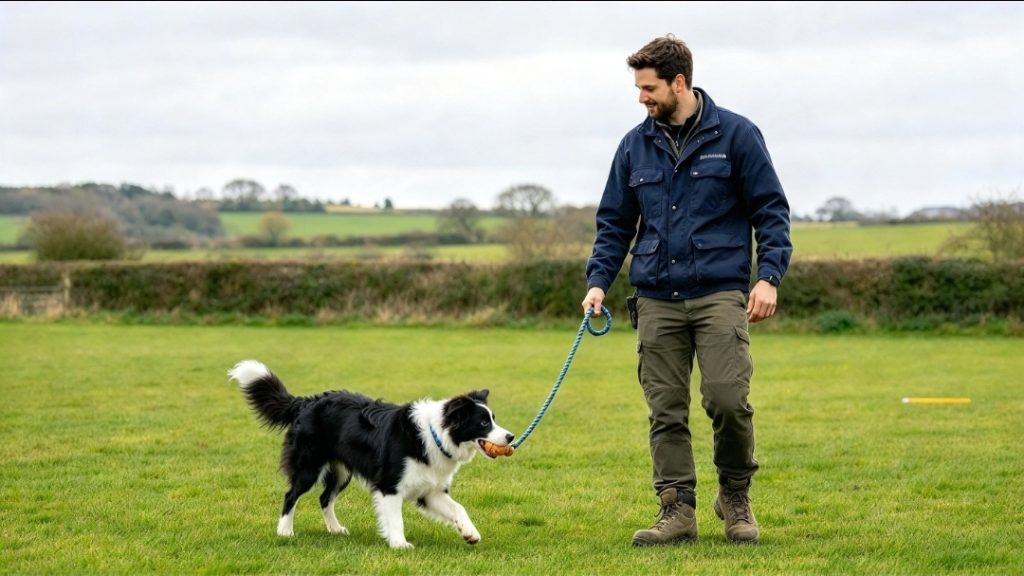
Focus on manageable lead movement, responding to appropriate guidance and remaining comfortable around ordinary distractions. Keep the session short enough that you can observe your dog properly.
2. Introduce One Meaningful Change
Choose a slightly different route, a quieter section of a park or a new walking surface.
Observe how your dog responds before introducing additional challenges. If your dog remains comfortable and manageable, repeat the experience before making it more difficult.
3. Reward Appropriate Responses
Use food, praise or another suitable reward your dog values.
Reward behaviours such as checking in with you, moving calmly, responding to familiar guidance or recovering after a distraction.
Timing matters. Deliver the reward when your dog performs the behaviour you want to encourage, rather than waiting until the moment has passed.
4. Vary the Environment
As your dog becomes more comfortable, practise in other suitable locations.
Remember that a familiar skill may need reinforcing when the surroundings change. Your dog may respond reliably in the garden but need additional practice on a quiet street before the same behaviour becomes manageable in a park.
5. Reassess Before Increasing Difficulty
If your dog begins pulling persistently, staring intensely, hesitating or struggling to respond, consider whether the environment has become too difficult.
Reduce the pressure, create space or return to an easier location.
Progress should reflect your dog’s behaviour rather than a fixed schedule.
RECOMMENDED PRODUCTS
How to Train Your Dog in Different Walking Environments
Residential Streets
Residential streets provide an opportunity to practise walking around ordinary household activity, pedestrians, parked vehicles and passing traffic.
Choose a route with enough space to maintain safe control. Practise moving calmly past everyday distractions without expecting your dog to respond to every sight or sound with a formal command.
If traffic or approaching people make the situation difficult, use a quieter street or change direction where safe.
Never allow training to compromise road safety. Keep your dog securely managed around vehicles and avoid stopping in places where you or your dog could obstruct pedestrians or traffic.
Public Parks
Parks can offer more space, but they may also contain a greater variety of distractions. Other dogs, children, cyclists, runners, wildlife and strong smells can compete for your dog’s attention.
Start in a quieter area and observe how your dog responds to activity at a distance. Gradually introduce busier sections as your dog becomes more manageable.
A large park is not automatically an easy environment. The number of distractions and their proximity matter more than the size of the location alone.
Allow your dog appropriate opportunities to sniff and explore while maintaining enough control to respond safely when circumstances change.
Town Centres and Busy Streets
Town centres can be challenging because people, traffic, crowds and sudden sounds may appear in quick succession. Narrow pavements can also limit the space available to move away from a distraction.
Begin with quieter streets or less busy periods. Maintain safe lead control and avoid forcing your dog through crowded situations if it is struggling.
Where there is insufficient space to pass safely, wait in a suitable area or choose another route.
Build familiarity with busier locations gradually. A successful walk through a quiet shopping street is a useful step before attempting a much busier environment.
Woodland Paths
Woodland paths introduce unfamiliar smells, natural sounds, uneven ground and possible wildlife encounters.
Allow appropriate opportunities to investigate the surroundings while maintaining control. Watch for changes in terrain, hidden hazards and wildlife that may trigger chasing behaviour.
Uneven ground, slippery surfaces and concealed obstacles can also create physical risks. Choose routes appropriate to your dog’s age, physical ability and experience.
Do not assume a dog that walks calmly on a familiar pavement will respond equally well to woodland distractions. Practise and assess your dog’s behaviour in the new setting.
Countryside and Livestock Areas
Countryside walking can provide a very different experience from urban walking. Wildlife, livestock, unfamiliar scents and open spaces may increase your dog’s interest in its surroundings.
Maintain control and follow local access requirements. Keep your dog on a lead around livestock and wherever required. Never allow your dog to chase or approach farm animals.
If your dog has a strong chasing instinct or unreliable recall, choose suitable routes and keep it securely managed. Open countryside can make it harder to prevent a dog from reaching livestock or wildlife once it starts chasing.
The safety of livestock, wildlife, other people and your dog must take priority over freedom to explore.
Different Walking Surfaces
Some dogs hesitate when encountering gravel, metal grates, bridges, wet ground, steps or other unfamiliar surfaces.
Observe whether your dog is comfortable before encouraging it to continue. Give it time to investigate where safe, use calm encouragement and reward voluntary progress.
Avoid dragging a reluctant dog across a surface. If your dog appears frightened or physically uncomfortable, stop and consider whether pain, a health problem or the surface itself may be contributing.
Introduce unfamiliar surfaces gradually, beginning with easier examples before progressing to more challenging ones.
Managing People and Other Dogs
People and other dogs can significantly increase the difficulty of a walking environment.
Your dog may pull towards someone, stare at another dog, bark, stop moving or become over-excited. Consider the individual dog’s response rather than assuming every encounter should become a greeting.
Socialisation does not require your dog to greet every person or dog. Learning to remain manageable while others pass is an important everyday skill.
Maintain sufficient distance for your dog to cope. Use wider paths where possible and avoid close approaches if either dog appears uncomfortable.
If your dog has a history of lunging, snapping, biting or intense reactions, seek appropriate professional assessment rather than deliberately placing it in difficult encounters.
Managing Noise, Movement and Distractions
Different environments introduce different sounds and movement. Traffic, cyclists, runners, children, moving vehicles and wildlife can all attract a dog’s attention.
Observe how your dog responds to each type of distraction. Some dogs may watch calmly, while others may become excited, fearful or fixated.
When a distraction becomes difficult to manage:
- Increase distance where possible.
- Avoid forcing your dog to approach.
- Use clear, familiar guidance.
- Reward calm, appropriate responses.
- Move to a quieter area if your dog cannot recover.
Do not repeatedly issue commands if your dog is unable to respond. The environment may be too difficult at that moment, and reducing the challenge can be more useful than increasing verbal pressure.
Common Mistakes When Training in New Places
Changing Too Much at Once
Taking a dog from a familiar, quiet route directly into a crowded environment can introduce too many challenges simultaneously.
Make changes gradually and give your dog opportunities to become comfortable before adding more difficulty.
Expecting Immediate Results
A dog may need additional practice before it can apply a familiar skill in a new location. This is a normal part of developing reliable behaviour across different situations.
Repeat manageable experiences and increase difficulty only when your dog is coping well.
Repeating Commands Constantly
Repeated commands can make communication less clear. If your dog cannot respond, reassess the environment and return to a level where it can succeed.
Make sure your dog understands the behaviour in easier conditions before expecting it to respond reliably around stronger distractions.
Ignoring Body Language
A dog may show changes in posture, movement, attention or responsiveness before its behaviour becomes more difficult to manage.
Observe the whole dog and consider the surrounding circumstances rather than waiting for obvious pulling, barking or lunging.
Continuing When Your Dog Is Struggling
Completing a planned route should not take priority over safety and welfare.
If your dog cannot remain manageable, create space, reduce the difficulty or end the session appropriately. A shorter, calmer walk can be more useful than continuing through an environment your dog cannot cope with.
Expecting Every Walk to Be a Training Session
Dogs also need appropriate opportunities to sniff, explore and experience their surroundings.
You can practise specific skills during a walk without demanding constant attention. Alternate brief training exercises with suitable opportunities for exploration while maintaining safe control.
A Practical Training Sequence for New Environments
Use the following process whenever you introduce a new walking environment.
Step 1: Observe
Look at your dog’s body language, movement, attention and responsiveness. Consider the people, animals, sounds and other distractions around you.
Step 2: Interpret
Consider what may be influencing the behaviour. Is your dog interested, excited, uncertain, uncomfortable or struggling with the amount of activity?
Do not assume that one behaviour always has the same cause.
Step 3: Decide
Determine whether the environment is manageable or whether you need to reduce the difficulty.
Consider the available space, your dog’s current behaviour and whether you can move away safely if necessary.
Step 4: Communicate
Give clear, appropriate guidance and reward suitable responses. Avoid repeatedly asking for behaviours your dog cannot currently perform in that environment.
Step 5: Observe the Response
Check whether your dog remains comfortable and manageable or becomes increasingly distracted, tense or reluctant.
Step 6: Reassess
Continue if appropriate, create more space, choose an easier route or stop the activity.
This process encourages you to respond to the actual situation rather than following a rigid plan regardless of your dog’s behaviour.
How to Recognise Progress
Progress is not simply about visiting more places or walking further.
Look for signs that your dog can:
- Remain manageable around familiar distractions.
- Respond to appropriate guidance in different locations.
- Recover after encountering something unexpected.
- Move past people and dogs without automatically approaching them.
- Explore unfamiliar surroundings without becoming persistently overwhelmed.
- Settle more quickly when an environment becomes difficult.
- Adapt to changes in the route or surroundings.
Progress will vary between dogs and situations. A dog may cope well in a park but need more practice on a busy pavement.
Do not compare your dog’s performance with another dog’s behaviour or expect identical responses everywhere. Continue building experience at a suitable pace.
RECOMMENDED PRODUCTS
When to Seek Professional Support
Some dogs find particular environments consistently difficult because of fear, anxiety, frustration, reactivity or chasing behaviour.
If your dog repeatedly lunges, attempts to bite, cannot recover after encountering triggers or creates a safety risk, seek suitable professional support.
A veterinary assessment may also be appropriate when behaviour changes suddenly or physical discomfort is suspected.
Until the situation has been assessed, avoid deliberately exposing your dog to environments it cannot manage. Choose safer routes, maintain appropriate control and prioritise the welfare of everyone involved.
Final Thoughts
Training your dog for different walking environments is about building reliable behaviour across changing surroundings, not expecting every walk to feel identical.
Residential streets, parks, town centres, woodland and countryside each introduce different distractions and demands. Your dog needs opportunities to develop experience gradually, while you observe its response and adjust the difficulty when necessary.
Start with environments your dog can manage, introduce new challenges one step at a time and reward appropriate behaviour. If your dog struggles, make the situation easier rather than forcing it to continue.
With consistent positive training, suitable walking choices and attention to your dog’s individual needs, you can help it become more comfortable and manageable across a wider range of environments.