How Long Can I Leave My Dog Alone?
How long can I leave my dog alone? For most dogs, the recommended maximum is around four hours at a time, provided the dog is comfortable being alone and its physical, mental and social needs are being met. Puppies, dogs with separation-related problems, elderly dogs and dogs with medical or toileting needs may need to be left for much less time.
The important point is that four hours is not a target that every dog should automatically be trained to reach. Your dog should be comfortable throughout the period you leave it, and you should reduce the time if it shows signs of distress.
How long can an adult dog be left alone?
An adult dog that is comfortable being alone can generally be left for no more than four hours at a time. Both the RSPCA and Dogs Trust recommend avoiding longer periods without someone checking in, even when a dog appears able to cope.
If you need to be away for longer, arrange for someone to visit your dog, provide company, allow a toilet break and give appropriate exercise or care.
Your dog’s individual needs still matter. A dog that becomes distressed after 30 minutes should not be left for four hours simply because four hours is considered an upper limit.
How long can a puppy be left alone?
Puppies should generally be left alone for much less time than an adult dog.
A puppy is still developing physically and emotionally and may need more frequent toilet breaks, interaction, rest and supervision. The RSPCA specifically advises that puppies should be left alone for much less than four hours.
Rather than relying on a fixed number of hours, gradually teach your puppy to cope with short periods alone and increase the duration only when it remains relaxed.
How do I know if my dog can cope with being alone?
The best indication is your dog’s behaviour while you are away.
A dog that is coping well may settle, sleep, use an appropriate toy or chew, and remain relaxed until you return.
Signs that your dog may be struggling include:
- Barking or whining
- Pacing
- Panting
- Scratching at doors
- Trying to escape
- Destructive behaviour
- Toileting indoors
- Excessive vocalisation
- Being unable to settle
Dogs Trust recommends monitoring your dog’s behaviour because signs of separation-related distress can occur soon after you leave.
How do I teach my dog to stay alone for longer?
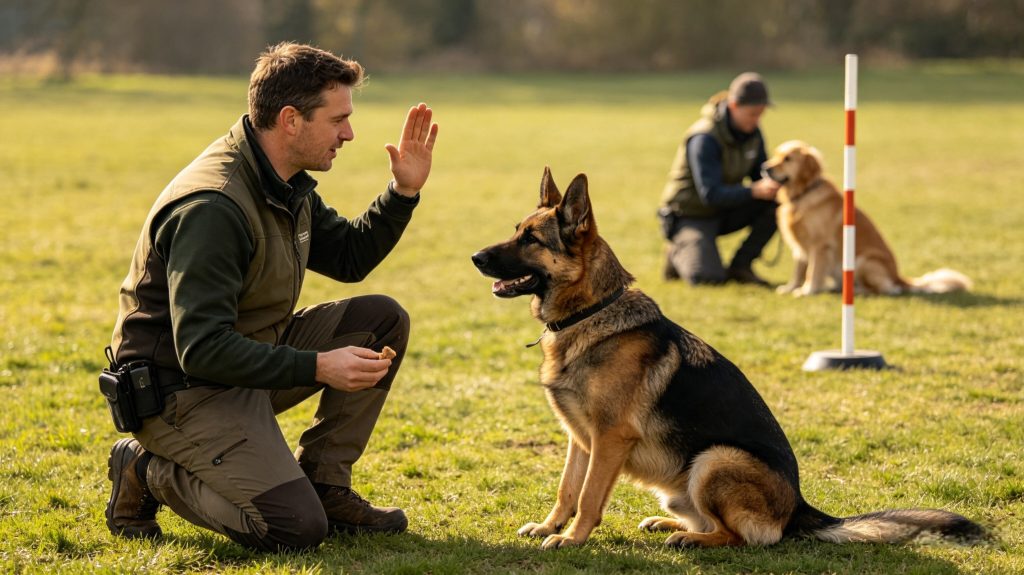
Build the time gradually rather than starting with a long absence.
1. Teach your dog to settle independently
Start while you are still at home.
Encourage your dog to relax in its normal resting area and reward calm behaviour. A placemat can provide a consistent location for settling if your dog has already been taught to use one positively.
The aim is to teach your dog that it can relax without constantly following or interacting with you.
2. Create short periods of separation
Move away from your dog for a few seconds, then return while it remains calm.
Gradually progress from moving around the room to briefly leaving the room and then briefly leaving the house.
The RSPCA recommends increasing distance and duration gradually and returning to an easier stage if the dog reacts or becomes unsettled.
3. Increase the duration slowly
Once your dog is consistently comfortable at one level, increase the duration slightly.
Do not make large jumps.
For example:
A few seconds → short periods → longer short periods → gradually extended periods.
The exact progression should be based on your dog’s behaviour.
4. Reward calm independence
Reward relaxed behaviour rather than creating excitement around every departure or return.
Food, a suitable toy or another appropriate reward can help create a positive association with calm independent time.
If your dog becomes too anxious to eat or engage with its normal enrichment, the separation may already be too difficult.
Should I use a crate when leaving my dog alone?
A crate can provide a safe resting area if your dog has already been positively introduced to it and is relaxed when using it.
It should not be used to confine a distressed dog for longer than it can cope with.
A crate does not treat separation-related anxiety by itself. If your dog becomes distressed when the crate is closed and you leave, increase the difficulty more slowly rather than simply keeping the door closed for longer. Dogs Trust also advises that crate training alone will not resolve separation anxiety.
The crate should never be used as punishment.
What should I do before leaving my dog alone?
Before leaving, make sure your dog has had the opportunity to meet its normal needs.
This can include:
- Appropriate exercise
- A toilet opportunity
- Food and access to water
- A comfortable resting area
- Safe, suitable enrichment
Exercise can help your dog settle, but it should not be used as a way of making an anxious dog tolerate a long period alone.
Dogs Trust and the RSPCA both recommend ensuring a dog has had appropriate exercise and a toilet opportunity before being left.
What should I leave my dog with while I am out?
Provide access to appropriate, safe enrichment that your dog already knows how to use.
A suitable toy, chew or food-releasing activity can give your dog something positive to do while alone.
Do not introduce an unfamiliar item for the first time when you leave the house. Make sure anything left with your dog is safe and appropriate for that individual dog.
If your dog is showing significant distress, enrichment should not be used to cover up the problem. The separation itself needs to become easier.
What if I need to leave my dog for more than four hours?
If you will be away for longer than your dog should comfortably remain alone, arrange for someone to provide a break and company.
Depending on the individual dog and circumstances, this could be:
- A family member
- A trusted friend
- A suitable dog walker
- A dog sitter
- Appropriate day care
The aim is to avoid routinely leaving your dog alone beyond the period it can comfortably manage.
What if my dog becomes distressed when I leave?
Do not simply increase the time and expect your dog to get used to it.
Reduce the duration to a level your dog can manage and gradually build from there.
If your dog becomes distressed within minutes, it may not be appropriate to leave it alone for even a short period without addressing the underlying problem.
Persistent barking, pacing, destructive behaviour, escape attempts or other signs of severe distress can indicate separation-related problems. In these situations, speak to your vet or a qualified behaviour professional.
Should I punish my dog for damaging things while I am away?
No.
Punishing your dog when you return will not teach it how to cope with being alone and may increase anxiety around your departures.
Instead, identify why the behaviour is happening, reduce the difficulty of being alone and work on gradual training. The RSPCA specifically advises against punishment following unwanted behaviour that occurs while a dog is alone.
Can I leave my dog alone for longer if it seems fine?
You should still avoid routinely exceeding the recommended four-hour maximum for an adult dog.
A dog sleeping throughout a long absence does not necessarily mean that leaving it alone for longer is appropriate. Your dog still needs opportunities for toilet breaks, exercise, interaction and mental stimulation.
If you regularly need to be away for longer, arrange appropriate care rather than simply extending the time your dog spends alone.
How can I tell if I am increasing the time too quickly?
Watch your dog’s behaviour during and after each separation.
If your dog starts becoming unsettled, reduce the duration and return to a level where it can remain relaxed.
Successful, calm repetitions are more important than reaching a particular number of minutes.
Gradual progression helps your dog learn that separation is predictable and manageable.
How long does it take for a dog to learn to stay alone?
There is no fixed timeframe.
Some dogs become comfortable with short periods alone relatively quickly. Others need weeks or months of gradual training, particularly if they already have separation-related problems.
Progress should be based on your dog’s ability to remain calm rather than on reaching a specific target.
Conclusion
Most adult dogs should not routinely be left alone for more than around four hours at a time, and puppies or dogs that struggle with separation may need considerably less time.
Teach your dog to cope with being alone gradually, monitor its behaviour, and arrange a suitable break or care if you need to be away for longer. If your dog becomes distressed when left, address the problem rather than simply increasing the time it spends alone.