Why Does My Puppy Bite Me?
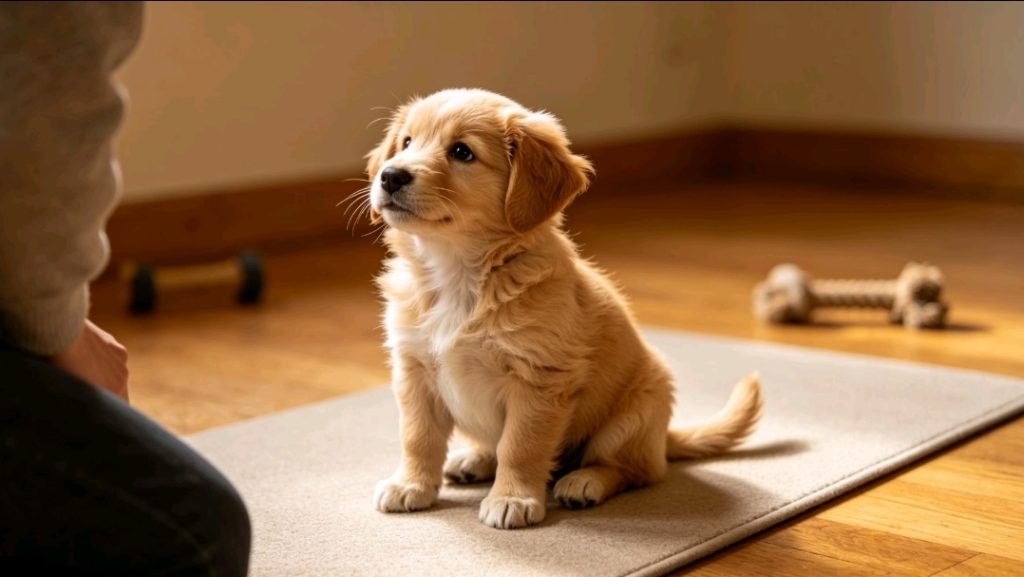
Why does my puppy bite me? Puppies commonly bite people because they are exploring with their mouths, teething, playing, seeking attention or becoming overexcited. Puppy biting is usually normal, but your puppy still needs to learn that human skin is not an appropriate target and what behaviour is expected instead.
RECOMMENDED PRODUCTS

Why do puppies bite their owners?
Puppies use their mouths to investigate the world. They do not automatically understand that biting people is unacceptable.
Common reasons include:
- Teething and the desire to chew.
- Play and excitement.
- Exploring new objects and people.
- Seeking attention.
- Frustration.
- Overstimulation.
- Tiredness.
- Learning through interaction.
The reason matters because the most effective response depends on what is causing the biting.
Is puppy biting normal?
Yes, puppy biting is common, particularly during the early stages of development and teething.
However, normal puppy biting should still be managed and redirected. Allowing a puppy to repeatedly practise biting hands, clothing or feet can make the behaviour more difficult to change.
The aim is not simply to stop your puppy using its mouth. The aim is to teach your puppy appropriate ways to play, interact and chew.
How do I stop my puppy biting me?
Start by making biting people unrewarding and appropriate behaviour rewarding.
When your puppy bites your hands, clothes or body, calmly stop the interaction. Avoid shouting, hitting, pushing the puppy away or turning the situation into an exciting game.
When your puppy stops biting and becomes calm, provide an appropriate alternative such as a suitable chew or toy. Reward your puppy for engaging with that alternative.
This teaches a clear pattern:
Biting people stops the interaction. Calm behaviour and appropriate play continue the interaction.
Consistency is important because different responses from different people can make it harder for your puppy to understand the rule.
What should I do when my puppy bites my hands?
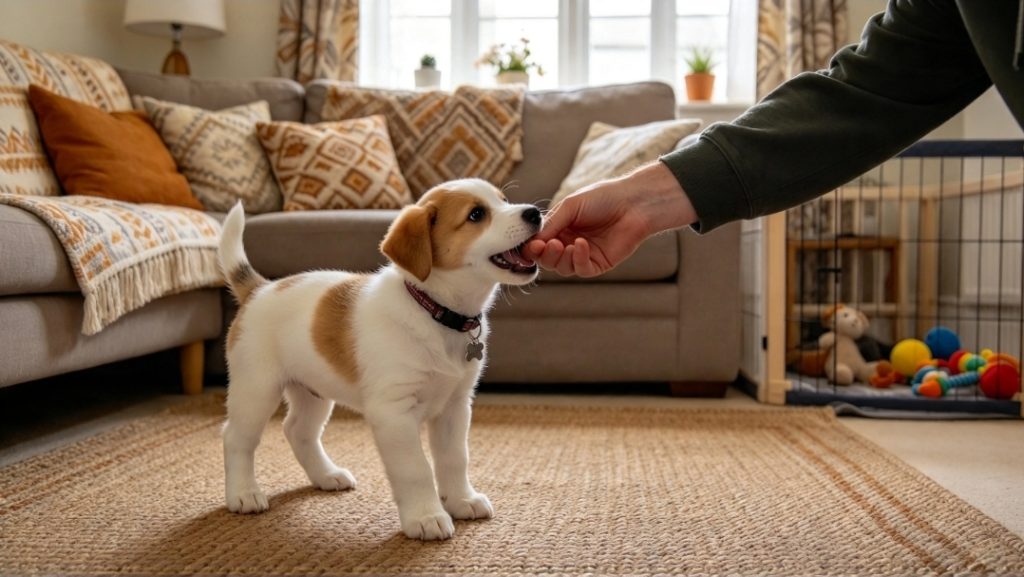
If your puppy bites your hands during play, calmly stop using your hands as part of the game.
Pause the interaction and give your puppy an appropriate toy or chew instead.
When your puppy engages with the toy, reward the behaviour and continue the interaction if appropriate.
Avoid repeatedly waving your hands around or pushing your puppy away because this can encourage more chasing and biting.
Why does my puppy bite my feet and ankles?
Puppies may chase and bite moving feet because movement can trigger play and chase behaviour.
If your puppy repeatedly targets your ankles, avoid running away or making sudden movements that turn the behaviour into a game.
Stop the interaction, create some space and redirect your puppy towards an appropriate activity.
Reward calm behaviour around your feet before gradually increasing movement again.
RECOMMENDED PRODUCTS
Why does my puppy bite when I stroke it?
If your puppy bites during handling, consider what happens immediately before the bite.
Your puppy may be overexcited, uncomfortable, tired or simply not yet accustomed to being handled.
Keep handling sessions short and gentle. Touch your puppy briefly, reward calm behaviour and then release the puppy.
Gradually increase the duration and variety of handling as your puppy becomes comfortable.
If your puppy consistently reacts negatively to a particular type of touch, stop and seek veterinary or professional behavioural advice rather than forcing the interaction.
Why does my puppy bite when playing?
Play naturally increases excitement, and puppies often use their mouths during play.
Teach your puppy that toys are appropriate for biting and human skin is not.
Use toys to create distance between your hands and your puppy’s mouth. If the puppy becomes too excited and starts targeting people, pause the game and allow it to settle before starting again.
Do not continue an exciting game while your puppy is repeatedly biting people.
Could my puppy be biting because it is tired?
Yes. An overtired puppy can become more excitable, frustrated and difficult to control.
If biting becomes worse after prolonged activity or play, your puppy may need a break rather than more stimulation.
Provide a quiet opportunity to settle and rest.
Learning to recognise when your puppy needs rest can prevent some biting episodes before they start.
Could teething cause my puppy to bite me?
Teething can increase a puppy’s desire to chew.
Provide suitable puppy-safe chewing options and make them readily available.
When your puppy chooses an appropriate item, reward the choice. If your puppy repeatedly targets hands, clothing or other inappropriate objects, improve management so those items are less accessible.
Teething may explain increased chewing, but it does not mean your puppy should be allowed to practise biting people.
Should I say “no” when my puppy bites?
Simply saying “no” does not teach your puppy what to do instead.
Your puppy needs a clear alternative.
Calmly interrupt the interaction, provide an appropriate toy or chew when suitable and reward the correct choice.
Over time, consistent reinforcement helps your puppy understand which behaviours produce attention and continued interaction.
Should I bite or physically correct my puppy?
No.
Do not bite your puppy, hit it, hold its mouth shut, pin it down or use physical punishment.
These approaches can create fear, increase conflict and fail to teach your puppy an appropriate alternative.
Use management, calm interruption, appropriate alternatives and positive reinforcement instead.
What equipment can help with puppy biting?
Equipment should support management rather than be used to punish your puppy.
A collar or harness and lead can help you manage your puppy safely during supervised situations.
A short line may be useful for controlled management when appropriate, particularly if your puppy repeatedly grabs clothing or chases people. It should only be used under supervision and should never be left attached when your puppy is unattended.
A crate can provide a positive resting area if your puppy has been properly introduced to it and is comfortable using it. It should not be used as punishment for biting.
Appropriate toys and puppy-safe chewing items are also important because they give your puppy suitable outlets for chewing and play.
How should I teach my puppy not to bite during play?
Use a simple progression:
1. Start with an appropriate toy
Begin play using a suitable toy rather than encouraging your puppy to grab hands or clothing.
2. Reward appropriate play
When your puppy bites and interacts with the toy appropriately, continue the game and reinforce the behaviour.
3. Pause if biting becomes inappropriate
If your puppy switches from the toy to your hands or clothing, calmly stop the interaction.
4. Wait for calm behaviour
Give your puppy an opportunity to settle before restarting.
5. Reward the correct choice
Restart the interaction when your puppy is calm and focused on the appropriate toy.
Gradually increase the length and excitement of play as your puppy becomes better at controlling its behaviour.
What if my puppy bites harder when I stop playing?
Some puppies become more frustrated when an interaction ends.
If stopping the game causes your puppy to bite harder, avoid wrestling with the puppy or physically pushing it away.
Reduce the intensity of the situation, create appropriate space and wait for your puppy to settle.
You may also need to shorten play sessions so that you end the interaction before your puppy becomes excessively excited.
When is puppy biting a concern?
Puppy biting should be taken more seriously if it is accompanied by significant fear, stiff body language, repeated guarding, intense growling, attempts to cause injury or behaviour that appears very different from normal playful puppy behaviour.
A sudden change in biting behaviour can also warrant veterinary advice, particularly if your puppy appears painful or unwell.
If you are concerned about the intensity or reason for the behaviour, seek professional assessment rather than relying solely on general puppy training advice.
How long does puppy biting last?
There is no exact age when every puppy stops biting.
Puppies usually improve as they mature, learn better impulse control and receive consistent guidance, but the process varies between individual dogs.
Your goal should be steady improvement, rather than expecting biting to disappear immediately.
The habits you reinforce during puppyhood can influence how your dog behaves as it matures.
Conclusion
Puppies bite because they are learning how to interact with the world, and common causes include teething, exploration, play, attention, excitement and frustration.
Do not punish or physically correct your puppy. Instead, manage the environment, calmly stop inappropriate biting, provide suitable alternatives and consistently reward calm and appropriate interaction.
With clear boundaries, positive reinforcement, good timing and gradual progression, your puppy can learn that people are for calm interaction and appropriate play, while chewing and biting are directed towards suitable objects.
Golden Rule One — Home & Social
Golden Rule One — Home & Social establishes the foundation for everyday life with the dog. It focuses on communication, boundaries, calm behaviour, household routines and appropriate behaviour around people, animals and normal activity.
The purpose of Golden Rule One — Home & Social is to help the handler understand the dog’s behaviour and recognise changes in arousal before they become larger problems. The handler learns to observe, assess and communicate rather than simply reacting after unwanted behaviour has already occurred.
Golden Rule One — Home & Social provides the foundation from which the handler can develop a calmer, more predictable and better-communicating dog.
Golden Rule Two — Obedience
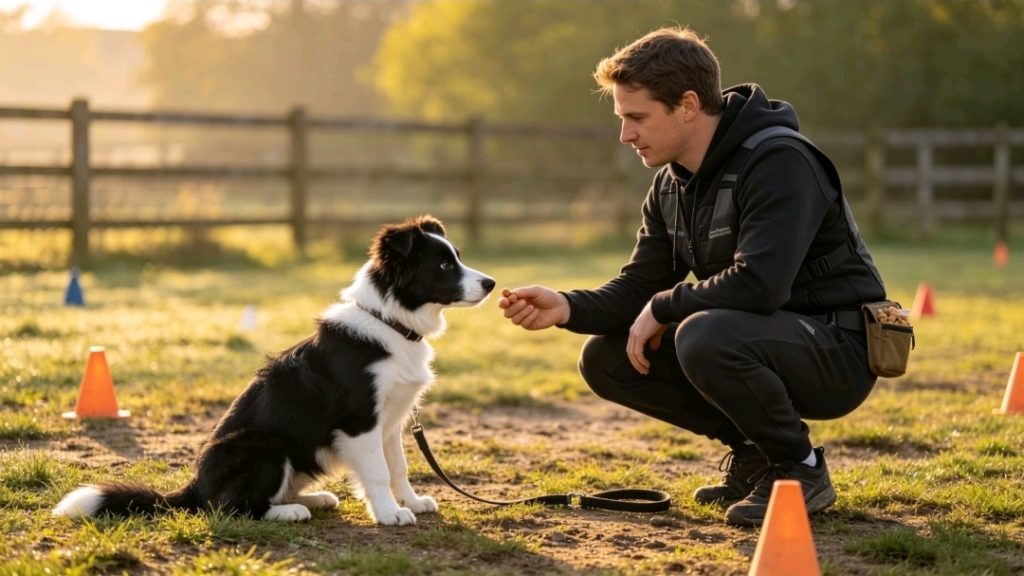
Golden Rule Two — Obedience develops the dog’s ability to understand and respond to the handler’s communication.
The focus of Golden Rule Two — Obedience is not simply teaching commands. It is about developing understanding, reliability, timing, reward, release and control so the dog learns what the handler is communicating.
Through Golden Rule Two — Obedience, the handler learns to progress training appropriately, gradually increasing the dog’s freedom and responsibility as understanding and reliability improve.
Golden Rule Three — Prey Drive
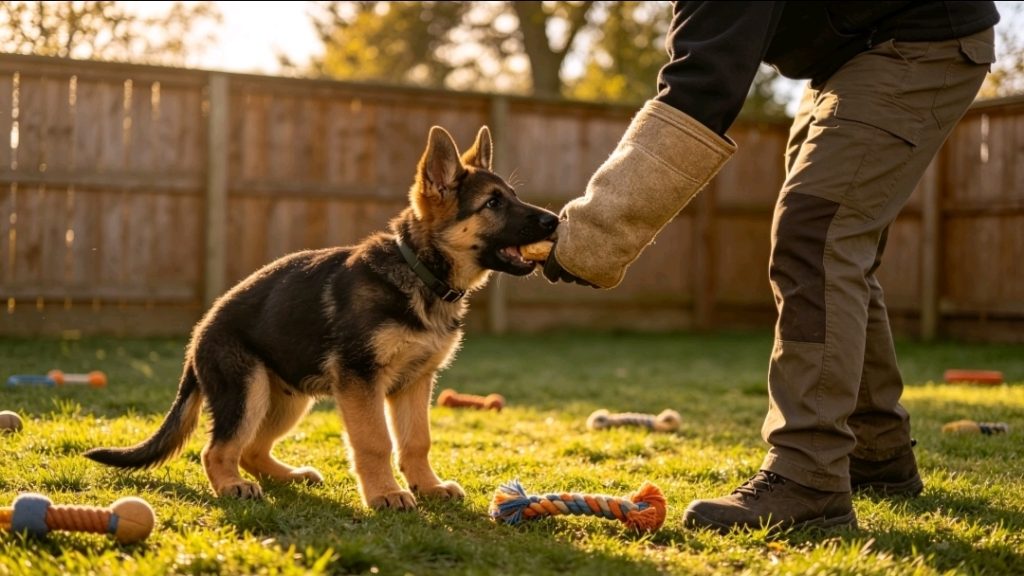
Golden Rule Three — Prey Drive focuses on understanding and developing the dog’s natural motivation to chase, pursue, engage and work with an appropriate toy or prey-based reward.
The purpose of Golden Rule Three — Prey Drive is not simply to increase drive. The handler must learn how to recognise the dog’s level of motivation, select an appropriate reward and use timing, communication and control to channel that motivation productively.
Golden Rule Three — Prey Drive teaches the handler that motivation can become a powerful training tool when it is developed and controlled correctly.
Golden Rule Four — Toilet
Golden Rule Four — Toilet establishes reliable toilet habits through consistency, observation, timing, supervision and appropriate reinforcement.
The handler learns through Golden Rule Four — Toilet to recognise when the dog is likely to need the toilet, provide the correct opportunity and reinforce the desired behaviour.
The objective of Golden Rule Four — Toilet is to establish a predictable routine that helps the dog understand where and when toileting is appropriate while reducing opportunities for mistakes.
Golden Rule Five — Social Walking
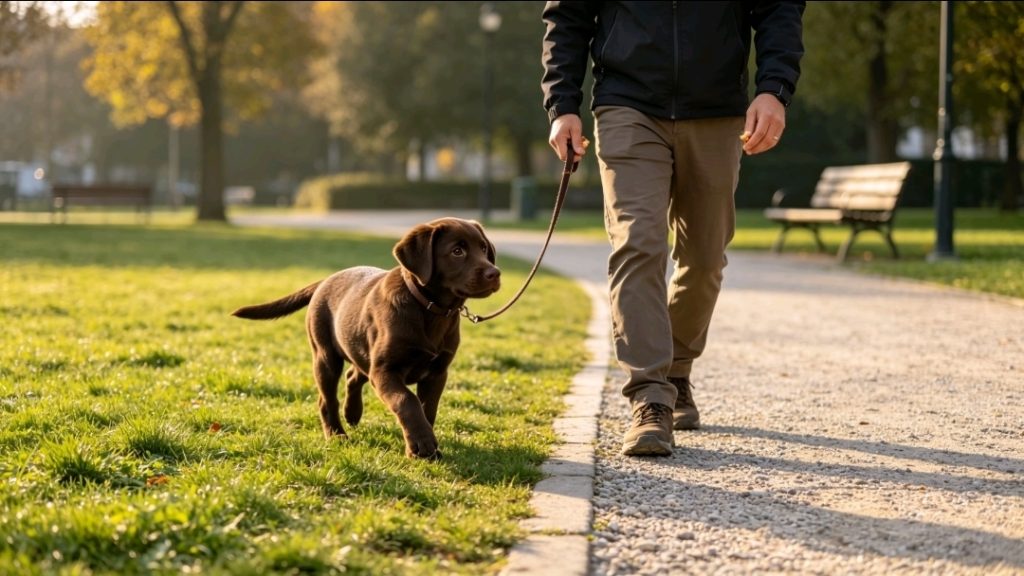
Golden Rule Five — Social Walking develops the dog’s ability to walk calmly and appropriately in the real world while remaining connected to the handler.
The focus of Golden Rule Five — Social Walking is the relationship between the handler, the dog, the environment, distractions, distance and available control.
Through Golden Rule Five — Social Walking, the handler learns to observe body language, identify potential triggers, assess distance and recognise changes in drive or arousal before behaviour escalates.
The objective of Golden Rule Five — Social Walking is not simply to make the dog walk beside the handler. It is to develop a dog that can experience the outside world while remaining connected to the handler and capable of responding to clear communication.
How the Five Golden Rules Work Together
The GPK9 Five Golden Rules are designed to work together rather than being treated as five completely separate subjects.
Golden Rule One — Home & Social establishes the foundations for everyday behaviour and communication.
Golden Rule Two — Obedience develops understanding, responsiveness and control.
Golden Rule Three — Prey Drive develops motivation and teaches the handler how to channel natural drive appropriately.
Golden Rule Four — Toilet establishes essential household routine and reliability.
Golden Rule Five — Social Walking takes the communication and control developed through the other areas into the outside environment.
Together, the GPK9 Five Golden Rules help the handler develop a complete understanding of the dog rather than treating individual behaviours as isolated problems.
The overall objective of the GPK9 Five Golden Rules is to train the human, train the dog and build the partnership through clear observation, communication, appropriate control and progressive development.