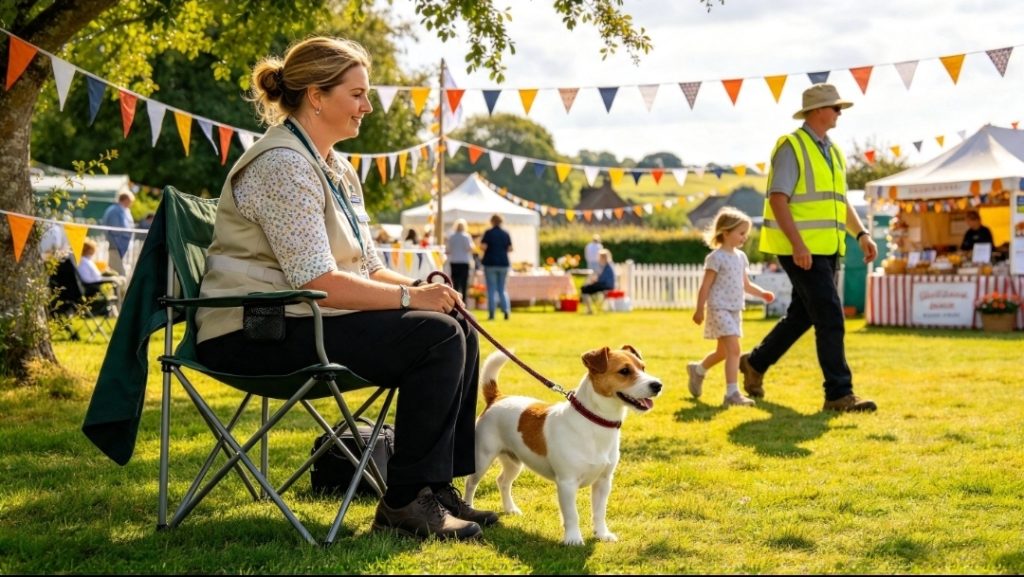
How Do I Teach My Dog to Behave Around People?
How do I teach my dog to behave around people? The key is to teach your dog that being around people does not always mean greeting, jumping up, barking or seeking attention. Reward calm behaviour, teach your dog what to do instead, and gradually practise around different people and situations.
RECOMMENDED PRODUCTS

Start With the Behaviour You Want
Before training around people, decide what appropriate behaviour looks like.
This might mean your dog can calmly look at someone, remain beside you, sit or stand without jumping, respond to its name, walk past someone without pulling, or settle while a person is nearby.
Teach these behaviours in an easy environment first. Once your dog understands what you want, gradually practise around more people and distractions.
Reward Calm Behaviour Around People
Begin at a distance where your dog can notice people without becoming overly excited or worried.
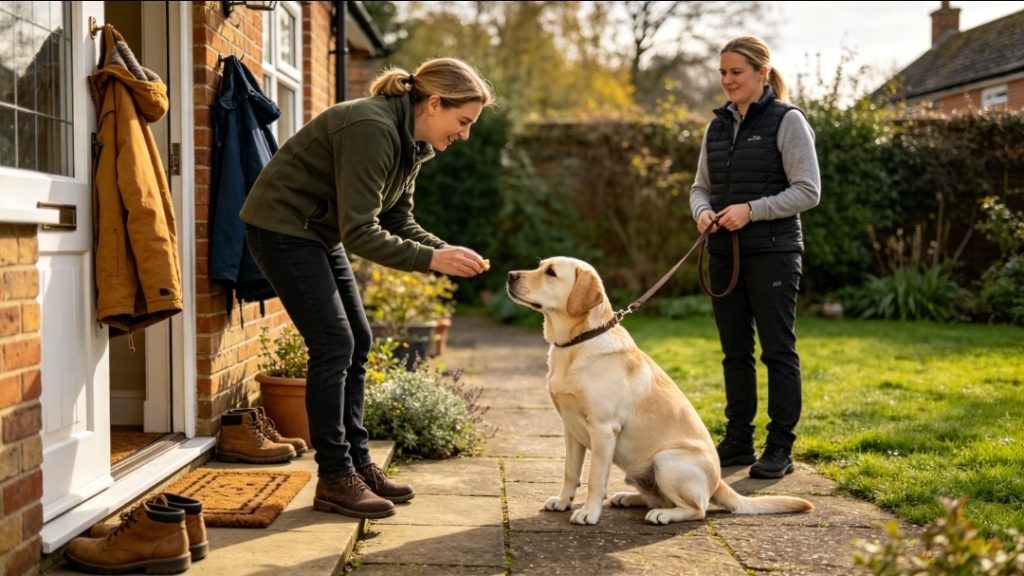
When your dog remains calm, reward it with food, praise or another suitable reward. The timing of the reward is important because you want your dog to associate being calm around people with something positive.
Do not wait until your dog has already jumped, barked or pulled before deciding what behaviour you want.
Teach Your Dog Not to Greet Everyone
Your dog does not need to approach every person it sees.
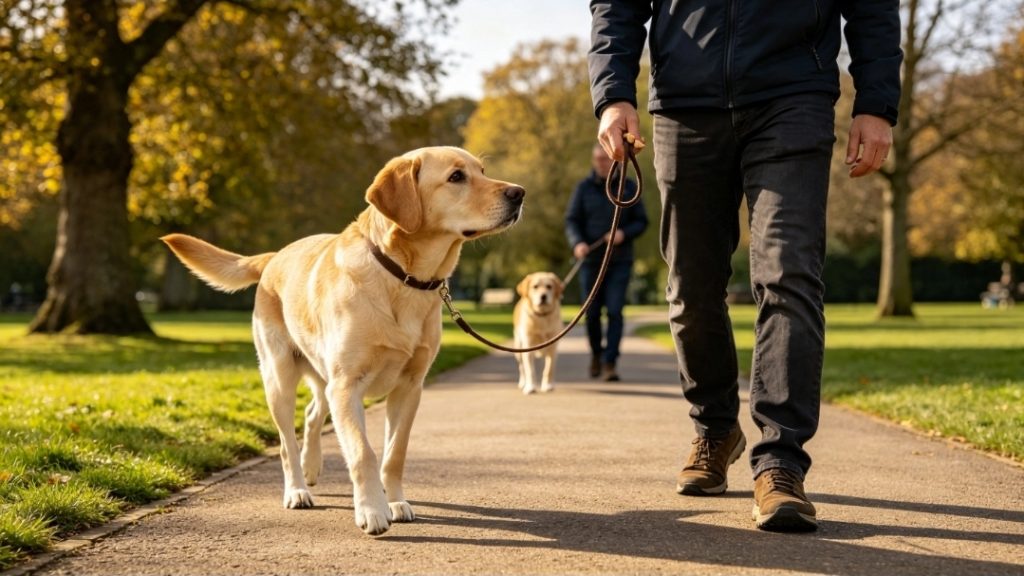
Practise walking past people while your dog remains focused on you or continues walking calmly. Reward your dog for ignoring people when appropriate.
This teaches an important distinction: seeing a person does not automatically mean getting access to them.
Teach an Appropriate Greeting
When you do want your dog to greet someone, teach the dog to approach calmly rather than rushing towards the person.
Ask the person to remain calm and avoid encouraging jumping or excessive excitement. Reward your dog for keeping four paws on the floor and remaining under control.
If your dog becomes too excited, increase the distance and try again when it is calmer.
Stop Jumping Up
If your dog jumps up when meeting people, avoid rewarding the behaviour with attention.
Create enough space for your dog to calm down and reward an alternative behaviour such as standing calmly, sitting or remaining beside you.
Ask other people to follow the same approach. If some people encourage jumping while others discourage it, your dog receives inconsistent information.
Teach Your Dog to Respond to Its Name
Your dog’s name can be useful when people are nearby.
Practise saying your dog’s name and rewarding it for looking towards you. Start in a quiet environment and gradually practise around greater distractions.
When your dog learns that responding to its name is worthwhile, you can use it to regain attention before the dog becomes too focused on another person.
Teach Your Dog to Walk Calmly Past People
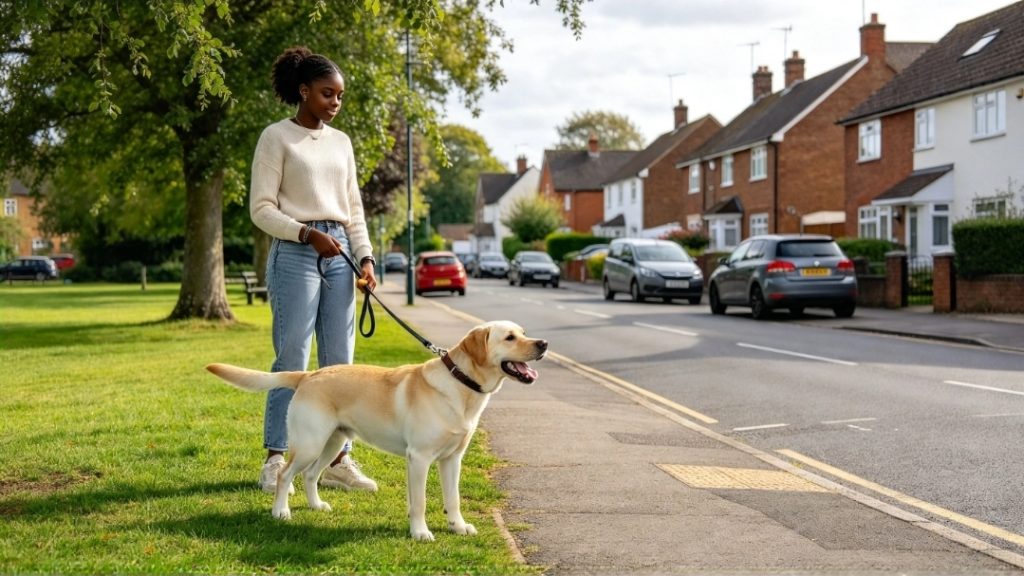
Start somewhere with enough space to pass people without forcing your dog too close.
Reward your dog for walking calmly and remaining responsive to you. If your dog begins pulling towards someone, increase the distance and regain calm behaviour before continuing.
Gradually practise around busier environments as your dog becomes more reliable.
RECOMMENDED PRODUCTS
What If My Dog Barks at People?
Do not simply force your dog closer to the person.
Increase the distance until your dog can observe the person without becoming overwhelmed. Reward calm behaviour and gradually build up the difficulty.
Try to identify why your dog is barking. Fear, excitement, frustration and a desire to interact can produce different behaviour, so the appropriate training approach depends on the underlying reason.
If barking is accompanied by lunging, snapping, biting or significant fear, seek professional assessment.
What If My Dog Is Nervous Around People?
A nervous dog should not be forced to interact.
Give your dog enough distance to feel safe and allow it to observe people without pressure. Reward calm behaviour and gradually introduce more difficult situations as your dog becomes comfortable.
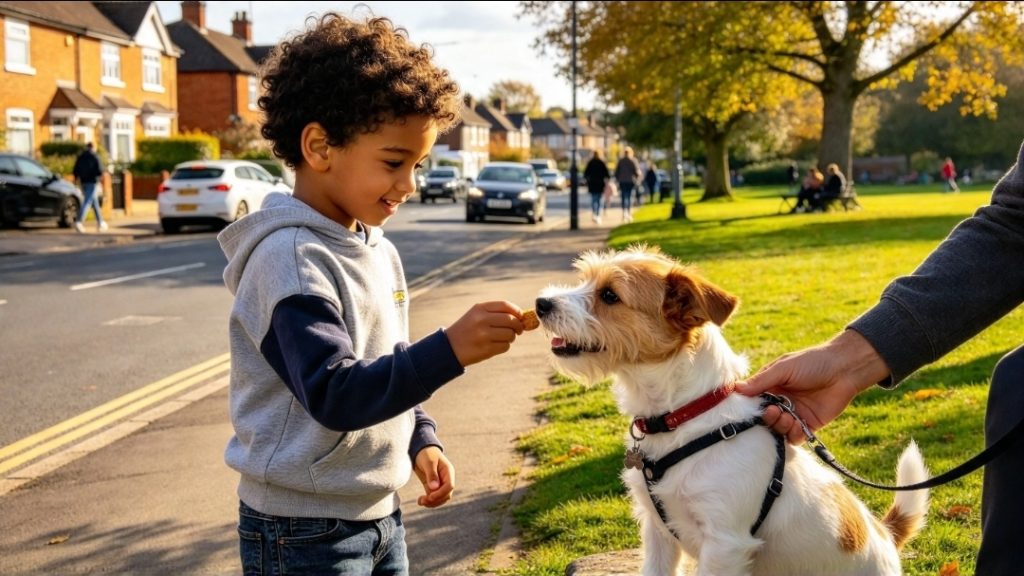
Do not allow strangers to rush towards, stare at, touch or corner a nervous dog.
The objective is not to make your dog interact with everyone. It is to teach your dog that it can remain safe and calm around people.
What If My Dog Gets Overexcited?
If your dog becomes highly excited around people, reduce the difficulty.
Move further away, allow your dog to calm down and reward appropriate behaviour. Once your dog can remain under control, you can gradually work closer again.
Avoid repeatedly allowing your dog to practise rushing towards people because repeated behaviour can become easier for the dog to repeat.
Practise With Different People
Once your dog is comfortable with familiar people, gradually practise around different types of people.
This can include people wearing different clothing, people moving differently, people carrying objects, people entering your home and people passing you outdoors.
Introduce changes gradually rather than combining several difficult situations at once.
Teach Your Dog to Settle Around People
Being able to relax while people are present is an important part of good behaviour.
Practise having your dog settle while you speak to someone, sit in a public place or have visitors in your home.
Reward calm settling and avoid constantly exciting the dog with attention.
The ability to switch off around people is often more useful than teaching a dog to greet everyone.
RECOMMENDED PRODUCTS
Use Appropriate Equipment
A well-fitted harness or collar and suitable lead can help you maintain appropriate control while practising around people.
A short line can provide closer control when necessary. A long line may be useful later in a safe, secure environment when your dog has more freedom.
Equipment should support training and safety rather than being used to force your dog towards people.
If a muzzle is genuinely required because of a safety concern, it should be introduced positively and the situation should be professionally managed.
Common Mistakes to Avoid
Avoid forcing your dog to interact with people, allowing people to reward jumping, repeatedly exposing a nervous dog to overwhelming situations or expecting your dog to behave perfectly immediately.
Do not punish fear or anxiety. Instead, reduce the difficulty and teach the dog an appropriate alternative.
Consistency is important. Everyone who regularly handles your dog should understand which behaviours are encouraged and which behaviours should not be rewarded.
How Long Does It Take to Teach Good Behaviour Around People?
There is no fixed training time because every dog starts from a different level of experience, confidence and behavioural control.
Short, regular training sessions are usually more effective than occasional long sessions. Increase difficulty gradually and only progress when your dog can cope with the current level.
If your dog struggles, reduce the difficulty rather than simply repeating the same situation.
Conclusion
Teaching your dog to behave around people is about more than teaching it to say hello. Your dog should learn to remain calm, respond to you, walk appropriately, settle when people are nearby and interact only when appropriate.
Start with simple situations, reward the behaviour you want, control the distance and gradually introduce more challenging people and environments. The goal is a dog that can behave appropriately around people whether it is greeting them or simply ignoring them.