Why Does My Dog Bark at Other Dogs?
Why does my dog bark at other dogs? Dogs bark at other dogs for different reasons, including excitement, frustration, fear, uncertainty, anxiety or a desire to interact. Barking alone does not tell you why your dog is reacting, so look at your dog’s body language, the situation and the distance between the dogs to understand what is happening.
RECOMMENDED PRODUCTS

Why Does My Dog Bark at Other Dogs?
Your dog may bark at another dog because they want to approach it, want it to move away or are unsure how to respond.
Common reasons include:
- Excitement about seeing another dog.
- Frustration because the lead prevents access.
- Fear or uncertainty.
- Previous negative experiences.
- Anxiety in unfamiliar situations.
- A strong desire to interact or play.
- Learned behaviour that has become a habit.
The same barking behaviour can have completely different causes, which is why simply telling your dog to stop barking may not solve the problem.
Is My Dog Barking Because They Are Excited?
An excited dog may bark while pulling towards another dog, jumping, whining, moving quickly or trying to get closer.
The dog may be interested in interacting rather than trying to make the other dog go away.
However, high excitement can quickly become difficult for your dog to control. If barking and pulling consistently result in getting closer to other dogs, your dog may learn that this behaviour works.
Create enough space for your dog to calm down and reward appropriate behaviour before deciding whether interaction is suitable.
Is My Dog Barking Because They Are Frustrated?
Frustration is common when a dog wants to reach another dog but is prevented by a lead, gate or other barrier.
Your dog may stare, pull, whine, jump and bark because they cannot access what they want.
Increasing distance can help reduce the frustration. Once your dog is calm enough to respond to you, reward appropriate behaviour and continue at an easier level.
Is My Dog Barking Because They Are Frightened?
A frightened dog may bark because they want the other dog to move away.
Look for signs such as:
- Tension.
- Freezing.
- Avoidance.
- Moving backwards.
- Attempting to escape.
- Lowered body posture.
- Tail tucked underneath the body.
- Intense staring.
- Barking combined with defensive behaviour.
If fear is involved, do not force your dog closer to another dog.
Increase the distance and allow your dog to recover. Training should take place at a level your dog can manage rather than repeatedly exposing them to situations that cause an intense reaction.
Does Barking at Other Dogs Mean My Dog Is Aggressive?
No. Barking does not automatically mean that a dog is aggressive.
A dog can bark because they are excited, frustrated, nervous, uncertain or trying to communicate.
You need to consider the whole behaviour, including body posture, facial expression, movement, distance, the situation and what your dog does after the other dog moves away.
However, barking combined with lunging, snapping, attempts to bite or other unsafe behaviour should be taken seriously.
How Can I Tell What Is Causing the Barking?
Watch your dog before the barking starts.
Early signs may include staring at the other dog, becoming tense, slowing down, pulling on the lead, changing direction, whining or becoming less responsive to you.
Ask yourself:
- How far away is the other dog?
- Does my dog try to approach or move away?
- Is my dog relaxed or tense?
- Can my dog still respond to their name?
- Will my dog take a reward?
- Does the reaction happen with every dog or only certain dogs?
- What happens when the other dog gets closer or moves away?
These observations can help you understand whether the behaviour is driven mainly by excitement, frustration, fear or uncertainty.
How Do I Stop My Dog Barking at Other Dogs?
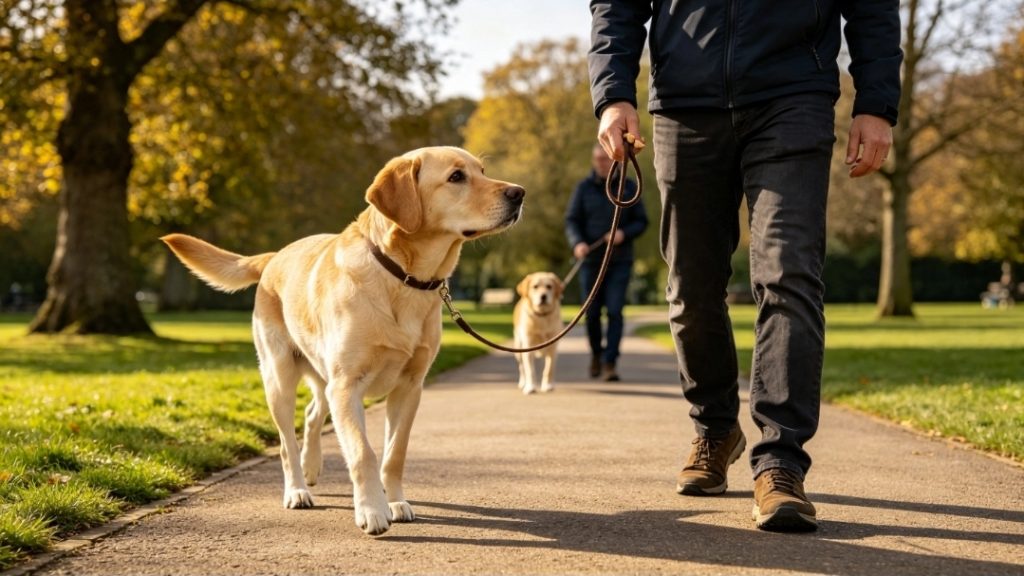
Start at a distance where your dog can see another dog without immediately reacting.
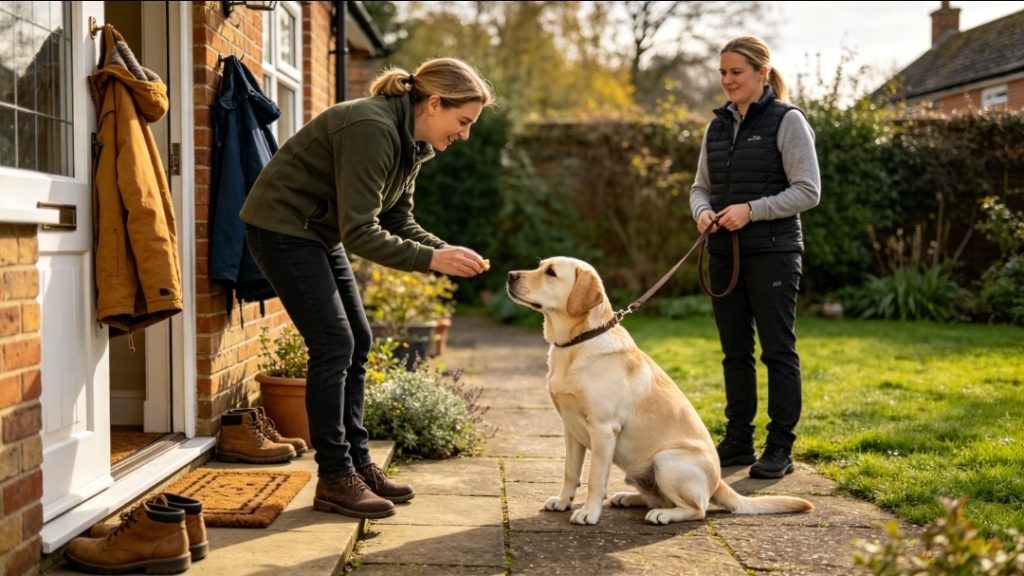
When your dog notices the other dog and remains calm, reward that behaviour.
You can also teach your dog to disengage from the other dog and return their attention to you. This gives your dog a clear alternative to staring, pulling and barking.
Gradually practise around different dogs while keeping the difficulty manageable.
Do not rush closer simply because your dog has remained calm once. Progress should be based on repeated successful experiences.
What Should I Do If My Dog Starts Barking?
If your dog starts barking, do not try to force them to remain close to the other dog.
Instead:
- Stop and observe what is happening.
- Assess your dog’s body language.
- Create more distance from the other dog.
- Allow your dog to calm down.
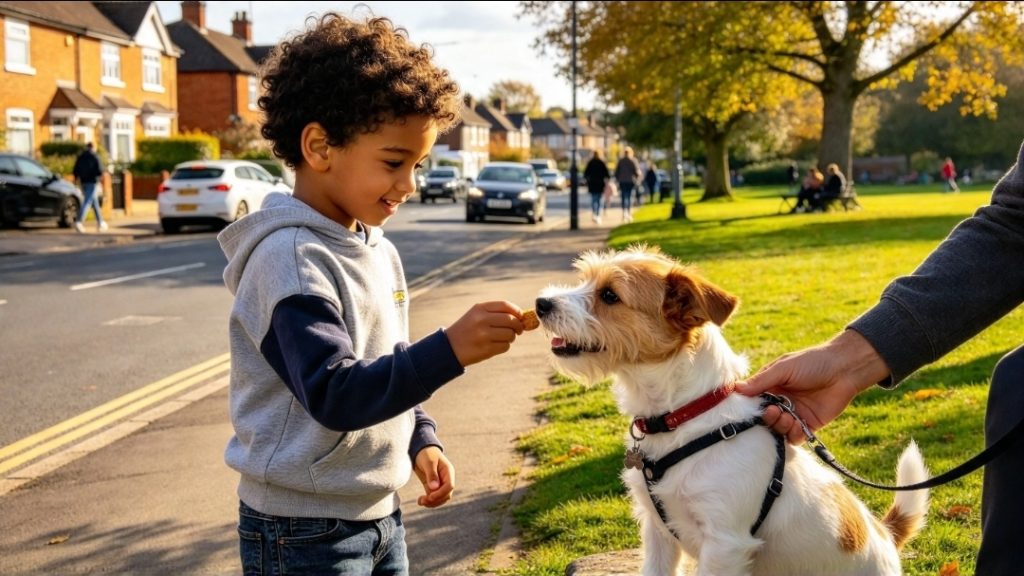
- Reward calm behaviour when your dog is able to respond.
- Reassess the situation before continuing.
If your dog cannot settle, increase the distance further or end the interaction.
The aim is to prevent repeated reactions rather than repeatedly putting your dog into the same situation and waiting for them to bark.
Does My Dog Need to Meet Other Dogs?
No. Your dog does not need to greet every dog they see.
Being able to calmly notice another dog, remain under control and continue walking is a valuable social skill.
Allowing your dog to approach every dog can also create an expectation that seeing another dog always leads to interaction.
Appropriate interaction can be positive when both dogs are comfortable and the situation is suitable, but calm disengagement is equally important.
How Do I Stop My Dog Pulling and Barking on the Lead?
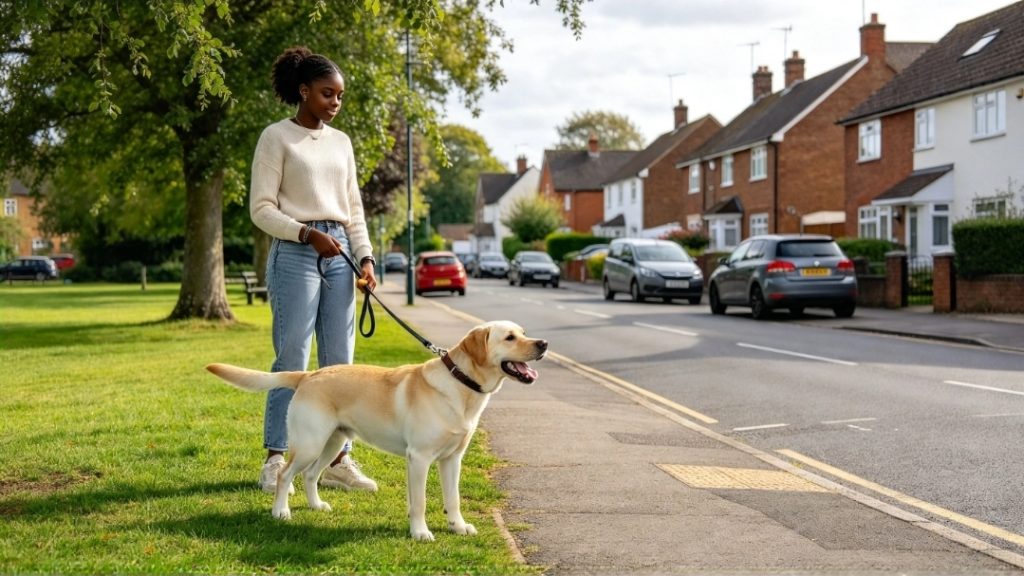
Start with enough distance between your dog and other dogs that your dog can remain responsive.
Reward your dog for walking calmly, checking in with you and disengaging from distractions.
If your dog begins staring, pulling or becoming tense, increase the distance before the behaviour escalates.
A suitable collar or harness and lead can help you manage your dog safely. A short line can provide closer control when necessary, while a long line can provide additional freedom in a secure and appropriate environment.
Equipment should support training rather than replace it.
Should I Use a Muzzle If My Dog Barks at Other Dogs?
A muzzle is not standard equipment simply because a dog barks at other dogs.
If your dog has a genuine bite risk, a suitable muzzle may form part of a wider safety and behaviour-management plan. It should be introduced properly and used alongside appropriate professional guidance.
A muzzle should not be treated as a solution to the underlying reason for the barking.
RECOMMENDED PRODUCTS
What Should I Avoid?
Avoid forcing your dog to approach another dog when they are frightened or overwhelmed.
Avoid repeatedly allowing your dog to rehearse barking and lunging at close range.
Avoid punishing your dog for communicating through barking, particularly when fear or anxiety may be involved.
Instead, manage distance, recognise early warning signs and reward calm alternative behaviour.
When Should I Get Professional Help?
Professional help is appropriate if your dog repeatedly lunges, snaps, attempts to bite, shows severe fear or cannot be safely managed around other dogs.
A professional can assess the behaviour and help establish an appropriate training and management plan.
If your dog’s behaviour towards other dogs changes suddenly or becomes significantly more intense, speak to your vet to rule out an underlying health problem.
Conclusion
If your dog barks at other dogs, the important question is not simply how to stop the barking but why your dog is reacting.
Look at your dog’s body language, identify the trigger and work at a distance where your dog can remain calm. Reward calm observation, teach disengagement and gradually increase difficulty as your dog’s behaviour becomes more reliable.
Your dog does not need to greet every dog. Learning to calmly notice another dog and continue without reacting is an important part of reliable social behaviour.