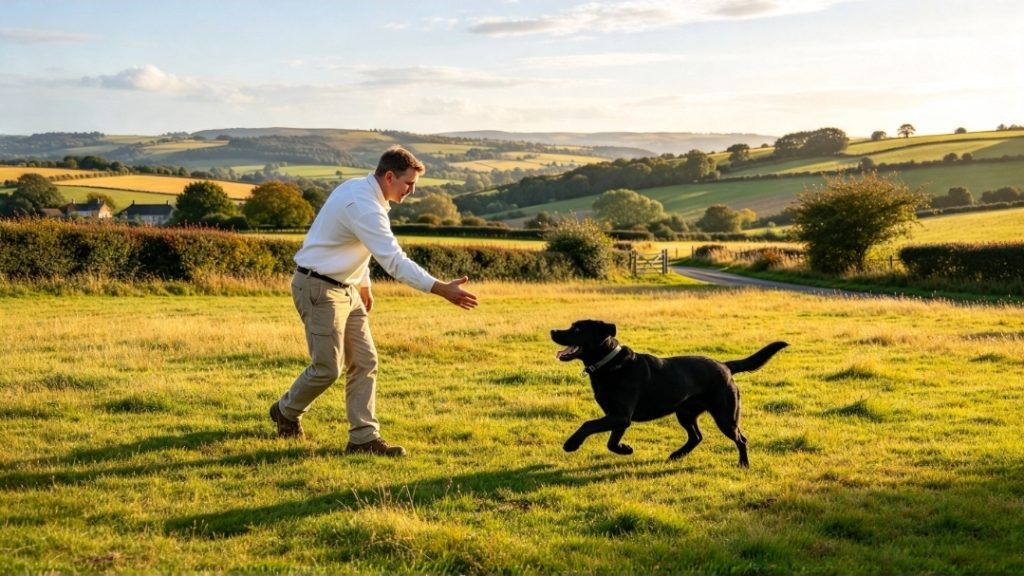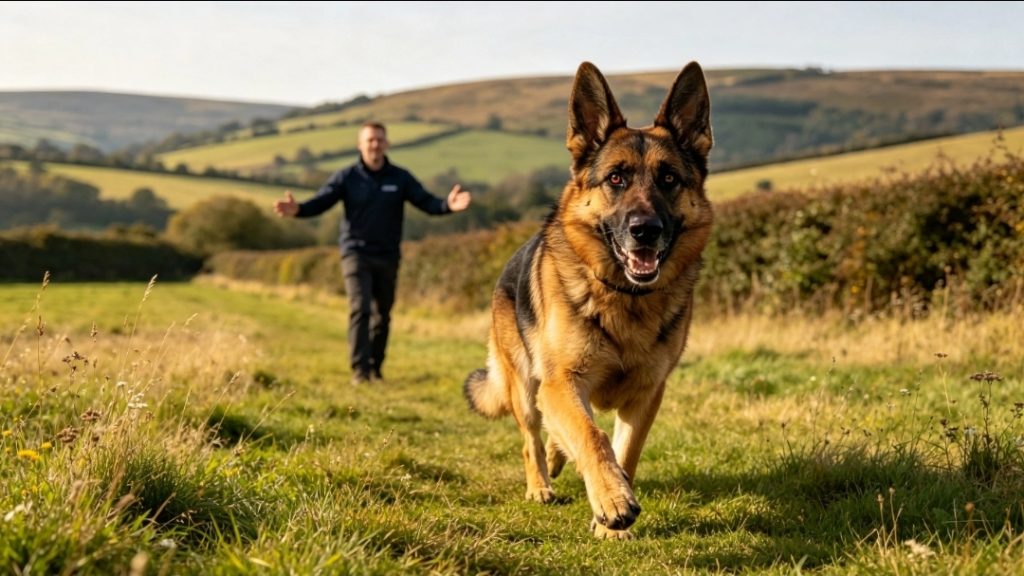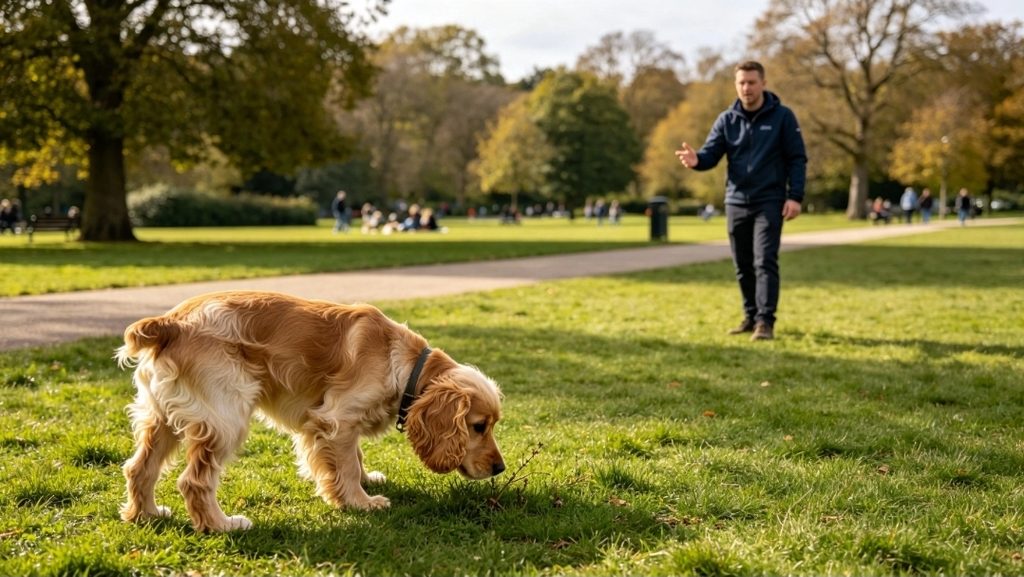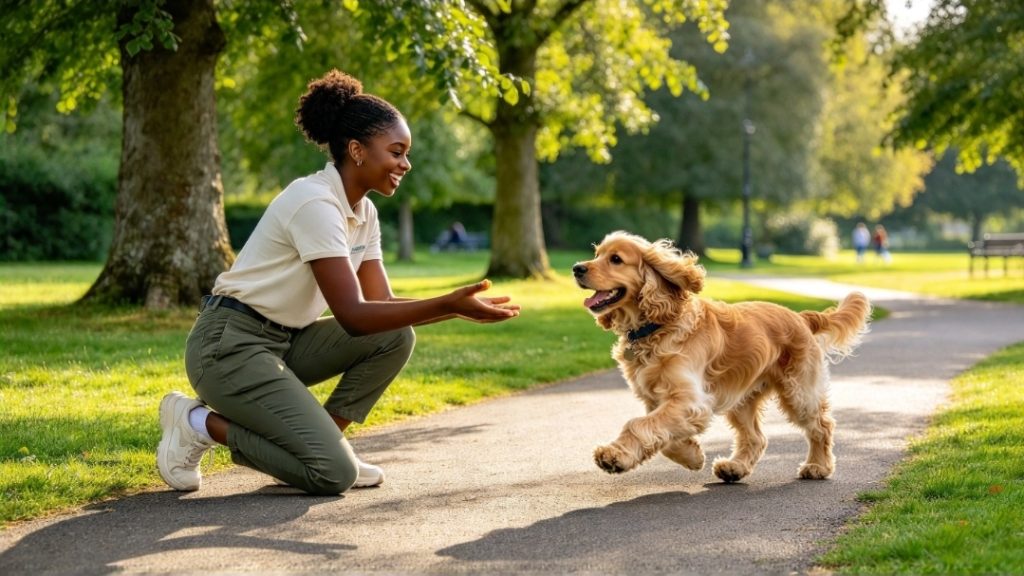
What Is the Best Recall Training Method?
What is the best recall training method? The most effective recall training method is to teach your dog that returning to you is consistently rewarding, then gradually increase distance, distractions and freedom as reliability develops. Start in an easy environment, use a clear recall cue, reward successful returns immediately and use appropriate management when your dog is not ready for greater freedom.
RECOMMENDED PRODUCTS

What makes a recall training method effective?
A good recall method should teach your dog what the recall cue means while making returning to you worthwhile.
The training should be:
- Positive and consistent.
- Easy enough for the dog to succeed.
- Gradually more difficult.
- Practised in different environments.
- Reinforced with rewards your dog values.
- Supported by appropriate equipment when needed.
The aim is to build a reliable behaviour rather than repeatedly testing whether your dog will come back.
How do I start the best recall training method?
Begin somewhere your dog can succeed easily.
Step 1: Choose one recall cue
Use one clear word or phrase, such as “come”, and use it consistently.
Your dog needs to learn that the cue means to turn towards you and return.
Avoid repeatedly saying the cue when your dog is unlikely to respond.
Step 2: Start at a short distance
Begin indoors or in another quiet, controlled environment.
Move only a short distance away and give the recall cue.
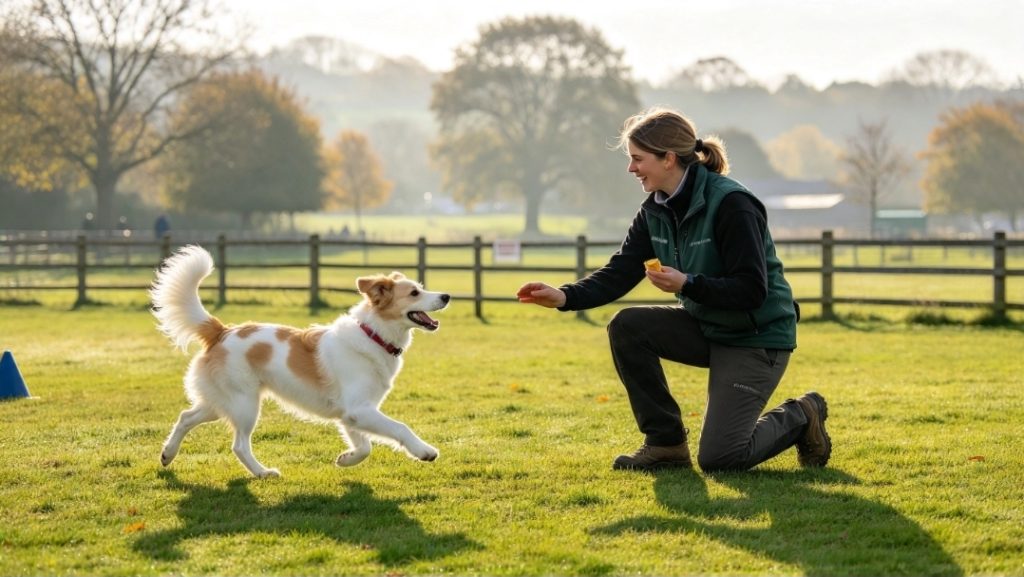
When your dog turns towards you and comes back, reward immediately.
Step 3: Make returning rewarding
Use a reward your dog genuinely values.
Depending on the dog and situation, this could be food, praise or play.
The reward should follow the successful return quickly so your dog understands why it is being rewarded.
Step 4: Repeat successful recalls
Practise several short recalls without making the session repetitive or frustrating.
Keep the difficulty low enough that your dog continues to succeed.
The objective is to build a strong history of responding to the cue.
How do I make recall reliable?
Reliability comes from gradual progression, not from repeatedly testing your dog in difficult situations.
Increase one challenge at a time.
You can gradually increase:
- Distance.
- Duration away from you.
- Environmental distractions.
- Movement.
- Excitement.
- The difficulty of the location.
If your dog stops responding, reduce the difficulty and rebuild the behaviour.
Should I use a long line for recall training?
A long line can be extremely useful when developing outdoor recall.
It allows your dog to move further away while giving you additional control if the dog does not respond.
Start in a suitable secure environment and attach the long line to appropriate equipment.
Do not use the long line to drag your dog back to you as a punishment.
The long line is a safety and management tool while the recall is being developed.
Should I use a collar or harness?
A suitable collar or harness can be used with the lead or long line.
The choice depends on your dog and the equipment being used safely.
The equipment should allow you to manage your dog without relying on physical force.
The purpose is to support training while your dog learns to respond voluntarily.
How do I train recall around distractions?
Do not begin with the hardest distraction your dog encounters.
Start with something mildly interesting.
Call your dog from a distance where you expect a successful response and reward it when it returns.
Gradually increase the difficulty.
If your dog becomes focused on the distraction and stops responding, increase the distance from the distraction or return to an easier stage.
Distance is often one of the most useful ways to make recall training easier.
What if my dog ignores the recall?
Do not repeatedly shout the cue.
Repeatedly giving a cue that your dog ignores can weaken the reliability of the behaviour.
Instead, use appropriate management to prevent the situation from becoming unsafe.
Once you have control, reduce the difficulty and practise again.
Ask yourself:
- Was the distraction too difficult?
- Was the distance too great?
- Was my dog too excited?
- Was the reward valuable enough?
- Has the recall been practised sufficiently in this environment?
The answer helps you decide what needs to change.
Should I punish my dog for ignoring recall?
No.
Punishment can make your dog less willing to return.
Most importantly, never punish your dog after it eventually comes back to you.
Your dog should learn that returning to you is safe and rewarding, even when the original response was delayed.
RECOMMENDED PRODUCTS
How do I stop recall meaning the end of fun?
A common mistake is only calling a dog when something enjoyable is about to finish.
Instead, practise recalls during enjoyable activities.
Call your dog, reward the return and, when appropriate, release your dog to continue exploring or playing.
This teaches your dog that coming back does not automatically mean the end of freedom.
How often should I train recall?
Short, regular sessions are more useful than long sessions where your dog loses concentration.
Practise in different safe environments and look for opportunities to reinforce natural returns to you.
Avoid calling your dog unnecessarily.
Every recall cue should have a purpose.
Should I use food for recall training?
Food can be highly effective if your dog is motivated by it.
However, food is not the only possible reward.
Some dogs respond strongly to play, praise or access to something they value.
The best reward is the one that motivates your individual dog in that particular situation.
As distractions become more difficult, the reward may need to become more valuable.
How do I progress from home to off-lead recall?
Use a gradual progression.
A suitable sequence might be:
- Quiet room.
- Larger indoor area.
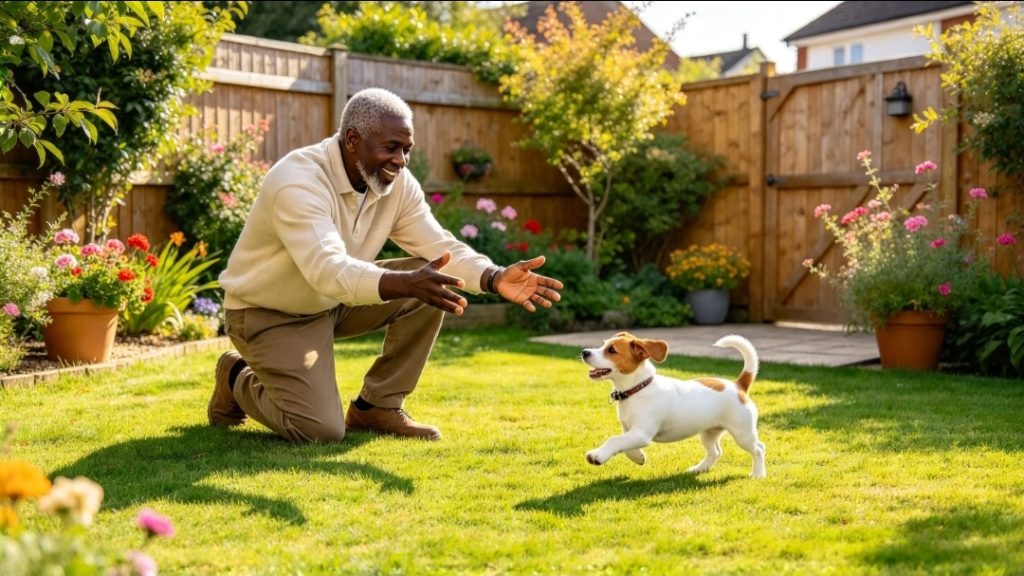
- Secure garden or enclosed space.
- Quiet outdoor environment.
- Mild distractions.
- Greater distance.
- More difficult distractions.
- Controlled off-lead practice in a secure area.
- Greater freedom when reliability has been demonstrated.
Do not move to the next stage simply because your dog succeeds once.
Look for consistent success before increasing the difficulty.
When should I let my dog off lead?
Off-lead freedom should be based on reliability rather than age alone.
Your dog should demonstrate that it can respond to the recall cue in increasingly difficult situations.
Practise in secure areas first and consider the environment, distractions and potential hazards.
If your dog’s recall remains unreliable, continue using appropriate management while training.
More freedom requires more behavioural responsibility.
How do I train recall around other dogs?
Start far enough away that your dog can still respond to you.
Reward attention and successful recalls.
Gradually reduce the distance as your dog becomes reliable.
Do not immediately test recall when your dog is highly excited and playing with another dog.
Build the behaviour before introducing difficult distractions.
How do I train recall around wildlife?
Wildlife can be a very difficult distraction.
Use appropriate management and a long line while training.
Start with easier distractions and gradually work towards more challenging situations.
Never rely on an untested recall when your dog is likely to chase wildlife.
What is better: calling my dog or using a whistle?
Both can work.
A verbal cue can be convenient because you always have your voice available.
A whistle can provide a consistent sound that carries over distance and environmental noise.
The important factor is not which cue you choose. It is how consistently the cue is trained and reinforced.
What are the biggest recall training mistakes?
Common mistakes include:
- Repeating the recall cue again and again.
- Calling when the dog is unlikely to respond.
- Punishing the dog after it returns.
- Only calling when the fun is ending.
- Increasing distractions too quickly.
- Giving too little reward for difficult recalls.
- Allowing the dog to practise running away.
- Testing recall before it has been properly trained.
- Giving too much off-lead freedom too soon.
Avoiding these mistakes can make training considerably more effective.
How long does effective recall training take?
There is no fixed timeframe.
A dog’s age, temperament, motivation, previous learning and environment can all affect progress.
Focus on building reliability rather than reaching a particular deadline.
A recall that works in the kitchen but fails around wildlife is not yet reliable enough for unrestricted freedom.
When should I get professional help?
Seek professional help if your dog regularly runs away, ignores recall around major distractions, chases people or animals, or cannot be safely managed outdoors.
Professional assessment can help identify why the recall is failing and establish an appropriate training progression.
Conclusion
The best recall training method is positive, consistent and progressive.
Teach one clear cue, start where your dog can succeed, reward every successful return and gradually introduce greater distance and distractions.
Use a long line and appropriate equipment when additional safety and control are needed, and use release to show your dog that returning does not always mean the end of freedom.
The goal is not simply to make your dog come when called in an easy environment. It is to build a reliable behaviour that continues to work as the environment becomes more challenging.
GPK9 — The Five Golden Rules
The GPK9 Five Golden Rules provide the foundation of the GPK9 Professional Training System. They give new dog owners, new dog handlers, experienced handlers and professional dog trainers a clear structure for developing the dog and the handler together.
The GPK9 Five Golden Rules cover five essential areas of development: Home & Social, Obedience, Prey Drive, Toilet and Social Walking. Each area has its own purpose, but they are designed to work together as one complete training system.
The GPK9 approach is based on CATEGORY → STATUS → DRIVE → CONTROL and the handler’s ability to OBSERVE → INTERPRET → DECIDE → COMMUNICATE → OBSERVE RESPONSE → REASSESS. This gives the handler a consistent process for understanding what the dog is doing, why the behaviour is occurring, what level of control is appropriate and how to communicate effectively.
The purpose of the GPK9 Five Golden Rules is not simply to teach a collection of individual exercises. They are designed to develop the dog’s behaviour, motivation, communication, control and reliability while teaching the handler how to make better decisions.
Golden Rule One — Home & Social
Golden Rule One — Home & Social establishes the foundation for everyday life with the dog. It focuses on communication, boundaries, calm behaviour, household routines and appropriate behaviour around people, animals and normal activity.
The purpose of Golden Rule One — Home & Social is to help the handler understand the dog’s behaviour and recognise changes in arousal before they become larger problems. The handler learns to observe, assess and communicate rather than simply reacting after unwanted behaviour has already occurred.
Golden Rule One — Home & Social provides the foundation from which the handler can develop a calmer, more predictable and better-communicating dog.
Golden Rule Two — Obedience
Golden Rule Two — Obedience develops the dog’s ability to understand and respond to the handler’s communication.
The focus of Golden Rule Two — Obedience is not simply teaching commands. It is about developing understanding, reliability, timing, reward, release and control so the dog learns what the handler is communicating.
Through Golden Rule Two — Obedience, the handler learns to progress training appropriately, gradually increasing the dog’s freedom and responsibility as understanding and reliability improve.
Golden Rule Three — Prey Drive
Golden Rule Three — Prey Drive focuses on understanding and developing the dog’s natural motivation to chase, pursue, engage and work with an appropriate toy or prey-based reward.
The purpose of Golden Rule Three — Prey Drive is not simply to increase drive. The handler must learn how to recognise the dog’s level of motivation, select an appropriate reward and use timing, communication and control to channel that motivation productively.
Golden Rule Three — Prey Drive teaches the handler that motivation can become a powerful training tool when it is developed and controlled correctly.
Golden Rule Four — Toilet
Golden Rule Four — Toilet establishes reliable toilet habits through consistency, observation, timing, supervision and appropriate reinforcement.
The handler learns through Golden Rule Four — Toilet to recognise when the dog is likely to need the toilet, provide the correct opportunity and reinforce the desired behaviour.
The objective of Golden Rule Four — Toilet is to establish a predictable routine that helps the dog understand where and when toileting is appropriate while reducing opportunities for mistakes.
Golden Rule Five — Social Walking
Golden Rule Five — Social Walking develops the dog’s ability to walk calmly and appropriately in the real world while remaining connected to the handler.
The focus of Golden Rule Five — Social Walking is the relationship between the handler, the dog, the environment, distractions, distance and available control.
Through Golden Rule Five — Social Walking, the handler learns to observe body language, identify potential triggers, assess distance and recognise changes in drive or arousal before behaviour escalates.
The objective of Golden Rule Five — Social Walking is not simply to make the dog walk beside the handler. It is to develop a dog that can experience the outside world while remaining connected to the handler and capable of responding to clear communication.
How the Five Golden Rules Work Together
The GPK9 Five Golden Rules are designed to work together rather than being treated as five completely separate subjects.
Golden Rule One — Home & Social establishes the foundations for everyday behaviour and communication.
Golden Rule Two — Obedience develops understanding, responsiveness and control.
Golden Rule Three — Prey Drive develops motivation and teaches the handler how to channel natural drive appropriately.
Golden Rule Four — Toilet establishes essential household routine and reliability.
Golden Rule Five — Social Walking takes the communication and control developed through the other areas into the outside environment.
Together, the GPK9 Five Golden Rules help the handler develop a complete understanding of the dog rather than treating individual behaviours as isolated problems.
The overall objective of the GPK9 Five Golden Rules is to train the human, train the dog and build the partnership through clear observation, communication, appropriate control and progressive development.