
How Do I Teach My Dog a Recall?
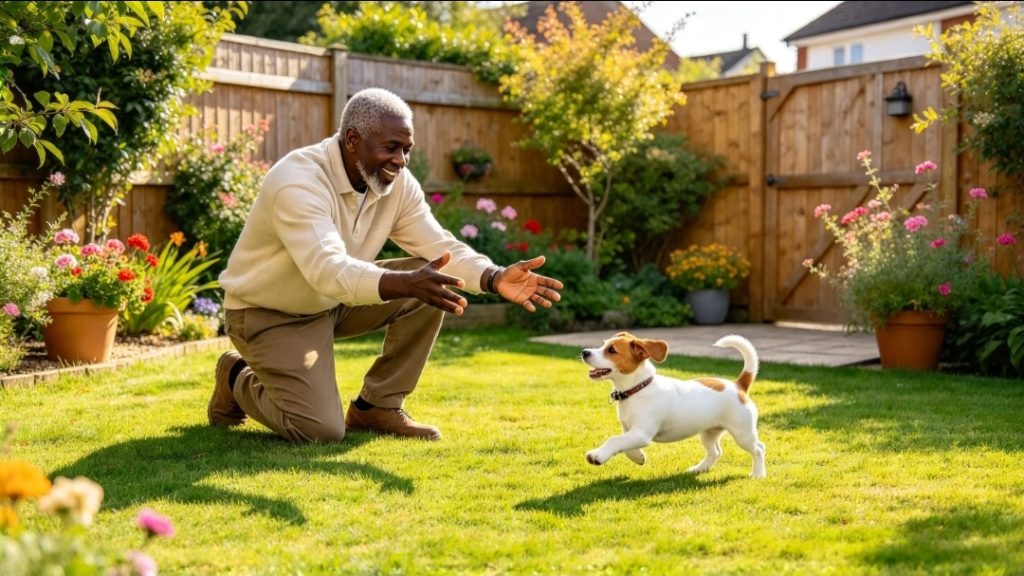
How do I teach my dog a recall? Start by teaching your dog that coming back to you is rewarding, safe, and worth doing. Begin in a quiet, controlled environment, use a consistent recall cue, reward your dog immediately when it comes to you, and gradually increase the distance and distractions as your dog becomes more reliable.
RECOMMENDED PRODUCTS

What Does Recall Mean?
Recall means teaching your dog to return to you when you give a specific cue, such as “come” or “here”. A reliable recall is an important safety skill because it allows you to bring your dog back when it is off lead or when it needs to move away from something.
Recall is different from simply getting your dog’s attention. Your dog may look at you when you say its name without actually returning to you. A recall cue should mean turn around, come back to me, and stay close until released.
How Do I Start Teaching My Dog to Come Back?
Start somewhere your dog can succeed easily. A quiet room, secure garden, or other controlled area is better than beginning in a busy park.
Choose one clear recall word and use it consistently. Say the cue in a positive, clear voice, then encourage your dog to move towards you. When your dog reaches you, immediately reward it.
Step 1: Choose a Recall Cue
Pick a word that everyone in the household can use consistently.
For example, you might use:
- “Come”
- “Here”
- “Back”
Avoid repeatedly changing the cue. Your dog needs to learn that one specific word means return to the handler.
Step 2: Reward Your Dog for Coming to You
Begin at a very short distance. Say the recall cue once and encourage your dog towards you.
As soon as your dog reaches you, give the reward.
The timing matters. The reward should happen immediately after the desired behaviour so your dog can clearly understand what earned it.
Food is often useful when teaching recall, but a favourite toy, praise, play, or another appropriate reward can also be valuable depending on what motivates your dog.
Step 3: Make Coming Back Worthwhile
Do not make every recall mean that something enjoyable is about to end.
If you only call your dog to put the lead on, stop playing, leave the park, or do something your dog dislikes, your dog may begin to avoid the recall.
Practise calling your dog back, rewarding it, and then allowing it to return to an appropriate activity.
This teaches your dog that coming back does not always mean losing its freedom.
How Do I Increase the Distance?
Once your dog reliably comes back from a short distance, gradually increase the distance.
For example:
- Call your dog from one or two steps away.
- Increase the distance across the room.
- Practise in a secure garden.
- Increase the distance outdoors in a controlled area.
- Introduce mild distractions.
- Gradually work towards more difficult environments.
Do not increase distance, distractions, and difficulty at the same time. If your dog struggles, make the exercise easier again.
How Do I Teach Recall Outside?
Outdoor recall should be introduced gradually rather than immediately expecting your dog to return reliably in a busy environment.
A long line can provide additional control while allowing your dog to move away from you. It should be attached to suitable equipment and used in an appropriate open area where it cannot become caught around objects, people, or other animals.
Call your dog when you have a reasonable chance of success. When it returns, reward it immediately.
The long line should be used as a safety and training aid, not as something to repeatedly drag your dog back with.
Should I Use a Harness or Collar for Recall Training?
The correct equipment depends on the individual dog and the environment.
A suitable harness can provide a comfortable connection point for controlled recall training, particularly when using a long line. A short line can be useful when you need closer control.
Equipment should support the training rather than replace it. Your dog still needs to learn that responding to the recall cue and returning to you produces a positive outcome.
If your dog has a history of running off or ignoring recall, do not rely on equipment alone. Manage the environment and gradually build reliability.
How Do I Add Distractions?
Once your dog recalls reliably in quiet surroundings, introduce distractions gradually.
Start with something mildly interesting, then progress towards more difficult distractions such as:
- Toys
- Food
- Household activity
- New environments
- People
- Other dogs at a safe distance
- Interesting smells
- Outdoor activity
Always increase difficulty gradually.
If your dog ignores the recall, the exercise may have become too difficult. Reduce the distraction or increase the distance from it before trying again.
What Should I Do If My Dog Ignores the Recall?
Do not repeatedly shout the recall cue.
If you say “come” several times while your dog continues doing something else, the word can lose its importance.
Instead, calmly manage the situation and make the next training repetition easier.
Ask yourself:
- Was the environment too distracting?
- Was the distance too great?
- Was the reward valuable enough?
- Did I give the cue when my dog was already highly focused on something else?
- Has the recall been practised enough at easier levels?
The answer is usually to reduce the difficulty and rebuild success, rather than simply saying the cue louder.
Should I Chase My Dog If It Runs Away?
Generally, chasing can make the situation worse because some dogs interpret being chased as a game.
If your dog runs away, avoid turning the situation into a chase where possible. Use your trained recall, move away from your dog if safe to do so, make yourself interesting, and use your established reward system.
Prevention is even more important. Until recall is reliable, use secure areas and appropriate equipment rather than giving your dog unrestricted off-lead freedom in unsafe environments.
How Do I Stop My Dog From Running Away After Being Released?
Your dog needs to learn that returning to you does not always mean being immediately restrained.
Practise calling your dog back, rewarding it, holding or touching its harness briefly if appropriate, and then releasing it again.
You can also practise short periods of staying near you before giving the release cue.
This builds a useful pattern:
Recall → return → reward → brief control → release.
Gradually increase the amount of time your dog remains with you before being released.
How Do I Teach Recall Around Other Dogs?
Do not begin by calling your dog directly away from another dog at close range if you already know it will ignore you.
Start at a distance where your dog can notice the other dog while still responding to you.
Reward successful recalls and gradually reduce the distance only when your dog remains responsive.
If your dog becomes highly focused on another dog, increase distance and allow it to settle before trying again.
The goal is not to overwhelm your dog with distractions. The goal is to build the ability to notice distractions and still respond to the handler.
How Do I Teach Recall to a Puppy?
Puppies can begin learning recall through very short, positive exercises.
Call your puppy from a short distance when it is already interested in you. Reward it immediately when it comes towards you.
Keep early sessions brief and successful.
Use everyday opportunities to practise, such as calling your puppy between people in the household or calling it a few steps towards you during play.
Do not expect a young puppy to have the same reliability as an adult dog. Recall needs to be developed through repetition and gradual progression.
What If My Dog Only Comes Back When I Have Food?
Food can be an excellent training reward, but your dog should gradually learn that returning to you is valuable in different ways.
Once the behaviour is established, vary the rewards. You might use food sometimes, play at other times, praise when appropriate, or allow access to something your dog wants.
Do not suddenly remove rewards before the recall is reliable.
Instead, gradually build the behaviour so your dog understands that responding to the recall cue consistently produces a worthwhile outcome.
What Should I Avoid When Training Recall?
Avoid using the recall cue to repeatedly call your dog for unpleasant experiences.
Also avoid:
- Repeating the cue again and again
- Punishing your dog for eventually returning
- Chasing your dog unnecessarily
- Starting in an environment that is too difficult
- Expecting immediate off-lead reliability
- Calling your dog when you know it is unlikely to respond
- Increasing distance and distractions too quickly
If your dog eventually returns after ignoring the cue, do not punish the return. You want your dog to learn that coming back to you is always the right decision.
How Often Should I Practise Recall?
Short, frequent sessions are usually more effective than one long session.
Practise several successful recalls during normal daily activities and gradually introduce different locations and distractions.
Keep the difficulty appropriate for your dog’s current ability.
A useful progression is:
Easy environment → short distance → reward → greater distance → mild distraction → greater distraction → more challenging environment.
Only progress when your dog is consistently successful at the current level.
How Do I Make My Dog’s Recall More Reliable?
Reliability comes from building the behaviour across different situations rather than teaching it once.
Practise:
- Indoors
- In a secure garden
- On a long line
- At different distances
- Around mild distractions
- In different environments
- Around controlled distractions
- With different appropriate rewards
Your dog should learn that the recall cue has the same meaning wherever you practise it.
What If My Dog Has a Very Poor Recall?
If your dog has learned to ignore its recall, start again at an easier level rather than repeatedly testing it in difficult situations.
Use a controlled environment and rebuild the association between the recall cue, returning to you, and receiving an immediate reward.
For dogs that regularly run away, chase wildlife, approach other dogs, or place themselves in danger, professional training support may be appropriate.
Until the behaviour is reliable, manage the environment carefully and do not give your dog opportunities to practise running away.
RECOMMENDED PRODUCTS
How Long Does It Take to Teach a Reliable Recall?
There is no fixed timeframe because recall reliability depends on the individual dog, its previous learning, motivation, environment, distractions, and how consistently the training is practised.
A dog may learn the basic response quickly but still require considerably more training before its recall is reliable around difficult distractions.
Do not measure progress simply by how quickly your dog responds in a quiet room. Measure whether it can respond successfully as distance, distractions, and environmental difficulty increase.
Frequently Asked Questions About Dog Recall
What Is the Best Recall Word for a Dog?
The best recall word is one that is clear, consistent, and used correctly by everyone handling the dog. “Come” and “here” are common choices, but consistency is more important than the specific word.
Should I Reward My Dog Every Time It Comes Back?
When teaching recall, frequent rewards help build a strong behaviour. As reliability improves, you can vary the type and value of the reward while continuing to make returning to you worthwhile.
Can I Teach Recall Without Food?
Yes. Food is useful for many dogs, but toys, play, praise, access to appropriate activities, and other rewards can also reinforce recall. The important point is that the reward should be meaningful to the individual dog.
Should I Let My Dog Off Lead While Teaching Recall?
Only in a genuinely secure environment or when using appropriate management such as a correctly used long line. A dog that is still learning recall should not be given unrestricted freedom in an unsafe area simply to test its training.
Is Recall the Same as Teaching My Dog Its Name?
No. A name can be used to gain your dog’s attention, while a recall cue tells the dog to return to you. These can be trained as separate behaviours and then used together when appropriate.
Conclusion
Teaching a reliable recall starts with making it worthwhile for your dog to return to you. Begin in an easy environment, use one consistent cue, reward the return immediately, and gradually increase distance and distractions.
Avoid repeatedly calling a dog that is unlikely to respond, and do not punish your dog when it eventually comes back. Use appropriate equipment and controlled environments while reliability is being developed.
The most important principle is simple: build recall gradually, reward success, and give your dog plenty of opportunities to practise getting it right.




