
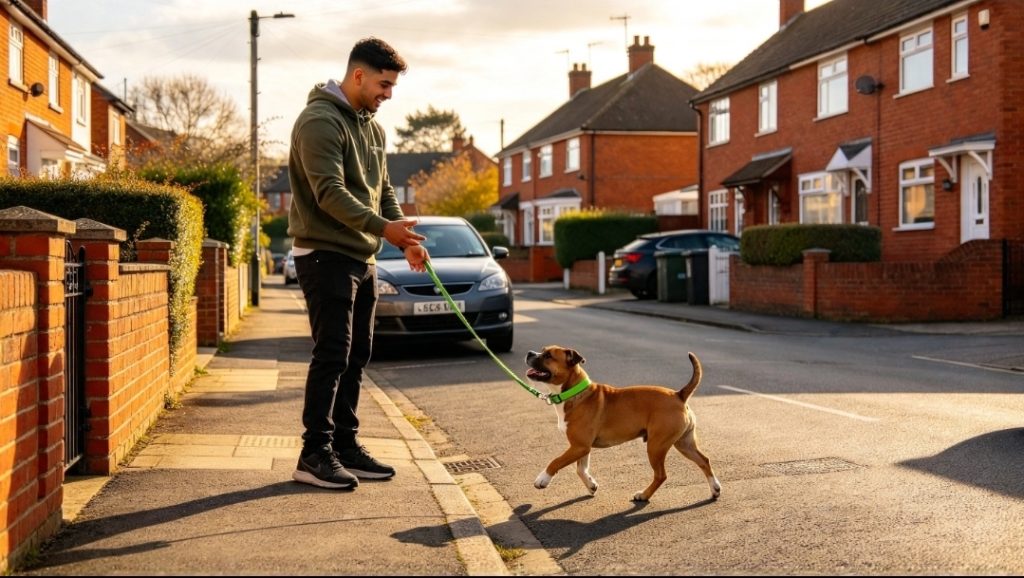
How Do I Get My Dog to Come Back When Called?
How do I get my dog to come back when called? Teach your dog that coming back to you when called always leads to something positive. Start in a quiet environment, use one consistent recall cue, reward your dog immediately when it returns, and gradually increase the distance and distractions as your dog’s response becomes more reliable.
RECOMMENDED PRODUCTS

Why Won’t My Dog Come Back When Called?
A dog may ignore a recall because the environment is more rewarding than returning to the handler, the recall has not been properly trained, the dog has learned that ignoring the cue has no consequence, or the situation is simply too difficult.
Dogs do not automatically understand that words such as “come” or “here” mean they should stop what they are doing and return to you. The behaviour needs to be taught and reinforced.
The first step is therefore to stop testing recall in situations that are too difficult and rebuild the behaviour where your dog can succeed.
How Do I Teach My Dog to Come Back When Called?
Start somewhere quiet where your dog is able to focus on you.
Choose one recall word, such as “come” or “here”. Say the cue clearly and encourage your dog towards you. When your dog reaches you, immediately give an appropriate reward.
Keep the first exercises easy.
Your dog should learn:
Recall cue → turn towards you → come to you → reward.
Once this response becomes reliable, you can gradually increase the distance and introduce distractions.
Step-by-Step: Teaching Your Dog to Come Back
Step 1: Choose One Recall Cue
Choose one word that everyone handling your dog will use consistently.
Do not continually change between “come”, “here”, “come here”, your dog’s name, shouting, or other phrases.
Your dog needs to understand that one particular cue means return to the handler.
Step 2: Start at a Short Distance
Begin only a few steps away from your dog.
Say the recall cue once and encourage your dog to move towards you. As soon as your dog reaches you, reward it.
Do not start by calling your dog from across a large field.
The behaviour needs to be established before you expect your dog to perform it at a greater distance.
Step 3: Reward the Return Immediately
Timing is important.
The reward should follow the return as quickly as possible so your dog can understand exactly what behaviour earned it.
Food can be particularly useful during early training, but appropriate play, toys, praise, or access to something your dog enjoys can also be used.
Step 4: Increase the Distance Gradually
Once your dog reliably comes back from a short distance, increase the distance a little.
Practise indoors first, then move into a secure garden or another controlled environment.
If your dog starts ignoring the cue, the increase may have been too large.
Reduce the distance and rebuild success before progressing again.
How Do I Get My Dog to Come Back Outside?
Outdoor environments are more difficult because there are more smells, sounds, movement, people, animals, and other distractions.
Start somewhere controlled rather than immediately practising in a busy park.
A long line can be useful while developing recall outdoors because it allows your dog to move away from you while providing additional control.
Call your dog when you believe it is likely to respond. Reward the return immediately.
Do not repeatedly pull your dog back towards you with the long line. The objective is for your dog to learn to respond to the recall cue voluntarily.
How Do I Get My Dog to Come Back When Distracted?
Do not begin with the biggest distraction you can find.
Start with a mild distraction at a distance. Call your dog and reward the response.
As your dog improves, gradually make the distraction more interesting or move closer to it.
For example, you might progress from:
Quiet garden → mild outdoor activity → people at a distance → toys → other dogs at a safe distance → highly interesting environments.
If your dog cannot respond, increase the distance from the distraction or make the exercise easier.
What Should I Do If My Dog Ignores Me When I Call?
Avoid repeatedly saying the recall cue.
If you say “come” five or six times while your dog continues doing something else, the dog may learn that the word does not require an immediate response.
Instead, manage the situation safely and make the next training session easier.
Consider whether:
- The distraction was too strong.
- The distance was too great.
- Your dog was too highly focused on something else.
- The reward was not valuable enough.
- Your dog has not practised enough at easier levels.
Then return to a level where your dog can succeed.
Should I Chase My Dog If It Runs Away?
Chasing can encourage some dogs to run further because they interpret the interaction as a game.
If your dog runs away, avoid turning the situation into a chase whenever it is safe to do so. Use your established recall training, encourage your dog towards you, and make returning to you worthwhile.
The better solution is to prevent repeated opportunities for your dog to practise running away while recall is still developing.
Use secure areas and appropriate equipment rather than relying on an unreliable recall in an unsafe environment.
RECOMMENDED PRODUCTS
How Do I Stop My Dog Running Away After Coming Back?
Your dog should learn that returning to you does not always mean the end of its freedom.
Practise calling your dog back, rewarding it, briefly taking hold of its harness if appropriate, and then releasing it again.
You can also reward your dog and allow it to return to an appropriate activity.
This prevents the recall from becoming associated only with:
- Going home
- Putting the lead on
- Ending play
- Leaving the park
- Losing freedom
A recall should sometimes result in reward and release.
Should I Use Food to Get My Dog to Come Back?
Food can be an effective reward for recall training, particularly when teaching the behaviour.
However, avoid relying on showing your dog food before giving the recall cue every time.
The aim is for the recall cue itself to become meaningful and for the dog to learn that responding produces a worthwhile outcome.
As your dog’s reliability improves, vary the rewards appropriately.
How Do I Teach a Puppy to Come Back When Called?
Start with very short distances and minimal distractions.
Call your puppy when it is already paying attention to you. When it comes towards you, reward it immediately.
You can practise around the home, in a secure garden, and during controlled play.
Keep puppy training sessions short and positive.
Do not expect a young puppy to ignore every interesting smell, person, animal, or movement outdoors. Build the behaviour gradually.
What Equipment Should I Use for Recall Training?
The equipment should help you manage the environment while your dog learns.
A suitable harness can provide a comfortable connection point for controlled training, while a short line can provide closer control in appropriate situations.
A long line can allow greater distance while maintaining a physical safety connection.
Equipment should not be used to repeatedly drag the dog back. The dog still needs to learn the behaviour through appropriate timing, rewards, repetition, and progression.
A muzzle may be appropriate for a dog that requires additional safety management around certain situations, but it does not teach recall and should never be treated as a substitute for training.
A crate, placemat, or similar equipment is not normally necessary for teaching a basic recall.
What If My Dog Comes Back but Immediately Runs Away Again?
Reward the return and practise keeping your dog with you briefly before releasing it.
You can touch the harness, reward again, and then give a clear release cue.
Gradually increase the amount of time your dog remains with you before being released.
This teaches your dog that coming back does not simply mean rushing past you before running away again.
What If My Dog Only Comes Back When It Wants Something?
This usually means the recall needs more training and reinforcement.
Return to easier situations and reward successful responses more consistently.
Do not only call your dog when you need to stop something enjoyable.
Practise recalls during normal activities when there is no urgent reason to call the dog back.
The more successful repetitions your dog has, the stronger the behaviour can become.
What Should I Do If My Dog Comes Back Slowly?
Reward the return when your dog reaches you rather than becoming frustrated because it did not run back quickly enough.
Then look at the difficulty of the exercise.
If your dog is consistently slow to respond, you may be asking for the behaviour in situations where the environment is more rewarding than returning to you.
Reduce distractions, shorten the distance, improve the reward, and build the behaviour again.
How Do I Make Recall Reliable?
Reliable recall is built through progression, not by repeatedly testing whether your dog will come back.
Practise in different environments and gradually increase:
- Distance
- Distractions
- Duration away from you
- Environmental difficulty
Do not increase everything at once.
A dog that recalls perfectly indoors may still struggle outdoors. A dog that recalls in the garden may struggle around other dogs.
Each new environment is another opportunity to build reliability.
Common Recall Training Mistakes
Calling Too Many Times
Give the cue clearly and avoid repeatedly shouting it.
Calling Only for Something Unpleasant
If every recall ends with the lead going on or the fun stopping, your dog may become reluctant to return.
Starting Too Difficult
A busy park is not necessarily the correct place to begin recall training.
Punishing the Return
Never teach your dog that coming back to you results in punishment. Even if the dog has taken a long time to return, the return itself should be treated as the behaviour you want to reinforce.
Giving Too Much Freedom Too Soon
If your dog’s recall is unreliable, unrestricted off-lead freedom can allow it to practise ignoring you.
Build reliability before increasing freedom.
How Often Should I Practise Recall?
Short and successful practice is generally better than repeatedly testing the behaviour until your dog becomes tired or loses interest.
Practise throughout normal activities and use different environments as your dog improves.
A useful progression is:
Short distance → reward → greater distance → mild distraction → greater distraction → different environments.
Only increase the difficulty when your dog is consistently successful at the current level.
Frequently Asked Questions
What Is the Best Word to Call My Dog Back?
There is no single word that is automatically best. Choose one clear recall cue and use it consistently. The training and reinforcement behind the cue are more important than the specific word.
How Long Does It Take to Teach a Dog to Come Back?
Basic recall can be learned relatively quickly, but reliable recall around difficult distractions takes longer. Progress depends on the individual dog, previous training, environment, motivation, and consistency.
Can an Older Dog Learn Recall?
Yes. Older dogs can learn or improve recall through the same basic principles of gradual training, appropriate rewards, repetition, and controlled progression.
Should I Let My Dog Off Lead While Recall Is Being Trained?
Only where it is safe and appropriate. A secure enclosed area or correctly managed long line can allow you to practise without giving an unreliable dog unrestricted opportunities to run away.
RECOMMENDED PRODUCTS
Why Does My Dog Come Back at Home but Not Outside?
Outside environments contain significantly more distractions. Your dog may understand the recall but not yet have enough training to perform it reliably in a more difficult environment. Reduce the difficulty and gradually build outdoor reliability.
Conclusion
Getting your dog to come back when called starts with making the recall behaviour clear, rewarding, and consistent. Begin in an easy environment, use one recall cue, reward your dog immediately, and gradually increase distance and distractions.
Do not repeatedly call an unreliable dog in situations where it is unlikely to respond. Instead, make the training easier, create successful repetitions, and gradually build reliability.
A dependable recall is developed through consistent practice and controlled progression. Give your dog a reason to return to you, manage the environment while training, and make coming back one of the most rewarding behaviours your dog knows.




