What is the best dog training method?
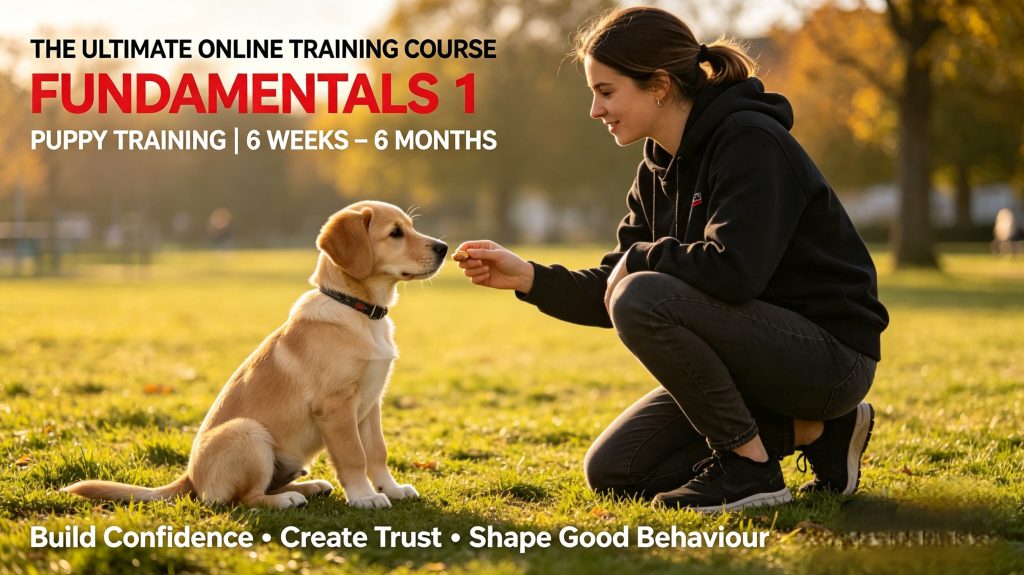
There is no single training method that should be applied identically to every dog. Effective training should be based on the individual dog, the behaviour being taught, the environment and the dog’s ability to remain engaged and respond appropriately. A practical approach should use positive reinforcement, food, patience and suitable motivation while giving the dog clear information and allowing behaviour to develop progressively.
Training treats can provide useful food motivation when teaching new behaviours, particularly when the dog is learning what behaviour earns a reward. The amount and type of food should be appropriate for the individual dog, and training should remain focused on developing the behaviour rather than simply feeding the dog repeatedly.
RECOMMENDED PRODUCTS
POSITIVE REINFORCEMENT AND FOOD MOTIVATION
Positive reinforcement can be used to encourage behaviours that you want the dog to repeat. Food can be particularly useful when introducing a new behaviour because it provides clear motivation and allows the handler to reward the dog at the appropriate moment.
Food motivation will vary between individual dogs. Some dogs may have a high food drive and engage readily, while others may have a lower food drive and require a different approach to motivation, environment or reward value.
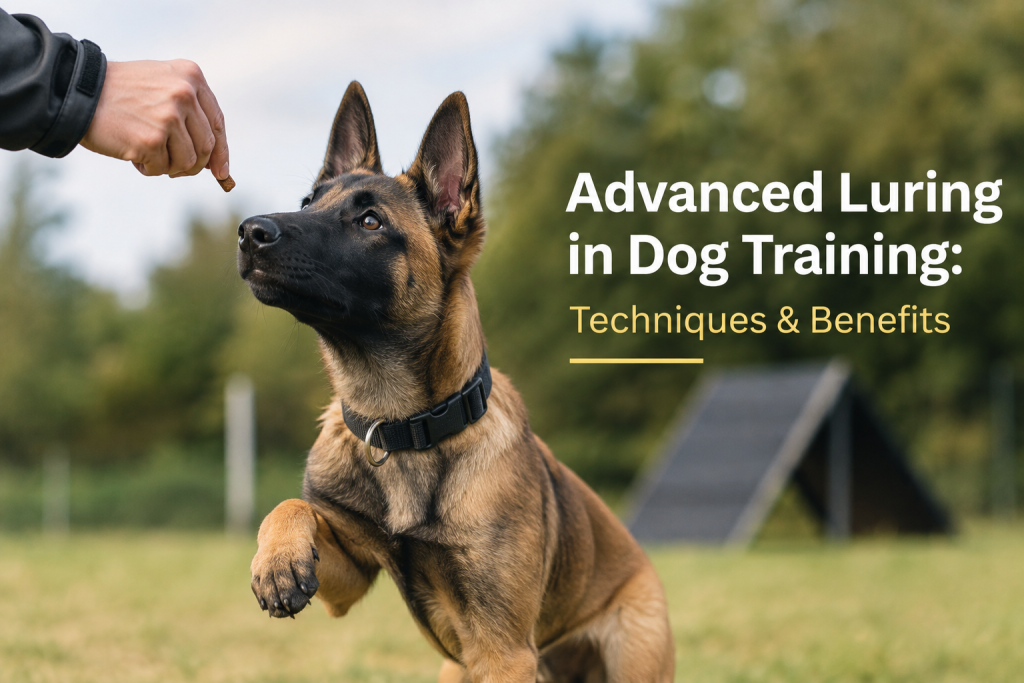
The objective is not simply to hold food in front of the dog. The handler should use food and luring appropriately to help the dog understand what is being asked, then gradually develop the behaviour so the dog can perform it with greater reliability.
START WITH THE RIGHT ENVIRONMENT
The training environment can have a major effect on how well a dog learns. A dog that is able to concentrate in a quiet environment may struggle when faced with additional movement, noise, people, animals or other distractions.
Begin where the dog can remain engaged and responsive. Once the behaviour is becoming reliable, gradually introduce additional difficulty.
If the dog begins struggling, the answer is not always to continue increasing the difficulty. The environment may need to be simplified so the dog can regain focus and successfully complete the behaviour.
A crate and playpen can provide useful management within the home while a dog is learning. They can help control the environment, provide appropriate boundaries and prevent unnecessary freedom while training is developing.
TRAIN THE DOG IN FRONT OF YOU
Every dog is an individual. Differences in food drive, prey drive, experience, age, environment and previous learning can affect how a dog responds to training.
A dog with a high food drive may respond strongly to food motivation, while another dog may have a lower food drive and require more careful consideration of motivation and training conditions.
The same principle applies to prey drive. Dogs with different levels of prey drive may respond differently to movement, toys and play.
Understanding these differences allows the handler to make sensible adjustments rather than expecting every dog to learn in exactly the same way.
BUILD ONE BEHAVIOUR PROGRESSIVELY
A good training method should make learning understandable to the dog.
Start with a behaviour the dog can reasonably achieve, reward the correct response and repeat the process. As the dog becomes more reliable, gradually increase the level of difficulty.
This may involve changing the environment, increasing distance, adding distractions or increasing the amount of freedom available.
More freedom should come with greater behavioural responsibility. If the dog cannot maintain the required behaviour at a particular level of freedom, the training stage may need to be adjusted.
A training pouch allows rewards to remain accessible during training and can make timing more practical when teaching and reinforcing new behaviours.
USE APPROPRIATE CONTROL AND MANAGEMENT
Training does not mean giving a dog unlimited freedom immediately. Appropriate control and management allow the handler to create successful learning opportunities.
Depending on the exercise and the dog’s current ability, this may include a short line, harness, long line or controlled free roam.
A short line may provide additional control during early training. A harness can be useful where appropriate for managing the dog during training and walking. A long line can provide additional freedom while maintaining a level of management. Free roam should be introduced when the dog’s behaviour is sufficiently reliable for the environment.
Suitable leads and long lines can help provide different levels of control as the dog’s training progresses. The equipment should support the training objective rather than replace training itself.
OBSERVE, ASSESS AND ADJUST
An effective training method requires the handler to observe the dog rather than simply repeat commands.
Watch how the dog responds to the environment, the training exercise, the reward and the level of difficulty. Consider whether the dog is engaged, whether the behaviour is improving and whether the current stage is appropriate.
If the dog is struggling, assess what has changed. The difficulty may be too high, the environment may contain too many distractions, or the dog may need time to calm and regain focus.
Make an appropriate adjustment and reassess the response before continuing.
KNOW WHEN TO PROGRESS
Progress should be based on the dog’s ability rather than an arbitrary timetable.
When the dog can perform the behaviour reliably in the current environment, the next stage can be introduced gradually. When the dog struggles, return to a level where successful learning is possible and rebuild from there.
This approach prevents training from becoming unnecessarily difficult and gives the dog repeated opportunities to understand and succeed.
TRAINING SHOULD FIT EVERYDAY LIFE
The best training method is not only about what happens during a formal training session. The behaviour being taught should eventually become useful within everyday life.
A dog may learn a behaviour in a quiet room but need further training before it can perform reliably around distractions. Training should therefore progress from controlled learning environments towards the situations where the behaviour is actually required.
This helps the dog understand that the behaviour applies beyond one particular training location.
Toys and other appropriate rewards can provide additional motivation where suitable, particularly for dogs that respond strongly to play or prey-drive-based activities.
RECOMMENDED PRODUCTS
WHEN TRAINING IS NOT PROGRESSING
If progress stops, avoid simply repeating the same exercise more often.
Look at the environment, the dog’s motivation, the level of difficulty, the equipment being used and the behaviour expected. Consider whether the dog has progressed too quickly or whether unnecessary distractions have been introduced.
Sometimes the correct response is to simplify the exercise, reduce distractions, allow the dog to calm and then return to training at an appropriate level.
If the behaviour presents significant risk, aggression, reactivity or other concerns that require specialist assessment, professional support should be considered rather than attempting to manage a complex problem without appropriate expertise.