Can I train my dog myself?
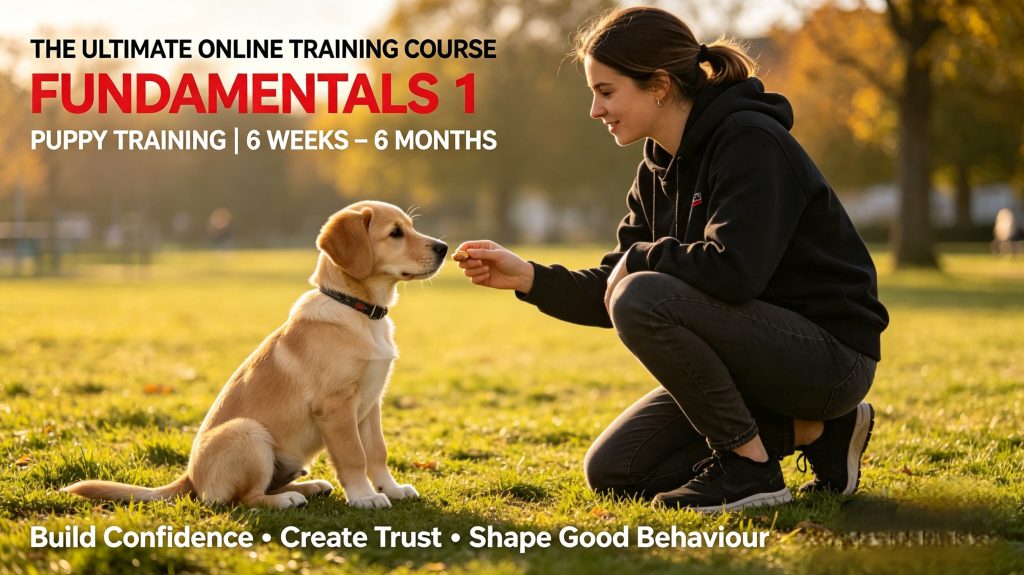
Yes, many aspects of dog training can be carried out by the owner, particularly when training is structured, consistent and appropriate for the individual dog. You do not necessarily need a professional trainer present for every training exercise. An owner can teach and reinforce useful behaviours by using positive reinforcement, food, patience, appropriate motivation and sensible management. The important part is understanding what you are trying to teach, creating the right environment and recognising when the dog is ready to progress or when additional support may be required.
RECOMMENDED PRODUCTS

Training treats can provide useful motivation when teaching new behaviours. Choose rewards that your dog responds to and use them to reinforce the behaviour you want to develop rather than relying on repeated commands.
START TRAINING IN A CONTROLLED ENVIRONMENT
Training yourself does not mean trying to teach everything at once.
Begin in an environment where your dog can concentrate. For many dogs, the home provides a useful starting point because distractions can be controlled more easily.
Start with achievable behaviours and build gradually. Once your dog understands what you are asking, you can begin increasing the difficulty by introducing different environments and appropriate distractions.
If your dog struggles when the difficulty increases, make the exercise easier again rather than continuing to push forward.
UNDERSTAND YOUR INDIVIDUAL DOG
One of the biggest advantages of training your own dog is that you spend time learning how your dog responds.
Dogs differ in their food drive and prey drive. Some dogs are highly motivated by food, while others may have lower food motivation. Some dogs respond strongly to toys and movement because of higher prey drive, while others may require a different approach.
Understanding these differences helps you choose appropriate motivation and adjust the training environment.
A training pouch keeps rewards readily available and can make training easier when you are working on timing, engagement and repeated reinforcement.
USE POSITIVE REINFORCEMENT
Positive reinforcement provides a practical way to teach your dog that a particular behaviour produces a reward.
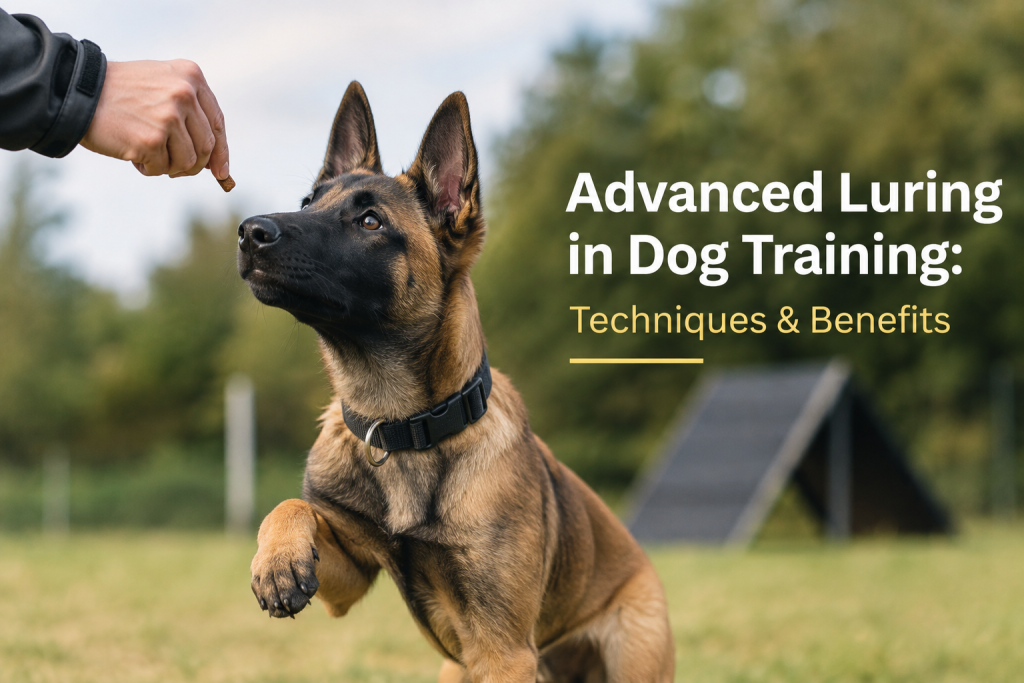
Food and luring can be particularly useful when introducing a new behaviour. Guide the dog towards the behaviour where appropriate, reward the correct response and gradually develop the behaviour so the dog becomes more reliable.
The objective is to help your dog understand what behaviour you want rather than simply repeating a command when the dog does not yet understand it.
Patience is important. Learning takes repetition and appropriate progression.
CREATE CLEAR BOUNDARIES AT HOME
Training at home involves more than teaching commands.
Your dog also needs to understand how to behave within the household. Appropriate management can help establish boundaries while your dog is learning.
A crate can provide a controlled space for rest, routine and resetting. A placemat can be used to develop stationing, settling and controlled behaviour within the home. A playpen can provide controlled freedom within a defined boundary.
The amount of freedom given to a dog should reflect its current behavioural responsibility.
Crates and pens can support home training by helping manage the environment while your dog learns appropriate behaviour and gradually earns more freedom.
USE APPROPRIATE CONTROL
When training outside the home, appropriate equipment can help you maintain control while your dog develops reliability.
A short line may be appropriate during early training. A harness may be useful where appropriate for managing the dog. A long line can allow greater movement while maintaining a level of control.
Free roam should be introduced progressively when the dog’s behaviour is sufficiently reliable for the environment.
Equipment should support your training rather than replace it.
RECOMMENDED PRODUCTS — HARNESSES
A suitable harness can provide an additional management option during training and walking when appropriate for the individual dog and exercise.
TEACH ONE STAGE AT A TIME
When training yourself, avoid making the process unnecessarily complicated.
Choose a behaviour, establish what you want the dog to do, use appropriate motivation and reinforce the correct response. Once the behaviour becomes reliable, gradually introduce more difficulty.
This might mean changing location, adding distractions, increasing distance or allowing greater freedom.
If your dog cannot perform the behaviour successfully, the difficulty may be too high. Reduce the challenge, remove unnecessary distractions, allow the dog to calm and reassess before continuing.
WATCH YOUR DOG’S RESPONSE
Training yourself requires careful observation.
Pay attention to your dog’s body posture, movement, attention, engagement, arousal, ability to settle and ability to recover after distractions.
If your dog remains engaged and responds appropriately, you can continue developing the behaviour.
If the dog becomes distracted or struggles to respond, assess what has changed. You may need to reduce distractions, change the environment or return to an easier stage of training.
RECOMMENDED PRODUCTS
Leads and long lines can provide different levels of control as your dog’s training develops. They are particularly useful when gradually increasing freedom while maintaining appropriate management.
KNOW WHEN TO PROGRESS
There is no need to rush your dog through training.
Progress when your dog is consistently demonstrating the behaviour at the current level. Increase difficulty gradually rather than making several changes at once.
For example, if your dog can perform a behaviour reliably in the home, moving directly into a highly distracting environment may create unnecessary difficulty. Build through manageable stages.
Training is more effective when the dog has repeated opportunities to succeed.
WHEN YOU MAY NEED PROFESSIONAL SUPPORT
Training your dog yourself can be highly effective for many everyday behaviours, but there are situations where professional support may be appropriate.
If your dog displays significant aggression, reactivity, attempts to bite, or behaviour that creates a safety concern, professional assessment should be considered.
Professional support can also be useful when you have repeatedly tried to train a behaviour but cannot identify why progress has stopped.
Seeking help does not mean you have failed to train your dog. It can provide additional assessment and guidance so you can understand what needs to change.