What are the basic commands for dogs?
Basic commands are simple obedience exercises that help a dog understand communication from its handler and develop appropriate responses. The exact commands introduced can vary according to the individual dog, its environment and the handler’s requirements. The important starting point is not the number of commands a dog knows, but whether the dog can understand and reliably respond to the training being introduced.
RECOMMENDED PRODUCTS

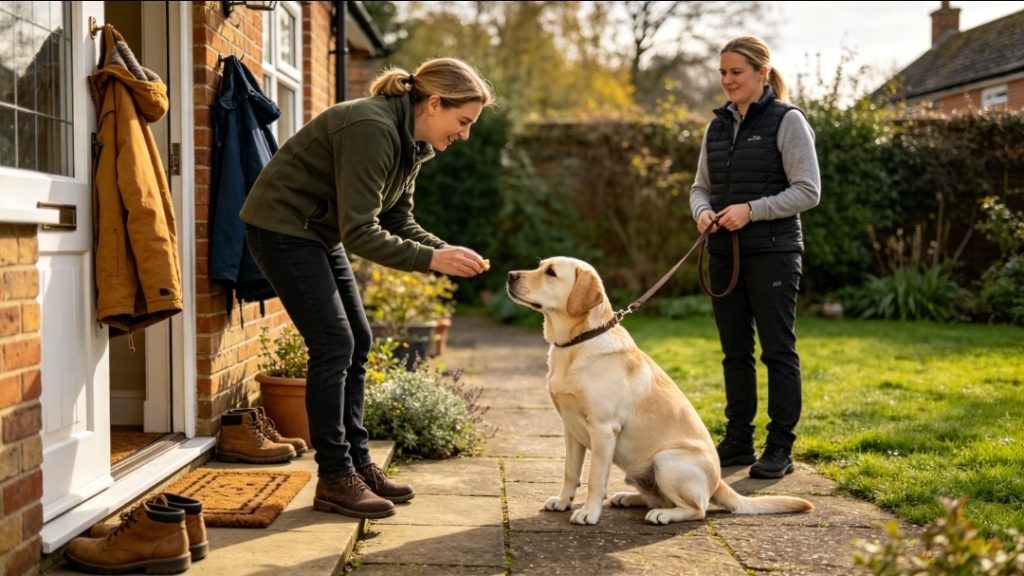
Begin with simple exercises in a calm, manageable environment. Use positive reinforcement, appropriate food motivation and patience, then gradually increase the difficulty as the dog’s responses become more reliable.
Start with simple obedience
Basic obedience should begin with exercises the dog can understand and perform successfully.
The handler should first establish engagement with the dog before expecting reliable responses in increasingly difficult situations.
Training can begin in a familiar environment with limited distractions.
Once the dog understands the exercise, the difficulty can gradually increase.
Teach useful communication
Commands should have a practical purpose.
Rather than teaching a large number of words without developing reliability, focus on clear communication between the dog and handler.
The dog needs to learn that a particular verbal or physical cue is connected to a particular response.
Consistency is therefore important during training.
Observe the dog’s response and make sure the exercise remains appropriate for its current level of understanding.
Use food motivation
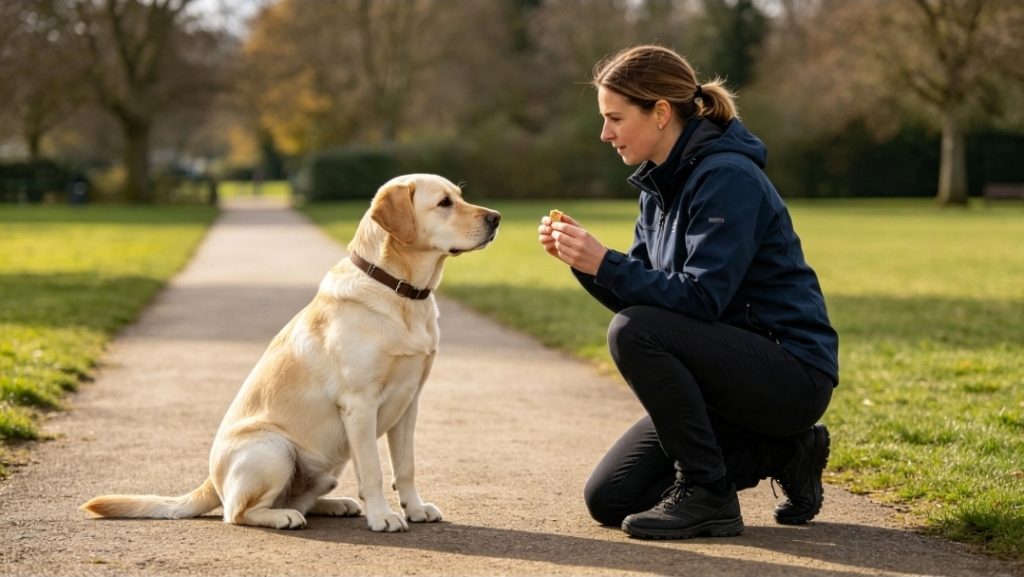
Food can be useful when teaching basic obedience.
Individual dogs have different levels of food drive. Some dogs have low food drive, while others have high food drive.
Small food rewards can reinforce appropriate responses and help maintain engagement.
Positive reinforcement and patience allow the dog time to understand what is expected.
Training should be adjusted according to the individual dog’s motivation rather than assuming every dog learns in exactly the same way.
Use appropriate control and equipment
Suitable equipment can help manage the dog while basic obedience is being developed.
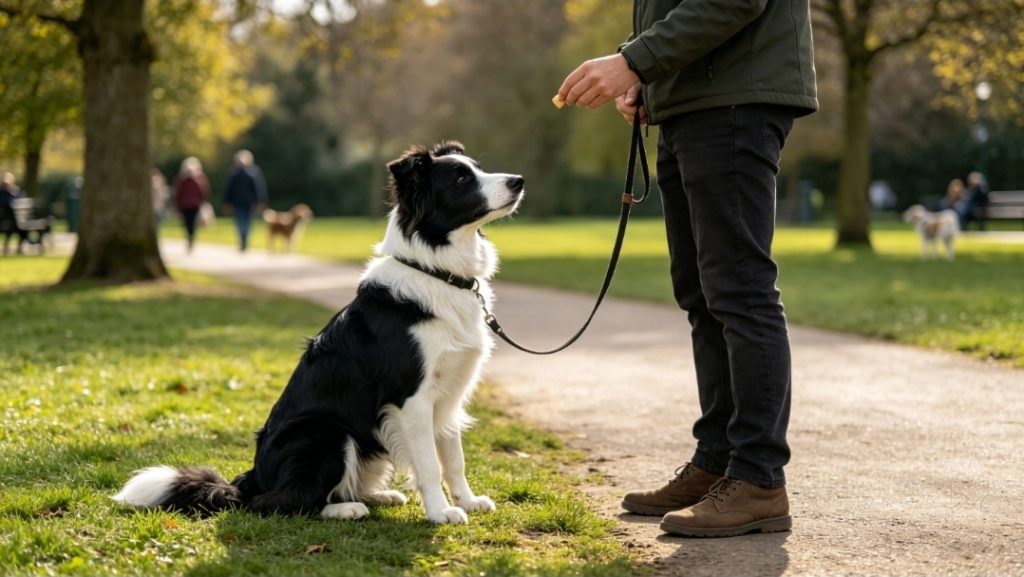
A short line can provide close control during training.
A harness or long line can provide additional management when appropriate, particularly as the training environment becomes larger or more distracting.
Once the dog understands a basic exercise, gradually increase the level of difficulty.
Progression can involve increasing distance, duration, environmental difficulty, freedom or distractions.
Avoid increasing difficulty too quickly.
The dog should be given opportunities to succeed before moving to the next stage.
If the dog struggles, reduce the difficulty and reassess before continuing.
Basic commands should work beyond the training area
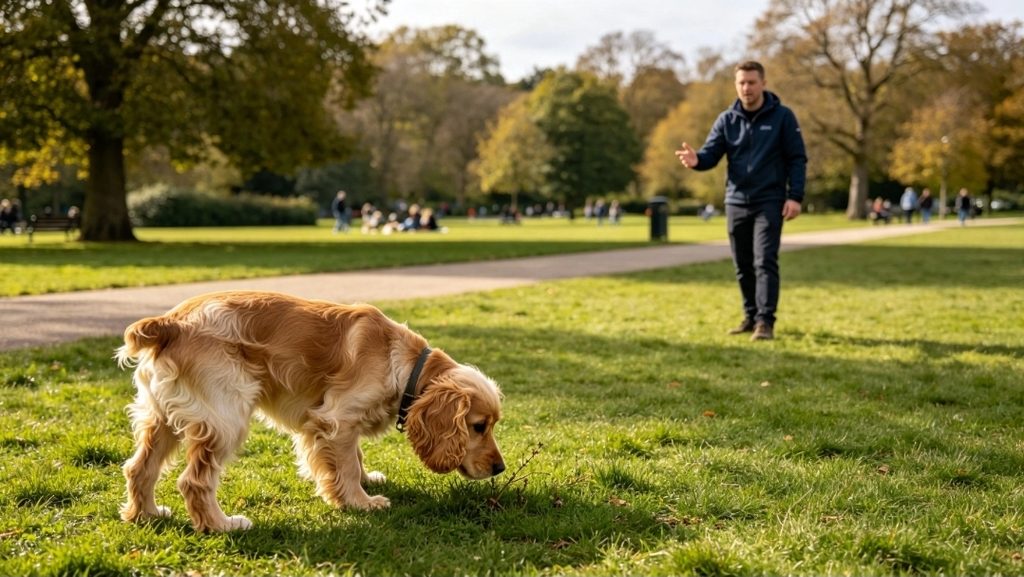
Learning a command in a quiet room does not automatically mean the dog can respond to it in every environment.
As the dog’s understanding develops, appropriate distractions can gradually be introduced.
Observe how the dog responds to changes in its surroundings.
If distractions interfere with the dog’s ability to respond, reduce unnecessary distractions where appropriate, allow the dog to calm and reassess.
The exercise can then be reintroduced at a manageable level.
What if my dog stops responding?
If the dog stops responding appropriately, do not simply repeat the command continuously.
Observe what has changed.
The exercise may have become too difficult, the environment may contain unnecessary distractions, or the dog’s motivation may have changed.
Reduce the difficulty, remove unnecessary distractions where appropriate and allow the dog to calm before reassessing.
If the dog cannot reduce or calm sufficiently to continue, an appropriate reset may be required before returning to obedience training.
Where behaviour presents a significant safety concern, including serious aggression or bite risk, professional support should be sought.
RECOMMENDED PRODUCTS
Should every dog learn the same basic commands?
Not every dog needs exactly the same collection of commands.
The appropriate basic obedience exercises depend on the individual dog, its environment and the requirements of the handler.
What matters is that the dog understands the communication being used and can progressively respond appropriately.
A smaller number of well-understood exercises can be more useful than a large number of commands that have not been developed to a reliable level.