Social Walking vs Formal Obedience: What Is the Difference?
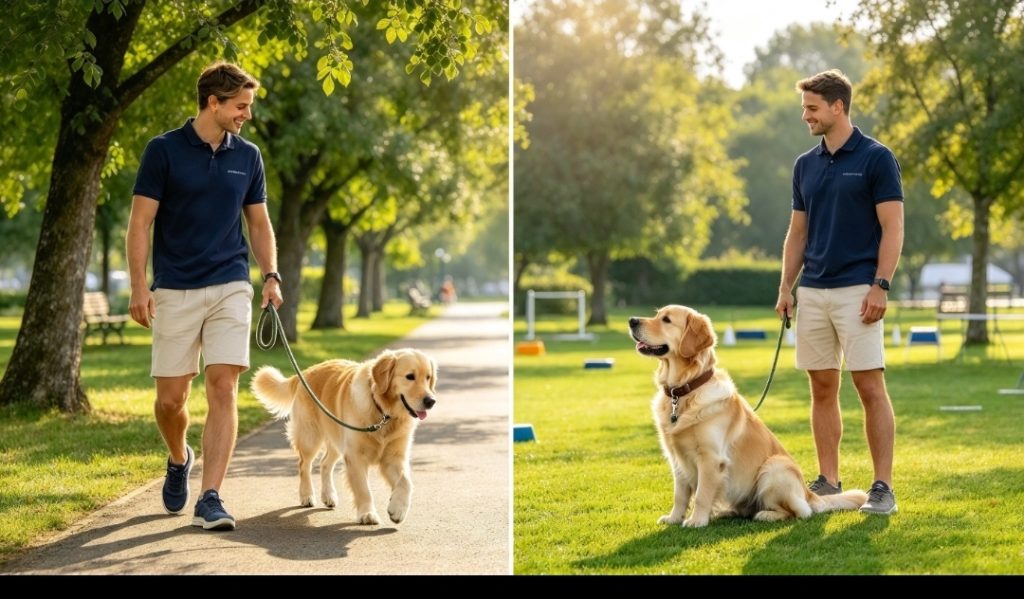
Social walking and formal obedience are both important parts of dog training, but they serve different purposes. Formal obedience teaches specific behaviours through structured practice, while social walking focuses on moving through everyday environments calmly, safely and manageably.
Understanding the difference helps you avoid expecting precise obedience throughout every walk or assuming that a dog that walks calmly automatically understands formal training exercises.
Both activities have value. The key is knowing what you are teaching, what you expect from your dog and how to adjust your approach to the situation.
RECOMMENDED PRODUCTS

What Is Social Walking?
Social walking is taking your dog through everyday environments while maintaining safe, manageable behaviour.
Your dog may encounter people, other dogs, vehicles, sounds, smells and changing surroundings. The purpose is to navigate these experiences without allowing every distraction to dictate the dog’s behaviour.
A successful social walk does not require your dog to stare at you constantly or remain in a precise heel position throughout the entire journey.
Instead, your dog should be able to explore appropriately, notice the environment and continue walking with you without persistent pulling, uncontrolled rushing or disruptive reactions.
The handler’s role is to:
- Maintain safe control of the lead.
- Observe the dog’s body language and behaviour.
- Allow appropriate sniffing and exploration.
- Manage distance from distractions when necessary.
- Reinforce calm, manageable walking.
- Adjust the route or activity if the dog becomes overwhelmed.
Social walking is about managing the relationship between your dog, you and the surrounding environment.
What Is Formal Obedience?
Formal obedience is structured training in which you deliberately teach and practise specific behaviours.
Depending on your dog’s training stage, this may include:
- Sit, down and stay.
- Recall and responding to cues.
- Walking in a particular position.
- Changes of direction and pace.
- Maintaining a position for a short period.
- Responding to the handler around controlled distractions.
The handler has a defined training objective and arranges the exercise to help the dog understand what is required.
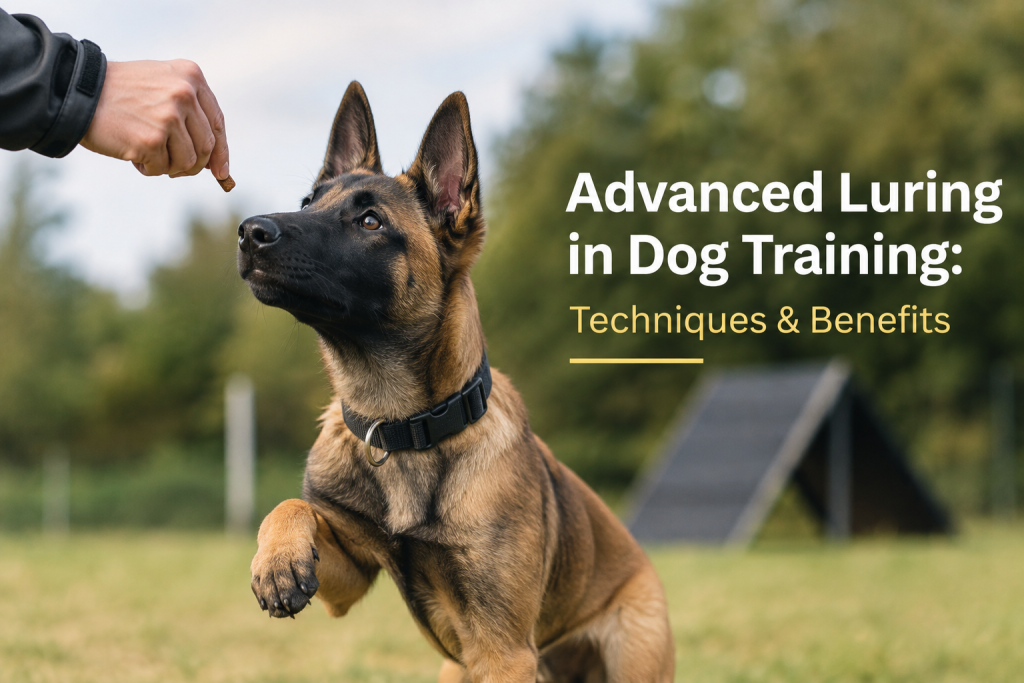
Food rewards and luring can be useful when appropriate. As the dog learns, the handler can gradually reduce assistance and practise the behaviour in different environments.
Formal obedience is not simply about issuing commands. It is about teaching a behaviour clearly, reinforcing the desired response and building reliability progressively.
A dog that performs an exercise in a quiet room may need additional practice before responding reliably in a busy park. Changing the surroundings increases the difficulty, so training should progress at a pace the dog can manage.
Social Walking vs Formal Obedience: The Main Differences
| Social walking | Formal obedience |
|---|---|
| Focuses on manageable movement through everyday environments. | Focuses on teaching and practising specific behaviours. |
| Allows appropriate sniffing and environmental exploration. | Uses planned exercises with clear objectives. |
| The handler monitors changing surroundings and the dog’s response. | The handler concentrates on the behaviour being taught. |
| The dog does not need constant formal attention. | Attention may be required for a particular exercise. |
| Success means the walk remains safe and manageable. | Success means the dog is learning or performing the target behaviour. |
Neither activity is automatically more important than the other. They develop different skills that can complement one another.
Why You Should Not Turn Every Walk Into Formal Obedience
One common mistake is expecting a dog to perform formal obedience continuously throughout an ordinary walk.
The handler may repeatedly demand attention, issue commands at every distraction or expect the dog to remain in a precise position for the entire journey.
This can make a simple walk unnecessarily complicated.
Dogs benefit from learning how to respond to cues, but they also need opportunities to investigate their surroundings appropriately. A dog can walk calmly without maintaining continuous eye contact or performing a formal heel.
For example, your dog may be walking on a loose lead while sniffing a grass verge. If the dog remains safe and manageable, there may be no reason to interrupt that behaviour with an obedience command.
However, if the dog starts pulling towards another dog, moving into a road or becoming difficult to control, the handler needs to respond.
The aim is not to demand obedience at every moment. It is to know when a specific response is needed and when normal, manageable walking can continue.
Why Calm Walking Does Not Replace Obedience Training
The opposite mistake is assuming that a dog that walks calmly has automatically learned formal obedience.
A dog may walk comfortably on a quiet route but struggle to respond to a recall cue, hold a position or follow a specific instruction.
These are different skills.
Formal training gives you opportunities to teach and practise the behaviours you may need in everyday life. Social walking then provides opportunities to manage normal environmental activity while using those skills when appropriate.
For example, a dog may walk calmly past several people but still need structured practice to learn a reliable recall.
Likewise, a dog that responds well to a sit cue in the home may struggle to do so around unfamiliar dogs.
The answer is to teach the behaviour in manageable conditions and gradually introduce greater difficulty.
Common Problems During Social Walking
Expecting Constant Attention
Your dog does not have to look at you every second to be walking appropriately.
Dogs naturally investigate smells, sounds and movement. The important distinction is whether they can do so without becoming unsafe or unmanageable.
Reward engagement when it occurs, but do not mistake every glance away from you for disobedience.
Pulling Towards Distractions
Your dog may pull towards people, other dogs, interesting smells or places it wants to investigate.
If pulling repeatedly allows your dog to reach the desired destination, the behaviour can become established.
Practise loose-lead walking in a manageable environment. Reward your dog when the lead remains loose, and avoid allowing pulling to become the routine way of accessing distractions.
If the dog becomes too excited to respond, increase distance or choose a quieter route.
Giving Too Many Commands
Constant verbal instructions can make it difficult to distinguish between ordinary walking and a specific training exercise.
Use cues when they serve a purpose. Give your dog time to respond, and reinforce the behaviour you want rather than repeating instructions without changing the situation.
Expecting Every Walk to Be Identical
A quiet street and a busy park present different challenges.
Your dog may walk comfortably in one location but need more distance and support in another.
Adjust your expectations to the environment and your dog’s current ability. A difficult walk does not automatically mean the dog has forgotten everything it has learned.
Common Problems During Formal Obedience
Expecting Precision Too Quickly
A dog needs to understand an exercise before being expected to perform it reliably.
Start with a simple version of the behaviour and reward successful responses. Increase duration, distance or distractions gradually rather than making every aspect harder at once.
Poor Reward Timing
If a reward arrives after the dog has moved away from the desired position, it may reinforce the wrong behaviour.
Deliver food or another suitable reward close to the response you want to reinforce. Clear timing helps your dog understand which action produced the reward.
Training in Difficult Environments Too Soon
A dog that performs well at home may struggle in a busy outdoor location.
This does not necessarily mean the dog is stubborn or deliberately ignoring you. The environment may be too difficult for the current stage of training.
Return to a quieter setting, rebuild the behaviour and introduce distractions gradually.
Turning Training Into Repetition Without Progress
Repeating the same exercise is not enough if the dog is confused or struggling.
Observe the response. If the dog repeatedly fails, simplify the exercise, improve the timing or reduce the distractions.
The aim is to develop understanding and reliability, not merely to complete a set number of repetitions.
How to Combine Social Walking and Formal Obedience
You can include both activities in your dog’s routine without making them compete with one another.
1. Practise Obedience Separately
Choose a suitable, relatively quiet environment and work on one or two specific behaviours.
Keep sessions manageable and reward successful responses.
2. Begin the Social Walk
Once the formal exercise is finished, move into ordinary walking.
Allow appropriate exploration while maintaining safe lead handling and monitoring the environment.
3. Use Obedience When It Has a Purpose
You may need a familiar cue to help your dog move away from a distraction, change direction or pause somewhere safe.
Use the cue when it is appropriate rather than continuously demanding formal attention.
4. Reward Manageable Behaviour
During the walk, reinforce loose-lead movement, calm responses and appropriate engagement.
Food can be useful, but rewards may also include moving forward or being allowed to investigate a safe area.
5. Adjust the Difficulty
If your dog becomes increasingly distracted, create more space or choose a quieter route.
When practising formal obedience, reduce the difficulty if your dog cannot respond successfully.
6. Build Reliability Gradually
As your dog becomes more capable, practise familiar behaviours in different places and around progressively greater distractions.
Do not assume that success in one environment guarantees success everywhere.
RECOMMENDED PRODUCTS
A Practical Example: Passing Another Dog
Imagine you are walking along a public footpath and another dog approaches.
During a formal obedience session, you might deliberately practise a particular position, attention cue or change of direction.
During a social walk, the objective may simply be to pass the other dog safely while your own dog remains manageable.
You may create more distance, reward calm behaviour and continue walking when appropriate.
If your dog becomes highly focused, pulls hard, barks or lunges, do not insist on passing at close range just to complete the walk as planned. Move away if possible and reassess the situation.
If the behaviour is persistent or unsafe, seek an appropriate professional assessment.
The important point is that the same environment can call for different responses depending on the training objective and your dog’s behaviour.
What Does Good Social Walking Look Like?
A successful social walk does not have to look like a formal obedience demonstration.
Look for practical signs of progress:
- Your dog can walk with a reasonably loose lead.
- Your dog can investigate suitable smells without continually dragging you.
- Your dog can notice everyday distractions without reacting to everything.
- Your dog can respond when you need to guide or redirect them.
- Your dog can move away from distractions when necessary.
- You can adjust the route or distance before a situation becomes difficult.
There will be days when your dog finds the environment harder to manage. Continue observing and make sensible adjustments rather than expecting identical behaviour in every circumstance.
What Does Good Formal Obedience Look Like?
Formal obedience should be judged against the specific behaviour being taught.
For example, if you are teaching a sit, look for the dog to respond to the cue and reach the intended position. If you are teaching recall, practise the dog returning to you under conditions that are safe and appropriate for its current ability.
As training progresses, introduce different environments and distractions gradually.
A behaviour is not fully reliable simply because it works once in a quiet room. It needs to be practised under a range of manageable conditions.
What If My Dog Struggles With Both?
If your dog pulls, reacts to distractions and struggles to respond to cues, work out which part of the situation is most difficult.
Consider:
- Is the environment too distracting?
- Is the dog becoming excited, frustrated or worried?
- Has the relevant behaviour been taught clearly?
- Is the dog physically comfortable in the equipment being used?
- Can the dog still respond to familiar cues?
- Would increasing distance make the situation easier?
Start with the most manageable version of the problem. Teach the necessary skills separately before combining them in more challenging situations.
If your dog displays significant fear, aggression, lunging or behaviour that you cannot safely manage, seek help from a suitably qualified professional.
RECOMMENDED PRODUCTS
Final Thoughts: Social Walking vs Formal Obedience
Social walking and formal obedience have different purposes, and understanding that difference helps you train more effectively.
Formal obedience develops specific behaviours through structured teaching and practice. Social walking develops the ability to move through everyday environments safely and manageably.
You do not need to turn every walk into a training test, and you should not assume that calm walking replaces the need to teach useful obedience skills.
Teach behaviours clearly, reward appropriate responses, practise in manageable environments and increase difficulty gradually. During ordinary walks, allow suitable exploration while maintaining control and responding when necessary.
The goal is a dog that can learn specific behaviours when asked and enjoy everyday walks without needing constant formal instruction.