What Does “Ignore the World” Mean in Dog Training?
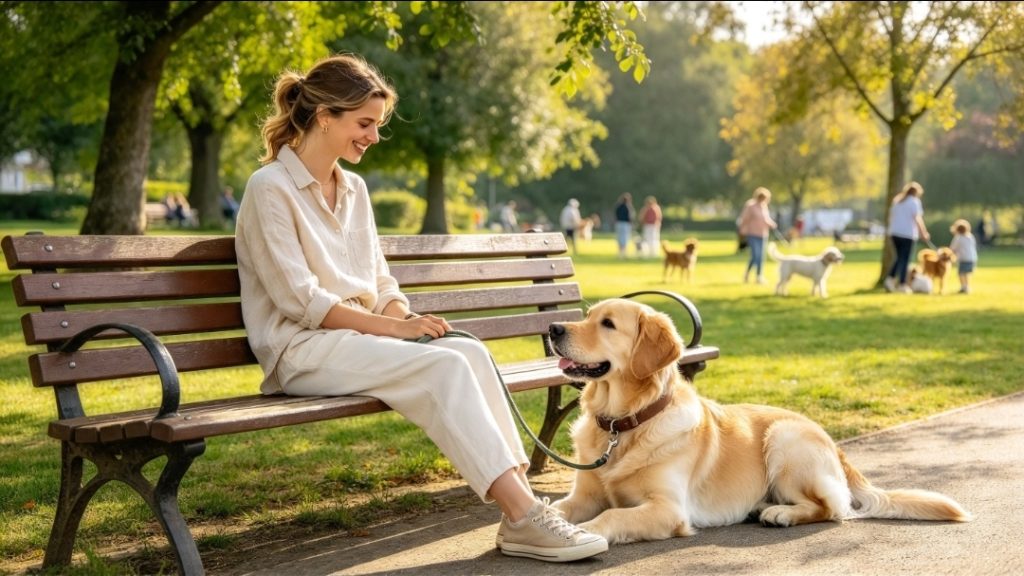
“Ignore the World” is a dog-training concept that teaches dogs to remain calm, relaxed and manageable while everyday activity happens around them. It does not mean ignoring everything, suppressing natural behaviour or forcing a dog to tolerate situations that cause fear or distress.
The aim is to help your dog notice the environment without automatically reacting to every person, dog, vehicle, sound or movement. Your dog can be aware of the world while remaining connected to you and able to continue walking safely.
This approach requires observation, consistent handling, appropriate rewards and gradual practice in environments your dog can manage.
RECOMMENDED PRODUCTS

What Does “Ignore the World” Actually Mean?
Dogs experience their surroundings through sight, sound, smell and movement. During a walk, they may notice a passing cyclist, another dog, a person approaching or an interesting scent.
Noticing these things is normal. The difficulty arises when every distraction causes the dog to pull, rush, bark, lunge or become too excited to continue walking comfortably.
“Ignore the World” means teaching your dog that not every distraction requires a response.
For example:
- A person walks past, and your dog continues walking without demanding an interaction.
- Another dog appears at a comfortable distance, and your dog notices it without immediately pulling towards it.
- A vehicle passes, and your dog remains manageable.
- Your dog discovers an interesting smell but can move on when needed.
- An unexpected noise occurs, and your dog can recover rather than remaining distressed.
The goal is not to prevent your dog from looking around. It is to develop the ability to experience everyday distractions without losing control of the walking situation.
Why Dogs Become Distracted During Walks
The outside environment contains far more competing information than a quiet home. Some dogs are especially interested in movement, while others are motivated by smells, social interaction, play or unfamiliar surroundings.
A dog’s response may also be influenced by excitement, frustration, uncertainty or fear.
Pulling Towards People, Dogs and Objects
Your dog may pull towards something because it wants to investigate, greet another dog or reach an interesting location.
If pulling repeatedly results in reaching the desired destination, that behaviour can become more established.
Teach loose-lead walking in manageable conditions and reward your dog for moving with you without persistent tension on the lead. Where necessary, increase distance from distractions so your dog can respond more successfully.
Becoming Overexcited
Some dogs become increasingly excited as a walk progresses.
They may start calmly but become more difficult to manage after encountering several dogs, people, smells or other stimulating events.
Recognise when your dog’s behaviour begins to change. Taking a quieter route or reducing exposure to distractions can help prevent the situation from becoming harder to manage.
Reacting to Other Dogs
A dog may stare, bark, lunge, pull or attempt to approach another dog.
These behaviours can have different causes, including excitement, frustration and fear. The correct response depends on what the dog is experiencing, rather than simply assuming it is disobedient.
Create sufficient distance, avoid forced greetings and reward manageable behaviour where appropriate. If your dog repeatedly reacts strongly or is unsafe to handle, seek professional assessment.
Becoming Distracted by Every Sound or Movement
Sudden noises, moving vehicles, bicycles and people can interrupt a dog’s attention.
Some dogs quickly return to their normal activity, while others remain focused on the distraction.
Practise in quieter environments first. Gradually introduce manageable distractions while rewarding calm responses. Do not increase the difficulty simply because your dog has completed one successful walk.
Awareness Is Not the Same as Reactivity
A dog can notice something without reacting to it.
For example, your dog may look at another dog, assess the situation and then continue walking. That is different from becoming fixated, pulling towards the other dog or displaying behaviour that makes the walk difficult to manage.
The same distinction applies to people, vehicles, wildlife and unfamiliar sounds.
Do not treat every glance as a problem. Instead, observe the dog’s overall body language, ability to disengage and response to the situation.
A dog that is relaxed and able to continue walking may not need intervention. A dog that becomes tense, fixated or increasingly agitated may need more distance or a quieter environment.
The objective is to recognise the difference before deciding what to do next.
How to Teach Your Dog to Ignore Distractions
Step 1 — Begin in a Manageable Environment
Start somewhere your dog can walk comfortably without being overwhelmed by the surroundings.
This might be a quiet street, a relatively empty path or another familiar location.
Allow your dog time to become comfortable before introducing additional challenges. If the environment is already too stimulating, move somewhere quieter rather than expecting your dog to overcome the difficulty through repetition.
Step 2 — Reward Calm, Manageable Behaviour
Carry suitable food rewards if they are useful for your dog.
When your dog notices a distraction but remains manageable, you can reward calm behaviour or voluntary engagement with you. Deliver the reward at the appropriate moment so your dog can make the connection.
Rewards can also include continuing the walk or allowing appropriate investigation of a safe area.
The aim is to help your dog learn that calm behaviour is worthwhile without requiring constant commands.
Step 3 — Practise at a Suitable Distance
Distance can make a significant difference when a dog is learning to cope with distractions.
If your dog struggles when another dog is close, begin farther away. Choose a distance at which your dog can notice the other dog without becoming overwhelmed.
Reward manageable responses and allow the dog to move away when necessary.
Gradually reduce the distance only when your dog is coping comfortably. Do not force close encounters to test whether training has worked.
Step 4 — Teach Your Dog to Disengage
Your dog does not need to ignore every distraction immediately.
Instead, practise allowing your dog to notice something and then return attention to you or continue walking.
You can reward voluntary disengagement and use familiar cues when appropriate. Keep the exercise simple enough that your dog can succeed.
If your dog remains fixated or cannot respond, increase distance and make the situation easier.
Step 5 — Keep the Walking Routine Consistent
Use a suitable lead and maintain a manageable pace.
Avoid repeatedly changing direction, issuing unnecessary commands or allowing the walk to become a continuous struggle over the dog’s attention.
Consistency does not mean following the same route regardless of circumstances. It means responding to your dog’s behaviour in a clear and predictable way.
Step 6 — Increase Difficulty Gradually
Once your dog can manage distractions in a quieter environment, practise in slightly more challenging surroundings.
Change one aspect at a time where possible, such as the distance from another dog, the amount of movement nearby or the busyness of the route.
If your dog starts struggling, return to an easier level.
Progress is based on how well your dog manages the situation, not on how quickly you can introduce more distractions.
What Should You Do When Your Dog Cannot Ignore a Distraction?
If your dog begins pulling, barking, lunging or becoming increasingly agitated, do not simply continue towards the distraction.
Instead:
- Create distance where it is safe to do so.
- Observe your dog’s body language and identify what may be causing the difficulty.
- Reduce the environmental pressure by changing direction or choosing a quieter area.
- Give your dog time to recover without forcing an interaction.
- Resume walking when the situation is manageable, or end the walk if necessary.
Avoid shouting, jerking the lead or forcing your dog to remain close to something it finds difficult.
If your dog is frightened, repeatedly reactive or difficult to control safely, seek help from a suitably qualified dog-training professional. A tailored plan may be needed to address the underlying cause.
Common Mistakes When Teaching “Ignore the World”
Expecting Your Dog to Ignore Everything Immediately
A dog cannot be expected to manage every environment simply because it behaves well at home.
New locations and stronger distractions create additional challenges. Build the skill progressively and adjust your expectations to your dog’s current ability.
Confusing Calmness With Suppression
A dog that stops moving or becomes unusually still is not necessarily comfortable.
Observe the whole dog, including posture, facial expression, movement and ability to disengage. Do not assume that the absence of barking or pulling proves the dog is relaxed.
Forcing Close Contact With Distractions
Walking directly towards another dog or remaining beside a frightening stimulus can increase distress.
Use distance and controlled exposure instead. The dog should be able to cope with the situation, not simply be prevented from moving away.
Using Too Many Commands
Constantly telling your dog to look at you, sit, stay or stop can turn an ordinary walk into a sequence of instructions.
Use cues when they have a clear purpose. Also give your dog opportunities to walk, sniff and explore appropriately while remaining manageable.
Increasing Difficulty Too Quickly
A dog that copes with one passing dog may struggle when several dogs, cyclists and pedestrians appear together.
Build each challenge gradually. If your dog struggles, simplify the exercise instead of repeating the same difficult situation.
Does “Ignore the World” Mean My Dog Should Never Greet Other Dogs?
No. It does not mean your dog must avoid every social interaction.
It means that seeing another dog does not automatically require a greeting.
Some interactions may be appropriate when both dogs are comfortable, the handlers agree and the circumstances are safe. Other situations call for maintaining distance and continuing the walk.
Your dog should be able to move past other dogs without assuming that every encounter provides an opportunity to play or interact.
This helps make walking more predictable and reduces the pressure to approach unfamiliar dogs.
Does “Ignore the World” Mean My Dog Should Never Sniff?
No. Sniffing is a normal part of canine exploration and can provide valuable environmental information.
A calm social walk can include appropriate opportunities to sniff and investigate.
The objective is to maintain a manageable balance. Your dog should be able to explore suitable areas without persistently dragging you towards every smell or becoming difficult to redirect when necessary.
Allowing appropriate exploration is compatible with calm, controlled walking.
RECOMMENDED PRODUCTS
How Long Does It Take to Teach a Dog to Ignore Distractions?
There is no fixed timeframe. Progress depends on the dog’s previous experiences, temperament, motivation, environment and the nature of the distraction.
A dog that becomes mildly distracted may improve with consistent practice. A dog that experiences significant fear or reacts strongly to other dogs may need a more gradual, individualised programme.
Look for practical signs of progress:
- Your dog can notice distractions without immediately reacting.
- Your dog can disengage from something interesting.
- Lead tension occurs less frequently.
- Your dog recovers more easily after an unexpected event.
- You can move through suitable environments without constant intervention.
- Your dog remains comfortable and manageable for more of the walk.
Progress may vary between environments. Continue practising at a level your dog can handle.
Final Thoughts: What Does “Ignore the World” Mean in Dog Training?
“Ignore the World” means helping your dog remain calm, relaxed and manageable while experiencing everyday environmental distractions.
It is not about preventing awareness, demanding constant attention or forcing a dog to tolerate fear and distress. It is about teaching the dog to notice the environment without automatically allowing every event to control its behaviour.
Start with manageable surroundings, reward appropriate responses, use distance when needed and increase difficulty gradually. Pay attention to your dog’s body language and adjust your approach when the situation becomes too challenging.
The aim is a dog that can experience the world without needing to react to everything in it. That creates a safer, more predictable walking experience for both dog and handler.