How to Leave the House Calmly With Your Dog
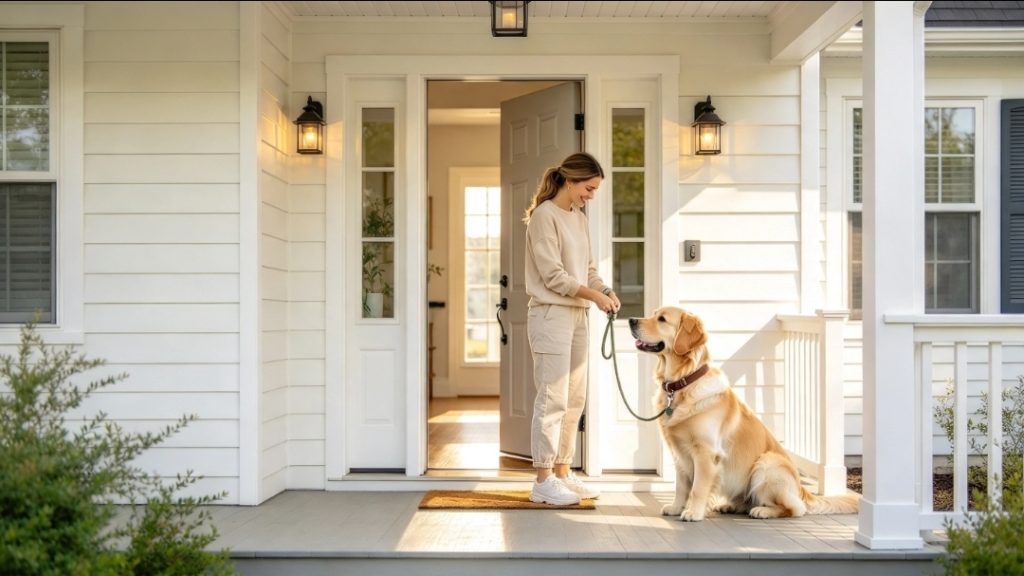
Learning how to leave the house calmly with your dog helps create a smoother transition from the home to the outside environment. Excitement around the lead, rushing towards the door, jumping, pulling and pushing past the handler can make the start of a walk difficult before it has even begun.
The solution is to prepare your dog before opening the door, reward calm behaviour and introduce each stage of departure gradually. The aim is not simply to get your dog outside, but to help them move from the home environment into the outdoors safely and under control.
RECOMMENDED PRODUCTS

Why Leaving the House Can Become Difficult
Leaving the house involves several changes in a short period. Your dog may see the lead, recognise the walking routine, hear the door opening and become aware of people, dogs, vehicles and smells outside.
These changes can increase excitement, particularly in dogs that have learned to anticipate immediate activity whenever walking equipment appears.
Common reasons for difficult departures include:
- Anticipation: Your dog becomes excited because it expects a walk.
- Learned habits: Rushing, jumping or pulling has become part of the departure routine.
- Environmental stimulation: Outdoor sights, sounds and smells compete for your dog’s attention.
- Inconsistent handling: Different expectations make it difficult for your dog to understand what behaviour is wanted.
- Insufficient preparation: The handler begins opening the door before the dog is ready.
The doorway may be where the problem becomes obvious, but the behaviour can begin much earlier.
Common Problems Before Leaving the House
Excitement When the Lead Appears
Some dogs start jumping, spinning, barking or grabbing the lead as soon as they recognise the walking routine.
Rather than immediately attaching the lead and moving towards the door, pause and allow your dog an opportunity to settle. Reward calm responses and continue preparing when your dog can manage the situation.
If the excitement becomes too intense, simplify the exercise. Practise calmly introducing the lead away from the front door before combining the two stages.
Rushing Towards the Door
A dog may learn that moving quickly towards the exit is part of getting outside.
If this happens repeatedly, the dog can become increasingly excited as soon as the handler approaches the doorway.
Practise approaching the door when you are not actually going for a walk. Reward your dog for remaining near you without rushing ahead. Keep the exercise short and gradually build reliability.
Pulling Through the Doorway
A dog that pulls before leaving the property may continue pulling once the walk begins.
Teach your dog that forward movement happens when you can manage the lead safely and move together. If your dog surges forward as the door opens, calmly pause or close the door if it is safe to do so. Give your dog another opportunity to succeed before trying again.
Avoid turning the exercise into a physical struggle. The objective is to teach a clear and repeatable behaviour.
Jumping or Pushing Past the Handler
Some dogs attempt to squeeze through the doorway or move ahead as soon as an opening appears.
This can create a safety risk around roads, driveways, shared entrances and open gates.
Keep your dog securely connected to suitable walking equipment before opening the exit. Position yourself so you can manage the doorway without being pushed aside, and avoid opening it wider than you can safely control.
If your dog repeatedly rushes through, practise with an easier internal doorway before progressing to the main entrance.
Common Handler Mistakes
Rushing the Departure
When the handler is in a hurry, the lead may be attached quickly, the door opened immediately and the dog taken outside while already highly excited.
Allow enough time to prepare your dog. A consistent routine gives you an opportunity to notice changes in behaviour before they become difficult to manage.
Repeating Too Many Commands
Repeatedly telling your dog to sit, wait, stay or stop may create confusion if the dog has not learned those behaviours reliably.
Choose a simple cue when it is useful, allow your dog time to respond and reward the behaviour you want. Practise the relevant skills away from the doorway before expecting them to work around greater distractions.
Allowing Different Expectations
If one person allows the dog to rush outside while another expects calm behaviour, the routine becomes inconsistent.
Everyone handling the dog should follow the same basic approach: prepare the dog, maintain safe control, reward appropriate behaviour and avoid allowing rushing to become the normal way of leaving.
Focusing Only on the Door
If your dog becomes overexcited when the lead appears, opening the door is not the first problem to solve.
Work backwards through the routine. Practise calmly approaching the lead, attaching the equipment, moving towards the door and preparing to leave. Combine these stages gradually as your dog becomes more comfortable.
RECOMMENDED PRODUCTS
How to Teach Your Dog to Leave the House Calmly
Step 1 — Prepare Before You Begin
Choose a time when you are not rushing. Have your dog’s lead and suitable equipment ready, and consider whether the outside environment is likely to be particularly busy.
Start somewhere your dog can pay attention to you. If the front door is too exciting, begin with an internal door or another quieter part of the home.
Step 2 — Introduce the Lead Calmly
Bring out the lead and observe your dog’s response.
If your dog remains calm, reward that behaviour. If your dog jumps, grabs the lead or becomes difficult to manage, pause and make the exercise easier.
Repeat short sessions until your dog can tolerate the preparation without immediately becoming overexcited.
Step 3 — Practise Moving Towards the Door
With the lead attached securely, walk towards the door at a manageable pace.
Reward your dog for staying with you and keeping the lead reasonably loose. If excitement increases, stop before progressing further or return to an easier starting point.
You do not need to demand a perfect heel. The goal is a safe, manageable approach to the exit.
Step 4 — Teach Your Dog to Wait
Teach a simple waiting behaviour away from the front door first.
Begin with a very short pause. Reward your dog for remaining in position or keeping their feet on the floor, depending on the behaviour you are teaching.
Gradually introduce the door once your dog understands the exercise. Keep the initial waiting period brief and increase the difficulty only when your dog is succeeding consistently.
Step 5 — Open the Door Gradually
Make sure your dog is securely managed before opening the door.
Open it a small amount and observe your dog’s response. If your dog remains calm enough to continue, reward them and gradually open it further.
If your dog rushes forward or becomes too excited, close the door if safe and practical, reset the exercise and try again at an easier level.
Do not continue opening the door while your dog is surging towards the exit simply to complete the departure.
Step 6 — Move Through the Door Together
Once your dog can manage the open doorway, invite them to move through with you.
Keep the lead secure and avoid allowing your dog to bolt into the outdoor environment. Reward calm movement and continue at a pace you can manage safely.
The dog does not have to remain perfectly still indefinitely. The aim is controlled movement rather than prolonged restraint.
Step 7 — Practise the First Few Moments Outside
The environment may become more exciting as soon as your dog leaves the house.
Begin in a relatively quiet area where possible. Reward attention, manageable movement and a loose lead. Allow appropriate sniffing and exploration while maintaining control around genuine hazards.
If your dog immediately becomes difficult to manage, increase distance from distractions or return to a quieter area before continuing.
Step 8 — Build Reliability Gradually
Practise the routine regularly, but do not make every departure unnecessarily complicated.
As your dog improves, gradually introduce different times, mild distractions and normal household activity. A dog that can leave calmly when the street is quiet may need more support when people, dogs or traffic are nearby.
Progress at a pace that matches your dog’s behaviour rather than expecting the same response in every environment.
What to Do If Your Dog Becomes Overexcited
If your dog starts jumping, barking, pulling or repeatedly rushing towards the door, avoid escalating the situation with shouting or physical confrontation.
Instead:
- Pause the departure if it is safe to do so.
- Observe what caused the excitement to increase.
- Reduce the difficulty by moving away from the doorway or practising a simpler stage.
- Reward a manageable response.
- Resume the process only when you can handle the situation safely.
Some dogs become overexcited because they anticipate a walk. Others may be frustrated, anxious or responding to something outside.
The response should reflect the individual dog’s behaviour. Do not assume that every difficult departure is simply a lack of obedience.
If your dog displays severe fear, attempts to escape, redirects aggression towards the handler or becomes unsafe to handle, stop the exercise and seek a professional assessment.
Choosing Suitable Walking Equipment
Suitable equipment helps you manage your dog safely during the transition from the house to the outdoors.
Depending on your dog and circumstances, this may include:
- A secure, well-fitted collar or harness.
- A suitable standard lead that you can hold safely.
- Identification appropriate to your dog’s circumstances.
- Training rewards, if food is useful for reinforcing calm behaviour.
Check that equipment fits properly and is in good condition before leaving. No item of equipment replaces the need to teach your dog how to move through the doorway safely.
If your dog is powerful, difficult to manage or likely to escape, seek professional guidance on an appropriate setup before practising in a challenging environment.
RECOMMENDED PRODUCTS
How Long Does It Take to Teach Calm Departures?
There is no single timeframe that applies to every dog.
A dog that becomes mildly excited when the lead appears may improve with short, consistent sessions. A dog that has rehearsed rushing, jumping or pulling for a long time may need more gradual training.
Progress depends on factors such as the dog’s temperament, previous learning, level of excitement, surroundings and the consistency of the handler.
Look for practical improvements:
- Your dog remains calmer when the lead appears.
- Your dog can approach the door without rushing.
- Your dog responds to a familiar waiting cue.
- Your dog moves through the doorway without pushing past you.
- Your dog begins the walk with a more manageable level of excitement.
These small improvements help build a more reliable departure routine.
From Leaving the House to Starting the Walk
Leaving the house is the first stage of the outdoor experience, not a separate event that has no connection to the walk itself.
The way your dog behaves before the door opens can affect how manageable the first few minutes outside become. Preparing calmly, maintaining safe control and rewarding appropriate responses help establish a clearer transition.
Once outside, continue to observe your dog. If they remain comfortable and responsive, maintain the routine. If the environment becomes too distracting, create more space or choose a quieter route.
For further guidance on outdoor pulling, read Why Does My Dog Pull on the Lead?.
RECOMMENDED PRODUCTS
Final Thoughts: How to Leave the House Calmly With Your Dog
Teaching your dog to leave the house calmly is about more than controlling the doorway. It involves the entire sequence: preparing the lead, approaching the exit, waiting when appropriate, opening the door safely and beginning the walk at a manageable pace.
Prepare first, observe your dog, reward calm behaviour and increase the difficulty gradually. Avoid rushing the process or expecting your dog to manage distractions they have not yet learned to handle.
With consistent practice, clear communication and suitable management, leaving the house can become a safer, calmer and more predictable part of everyday life for both you and your dog.