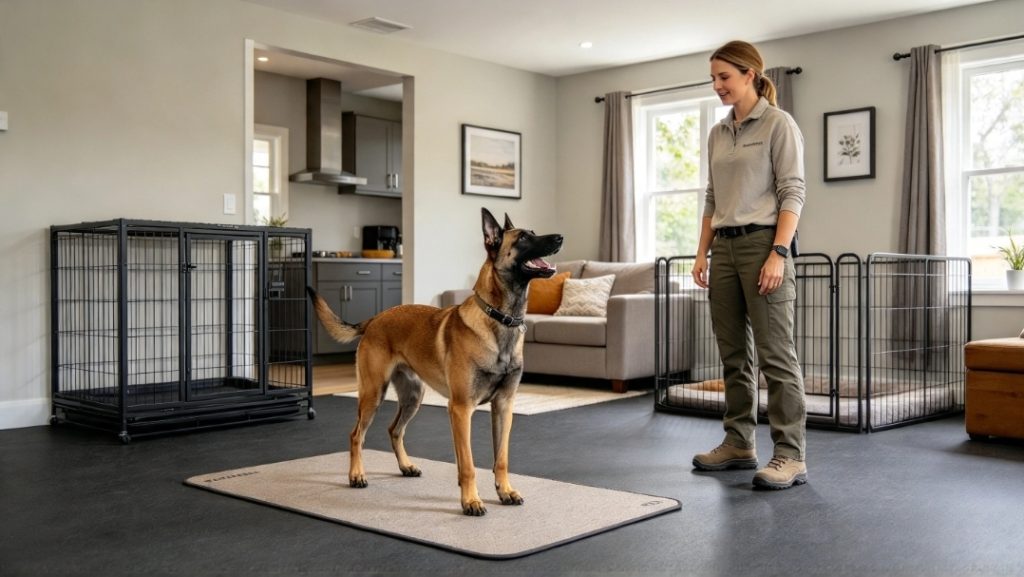
How to Calm an Overexcited Dog at Home
How to Calm an Overexcited Dog at Home can become a difficult question when a dog repeatedly struggles to settle, reacts to household movement, demands attention or becomes increasingly active as the day continues. Overexcitement can appear as jumping, pacing, barking, mouthing, chasing movement, repeatedly bringing toys to people or being unable to remain in one area for any meaningful period. The handler may attempt to calm the dog by giving more attention, increasing activity or repeatedly issuing commands, but these responses can sometimes create even more interaction when the dog is already highly stimulated. When routines, boundaries, timing and communication are inconsistent, the dog may struggle to understand when activity should stop and when calm behaviour is expected.
RECOMMENDED PRODUCTS
Training mat — Dog Beds & Rest
A dedicated training mat can provide a defined location within the home for structured calm behaviour and observation.
Common Problems
One common problem is assuming that an overexcited dog simply needs more physical exercise. While activity can form part of a dog’s routine, continually increasing physical activity does not necessarily address the underlying difficulty of settling indoors.
A dog may become tired physically but remain highly alert and ready to react to movement, sounds, people or objects. This can create a cycle where the handler increases activity because the dog still appears energetic, while the dog continues to struggle with calm behaviour.
Another problem is that household activity can continually reinforce excitement. Doors opening, people arriving, children moving around, food preparation, toys being handled and people interacting with the dog can all become triggers for increased activity.
Common Issues
Inconsistent routines can create significant issues. A dog may be expected to remain calm at one time but encouraged to become highly active indoors at another without a clear distinction between the two situations.
Attention can also become part of the problem. If barking, jumping, mouthing or persistent behaviour consistently results in interaction from the handler, the dog may continue attempting the same behaviours.
Another issue occurs when the dog has access to too much of the home without having developed the ability to manage that freedom. More space can create more opportunities to chase movement, investigate objects, follow people and become involved in household activity.
Common Mistakes
A common mistake is repeatedly telling an excited dog to calm down without changing the circumstances contributing to the excitement. Verbal repetition may become part of the interaction rather than creating clearer understanding.
Another mistake is attempting to physically control the dog when it is already highly stimulated. Increased physical interaction can sometimes add further excitement to an already active situation.
A further mistake is allowing the dog to move continuously between people, rooms, toys and activities without observing whether its level of excitement is increasing.
Frustration
An overexcited dog can create considerable frustration within the household. The handler may feel that the dog never settles, while other family members may find jumping, barking, mouthing or constant movement difficult to manage.
The dog can also experience frustration when it repeatedly seeks interaction but does not understand why its behaviour does not produce the outcome it expects.
When the same pattern occurs every day, the handler may begin reacting to individual incidents rather than recognising the wider pattern of overstimulation and inconsistent expectations.
Timing
Timing can have a significant influence on overexcitement. Attempting to introduce calm behaviour only after the dog has reached a very high level of stimulation can make the situation considerably more difficult to manage.
Timing can also become inconsistent when the handler provides attention, play or access to the wider home immediately after highly excited behaviour. The dog may then experience a confusing relationship between excitement and interaction.
Misunderstanding and Miscommunication
Dogs do not automatically understand when household activity has finished or when they are expected to settle. The handler may assume that the dog should recognise the difference between active and calm periods without providing a consistent structure.
Miscommunication can also occur when different people respond differently to the same behaviour. One person may encourage jumping or active play, while another expects the dog to remain calm. These differences can make the dog’s expectations less clear.
RECOMMENDED PRODUCTS
Training treats — Training Treats
Appropriately sized training treats can support structured exercises when food is being used as part of the training process and delivered with appropriate timing.
GPK9’S FIVE GOLDEN RULES
The GPK9 Five Golden Rules provide a connected system for understanding and managing the different factors that can contribute to an overexcited dog at home.
How to Calm an Overexcited Dog at Home is not simply about stopping a single behaviour. It connects to home structure, obedience, play, routine, environmental management and the relationship between the dog and handler.
The system provides a framework that can be used with a new puppy, family dog, experienced owner’s dog or working and professional dogs. The focus is on recognising what is happening, maintaining structure and progressing according to the dog’s behaviour.
Golden Rule One — Home and Social
How to Calm an Overexcited Dog at Home connects directly to GPK9 Golden Rule One because home structure provides the foundation for calm behaviour.
The GPK9 progression of crate → placemat → playpen provides different levels of management and freedom.
The crate provides safety, reset and toilet support.
The placemat provides calm home freedom.
The playpen provides monitored freedom.
This structure gives the handler different ways to manage the dog’s access to the home according to its current level of behaviour. The traffic-light system allows the handler to monitor progression: Green indicates appropriate behaviour and continued observation, Amber indicates that behaviour requires review, and Red indicates that the current situation should stop or return to a more controlled stage.
Golden Rule Two — Obedience
Obedience is directly connected to How to Calm an Overexcited Dog at Home because clear communication becomes increasingly important when a dog is struggling to manage its excitement.
GPK9 Golden Rule Two uses food and luring alongside praise, shaping and movement within structured training exercises. Consistency in the training environment and appropriate timing help establish clearer communication.
The purpose is not simply to issue more commands when a dog becomes excited. It is to develop a wider structure in which the handler can observe the dog’s behaviour and maintain clearer expectations.
Golden Rule Three — Prey Drive and Play
Play can be closely connected to overexcitement. Toys, chasing, movement and interaction can increase a dog’s level of engagement and arousal.
GPK9 Golden Rule Three separates structured play from obedience training and focuses on observing the dog’s behaviour during play.
This is directly relevant to How to Calm an Overexcited Dog at Home because inappropriate timing or excessive stimulation around play can contribute to difficulty settling. Recognising increasing arousal allows the handler to understand when the dog’s behaviour is moving away from a manageable level.
Golden Rule Four — Toilet
Toilet routines form part of the wider structure of the home, particularly for puppies and younger dogs.
GPK9 Golden Rule Four establishes consistency through the same place, the same time and a toilet command.
An inconsistent routine can add unnecessary disruption to the dog’s day and make it more difficult for the handler to distinguish between different causes of unsettled behaviour.
Golden Rule Five — Social Walking and Ignore the World
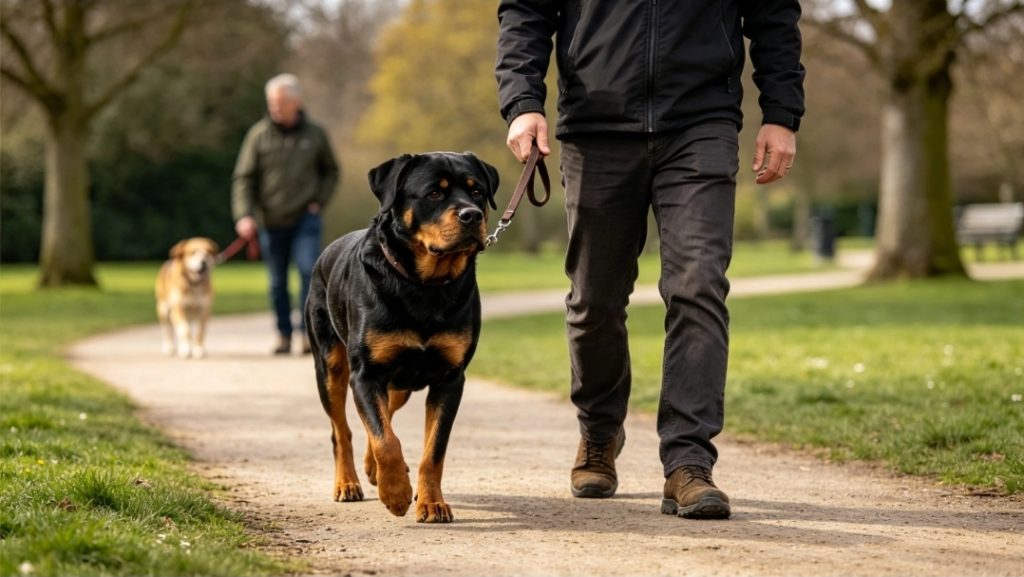
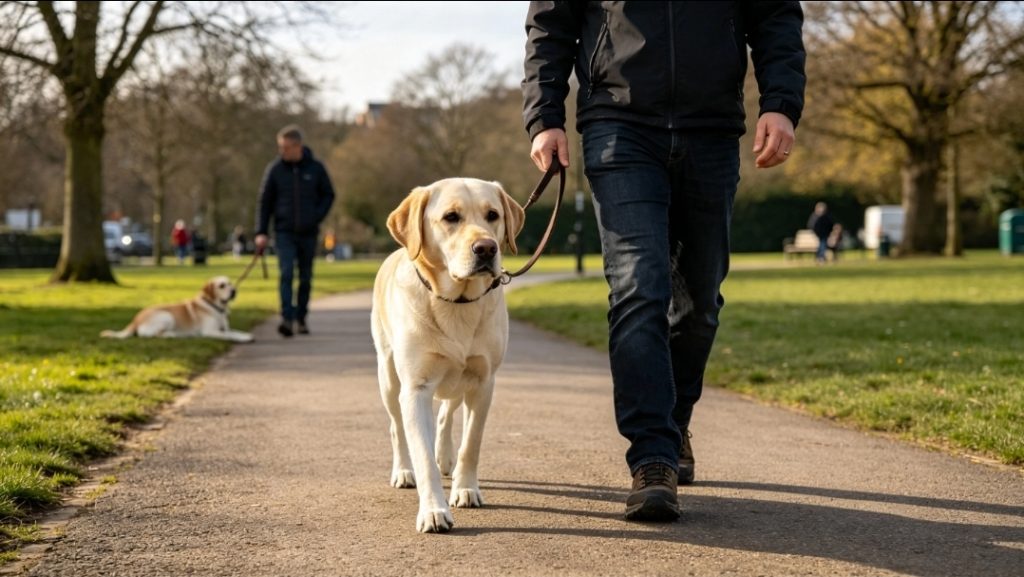
How to Calm an Overexcited Dog at Home also connects with Golden Rule Five because a dog’s ability to remain calm and manageable should extend beyond the home.
GPK9 Golden Rule Five focuses on a calm, relaxed and manageable walk without commands being the central focus. The dog learns to experience the surrounding environment while the handler monitors its behaviour.
This wider approach is relevant because environmental stimulation does not stop at the front door. A dog that struggles to remain manageable around movement, sounds and distractions can encounter similar challenges in different settings.
Final Connection
How to Calm an Overexcited Dog at Home begins with understanding the problem rather than simply reacting to the behaviour once it has become intense.
Jumping, barking, pacing, mouthing, chasing movement and constant attention-seeking can be connected to overstimulation, unclear boundaries, inconsistent routines, poor timing or misunderstandings between dog and handler.
The GPK9 Five Golden Rules bring these areas together as one structured system. Home and social structure establishes the foundation, while obedience, play, toilet routines and social walking contribute to the dog’s wider development.
The goal is not to treat every episode of excitement as an isolated problem. It is to understand the dog’s behaviour, observe progression and maintain clearer structure, communication and timing throughout everyday life.