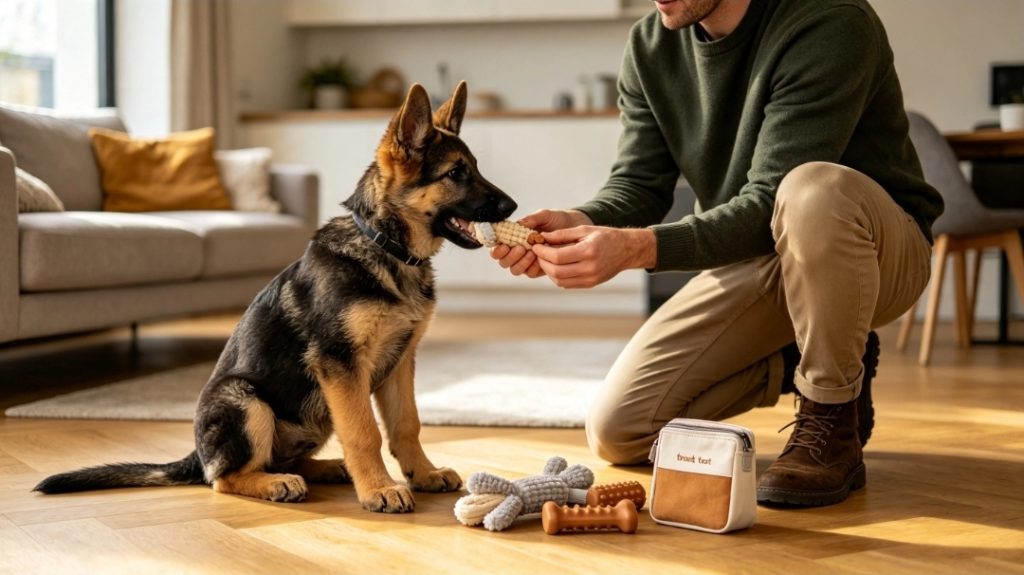
How do I settle a new puppy?
How do I settle a new puppy? The best way is to give your puppy time to adjust, establish a predictable daily routine, provide a safe and comfortable resting area, and build trust through calm, positive interactions. Moving into a new home is a significant change for a puppy, so patience, supervision and consistency will help them feel secure as they learn about their new surroundings.
RECOMMENDED PRODUCTS

Give Your Puppy Time to Adjust
When a puppy arrives in a new home, everything may feel unfamiliar. New people, different smells, household noises and changes to their usual routine can be overwhelming.
Your puppy may explore confidently at first, become quiet and withdrawn, follow you everywhere or struggle to settle. These reactions can vary between puppies, so avoid expecting them to feel comfortable immediately.
Allow your puppy to explore gradually and at their own pace. Keep their world small and manageable during the first few days rather than introducing every room, visitor and experience at once.
The aim is to help your puppy feel safe before expecting them to settle independently.
Create a Safe and Comfortable Resting Area
A comfortable resting area gives your puppy somewhere familiar to relax when they need sleep or a break from activity.
Choose a quiet location away from constant foot traffic and excessive noise. Provide suitable bedding, access to fresh water and an environment where your puppy can rest without being repeatedly disturbed.
A crate or puppy pen can help manage the environment when introduced gradually and positively. Your puppy should learn that this space is comfortable and safe, never somewhere they are sent as punishment.
Introduce the area with calm encouragement and rewards. Allow your puppy to investigate, enter and relax without forcing them to remain inside when they are frightened or distressed.
Young puppies need plenty of sleep. If your puppy becomes restless, bites excessively, jumps around or struggles to respond, they may be overtired rather than in need of more activity.
Establish a Consistent Daily Routine
A predictable routine helps your puppy understand what happens throughout the day. Regular opportunities for toileting, eating, playing, exploring and sleeping can reduce uncertainty and make settling easier.
Try to keep the following activities reasonably consistent:
- Toileting: Take your puppy to the appropriate toilet area after waking, eating, drinking, playing and before bedtime.
- Meals: Follow an appropriate feeding routine for your puppy’s age and needs.
- Play: Use short, positive play sessions rather than allowing excitement to build continuously.
- Training: Practise simple skills for a few minutes at a time, rewarding the behaviours you want to encourage.
- Rest: Provide regular opportunities to sleep in a calm, comfortable environment.
- Bedtime: Establish a quiet evening routine that helps your puppy transition from activity to rest.
You do not need to organise every minute of the day. The important thing is to create a pattern your puppy can begin to recognise.
Help Your Puppy Settle at Night
Night-time can be difficult because your puppy may be sleeping away from their mother and littermates for the first time. They may whine, move around or become unsettled when the house becomes quiet.
For the first few nights, consider placing your puppy’s sleeping area near you so they can feel reassured by your presence. You can gradually adjust the arrangement later if your long-term plan is for your puppy to sleep elsewhere.
Take your puppy out for a toilet opportunity before bedtime and be prepared for overnight toilet breaks, particularly while they are very young.
If your puppy whines, consider what they need rather than automatically ignoring them. They may need the toilet, reassurance or help because they are frightened or uncomfortable.
Keep overnight interactions calm and quiet. Once their needs have been met, help them return to their resting area without turning the night into an exciting play session.
Some adjustment is normal, but persistent or intense distress should not be dismissed as bad behaviour. If your puppy repeatedly panics, cannot settle or shows signs of illness or pain, seek appropriate veterinary advice.
Avoid Giving Your Puppy Too Much Freedom Too Soon
A new puppy does not yet understand the household rules or know which areas are safe to explore. Allowing unrestricted access to the entire home can create confusion and increase the risk of chewing, toileting accidents and unsafe behaviour.
Begin with a manageable area where you can supervise your puppy closely. Gradually introduce more space as they become comfortable and demonstrate that they can cope with the additional freedom.
Use barriers, a puppy pen or closed doors where necessary. Keep electrical cables, medicines, cleaning products, small objects and other hazards out of reach.
When your puppy investigates something inappropriate, calmly interrupt if needed and redirect them towards a suitable alternative. Reward them when they make a better choice.
More freedom should come with the ability to manage it safely. Expanding your puppy’s environment gradually makes it easier to teach boundaries without repeatedly correcting mistakes.
Build Trust Through Calm, Positive Interaction
Your puppy is learning how people behave, how communication works and what to expect from everyday interactions.
Use a calm voice, gentle handling and rewards to encourage confidence. Allow your puppy to approach people voluntarily and give them space when they want to move away or rest.
Avoid constantly picking your puppy up, following them around or demanding attention. Although affection is important, your puppy also needs opportunities to explore independently and relax without being disturbed.
Pay attention to their body language. A puppy that turns away, moves back, repeatedly licks their lips, yawns in an unfamiliar situation or tries to hide may be uncomfortable or stressed. These signs need to be considered in context rather than interpreted individually.
If your puppy moves away from an interaction, allow them to do so. Building trust means recognising when they want contact and when they need space.
Reward calm behaviour when you see it. If your puppy chooses to lie down, relax on their bedding or settle quietly near you, let them enjoy that moment rather than immediately starting another game.
Help Your Puppy Learn to Be Alone
Puppies need to develop confidence when separated from their owners, but independence should be introduced gradually.
Start with brief, manageable moments when your puppy is comfortable in a safe environment. You might step away for a short time while they relax with an appropriate activity, then return before they become distressed.
Increase the duration slowly, paying attention to how your puppy responds. If they become increasingly anxious, reduce the difficulty and build up more gradually.
Avoid suddenly leaving a new puppy alone for long periods and expecting them to cope. A puppy that has not learned to manage separation may become frightened rather than independent.
If your puppy shows persistent distress when you move away, seek guidance from a qualified professional who uses positive, welfare-focused methods.
Introduce People, Dogs and New Experiences Gradually
It is natural to want friends and family to meet your new puppy, but too many introductions can make settling more difficult.
Keep early visits calm and brief. Ask people to give your puppy space, avoid crowding them and allow them to approach when ready.
Introduce household sounds, different surfaces, everyday objects and new environments gradually. Pair manageable experiences with food rewards, play or other things your puppy enjoys.
When meeting other dogs, choose suitable, healthy and appropriately vaccinated dogs, and consider your puppy’s vaccination status and veterinary advice before exposing them to public areas.
Do not force your puppy to approach a person, dog or object that frightens them. Increase distance, reduce the intensity of the experience and allow them to recover before trying again.
Positive early experiences should help your puppy feel safe and curious, not trapped or overwhelmed.
Teach Your Puppy What to Do Instead
Settling is not simply about stopping unwanted behaviour. Your puppy needs to learn which behaviours are appropriate and rewarding.
For example:
- If your puppy bites your hands during play, pause the interaction and offer an appropriate toy.
- If your puppy repeatedly grabs household objects, manage access and redirect them towards something suitable to chew.
- If your puppy jumps up for attention, reward moments when they greet you with four paws on the floor.
- If your puppy struggles to relax, reduce stimulation and give them a quiet opportunity to rest.
- If your puppy becomes distracted during training, make the task easier and reward small improvements.
Keep expectations appropriate for their age and stage of development. Puppies are still learning to control their impulses, so progress comes from repetition, management and consistent reinforcement.
Avoid shouting, frightening your puppy or using physical punishment. These approaches can undermine trust and make it harder for your puppy to feel secure.
Understand Why Your Puppy May Not Settle
If your puppy seems unable to relax, look at the circumstances rather than assuming they are being difficult.
Common reasons include:
Overtiredness: Puppies need substantial sleep. Too much activity without sufficient rest can lead to frantic behaviour, nipping and difficulty settling.
Overstimulation: Visitors, loud noises, exciting play and unfamiliar experiences can leave your puppy struggling to relax. Reduce activity and provide a quiet break.
Toileting needs: A puppy that is restless, sniffing the floor or moving towards the door may need to go outside.
Hunger or thirst: Check that your puppy has access to fresh water and is receiving an appropriate feeding routine.
Uncertainty or fear: New surroundings and separation from familiar companions can cause distress. Offer reassurance and make the environment easier to manage.
Discomfort or illness: Sudden changes in behaviour, persistent restlessness, unusual crying, loss of appetite or other concerning symptoms may require veterinary attention.
Observe what happens before your puppy becomes unsettled. Identifying the cause allows you to change the situation instead of repeatedly trying to stop the behaviour.
How Long Does It Take a New Puppy to Settle?
There is no fixed time for every puppy. Some begin exploring and relaxing within a few days, while others need longer to feel comfortable with their surroundings, household routine and new family.
Age, temperament, previous experiences, sleep, health and the amount of change involved can all influence the adjustment period.
Look for gradual improvements rather than expecting immediate perfection. Your puppy may begin sleeping more comfortably, recovering more quickly after excitement, exploring with greater confidence and relaxing near family members.
Progress is rarely perfectly consistent. Your puppy may cope well one day and struggle the next, particularly after an unfamiliar experience or a change in routine.
Keep your expectations realistic, repeat successful routines and adjust the environment when your puppy needs additional support.
RECOMMENDED PRODUCTS
Common Mistakes to Avoid When Settling a Puppy
Avoiding a few common mistakes can make the adjustment period easier for both you and your puppy.
Introducing too much too quickly: Give your puppy time to become comfortable before adding more visitors, rooms and experiences.
Allowing constant stimulation: Puppies need a balance of interaction, exploration and uninterrupted rest.
Expecting immediate independence: Build confidence through gradual practice rather than leaving your puppy to cope with more than they can manage.
Using punishment for normal puppy behaviour: Teach an appropriate alternative and manage the environment instead of frightening or hurting your puppy.
Ignoring body language: Notice when your puppy is comfortable, tired, uncertain or trying to move away.
Changing rules frequently: Keep household expectations consistent so your puppy has a clearer understanding of what is expected.
Expecting perfect behaviour: Learning takes repetition. Reward improvement and make tasks easier when your puppy struggles.
How do I settle a new puppy successfully?
How do I settle a new puppy successfully? Focus on making the home feel safe, keeping the daily routine predictable, providing enough sleep and introducing new experiences gradually. Build trust through positive interactions, supervise your puppy carefully and teach appropriate behaviour in manageable steps.
Your puppy does not need to learn everything during the first few days. They need time to understand their surroundings, develop confidence and learn that their new home is a safe place to rest, explore and grow.
Consistency builds confidence. By responding to your puppy’s needs, rewarding the behaviours you want to encourage and allowing them to progress at a suitable pace, you can help them develop the foundations for a calmer and more confident life.