How Long Can a Puppy Be Left Alone?
How long can a puppy be left alone? A puppy should only be left alone for as long as it can comfortably cope, and this is usually much less time than an adult dog. Young puppies need frequent toilet opportunities, sleep, feeding, interaction and reassurance, so alone time should be introduced gradually rather than based on a fixed maximum.
How long can a puppy be left alone by age?
There is no reliable rule that gives every puppy the same number of hours based solely on age.
A very young puppy may only manage a few minutes comfortably, while an older puppy that has been gradually trained to be independent may cope with longer periods.
Age is only one factor. You also need to consider:
- Toilet training
- Individual temperament
- Previous experience of being alone
- Exercise and mental stimulation
- Feeding routine
- Sleep needs
- Health
- Signs of anxiety or distress
The important question is not simply “How old is my puppy?” but “How well does my puppy cope when I leave?”
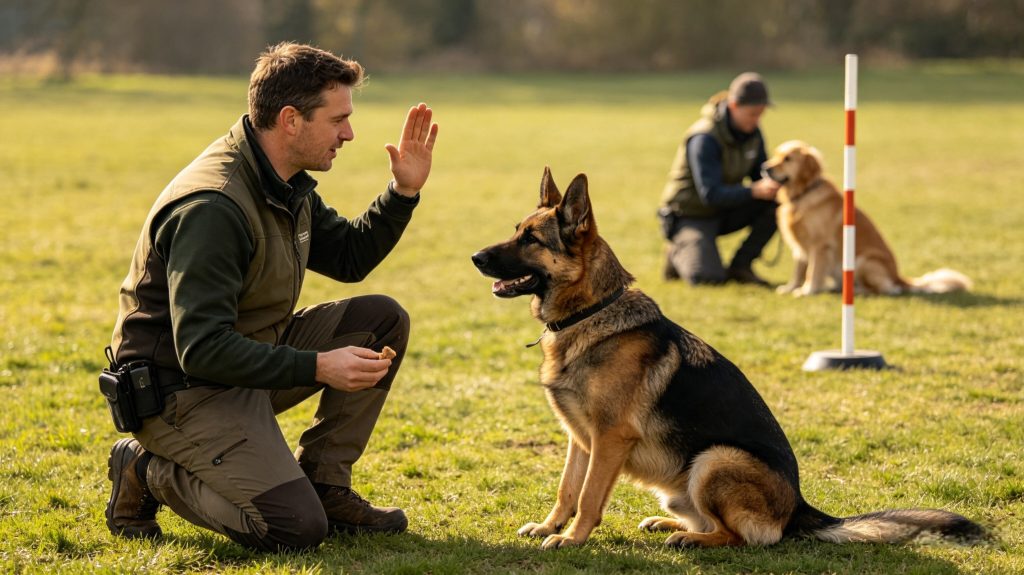
How do I teach my puppy to be left alone?
Start with very short periods and increase the time gradually.
Your puppy should experience being alone as a normal, safe and predictable part of life.
1. Teach your puppy to settle independently
Start while you are still at home.
Give your puppy a comfortable resting area and reward calm behaviour when it settles without constantly following you.
A placemat can help establish a consistent place for calm behaviour. If your puppy has been positively introduced to a crate, it can also provide a secure resting area.
Neither should be used as punishment.
2. Move away briefly
Once your puppy can settle while you are nearby, begin creating small amounts of distance.
Move across the room and return.
Then briefly leave the room before returning.
Keep the periods short enough that your puppy remains relaxed.
3. Begin leaving the house
When your puppy can cope with you moving out of sight, start practising very brief departures from the house.
You might initially step outside for only a short period before returning.
Gradually increase the duration as your puppy becomes comfortable.
Do not jump from seconds to a long absence simply because one short attempt went well.
4. Build the duration gradually
Increase the time in small steps.
A useful progression is:
Seconds → short periods → gradually longer periods → longer absences when ready.
There is no need to follow an exact timetable. Your puppy’s behaviour should determine when you progress.
How do I know if my puppy is ready to be left for longer?
Your puppy should remain relaxed during the current level of separation before you increase the duration.
Signs that your puppy is coping include:
- Settling or resting
- Remaining calm after you leave
- Engaging normally with appropriate enrichment
- Not repeatedly checking the door
- Not showing persistent vocalisation
- Remaining comfortable when you return
If your puppy becomes increasingly unsettled, the next step should be easier rather than harder.
What if my puppy cries when I leave?
First make sure your puppy’s basic needs have been met.
Your puppy may need the toilet, food, water, sleep or appropriate interaction.
If those needs are met and your puppy still becomes distressed, reduce the length of the separation.
Do not repeatedly leave your puppy for longer periods while it is distressed in the hope that it will eventually stop.
If the distress is persistent or severe, seek professional advice.
Can I leave my puppy alone overnight?
A young puppy should not simply be expected to remain alone overnight.
Puppies may need toilet opportunities during the night and may require reassurance while they are still adjusting to their new home.
Night-time independence should be developed gradually and according to the puppy’s age, toilet training, routine and individual needs.
If your puppy is becoming distressed overnight, address the reason rather than simply increasing the time it is left alone.
Can I leave my puppy alone while I go to work?
A young puppy should not routinely be left alone for a full working day.
If you need to be away for several hours, arrange appropriate care such as a trusted family member, friend, dog sitter or other suitable support.
As your puppy develops, you can continue building its ability to spend short periods alone, but training should not be used to justify leaving a puppy alone for an excessive period.
Should I use a crate when leaving my puppy alone?
A crate can be useful if your puppy already sees it as a safe and comfortable resting area.
Introduce the crate gradually and positively before using it during periods of separation.
Do not use the crate to contain a distressed puppy for longer than it can cope with.
If your puppy becomes distressed when the crate door is closed, make the exercise easier instead of simply leaving the door closed for longer.
The crate is a safe resting space, not a solution to separation anxiety and not a punishment.
Should I leave my puppy with food or toys?
A suitable toy, chew or food-based enrichment can give your puppy something positive to do while alone.
Introduce anything you plan to leave with your puppy while you are present first, so you know it is safe and appropriate.
Food and toys should not be used to cover up significant distress.
If your puppy is too anxious to eat or play after you leave, the separation may be too difficult.
What should I do before leaving my puppy?
Make sure your puppy has had an appropriate opportunity to meet its normal needs.
This may include:
- A toilet opportunity
- Appropriate food and water
- Suitable play or exercise
- Mental stimulation
- A calm period before you leave
- Access to a safe resting area
Avoid making your departure unnecessarily exciting.
A predictable routine can help your puppy understand that you leaving is a normal event.
How can I tell if my puppy is distressed when alone?
Some puppies show obvious signs such as barking or crying, while others become restless or destructive.
Possible signs include:
- Persistent barking or whining
- Pacing
- Panting
- Scratching at doors
- Attempting to escape
- Destructive behaviour
- Toileting indoors
- Excessive drooling
- Inability to settle
A camera can sometimes help you understand what your puppy does after you leave, particularly if the behaviour is not obvious when you return.
If your puppy repeatedly shows significant distress, reduce the separation and seek professional advice.
Should I let my puppy cry it out?
Deliberately leaving a distressed puppy alone until it stops crying is not a good basis for teaching comfortable independence.
The aim is to keep separation within a level the puppy can manage and gradually build confidence.
If your puppy becomes distressed, make the next training session easier rather than deliberately increasing the duration.
What mistakes should I avoid?
Leaving a puppy alone for too long
Puppies have greater physical and emotional needs than adult dogs.
Increasing the time too quickly
A puppy that manages a few minutes may not be ready for an hour.
Using the crate as a solution
A crate can provide a safe resting area but does not automatically teach a puppy to cope with separation.
Punishing accidents or destruction
Punishment after you return does not teach your puppy how to cope with being alone.
Ignoring persistent distress
Repeated distress should be treated as information that the training needs to change.
Forgetting toilet needs
Young puppies may not be physically capable of remaining clean for long periods.
How often should I practise leaving my puppy alone?
Short, successful sessions can be incorporated into your puppy’s normal routine.
Practise independence when your puppy is calm rather than making every session a major event.
You can also practise small separations around the house, such as moving into another room or briefly closing an internal door.
The objective is to make independence a normal skill rather than something your puppy only experiences when you need to leave the house.
How long does it take for a puppy to learn to stay alone?
There is no fixed timeframe.
Some puppies become comfortable with short periods alone relatively quickly, while others need a much slower progression.
Do not measure success by how quickly you reach a particular number of minutes.
Measure success by how calmly your puppy copes with the separation.
If your puppy consistently remains relaxed, you can gradually increase the duration. If it becomes distressed, return to an easier level.
When should I get professional help?
Seek professional advice if your puppy shows severe or persistent distress when alone, repeatedly attempts to escape, injures itself, causes significant destruction or cannot make progress despite careful gradual training.
A vet should also be consulted if there is a sudden change in behaviour or you are concerned that a physical or medical problem may be affecting your puppy.
Conclusion
A puppy should be left alone only for a period it can comfortably manage, and that ability needs to be developed gradually.
Start with very short separations, reward calm independence, meet your puppy’s physical needs and increase the duration slowly. If your puppy becomes distressed, reduce the difficulty rather than forcing it to continue.
The goal is not simply to make your puppy tolerate being alone for longer. It is to teach your puppy that being alone is safe, predictable and manageable.