How Do I Stop My Dog Wanting to Greet Everyone?
How do I stop my dog wanting to greet everyone? Teach your dog that seeing a person does not automatically mean getting access to them. Reward calm behaviour, teach your dog to stay focused on you and practise walking past people without interaction.
RECOMMENDED PRODUCTS

Why Does My Dog Want to Greet Everyone?
Dogs may want to greet people because they are friendly, excited, curious or have learned that approaching people leads to attention.
If your dog regularly gets to greet people whenever it pulls towards them, the behaviour can become stronger because your dog learns that approaching people works.
The solution is not to stop your dog noticing people. It is to teach your dog that calmly passing people is also normal behaviour.
Stop Automatic Greetings
Your dog does not need to greet every person it sees.
Start deciding when an interaction is appropriate instead of allowing your dog to make the decision by pulling towards someone.
Some people may not want to interact with your dog, and some situations may not be suitable for a greeting. Your dog needs to learn that sometimes the answer is simply to continue walking.
Start at a Comfortable Distance
Begin training somewhere your dog can see people without immediately becoming excited.
If your dog is already pulling, jumping, whining or struggling to respond to you, increase the distance.
Work at a level where your dog can notice a person while remaining sufficiently calm to listen and learn.
Reward Your Dog for Ignoring People
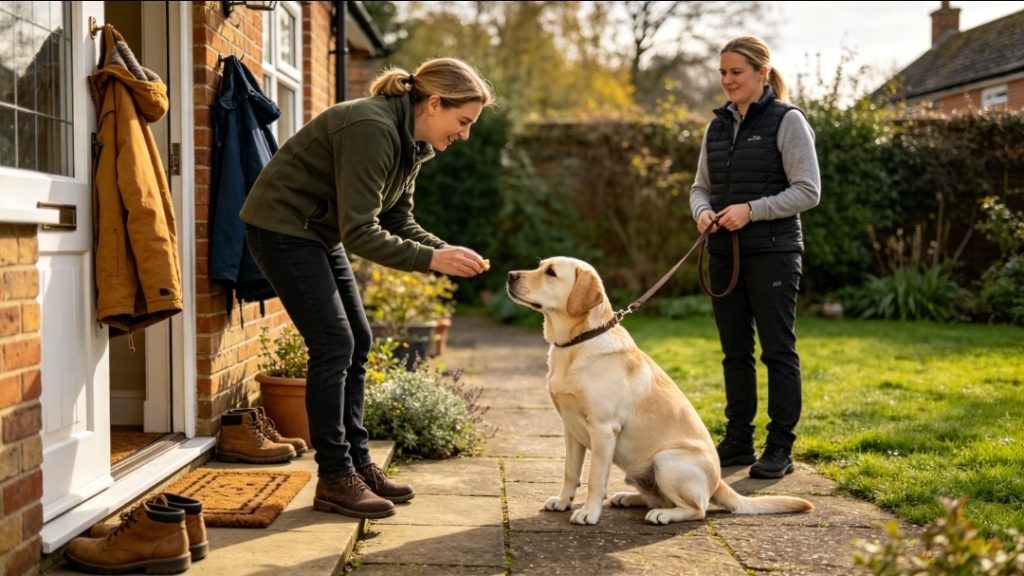
When your dog notices someone and remains calm, reward it.
You can use food, praise or another suitable reward. Reward the behaviour while your dog is calm rather than waiting until it has already pulled towards the person.
With repetition, your dog can learn that remaining calm and staying with you is worthwhile.
Teach Your Dog to Look at You
Practise your dog’s name and attention skills away from people first.
Say your dog’s name and reward it for looking towards you. Gradually practise around mild distractions.
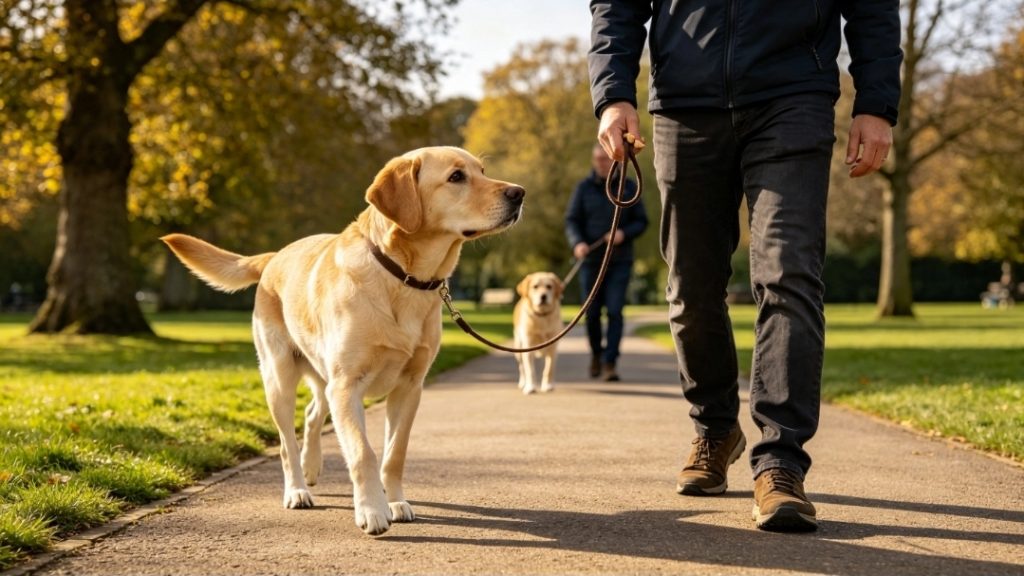
Once your dog understands the behaviour, you can use it when people are nearby. Your dog can notice the person and then redirect its attention back towards you.
Do Not Let Pulling Produce Access
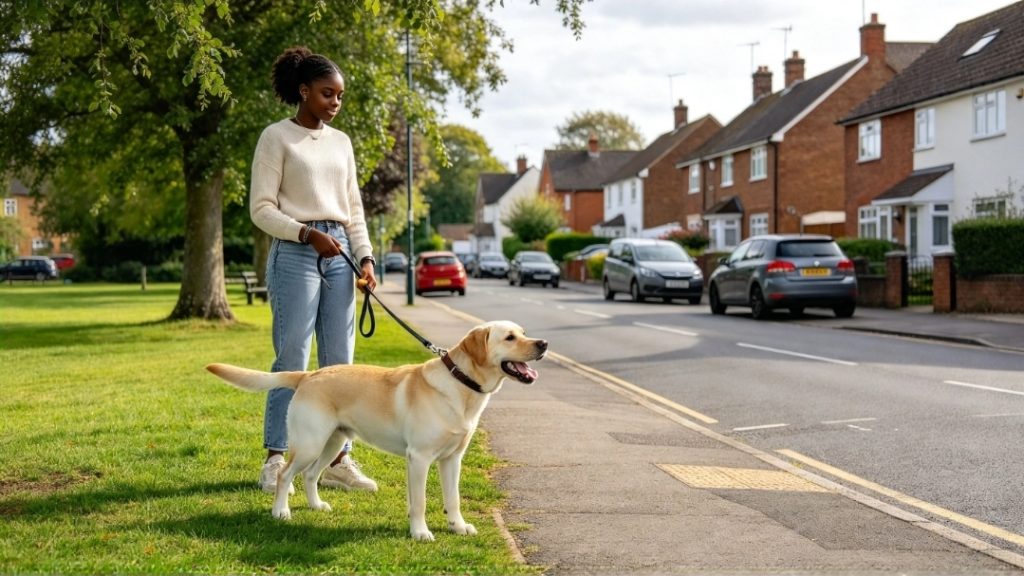
If your dog pulls towards a person, do not allow the pulling to take your dog directly to them.
Create more distance and wait for your dog to regain control. Once your dog is calm, continue walking or decide whether a greeting is appropriate.
If pulling repeatedly results in reaching people, your dog can learn that pulling is an effective way to get attention.
Practise Walking Past People
Choose an environment with enough space to make passing people manageable.
Walk past people while rewarding your dog for staying calm and continuing with you.
Start with plenty of distance and gradually practise in busier environments as your dog becomes more reliable.
Teach an Appropriate Greeting
You do not have to prevent every interaction.
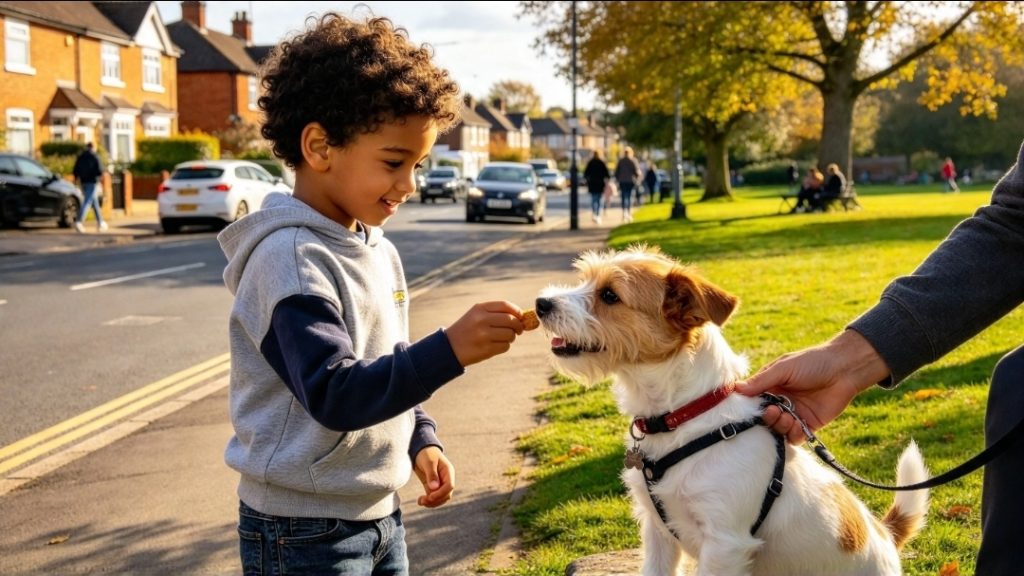
When a greeting is appropriate, teach your dog that it should approach calmly rather than rushing towards the person.
Reward four paws on the floor and calm behaviour. Keep the greeting brief and allow your dog to disengage.
Your dog should learn that greeting is something that happens when appropriate, not something it can demand.
What If My Dog Jumps Up at People?
If your dog jumps up, avoid rewarding the behaviour with attention.
Create space and wait for your dog to become calmer. Reward an appropriate alternative such as standing calmly, sitting or remaining beside you.
Ask other people to follow the same rules. If some people reward jumping while others ignore it, your dog receives inconsistent information.
What If My Dog Becomes Overexcited?
If your dog becomes highly excited when it sees someone, increase the distance.
Allow your dog to settle before continuing. Reward calm behaviour and only make the situation more difficult when your dog can cope.
Changing direction or moving away can be useful if a person is approaching too closely and your dog is struggling.
Does My Dog Need to Greet Strangers?
No.
Your dog can learn to walk past people, sit near people, settle while people are present and remain focused on you without interacting.
This is particularly important in busy public places where greeting every person would be impractical.
A well-socialised dog does not need to interact with everyone. It should be able to behave appropriately whether interaction happens or not.
Practise With Different People
Once your dog can ignore familiar people, gradually practise around different people and situations.
This might include people walking, standing, talking, carrying objects or moving in different ways.
Increase difficulty gradually. Avoid combining too many distractions at once.
RECOMMENDED PRODUCTS
What Equipment Should I Use?
A well-fitted harness or collar and suitable lead can provide appropriate control during training.
A short line can be useful when closer control is needed. A long line may be appropriate in a secure area once your dog has developed sufficient control and you want to practise with more freedom.
Equipment should help you manage distance and safety. It should not be used to force your dog past people.
A muzzle is not normal equipment for preventing a dog from greeting people. If a muzzle is genuinely required because of a safety concern, it should be introduced positively and the situation should be professionally managed.
Common Mistakes to Avoid
Avoid allowing your dog to greet everyone, letting pulling produce access, allowing people to encourage jumping or getting too close when your dog is already overexcited.
Do not punish your dog simply for being interested in people.
Instead, teach an alternative behaviour: notice the person, remain calm, respond to you and continue walking when appropriate.
How Long Does It Take?
There is no fixed amount of time because dogs differ in age, temperament, previous learning and how strongly the greeting behaviour has been reinforced.
Use short, regular training opportunities during normal walks and everyday situations.
If your dog struggles, increase the distance and reduce the difficulty rather than repeatedly allowing the behaviour to escalate.
Conclusion
To stop your dog wanting to greet everyone, teach it that people can be present without automatically becoming available for interaction.
Reward calm behaviour, teach your dog to focus on you, prevent pulling from producing access and practise walking calmly past different people.
The goal is not to make your dog antisocial. It is to teach your dog when a greeting is appropriate and when it should simply remain calm and continue with you.