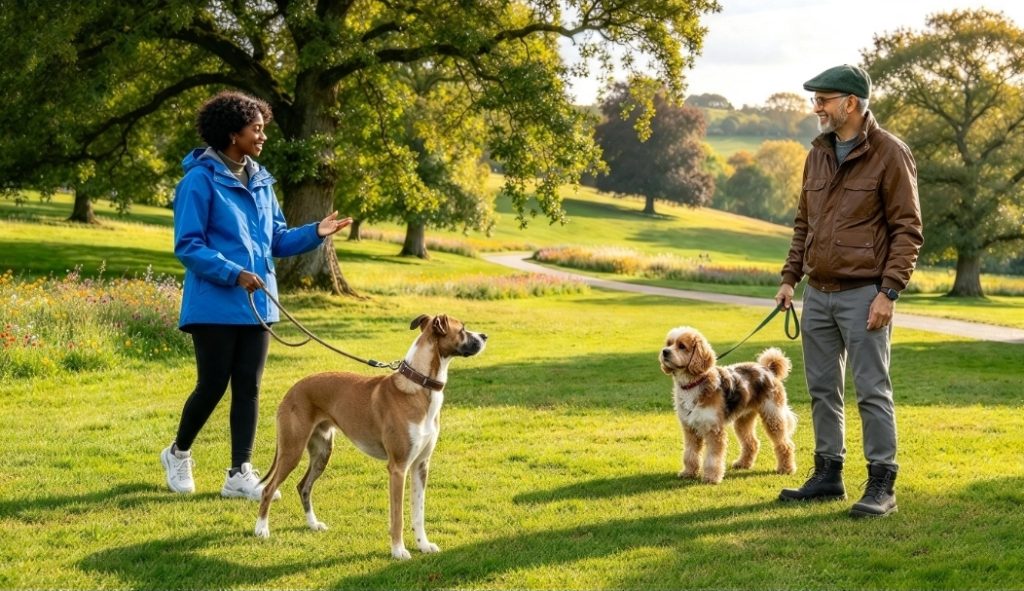
How Do I Teach My Dog to Ignore Other Dogs?
How do I teach my dog to ignore other dogs? Start by teaching your dog that seeing another dog does not automatically mean it needs to approach, play, bark or pull towards it. Work at a distance where your dog can remain calm, reward the behaviour you want and gradually increase the difficulty.
RECOMMENDED PRODUCTS

What Does Ignoring Other Dogs Mean?
Ignoring another dog does not mean your dog must never look at it.
Your dog should be able to notice another dog, remain under control, respond to you and continue what it was doing without becoming overly excited, frightened or reactive.
Being able to calmly observe another dog and then disengage is an important part of good behaviour around other dogs.
Start at a Comfortable Distance
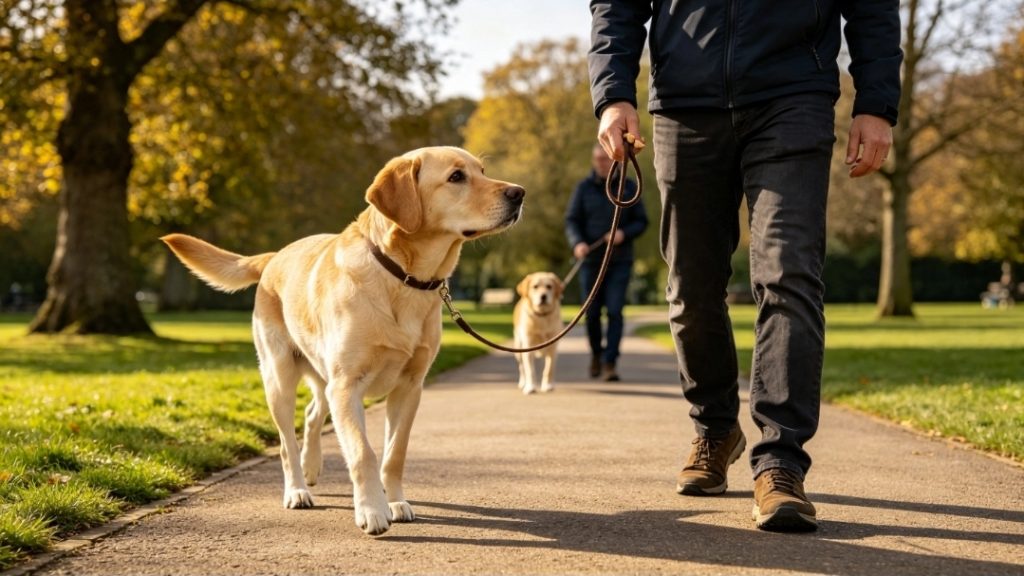
Begin somewhere where your dog can see other dogs without becoming overwhelmed.
The correct distance will depend on your individual dog. If your dog is staring intensely, pulling, barking, lunging or becoming difficult to control, you are probably too close.
Increase the distance until your dog can notice another dog while still being able to respond to you.
Reward Your Dog for Staying Calm
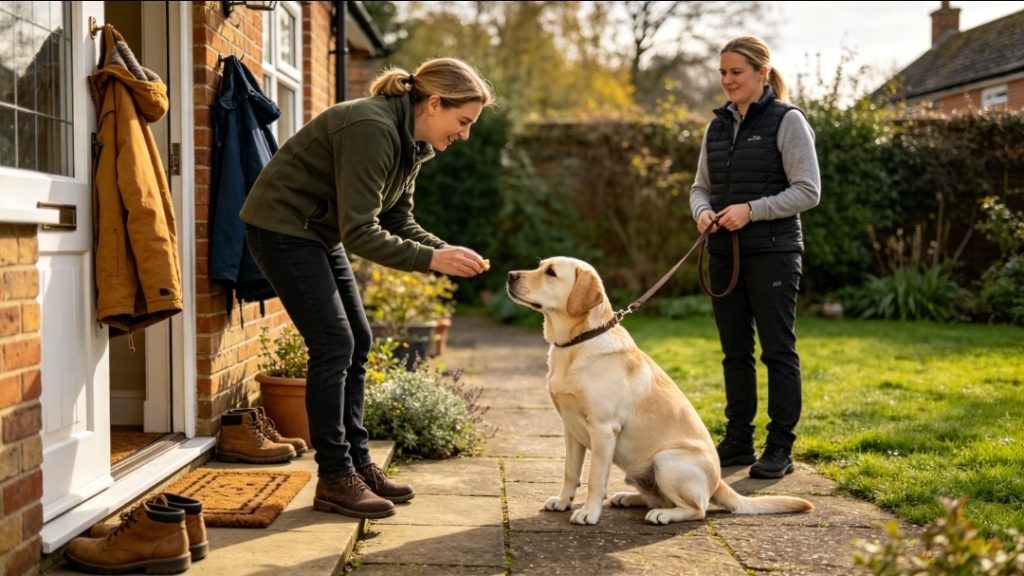
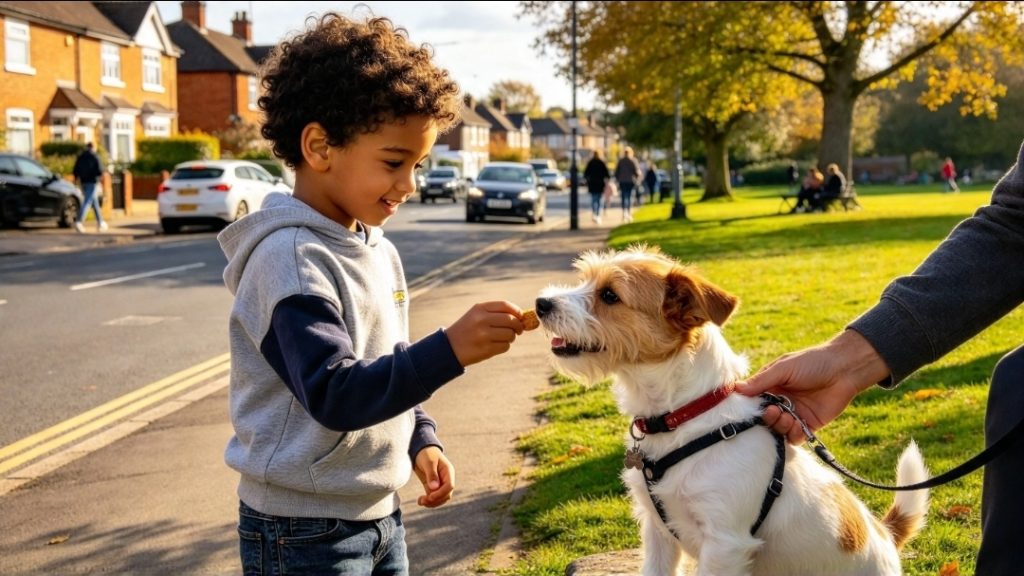
When your dog notices another dog and remains calm, reward that behaviour.
You can use food, praise or another suitable reward. The reward should be given while your dog is displaying the behaviour you want to reinforce.
Over time, your dog can learn that calmly seeing another dog and remaining connected to you is worthwhile.
Teach Your Dog to Look Back at You
Practise getting your dog’s attention in an easy environment before using the skill around other dogs.
Say your dog’s name and reward it for looking towards you. Gradually practise around mild distractions.
When another dog appears, you can then use your dog’s name or an already-trained attention cue before your dog becomes completely focused on the other dog.
Do Not Wait Until Your Dog Reacts
One of the most common mistakes is waiting until the dog is already barking, pulling or lunging before taking action.
Watch your dog’s behaviour and intervene early.
If you notice your dog becoming increasingly focused on another dog, create more distance and reward calm behaviour before the situation escalates.
RECOMMENDED PRODUCTS
Gradually Reduce the Distance
Once your dog can remain calm around other dogs at a particular distance, you can gradually make the situation more difficult.
Reduce the distance in small stages rather than suddenly walking directly towards another dog.
If your dog starts struggling, increase the distance again. Progress should be based on your dog’s behaviour rather than a fixed timetable.
Practise Walking Past Other Dogs
Once your dog can calmly observe other dogs, practise walking past them.
Start with plenty of space. Reward your dog for continuing to walk, responding to you and remaining calm.
As your dog improves, you can gradually practise in environments with more dogs or less space, provided your dog can still cope.
Does My Dog Need to Greet Other Dogs?
No.
Your dog does not need to meet every dog it sees. In fact, regularly allowing your dog to approach other dogs can make it more difficult to teach the difference between seeing another dog and interacting with one.
Sometimes the correct response is simply to notice the dog and continue walking.
Appropriate social interaction can still be valuable, but it should be controlled and suitable rather than automatic.
What If My Dog Pulls Towards Other Dogs?
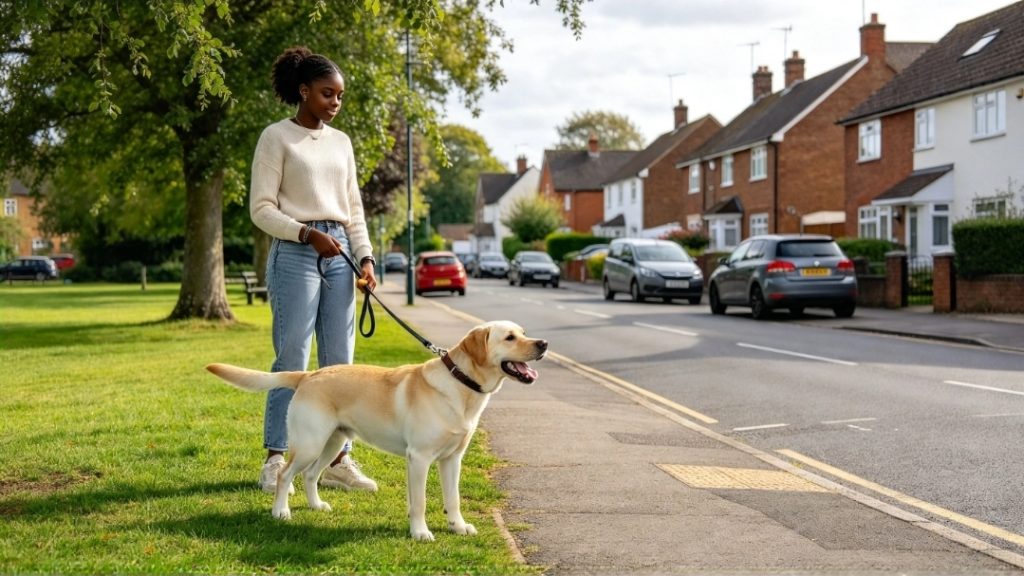
If your dog pulls towards another dog, do not simply allow the pulling to take your dog closer.
Create more distance and wait for your dog to regain calm behaviour. Reward your dog when it can respond to you and continue walking appropriately.
Repeatedly reaching another dog by pulling can reinforce the behaviour because your dog learns that pulling produces access.
What If My Dog Barks or Lunges at Other Dogs?
Do not force your dog closer.
Move to a safe distance where your dog can begin to settle. Once your dog is calmer, reward appropriate behaviour and reassess the situation.
Barking and lunging can have different causes, including fear, frustration, excitement or previous negative experiences. If your dog is aggressive, unpredictable or difficult to control around other dogs, seek professional assessment rather than attempting increasingly difficult encounters alone.
Use Appropriate Equipment
A well-fitted harness or collar and suitable lead can provide appropriate control during training.
A short line can be useful when you need closer control. A long line can provide additional freedom in a suitable secure area once your dog has developed better control around distractions.
Do not use equipment to force your dog towards or past another dog. Equipment should help you manage distance and safety while training.
A muzzle is not a standard solution for teaching a dog to ignore other dogs. If a muzzle is required because of a genuine safety concern, it should be introduced positively and used as part of appropriate professional management.
Practise in Different Places
Once your dog is successful in a quiet location, gradually practise in different environments.
You can progress to areas with more movement, more dogs or greater distractions, but change one difficulty at a time where possible.
A dog that can ignore another dog in a quiet field may still struggle on a narrow pavement or in a busy park. Training needs to prepare the dog for the environments it will actually experience.
RECOMMENDED PRODUCTS
Common Mistakes to Avoid
Avoid getting too close too quickly, forcing interactions, allowing your dog to practise pulling towards dogs or waiting until your dog has already reacted before creating distance.
Do not punish your dog for looking at another dog. The objective is to teach your dog what to do instead.
Avoid expecting immediate reliability in highly distracting environments. Build the behaviour gradually.
How Long Does It Take?
There is no fixed amount of time because dogs differ in age, experience, temperament and the reason behind their behaviour around other dogs.
Short, regular sessions are usually more useful than repeatedly putting your dog into difficult situations.
Progress when your dog is consistently coping at the current level. If behaviour deteriorates, reduce the difficulty and rebuild from there.
Conclusion
Teaching your dog to ignore other dogs is about teaching calm observation, disengagement and appropriate focus rather than preventing your dog from ever noticing another dog.
Start at a comfortable distance, reward calm behaviour, teach your dog to respond to you and gradually practise around greater distractions. With consistent training, your dog can learn that seeing another dog does not automatically mean pulling, barking, playing or approaching.